Switzerland will adopt PV self-consumption rules

Homeowners that want green electricity helped by the gorverment

Switzerland has new rules regarding small-PV systems

The new ruling will be adopted starting from the beginning of the next month. Residential PV customers can choose to reimburse 30% of the bills or a FIT.

Swiss homeowners that want to use green energy and decide to purchase solar panel systems can’t consume the resulted electricity right way, but they have to wait until Switzerland’s law will be amended, on the 1st of April.

At the moment, all Swiss photovoltaic systems that work have to turn over to the electricity grid all energy they produce. Even though owners are qualified to take in a feed-in tariff FIT, self-consumption is banned.

But the newly adopted rule accepted by the Swiss Federal Council also, says that the ones involved in using small-scale PV systems could enjoy the energy it generates. The remaining power will be delivered to other members of the community that need electric power, as the authorities announce.

The government of Switzerland wants to help homeowners even more and help them to make the installation process a little bit more affordable. This means they are giving them the right to choose between a 30% reimbursement of the installation price, or qualification to the FIT scheme.

Switzerland’s leading solar association, Swissolar, agrees with the new regulations and announced that they want to be a part of the process by making the FIT acceptance easier to reach.

In 2013, Swissolar disagreed with the Swiss government’s plan to lower the country’s fit rate by between 35-40%. That‘s because they didn’t want the huge tariffs to be an impediment for the solar sector’s development.

U.K. and Bulgaria, the two EU countries who adhered to WEEE PV Directive in time

Two E.U. countries submitted to Waste Electrical and Electronic Equipment Directive

U.K and Bulgaria intro directives in their national lows

Just two E.U. countries submitted to the most recent Waste Electrical and Electronic Equipment Directive (WEEE) on PV modules and introduced them in their national laws until de 14th of February deadline.

Last Friday was the last chance for E.U. countries to comply with the most recent WEEE directives, a set of rules for the disposal of old solar PV modules and just the governments of the U.K. and Bulgaria brought the latest text into their national law.

This directive was primary introduced in August 2012 and was meant to incorporate rules and advices on the proper disposal of solar PV modules for the first time. 18 months was the changeover period in which the solar PV industry and every nation’s governments could make the necessary improvements to the standard removal and waste management, and the law that implies them.

The end of that period was on February 14, and even if the governments in key PV markets all over the E.U. didn’t officially transferred the guidelines into their own national versions of the European directive, WEEE will be a significant to the PV sector during 2014 and more, as the pan-European PV recycling and take-back organization, PV Cycle reports .

“Under WEEE, PV companies in the European Union will not only have to ensure the collection and recycling of their discarded end-of-life products, but are required to also guarantee the financial future of PV waste management,” announced PV Cycle’s managing director, Jan Clyncke.

Even if only Bulgaria and the U.K. subscribe to the necessary changes until now, other European countries showed their bids for compliance.

Spanish solar market is rising

The statistics for the PV market for 2010 released by the Spanish photovoltaic association ASIF, according to which the Spanish PV industry is moving strongly into the international market.

Thanks to the changes in the Spanish solar energy promotion policies and because a yearly cap of 500 MW was set, the international sales in 2010 increased by 130% compared to the previous year.

The total capacity of Spanish PV production was 1.000 MW in 2010, of this, 70% was exported and only 30% installed locally.

In Spain itself, 392 MW of new photovoltaic systems were installed, of which a good 60% were locally produced.

2009 was a bad year for Spanish market because subsidies were massively cut and the sales in Spain only reached 17 MW.

However, a large portion of the projects completed in 2010 were actually old projects, the completion of which was delayed by the crisis of the year before.

The ASIF predicts that Spanish solar market will increase more in the coming years, and expects only 300 MW of new capacity to be installed in 2013.

3000 MW by 2020 in Malaysia

Malaysia‘s parliament announced the country’s installation targets for renewable energies and the plan to install 3,000 MW of renewable by 2020.

They expect that 1,250 MW will be generated by photovoltaic installations and another 1,065 by biomass.

With the implementation of these ambitious targets Malaysia follows other Asian countries like Thailand or Taiwan.

The Malaysia’s Minister of Energy announced that the legislation will come into effect in midsummer this year.

The 2011 quota for photovoltaic power is 29 MW with 9 MW set aside for projects smaller than 1 MW.

Malaysia’s feed-in-tariffs for photovoltaic power are divided into six different sections:  systems smaller than 4 kW, between 4 and 24 kW, between 24 and 72 kW, between 72 and 1 kW, between 1 MW and 10 MW and installations between 10 and 30 MW.

Algeria discovered solar thermal just one year ago

Algeria is the fourth biggest exporter of natural gas worldwide, the second biggest producer of liquefied petroleum gas and the tenth biggest producer of mineral oil.

The consequence is clear: renewable energies are not in the focus of the government.

The administration of the country only talks about photovoltaic and wind energy.

During a conference in Algeria in January, the state-owned electricity and gas utility Sonelgaz had 20 minutes to talk about projects in the field of renewable, and the speaker did not once mention the words ‘solar water heating’.

Algeria still remains in a deep slumber when it comes to heating water with the sun.

So far, annual market volume is estimated at around 50 residential systems per year.

1 Million Solar Water Heaters in Africa by 2015

A major green initiative will take place in Africa.

Eskom, the South African utility has announced a plan to install 1 million solar water heaters by 2015 and for many they will be free, because Eskom will offer free 110 liter capacity solar water heaters to the families who use paraffin heaters that cause air pollution.

Even for families that do not qualify for free electricity, Eskom offers rebates of up to 120% of the heater cost.

The use of solar heaters will make sense in this sunshine abundant nation.

Until now, Eskom has installed 30.000 free solar water heaters in just one township, and rebates offered to many wealthier families also.

The solar water heater consists of a water tank and a set of evacuated glass tubes that are solar collectors.

On clear sunny days, the water temperature can reach 55 degrees Celsius or higher.

South Africa is emitting 50% of the entire continent’s greenhouse gas emissions; this explains the large number of solar installations.

Another part of the country’s efforts is an ambitious plan to build a huge 5GW solar thermal power plant that could single-handedly provide 10% of the nation’s electricity needs.

The first 1GW is expected to feed into the grid in 2012.

Solar thermal market is decreasing

A new report has been released focusing on two renewable energy technologies: solar thermal energy for hot domestic water heating and concentrating solar power (CSP) for electricity generation.

The EurObserv’ER Solar Thermal Barometer shows different fortunes for the two solar thermal technologies.

It seems the recession threw black spots over the European solar thermal market throughout 2010.

For the second year running, new installations for hot water production and space heating (collectors) decreased.

According to the EurObserv’ER survey the newly-assigned surface area was 3.8 million square meters in 2010, down from 4.2 million square meters in 2009 and 4.6 million square meters in 2008.

Total EU solar thermal collectors at the end of 2010 was 25 135.6 MWth.

Five EU countries, mostly Mediterranean, intend to develop the sector.

According to experts the solar thermal market will pick up again in 2011 because the European markets have recovered maybe except the Spanish market.

The key to future growth will be driven by future conventional energy price trends.

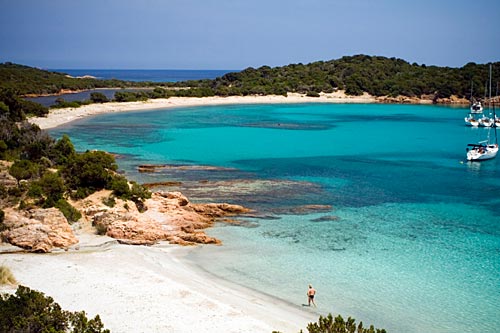
Corsica started to become attractive for the solar sector

Corsica, the fourth largest Mediterranean island enjoys a high degree of autonomy.

This island has a high solar radiation levels, between 1,750 and 1,900 kWh/m2, they are the highest in all of Europe.

Local authorities have a strong influence on the licensing of solar parks.

The island offers feed-in tariffs comparable to the French overseas departments and territories.

In France is a rule that wind or solar parks cannot feed in more than 30% of the electricity consumed in the region where they are installed.

The rule is applied to all systems with a capacity of more than 3kW.

Corsica is for most part mountainous and covered with forests, which makes it difficult to find suitable locations for solar parks.

One success story comes from White Owl Capital AG based in Berlin, Germany.

The company, which has specialized on renewable energy investments, and recently obtained licenses for the construction of two solar power plants with a total annual capacity of 5 MW.

The projects will incorporate 21.800 polycrystalline modules supplies by Trina Solar and be built on a surface of 11 hectares.

One of the first solar companies that became active in Corsica is juwi Solar.

In 2009 the company starts the construction of a new solar park on the island.

With a nominal capacity of 7, 7 MW the system was built on a surface of more than 30 hectares.

Switzerland stops nuclear power

We all know how dangerous nuclear power is after the disaster in Japan.

Many countries have begun protest to give up nuclear energy and Switzerland is one of them.

The last reactor in Switzerland will finally go offline in 2034 because the Swiss government just voted on Wednesday to abandon nuclear power in their country.

No reactors will be built and the last five reactors will slowly be phased out.

People’s confidence in the feasibility of nuclear energy has collapsed since the nuclear meltdown disaster in Japan.

Germany also decided to reject nuclear, and has accelerated the shuttering of a number of its aged reactors.

Over 20,000 people protested against nuclear power in Switzerland; the demonstration was the largest anti-nuclear power march since the eighties.

Top 10 clean energy states in U.S.

Promoting green technology is on the rise.

An extensive study released Wednesday by consulting firm Clean Edge offers some results.

The survey used more than 3,500 data points to evaluate all 50 states in the U.S.

Factors for evaluating each state included: the amount of green-tech related patent activity; the amount of green-tech venture capital being invested; the number of alternative fuel, electric, and hybrid vehicles registered in the state; and the percentage of electricity produced from clean sources.

The following states are ranked in the Top 10 for leading in green tech:

1.     California
2.    Oregon
3.    Massachusetts
4.    New York
5.    Colorado
6.    Washington
7.    New Mexico
8.    Minnesota
9.    Connecticut
10.  Vermont

California has the most money for backing up all those green-tech projects and has some of the most progressive environmental policies.

The state attracts more green-tech venture capital than all the other states in the U.S. combined.
California is also leading in clean-energy:

1.    California
2.    Massachusetts
3.    Oregon
4.    Colorado
5.    New Jersey
6.    Connecticut
7.    New York
8.    Maryland
9.    Washington
10.  Minnesota