Solar energy clears the view

solar panels

A new kind of solar concentrator

Some scientist at Michigan State Univ. (MSU) have been working on a new kind of solar concentrator that if situated on top of a window makes solar energy and, at the same time, is letting people truly see through that window.

The name for this device is transparent luminescent solar concentrator and can be useful for buildings, mobile phones and other utilities that need a clear surface.

And as Richard Lunt of MSU’s College of Engineering says, the key word for this is “transparent.”

The process of creating solar power from cells located around luminescent plastic-like material is not recent. Still, the progress made in the past lead to few good results as the power production was not efficient and the materials were more colored than transparent.

“No one wants to sit behind colored glass,” reports Lunt, an assistant professor of chemical engineering and materials science. “It makes for a very colorful environment, like working in a disco. We take an approach where we actually make the luminescent active layer itself transparent.”

The solar capturing system needs small organic molecules produced by Lund and his colleagues to absorb specific invisible wavelengths of sunlight.

“We can tune these materials to pick up just the ultraviolet and the near infrared wavelengths that then ‘glow’ at another wavelength in the infrared,” he added.

The “glowing” infrared light is lead to the edges of the plastic and then transformed into electric power with the help of thin strips of PV solar cells.

“Because the materials do not absorb or emit light in the visible spectrum, they look exceptionally transparent to the human eye,” Lunt believes.

A big advantage of this new discoveries is its flexibility. As the technology is at the beginning, is can be helpful even for commercial or industrial applications for low cost needs.

“It opens a lot of area to deploy solar energy in a non-intrusive way,” Lunt said. “It can be used on tall buildings with lots of windows or any kind of mobile device that demands high aesthetic quality like a phone or e-reader. Ultimately we want to make solar harvesting surfaces that you do not even know are there.”

The researcher believes that there is more work to be done in order to increase the power efficiency. As we speak, it is able to make a solar conversion efficiency close to 1% but can reach 5% when truly optimized. The best LSC has got a 7% efficiency.

Old car batteries can be recycled into cheap, resistant solar panels

green technology

Scientists from MIT have found a way to reuse the so-thought useless batteries

Pollution is a really serious issue nowadays, and it comes as no surprise that car batteries do a lot of damage to the environment. A lot of them are being thrown away as a result of the fast evolution in the industry. So scientists from MIT have found a way to reuse the so-thought useless batteries. The solution they came up with involves turning them into very efficient solar panels and not using them for new car batteries.

As shown in the picture, a single piece of car battery can be transformed into a cheap solar panel that can be used to harvest energy for 30 homes. This can be done with the help of the lead from the battery and use it in order to create solar cells that use perovskite, a compound that can achieve until 19% efficiency level.

Every solar cell works on a very thin layer of perovskite that MIT says measures in in at approximately half of a micrometer in thickness. Just one car battery can make sufficient power aforementioned houses, and has the advantage of doing something for the environment and the recycling world.

These types of panels made from used car batteries can also, themselves, be recycled and transformed into new solar cells, lowering the pollution rate, that could otherwise become a threat. Moreover, the benefits don’t stop, as scientists reveal that this type of transformation iss both easier and cheaper than common silicon utilities.

Green energy the new source of power for villages?

Clean energy in villages

Clean energy for villages

Villages could be powered with Cheap solar, wind or hydroelectricity

There are quite a few countries where energy infrastructure is not doing great. As a fallow-up, 1.4 billion people can’t enjoy the benefits of electric power. For example, in sub-Saharan Africa, just 8% of the population in villages are connected to electricity. All that could become a past problem as mini-grids – localised generation, transmission and distribution of power can resolve that.

The good news is the fact that solar power in the African continent and parts of India are incredibly low nowadays. So, a mini-grid is a cheap way to go.

The International Renewable Energy Agency (Irena) has just been awarded a $5m low-cost loan to the government of Mauritania, a place where only 1% of rural locations are powered. This loan can pay for four powered fishing communities in Mauritania’s northern coast.

The people of Bellewakh, Lemcid, Loubeir and Lemhaijratt are now lighten by candles, kerosene lamps and car batteries. Moreover, in order to power their power refrigeration units, they use canisters of butane which are not safe. The recently developed mini-grid will be made of 18 wind turbines of 15kW and will provide electricity for households, schools, health facilities, civic buildings, a desalination plant to produce drinking water and an ice-making plant.

Frank Wouters, director of Irena believes that a project like this is always welcomed. His company has $50m a year to invest in low cost loans but the last year was an exception and reached a billion. Irena was able to help six projects and refuse 80.

If mini-grids are a fact but are now powered by diesel Wouters says it is now a no-brainer for them to switch to turn green: “Where people are using diesel to generate electricity any renewable source of energy is at the moment more cost effective.”

Hydroelectricty is by far the cheapest – where it is available – followed by windpower, and only then solar panels. A report by the Alliance for Rural Electrification says that towns could save up to 60% of their costs if they turned to hydroelectricity or 16% if they turned to solar.

The low costs of green power made a change in the marketplace. Until now, Wouter says the people believed “solar is nice for [communities that are] off-grid, but it’s expensive, but that is not true anymore. It’s now cheap as well as being reliable, clean and low maintenance.”

So what is the problem with green mini-grids?

Wouters thinks that the first challenge the awareness of the low prices “When something halves in price every two years it’s hard to catch up, but I think that we’ve reached the point where people understand. “There is a big focus by the Asia Development Bank on mini-grids and the Islamic Development Bank; all the development banks are looking at this as a very interesting, scalable opportunity for them to put their money to work.”

Moreover, there is no infrastructure in some places.

Still, African savings are growing. And as Wouters says, every issue that comes together with the development will not disappear just like that, but the solutions are not so expensive anymore.

10 Green European Cities to inspire from

Green European Cities

The most important Green European Cities

Some European cities wanted to stand up and make efforts that count for green energy world. This includes lowering their carbon footprint, grow the green power supply or increase efficiency of the power distribution and handling systems. So, more than 160 green technology good practices from different European areas are to be found on www.greenitnet.com. Some of the most wonderful project to look up to, considering energy systems, smart grids and renewable energy are to be found there.

Nowadays, those initiatives are being spread around all cities in order to start working on their own green projects.

Here are the 10 initiatives cities should look up to:

1.  Amsterdam Vehicle 2 Grid, Amsterdam, the Netherlands: the first Household Smart Energy Network Where green power is distributed, stored in a vehicle and given to homeowners or the grid in the metropolitan area of Amsterdam.

2. Ice Wish, Rome, Italy: Intelligent control system (smart metering, wireless technology, cloud computing, and user-oriented display information) in order to generate power and water wastage reductions in social housing.

3. RELoadIT, Zaanstad, Amsterdam Region, the Netherlands: a little local smart grid connecting green power, an energy marketplace and e-vehicles.

4. E-car4ll, Amersfoort & Utrecht, the Netherlands: introducing a local smart e-transport e-grid, forecasting, producing and consuming clean power in green transport.

5. Green practices adopted at MITA, St.Venera, Malta: a renewable datacenter facilitating e-services and education applications.

6. Energia 4, Częstochowa, Poland: an electricity management system for data exchange.

7. Local biogas cogeneration, Riga, Latvia: local biogas cogeneration with the heat utilized for greenhomes.

8. AlpStore Project, Kranj, Slovenia: Sun, water and biomass are part of the Alpine Space. It is necessary to utilize them for energy generating. Pilot tests can reveal the feasibility of mobile and stationary storage in public infrastructure, business parks, enterprises and smart houses.

9. HeatMatcher, Amsterdam region, the Netherlands: Algorithm application bringing balanced heat for all components and optimized management and distribution and for improved low cost operations. Actual application zone is collective systems for heating and hot water use in residential areas.

10. LED Street Lighting, Częstochowa, Poland: Street lighting updated projects for lowering power usage and costs for the municipality.

One man’s pollution, another man’s green energy

energy storage

Cigarettes butts could be a part of the solutions for clean energy storage

It’s about the cigarettes butts that could be a part of the solutions for renewable energy storage enigma. Researchers believe that cigarettes filters could be useful in computer energy saving.

You may never heard of a good news about smoking, but the first one comes from South Korea where researchers have found a big advantage for cigarettes as used filters can be transformed into green energy batteries.

It’s rare that smoking receives some good press, but South Korean scientists say they have found an unlikely benefit to cigarettes: used butts can be converted into powerful batteries for storing renewable energy.

As an article published in the journal Nanotechnology says, cigars can be converted into a high-performance carbon-based material that is very good for energy storage.

The storage has always been one of the green energy’s problem, since, as opposed to fossil fuels, wind and solar can provide electricity in an intermittent way.

Reusing old cigar filters can offer two advantages: recycling cigarettes while offering a storage solution.

“Our study has shown that used-cigarette filters can be transformed into a high-performing carbon-based material using a simple one step process, which simultaneously offers a green solution to meeting the energy demands of society,” are Professor’s Jongheop Yi words, from Seoul National University, and co-author of the study.

“Numerous countries are developing strict regulations to avoid the trillions of toxic and non-biodegradable used-cigarette filters that are disposed of into the environment each year—our method is just one way of achieving this”, he added.

About 5.6 trillion used cigarettes are thrown into the environment every year. They have cancers related chemicals, pesticides and nicotine.

After being smoked, the cigars convert into a material made of tiny pores that makes a high surface area which can store big amounts of power.

This is useful for coating the electrodes of supercapacitors – electrochemical parts used in storing big energy amounts and create a super-efficient battery useful for computers, phones and hybrid cars. This could also impact production costs and could also be more efficient than current alternatives.

Researchers from Sheffield took another step forward as they developed spray-on, highly efficient solar cells with the help of perovskite, a new type of cheap efficient solar technology.

“There is a lot of excitement around perovskite based photovoltaics. Perovskite cells now have efficiencies of up to 19 per cent. This is not so far behind that of silicon at 25 per cent – the material that dominates the world-wide solar market,” says lead researcher Professor David Lidzey.

Shipping green energy has improved with the latest project

solar boat

The Blue Star Delos Renewable Energy Innovation Project

Eco Marine Power proudly reports to collaborate with Blue Star Ferries of Greece in order to develop some green energy related technologies for shipping, for example: the Aquarius Management and Automation System (MAS) with an integrated marine solar power system.

The Blue Star Delos Renewable Energy Innovation Project is big improvement and transforms shipping into a sustainable using renewable energy and fuel reduction solutions on-board ships.

The new strategy will study a multitude of inventive solutions made by Eco Marine Power (EMP) and some of its collaborators from “Blue Star Delos” – a contemporary high speed passenger and car ferry owned and operated by the multi-award winning Greek shipping company – Blue Star Ferries of Athens, Greece – a member of Attica Group.

Blue Star Delos and sister vessel Patmos incorporated cutting edge sustainable vessel technology as a premiere for vessels in the Mediterranean region. With a hybrid shaft generator system (HSG) – an innovative sophisticated active front end frequency converter system enabling the shaft generators to be constantly connected to the ships’ grid, the have a bigger power factor and release less Nox emissions.

Moreover, HVAC and engine room ventilation enjoy a frequency converted load dependent management system that can reduce fuel dependency and reduce Nox emissions.

In the project’s first steps, a marine solar power system based on flexible lightweight marine grade panels from Solbian Energie Alternative is going to be a part of the Aquarius MAS and it will all be observed for best performance. Furthermore, fuel oil consumption will be calculated with the Aquarius MAS, an alarm device foe green energy projects.

Greg Atkinson, Director and Chief Technology Officer at EMP says that: “This project with Blue Star Ferries is very exciting for Eco Marine Power and for our strategic partners as it will be the first deployment on a ship of some of the technologies and solutions we have been developing over the last few years including our integrated renewable energy systems.”

It is said that the Blue Star Delos Renewable Energy Innovation Project will lead the way to a bigger and stronger development of EMP’s renewable energy proposals in the domain.

Mobile device charging is not so green as it causes a big amount of greenhouse gases. The latest report says

green mobile

“Green Mobile: The Complete Guide to Vendor Strategies & Future Prospects 2014-2019”

Green energy and sustainable life do not generate as much consciousness as we might think as the new Juniper Research report shows. The report also tells us that, five years from now, a simple mobile recharge can make as much as over 13 megatons CO2 of greenhouse gasses per year, globally, and in the current year 6.4 megatons is predicted.

The emissions in 2019 reach the emissions produced by 1.1 million cars in a year.

Almost half of the emissions made until 2019 will be produced by Asian electricity grids that function with the help of coal. As the Juniper report shows, the vendors are responsible for convincing companies connected to the mobile industry to use green energy.

The report named “Green Mobile: The Complete Guide to Vendor Strategies & Future Prospects 2014-2019” also says the in situations when where ICT (information and communication technologies) companies are intransigent about green energy regarding their electricity grids, energy companies are offering to give other customers green energy supplies. The report has a requirement that implies that this view should attract as much attention as possible in order to diminish emission related to the mobile industry.

But this approach is not only an advantage for the firms, but also for the environment, as this could be a way of determining mobile users to pay more attention to green issues. For example prolonging battery life would be useful for both users and surroundings. So this could lead to emissions cut until 2019.

The study also teaches us that supply chain emissions are still a big issue for the industry. If the providers would begin making the necessary changes now, until 2019 57.8 megatons in greenhouse gas emissions would be saved.

Moreover, the report reveals the fact that the phone appearance plays a major role depending on the recycling strategy. A number of designs can be expensive in the recycling process. In order to avoid the growing e-waste problem, vendors need to begin to make a plan for the devices that are no longer functioning.

Copenhaga found a new way of harvesting solar energy: A giant floating Duck

clean energy

The giant “green”duck

The inovative structure is designed to provide, in theory, a green city with solar power and hydropower.

An interesting way of supporting sustainability was found by a team of British designers and artist. They came up with a floating tourist attraction that will also attract solar power in Copenhagen Harbor as the Danish city plans to become carbon-neutral until 2025.

The giant sea duck shaped structure is as high as 12-story.

Constructed from lightweight steel and wrapped in solar panels, the “energy duck” could collect the rays of sun during the day and at night could bask the harbor in LED lights that change color in rhythm with the hydro turbines inside it, as the blog designboom says.

So the city’s visitors could be able to cherish the shows of lights from a distance, but also they could get on board of the energy duck and take a look at the inside work of it.

The giant bird was designed and constructed with the help of the designers and artists Pochee, Adam Khan, Louis Leger, and Patrick Fryer in a competition lead by Land Art Generator Initiative, a project that has the purpose to bring together art and sustainable design in order to discover more solutions regarding renewable energy.

Someday, this beautiful concept could be a reality.


Some spary on cells can convert everything into solar panels. A very cheap way of solar harvesting

solar pervskite spray

Scientist say the spray can be applied on any surface that cells can remain on.

Huge solar panels are soon to be history. In the future, anything can be converted in solar harvesting “panels”.

Researchers from Sheffield just discovered a low-cost, spray-on- paint like solar cell. This type of cell is made of perovskite, a cheap convenient material. As we all know, the spray is already a thing for masses, so the making of it is cheap, leading to small prices for users.

Scientist say the spray can be applied on any surface that cells can remain on. Still, their efficiency can be changed by flexible surfaces or different surfaces.

About 85% of photovoltaic cells are being made of crystalline silicon. This a a quite expensive way to produce solar energy. Plus, the conversion rate reaches 25%.

Perovskite is a mineral crystal structure formed in the calcium titanium oxide mineral species. Its first use was 5 years ago but lacked efficiency. Meaning the scientists made solid cells from polymers, which gave only a 16% efficiency. Efficient organometal halide perovskite-based photovoltaics were demonstrated two years ago.

The Sheffield team found that by spray-painting the perovskite they could make prototype solar cells with efficiency of up to 11 per cent. Nowadays, about 85% of solar cells are from crystalline silicon with a 25% conversion rate.

Researchers from the University’s Department of Physics and Astronomy and Department of Chemical and Biological Engineering have used this method before to make solar cells with organic semiconductors but the perovskite is definitely a major advantage.

Lead researcher Professor David Lidzey said: ‘There is a lot of excitement around perovskite-based photovoltaics. Remarkably, this class of material offers the potential to combine the high performance of mature solar cell technologies with the low embedded energy costs of production of organic photovoltaics.”

If the majority of solar cells are being made with energy intensive materials, perovskites, on the other hand, take much less energy. The scientists believe that by spray-painting the perovskite layer in the air, they will achieve to harvest solar energy using less energy.

Professor Lidzey also sayd: “The best certified efficiencies from organic solar cells are around 10 per cent.”
The Sheffield team discovered that by spray painting the perovskite, they can make prototype solar cells with efficiency a 11% efficiency. Perovskite cells 19% efficiency.

The most innovative solar-powered devices for the summer

Solar energy is a lot more than just a way to reduce world carbon emissions, this way of harvesting power is, mainly, a way of saving money and each and every one of us can benefit from it. While the well-known solar powered calculators have been around since the 70’s, the sun will now have the ability to power a lot more devices in the close future because solar PV cell science are getting more and more profitable. Here is a list of the most innovative solar gadgets.

1. Solar-powered sun lounger

solar powered sun lounger


This solar powered sun lounger contains a built-in water misters and allows you to charge your pool side devices close at hand and always charged.

2. Solar-powered lawnmower

solar-powered hybrid lawn mower

The robotic solar-powered hybrid lawn mower from Husqvarna is made of an solar panel that helps you extend the battery’s life and consume a lot less power.

3. Solar powered barbecue

Solar powered barbecue

The COOKUP 200 from ID Cook allows you to enjoy a barbecue on the move and most important, it doesn’t need fossil fuels at all.

4. Solar powered beer

Solar powered beer

The Cerddin Brewery in Bridgend, Wales works with 18 photovoltaic roof panels and gives you the necessary power to create their range of ales and ciders.

5. Solar powered refrigerator

solar refrigirator

And what more can you ask on a hot summer day than a cool beer? Sundanzer refrigerators and freezers are constructed so that they can function with the help of solar panels. Moreover, they got the title: commercial invention of the year by NASA in 2011.

6. Solar powered boombox

solar boombox

What summer party is good without good and loud music? Don’t worry, the solar-based music system from Soulra works with any Bluetooth-enabled device as much as 8 hours if fully charged.

7. Solar-powered bikini

solar bikini

You can’t be anything else but surprised by the bikini designed by New York designer Andrew Schneider, made of small, flexible photovoltaic cells that harvest the sunlight and charge the devices you need while you do nothing but having a good time.

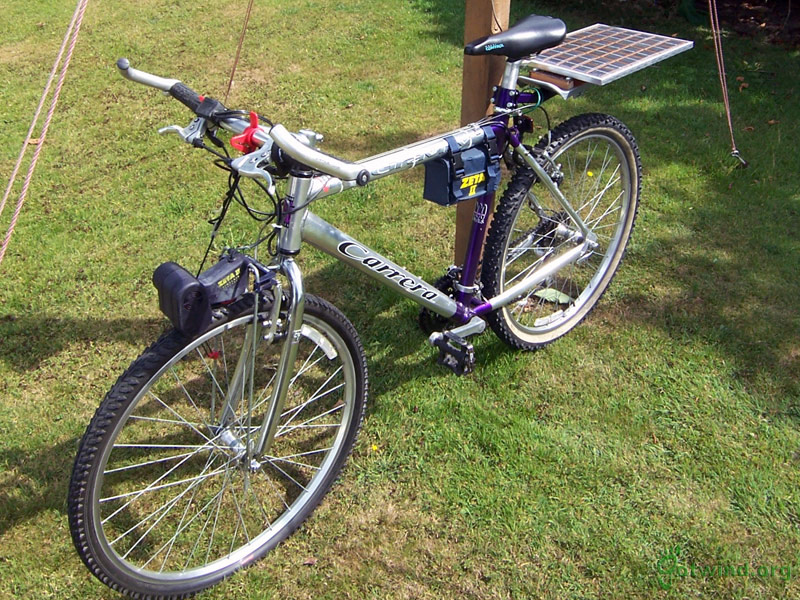
8. Solar-powered electric bike

solar bike

The solar-powered electric bicycle can reach 11mph and it all costs just £30 if you use second hand components.

Source: www.eta.co.uk