Company offers a ‘safer’ alternative to emergency power generators

solar-powered generator

The portable, solar powered generators aim to provide a “safer” alternative. Image via Philadelphia Business Journal

Thousands of unlucky South Jersey residents were still without electricity Monday morning, six days after a violent storm knocked out power. Yet one local firm says customers could use its product to turn the lights back on, while they wait for utility providers to make a fix.

“We really think you should be able to have power whenever and wherever you need it,” said Heather Farber of NRG Home, which has offices in the Science Center in University City.

According to Philadelphia Business Journal, NRG Home, a division of Princeton, N.J.-based NRG Energy Inc., offers consumers several solar powered generators – something that may appeal to the more than 4,000 Atlantic City Electric customers who were still without electricity mid-day Monday.

“It is clean and quiet, and you can put it in your house,” said Farber, who calls the solar powered generators a better option than traditional gasoline powered models.

Companies and consumer advocacy groups regularly warn the public against using gas powered generators indoors since it puts residents at risk of carbon monoxide poisoning.

NRG Energy began offering the portable, fume-free generators after acquiring Goal Zero last summer.
The line includes three options, the Yeti 150, Yeti 400 and Yeti 1250 – each providing a different number of hours worth of power.

Goal Zero introduced the Yeti 1250 in 2012, and the other two solar generators followed in 2013.

The Yetis’ retail price ranges from around $200 to nearly $1,600, price points that cost the consumer hundreds of dollars more than the gas powered generators that support the same watt hours.

But Farber points out Yetis do not require any fuel, which over time will up the expense of the gasoline versions.

NRG Home declined to provide specifics on sales, but the company did say the 400 is the top seller.

Atlantic City Electric said it expected power to be restored by the end of the day to its customers, although frustrations already boiled over for many residents and at least one Gloucester County leader after nearly a week in the dark. The Greenwich Township mayor called for Gov. Chris Christie to do more to help his community.

Christie said Friday FEMA officials were on the ground and will determine if federal relief is needed by Tuesday.

Emirates Insolaire Installs World’s First Coloured Solar Panels in Switzerland

world's first coloured solar panels in switzerland

Dubai firm installs Kromatix panels on building. Photo via Business Wire

Emirates Insolaire LLC, a pioneer in the development and application of unique solar technologies and a joint venture of Dubai Investments PJSC [DI] and SwissINSO Holding Inc., has created history with the successful installation of the world’s first KromatixTM coloured solar panels on a building façade in Lausanne, Switzerland.

According to Blackbird PR News, the entire installation, worth AED 850,000, is capable of generating sufficient electric power annually for two families of four people each. The building, boasting of its unique blue façade – thanks to the Emirates Insolaire glass panels, thus has the unique recognition of having the first coloured, photovoltaic solar panel façade in the world.

Two other projects in Basel, Switzerland, and Austria have also been completed. Emirates Insolaire continues to receive enquiries for its solar panels from UAE, Qatar, Saudi Arabia, Kuwait, Egypt, Bahrain, Lebanon, as well as from Europe, Asia, the US and Brazil.

Going by the projects on hand, demand and enquiries across the globe, Emirates Insolaire expects sales over 50,000 square metres for coloured solar panels in 2015 alone. Each coloured solar panel can generate above 150 watts electric power per square meter on roofs, or above 110 watts per square meter on façades.

Globally, the photovoltaic market has grown 40% year-on-year and the number of installations foreseen for 2015 is 160 GW – approximately 800 million square meters of glass. The share of Building Integrated Photovoltaic for rooftops and facades is witnessing one of the fastest growth rates.

Rafic Hanbali, Managing Partner of Emirates Insolaire, said: “The completion of Emirates Insolaire’s first project in Lausanne is a major milestone for the company. With the KromatixTM technology, the company has ushered in a paradigm shift in solar applications because of its aesthetic appeal to any building façade and efficiency due to its power generating attributes. The company sees significant growth opportunities going forward not only in the Europe but across the globe.”

KromatixTM solar panels can supply between 20% and 60% of the needed energy for a building. For certain industries with large roofs and façades, this can go up to 100%. Coming in virtually any colour, the Emirates Insolaire solar panels are optimised for both photovoltaic modules and solar thermal collectors.

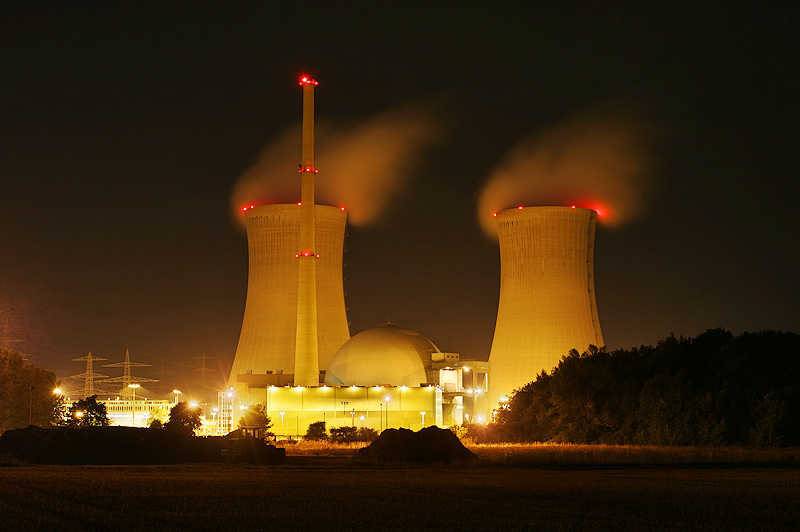
Germany’s Grafenrheinfeld nuclear reactor will be shut down permanently on June 27th

Grafenrheinfeld nuclear reactor

Grafenrheinfeld nuclear reactor. Photo via m8.i.pbase.com

One less nuclear reactor threat to the people of Europe with the early closure of the Grafenrheinfeld nuclear reactor.

According to Greenpeace International, Germany’s 33 year-old Grafenrheinfeld nuclear reactor will be shut down permanently on June 27th as the country’s phase out of nuclear power continues.

It’s the first reactor to close since Germany passed its Atomic Energy Act in July 2011 which requires the closure of all commercial nuclear reactors by the end of 2022.

The reactor is being shut down seven months early as the disastrous economics of nuclear power and Germany’s drive for clean and sustainable energy have made it impossible for its owner E.ON to operate the reactor and make a profit.

E.ON and other large nuclear utilities only have themselves to blame. They failed to anticipate the growth of renewable energy and so they failed to invest in it. At the same time, electricity prices have fallen making their nuclear power plants even less profitable.

That said, even E.ON is waking up to the new energy future of Germany. “The transformation of Europe’s energy system continues to offer us attractive growth opportunities in renewables and distributed energy,” said the company in a report from March this year.

But what are the implications of the closure of Grafenrheinfeld? Won’t it leave an energy gap?

In short: no.

Since 1981, Grafenrheinfeld reactor was the cornerstone of electricity production in Bavaria but that was before the renewables revolution. Now its closure will be barely noticed. There will be no blackouts and the security of supply is guaranteed.

The simple explanation is that over the last 15 years Germany has embraced renewables. The share of renewable energy in electricity generation grew from six percent in 2000 to around 27 percent in 2014, spread across wind, solar, and bioenergy. Germany is a major net exporter of electricity, reaching record levels in 2013 and 2014.

“This is going smoothly… No one, no company, no private citizen will feel that the reactor power is off the grid,” says Bavarian Economy and Energy Minister Ilse Aigner.

So what’s next? It’s clear that Germany doesn’t need nuclear power and that renewables are more than up to the job of leading the country into a future of sustainable, safe electricity.

But the job isn’t finished. At current growth rates, Germany is likely to reach its target of 35 percent by 2020 for renewable electricity. However, the overall share of renewable energy generation remains quite low at 11 percent because the power industry is being left to its own devices.

Germany will probably not reach its target of 20 percent of its total energy provision being renewable by the end of this decade without further government support.

So while it is excellent news from Grafenrheinfeld, there is still much to do. In the meantime, with the closure of this reactor, we see the victory of renewables over nuclear power. Germany is leading the way globally to the safe, clean energy future. The rest of the world needs to follow.

Fund solar panels for Gaza hospitals

solar panels on the roof of Gaza's hospital

Solar panels on the roof of Gaza’s hospital. Photo via middleeastmonitor.com

A group of Canadian doctors hope to make blackouts a thing of the past for Gaza’s hospitals by installing solar panels to provide energy 24/7 for emergency rooms and operating theatres.

The “EmpowerGAZA” project has launched a fundraising drive on Indiegogo to secure the $200,000 required to fund the first hospital, with the ultimate goal being to supply a further three hospitals with the life-saving solar panels.

Power outages are a daily reality in the Gaza Strip, and can last more than 16 hours per day. Hospital patients are especially vulnerable, and insufficient power can be the difference between life and death.

According to Dr Tarek Loubani, an emergency physician and collaborator on the project: “Doctors in Gaza were asking for reliable and green power, and the United Nations Development Programme (UNDP) came on board immediately when they heard about the project.”

“Everyone agreed, this project is urgent. We believe people world over will understand the impact and help its success.”

According to Middle East Monitor, EmpowerGAZA is a joint initiative of the United Nations Development Programme (UNDP) and Islamic Relief Canada to provide a renewable, reliable source of energy for intensive care units (ICUs), operating rooms and emergency departments.

A crowd-funding campaign began on 28 April and will run through to 26 June.

New ultralow-power circuit improves efficiency of energy harvesting to more than 80 percent

solar-powered sensors

The MIT researchers’ prototype for a chip measuring 3 millimeters by 3 millimeters. Image via Nanotechnology Now

The latest buzz in the information technology industry regards “the Internet of things” — the idea that vehicles, appliances, civil-engineering structures, manufacturing equipment, and even livestock would have their own embedded sensors that report information directly to networked servers, aiding with maintenance and the coordination of tasks.

Realizing that vision, however, will require extremely low-power sensors that can run for months without battery changes — or, even better, that can extract energy from the environment to recharge.

Last week, at the Symposia on VLSI Technology and Circuits, MIT researchers presented a new power converter chip that can harvest more than 80 percent of the energy trickling into it, even at the extremely low power levels characteristic of tiny solar cells. Previous experimental ultralow-power converters had efficiencies of only 40 or 50 percent.

Moreover, the researchers’ chip achieves those efficiency improvements while assuming additional responsibilities. Where its predecessors could use a solar cell to either charge a battery or directly power a device, this new chip can do both, and it can power the device directly from the battery.

All of those operations also share a single inductor — the chip’s main electrical component — which saves on circuit board space but increases the circuit complexity even further. Nonetheless, the chip’s power consumption remains low.

“We still want to have battery-charging capability, and we still want to provide a regulated output voltage,” says Dina Reda El-Damak, an MIT graduate student in electrical engineering and computer science and first author on the new paper.

“We need to regulate the input to extract the maximum power, and we really want to do all these tasks with inductor sharing and see which operational mode is the best. And we want to do it without compromising the performance, at very limited input power levels — 10 nanowatts to 1 microwatt — for the Internet of things.”

Ups and downs

The circuit’s chief function is to regulate the voltages between the solar cell, the battery, and the device the cell is powering. If the battery operates for too long at a voltage that’s either too high or too low, for instance, its chemical reactants break down, and it loses the ability to hold a charge.

To control the current flow across their chip, El-Damak and her advisor, Anantha Chandrakasan, the Joseph F. and Nancy P. Keithley Professor in Electrical Engineering, use an inductor, which is a wire wound into a coil. When a current passes through an inductor, it generates a magnetic field, which in turn resists any change in the current.

Throwing switches in the inductor’s path causes it to alternately charge and discharge, so that the current flowing through it continuously ramps up and then drops back down to zero. Keeping a lid on the current improves the circuit’s efficiency, since the rate at which it dissipates energy as heat is proportional to the square of the current.

Once the current drops to zero, however, the switches in the inductor’s path need to be thrown immediately; otherwise, current could begin to flow through the circuit in the wrong direction, which would drastically diminish its efficiency. The complication is that the rate at which the current rises and falls depends on the voltage generated by the solar cell, which is highly variable. So the timing of the switch throws has to vary, too.

Electric hourglass

To control the switches’ timing, El-Damak and Chandrakasan use an electrical component called a capacitor, which can store electrical charge. The higher the current, the more rapidly the capacitor fills. When it’s full, the circuit stops charging the inductor.

The rate at which the current drops off, however, depends on the output voltage, whose regulation is the very purpose of the chip. Since that voltage is fixed, the variation in timing has to come from variation in capacitance. El-Damak and Chandrakasan thus equip their chip with a bank of capacitors of different sizes. As the current drops, it charges a subset of those capacitors, whose selection is determined by the solar cell’s voltage. Once again, when the capacitor fills, the switches in the inductor’s path are flipped.

British naval base goes solar

Portsmouth naval base

Portsmouth naval base. Photo via mirror.co.uk

The British navy’s base at Portsmouth, England is to benefit from on-site solar energy.

According to cospp.com, the base has had 2000 solar PV panels fitted and it is estimated the facility will save £1m over the next 20 years as a result of the installation.

Ken Hobbs, head of energy solutions and services at BAE Systems Maritime Services, said: ‘‘Solar panels will generate power, transforming these buildings into clean energy producing facilities, improving efficiency and ultimately reducing costs for the Ministry of Defence (MoD).’

The naval base’s head of infrastructure, Captain Iain Greenlees, said: “This is an important step on the path to modernising the base to support the Royal Navy on global operations.”

The MoD is expecting to save more than £500,000 this financial year thanks to the panels, combined with other energy-saving initiatives at the base, which have been project-managed by BAE Systems.

Other measures have included the installation of LED lighting in offices, LED street lighting, air-source heat pumps and intelligent control systems.

The 500kW panels are part of a contract called the Maritime Support Delivery Framework.

This free app can help you calculate your renewable energy potential

IRENA app

IRENA launches the Global Atlas pocket. Image credit: IRENA

Businesses and individuals can make use of a free smartphone app to calculate the renewable energy generation potential of a given location.

According to Green Biz, the Global Atlas pocket was launched recently by the International Renewable Energy Agency (IRENA) and is designed to allow renewable energy “prospectors” and investors to comprehensively research projects before making early investment decisions.

The app draws on data from 1,000 maps provided by 67 governments and 50 data centers, and is designed to provide detailed information on whether a region or site represents a good prospect for renewable energy generation.

Adnan Z. Amin, IRENA’s director-general, said the app will help make it is easier for renewable energy firms to identify viable projects, curbing some costs of development.

“One of the major hurdles to worldwide renewable energy deployment is reaching the needed levels of investment,” he said in a statement. “The Global Atlas pocket brings more investment certainty to renewable energy prospectors and investors. Users can freely access data from geothermal potentials in the Caribbean to solar potentials in the Middle East and anything in between. It is an incredibly powerful tool.”

The app is being targeted at energy firms, governments and community project developers and is available for iOS, Android, Windows Phone and Blackberry 10 smartphones.

Anita Marangoly George, senior director of the World Bank’s Energy and Extractives Global Practice, which supported development of the app, said it could prove particularly attractive to companies in developing countries.

“Through its Energy Sector Management Assistance Program, the World Bank is making data-rich renewable energy resource maps of 12 developing countries available through IRENA’s Global Atlas,” she said. “As renewable resources take on a central role in countries’ energy planning, this information becomes increasingly important to governments, citizens and the private sector.”

The smartphone is an extension of IRENA’s online Global Atlas portal, which allows users to visualize information on renewable energy resources from any computer.

Great River Energy offers free wind-power upgrade for electric vehicles

windenergy promotion

Co-op upgrades EV users to wind power, at no extra cost. Image via windpowerengineering.com

Great River Energy and its participating member cooperatives launched Revolt, a first-of-its kind program that allows members to upgrade the electricity used to fuel their vehicles to wind energy at no additional cost.

According to Windpower Engineering, renewable sources are already part of Great River Energy’s power mix, but the Revolt program provides a more direct connection between wind energy and the electric vehicle driver.

“Our Revolt program allows consumers to further support the use of renewable energy. We are dedicating wind energy to completely cover the electricity that a consumer uses to fuel an electric vehicle for the vehicle’s lifetime,” said David Ranallo, Great River Energy Revolt program manager. “We’re thrilled to offer this innovative program and hope it acts as a spark to ignite awareness around electric vehicles in Minnesota.”

To be eligible for participation in Revolt, a cooperative member must currently own, purchase or lease a plug-in electric vehicle or plug-in hybrid electric vehicle by December 31, 2016. A household can enroll up to four electric vehicles in the program. Standard or off-peak rates still apply for electricity used to fuel the vehicles.

“Electric vehicle owners are already some of the happiest drivers on the planet because they know they’re making a positive impact on the environment,” said Jukka Kukkonen, a plug-in vehicle owner who is a principal in PlugInConnect, a Minnesota consulting firm. “The Revolt program adds an innovative element by powering the vehicles completely from wind energy, which I see only bolstering the satisfaction of owning an electric vehicle.”

In addition to electric vehicle enthusiasts, Revolt is being lauded by leaders of organizations across Minnesota that promote the use of renewable energy.

“There has never been so much innovation going in to producing vehicles that are faster, safer, cleaner, and cheaper and easier to maintain,” said Michael Noble, executive director of Fresh Energy, a nonprofit organization that advocates for acceleration of Minnesota’s transition to a clean energy economy.

“Refueling with renewable electricity is a great vision for Great River Energy to advance and is ready to become more common than fueling with gasoline within the next 20 years.”

“We applaud Great River Energy for giving customers 100 percent renewable wind energy to recharge their electric vehicles. Making sure renewables are generating the ‘juice’ for an electric vehicle is the right way to go and provides a win-win product for their members,” said Beth Soholt, executive director of Wind on the Wires, a nonprofit organization which works to bring wind energy to market.

Wind turbines in Germany generated 32.5 TWh of electricity in January

Germany wind energy

Germany’s record wind turbine growth boosts output. Photo via investindk.com

Germany’s wind power output in January-May rose 34% year on year and the country is on track for a third successive record year for new turbine installations, with the first wave of offshore wind farms finally coming online, a Platts analysis of the latest available data show.

According to Platts, wind turbines in Germany generated 32.5 TWh of electricity in January- May, up more than 8 TWh from a year earlier, grid operator data compiled by Platts Powervision show.

On average, wind generated 7.5 GW each hour in the first five months of 2015, the data shows. That is the equivalent output of seven modern nuclear reactors. Compared with the first five months 2013, wind output so far this year was even 71% higher, the data show. The main reason for the rise is record growth in Germany’s wind-power industry with Germany on track to install over 14 GW of new wind turbines between 2013 and 2015, averaging over 12 MW a day.

That compares with 13 GW added in the seven previous years between 2006 and 2012, or averaging just 5 MW/day, data from Platts Powervision show.

According to industry experts, the pending reform of Germany’s renewable energy law (EEG) and the introduction of an annual cap on solar in 2012 are one reason that triggered the latest boom in wind with onshore developers rushing to get projects implemented ahead of the launch of an annual cap on onshore wind this year.

Another reason for the current wind boom is delays in offshore grid links, which put back the planned start date of many offshore wind farms.

However, with the offshore grid link bottlenecks now easing, the first wave of some 3 GW of German offshore wind farms is on track to be online by the end of 2015. Offshore wind power capacity registered for direct marketing was 2.225 GW in May, a fourfold increase from a year earlier, according to the latest data from the TSOs. Last year, German offshore wind developers brought 529 MW online, doubling total installed capacity to 1.049 GW, according to the annual statistics.

Total onshore capacity was 38.116 GW as of end 2014 after a record 4.75 GW of new onshore wind capacity was installed last year.

For 2015, wind lobby group BWE still expects another significant increase of 3.5-4.0 GW, it said earlier this year.

However, the reform of the EEG, in place since August 2014, will cap future annual wind power installations at 2.5 GW for onshore wind.

Repowering of existing sites with more powerful turbines is exempt from the annual cap and more than 1 GW was added last year in a growing market, the BWE said.

The next update for new wind installations in the first half of 2015 is due in July.

The boom in additional wind capacity from 2013 to 2015 is in stark contrast to a sharp slowdown in new solar capacity, which boomed between 2010 and 2012 adding some 22 GW in those three years alone, Platts Powervision data show.

Germany’s new solar capacity fell 2014 for a second year in a row, down 42% year on year to 1.9 GW, its lowest annual level since 2007, as deeper cuts to solar subsidies have sharply reduced growth in the sector.

So far this year, Germany has added only 419 MW of new solar installations, still bringing total installed solar PV capacity to 38.7 GW.

Germany’s combined wind and solar portfolio is now estimated above 80 GW.

Combined output from wind and solar in January-May was 46 TWh with full-year estimates above 100 TWh, which would be the first time ever that wind and solar generated more electricity than nuclear in Germany.

Germany’s nuclear phase-out will start this June with the Grafenrheinfeld reactor coming offline for economic reasons six months ahead of its final decommissioning date, leaving just eight reactors with a combined capacity of 10 GW online until the end of 2017.

German day-ahead prices in April averaged Eur25.30/MWh, the lowest monthly average in more than 12 years as the seasonal drop in demand combined with strong supply from renewables as well as conventional sources.

May was the third month so far this year with average spot prices settling below Eur30/MWh with June, July and August also trading below Eur30/MWh.

By contrast, day-ahead prices in Great Britain in May averaged at GBP40.82/MWh (Eur56.17/MWh), more than double the average wholesale power price in Germany with the strong pound and the additional carbon levy boosting wholesale prices in the UK.