Costa Rica after 257 days with almost 100 percent renewable energy

wind farm Costa Rica

Wind farm in Costa Rica. Image source.

Data from the National Center for Energy Control (CENCE) showed that Costa Rica went 257 days on almost 100% renewable energy.

According to the Latin Correspondent, the Costa Rican Electricity Institute (ICE) reported that 98.82 percent of the electricity generated for domestic use came from renewable sources such as wind, geothermal, solar, biomass, and hydroelectric plants. Only 1.18 percent of generated electricity came from fossil fuels, used as a backup in the events of unfavorable weather conditions.

“The decline in oil imports has positively impacted electricity prices, as well as the expansion strategy and exchanges with the regional electricity market,” said ICE CEO Carlos Manuel Obregon. Luis Pacheco, ICE manager, added that their projections show the trend continuing in 2016.

ICE announced in March that the country’s initial target is to survive on 97.1 percent of clean energy.

Costa Rica has long been a leader in using renewable sources for electricity, prior to world leaders focusing on other sources of energy as a result of climate change.

Earlier this year, ICE announced that the country ran on 100 percent clean electricity for the first 75 days of the year. This was considered a huge feat by the international community, but more importantly, it was good news for consumers as electricity prices were cut by 7 to 15 percent.

The feat can be attributed to rainfall that Costa Rica received in the first part of the year, as the country mostly relies on the hydropower generation.

Costa Rica is committed to be carbon-neutral come 2021.

Vermont is 100% renewable

green cities

Vermont goes 100% green

Vermont’s biggest city has succeeded to convert all its energy sources in renewable ones and it is 100% renewable with the help of wind, water and biomass.

Burlington Electric Department managed to achieve the 7.4-megawatt Winooski 1 hydroelectric project on the Winooski River at the city’s edge. To do so, the 7.4-megawatt Winooski 1 hydroelectric project on the Winooski River at the city’s edge that gathers about 11,000 clients in the city.

‘‘It shows that we’re able to do it, and we’re able to do it cost effectively in a way that makes Vermonters really positioned well for the future,’’ reports Christopher Recchia, the commissioner of the Vermont Department of Public Service.

It is all part of a program that has the purpose to get 90% of Vermont’s energy from renewable resources by 2050, including electricity, heating, and transportation.

The movement is bigger than this, as governments and businesses and businesses search better ways to get rid of unenvironmentally friendly fuels.

Diane Moss, the founding director of the Southern California-based Renewables 100 Policy Institute, believes that it is a big achievement for cities all around the country to have such purposes.

‘It shows that we’re able to do it, and we’re able to do it cost effectively in a way that makes Vermonters really positioned well for the future.’

Almost 1000 local businesses managed to commit to 100%

‘‘They are selling the renewable energy credits to customers in other states. Those customers have the renewable and clean energy benefits of that power,’’ Sandy Levine, of the Vermont office of the Conservation Law Foundation said. ‘‘Simply using accounting measures to make claims about clean energy doesn’t get us there.’’

Renewable energy supply will go beyond gas by 2016 at a global scale

Renwable_energy_will_surpass_gas
Gas will be exceeded by renewable energy worldwide until 2016, reaching almost a quarter of the planet’s power supply by 2018, by 2016 it will exceed that from gas and be the twice of that of nuclear plants. It has already exceeded overall consumption of electricity in China by 2012.

Broadcasted on Wednesday, this year’s second Medium-Term Renewable Energy Market Report anticipates that alternative power will rise by 40% in the coming 5 years, although the economic context has seen better days. Renewable energy is by now the quickest-growing power producing sector and will be in 2018 at 25% of global supply exceeding with approximate 5% the ratio from 2011.

Thus, the portion of non-hydro sources like geothermal or bioenergy, wind and solar energy will be doubled by 2018, reaching 8%, up from 4% by in 2011, and half that in 2006.

IEA Executive Director, Maria van der Hoeven stated from the report: “As their costs continue to fall, renewable power sources are increasingly standing on their own merits versus new fossil-fuel generation, this is good news for a global energy system that needs to become cleaner and more diversified, but it should not be an excuse for government complacency, especially among OECD countries.”
This report, however warns that renewable energy growth is evolving in complexity and presents challenges, such as an increasing discussion regarding the expenses of renewable sustenance policies in various European countries who are affected by a stagnate economy and energy request.

There are two positive factors that sustain optimism: First of all, acceleration has been observed at the coming-out markets in investment and placement, where renewable energy is helping to approach the rapid increase of energy demand, the variation on energy producers and local pollution responsibilities. Second, along with hydropower, geothermal and bioenergy, solar energy is drawing attention in markets with high billing prices, like those produced by oil-fired energy. Plus the fact that photovoltaic energy production can be a lower expense than one centralized supplier.

Roxana Moraru

Hawaii partner with Boeing in aviation biofuel

Boeing has announced an agreement to work with Hawaii BioEnergy, to create aviation fuel.

The companies will work together to identify biofuel sources and supporting technologies for producing sustainable jet fuel in Hawaii.

“As an Asia Pacific gateway and leading tourism destination, Hawaii can play a meaningful role in helping aviation reduce carbon emissions, while increasing regional energy resources,” said Boeing Commercial Airplanes Vice President of Environment and Aviation Policy, Billy Glover. “This collaborative effort will allow us to examine potential local options, while protecting the beauty and culture these islands have to offer.”

EU biofuel consumption up 13% in 2010

The latest biofuels barometer shows that Europeans consumed 13.6% more biofuel in 2010 than in the previous year.

In 2010 biofuels continued to grow in the European Union.

In the transport sector, it increased by only 1.7 Mtoe compared to 2.7 Mtoe in 2009 which means EU biofuel consumption growth slackened off.

The total biofuel consumption for 2010 should hover at around 13.9 Mtoe.

Germany was consuming over 3 million toe of biofuel in 2010 (two third of which was biodiesel), followed by France, Spain, Italy and the UK.

The lack of interest in vegetable oil consumption is hardening (down 14.3%) and may still be due to increased German taxation on this biofuel.

Biogas fuel is almost unique to Sweden, while other EU countries struggle to develop it.

Future growth of consumption in the European Union will depend on external factors such as the increase in oil prices and the worldwide availability of biofuel.

Renewable energy from “Green Power Islands”

Green Power Islands – a great idea to generate and store renewable energy on uninhabited islands around the globe.

The Danish architectural firm Gottlieb Paludan has proposed generating power through wind or solar — depending on the climate — and then using the water surrounding the islands to store the power using pumped hydro technologies.

This new concept for producing and storing renewable energy could even provide all the power for Denmark’s population.

The idea of the architects is to create a “Green Power Island” off the coast of Copenhagen, which would become an “energy super centre” for the country.

The massive island would be accompanied by offshore wind farms, and populated with solar arrays and seawater pumps, and would produce marine biomass for biofuel.

The energy will be stored using pumped hydro facilities.

The architects from Gottlieb Paludan have suggested a few areas around the world where Green Power Islands could be built on existing islands.

These include: the Florida Keys, Jiangsu in China, Manama in Baharain and Tamil Nadu in India.

3000 MW by 2020 in Malaysia

Malaysia‘s parliament announced the country’s installation targets for renewable energies and the plan to install 3,000 MW of renewable by 2020.

They expect that 1,250 MW will be generated by photovoltaic installations and another 1,065 by biomass.

With the implementation of these ambitious targets Malaysia follows other Asian countries like Thailand or Taiwan.

The Malaysia’s Minister of Energy announced that the legislation will come into effect in midsummer this year.

The 2011 quota for photovoltaic power is 29 MW with 9 MW set aside for projects smaller than 1 MW.

Malaysia’s feed-in-tariffs for photovoltaic power are divided into six different sections:  systems smaller than 4 kW, between 4 and 24 kW, between 24 and 72 kW, between 72 and 1 kW, between 1 MW and 10 MW and installations between 10 and 30 MW.

Another kind of renewable energy: Human Waste

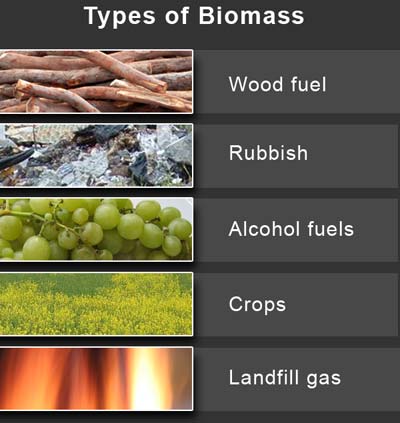
Another renewable source is biomass and is a biological material produced from living organisms and their byproducts, such as food waste, wood, excreta etc.

An excellent biomass is now considered the human waste.

More companies are turning to renewable energy from biomass.

The anaerobic digestion is the best method, which produce biogas, comprising of methane and carbon dioxide, which is used directly as cooking fuel.

The advantages of using human waste is that this will help protecting natural resources when the resultant product is used for cooking, fueling and will benefit to lower the greenhouse effect.

Britain raises support for renewable heat

A lot of Britain’s available energy is used to heat homes and buildings.

The British government plans to provide incentives for renewable energy.

The focus on renewable electricity has tended to sideline renewable heat.

But now finally, the Coalition government has specified the regulations of the Renewable Heat Incentive (RHI).

The regulations will be approved by Parliament in summer 2011.

These subsidies will be for a wide range of technologies including solar thermal, biomass, heat-pumps and biogas.

RHI program is a vital step towards ensuring that British homes and businesses  take greater  control of their energy while also reducing carbon emissions.

New study regarding sustainable biomass

More efficient land use could see England produce enough biomass to meet around four per cent of current UK electricity demand without affecting environmental sustainability or food production.
That is the conclusion of a major new study funded by the UK Energy Research Centre examining the potential of planting short rotation energy crops on unused agricultural land.
It suggests that growing lignocellulosic crops such as willow and poplar on marginal land could yield 7.5 million tons of biomass, of which the South West and North West could produce around a third.
The researchers said that converting marginal land to biomass plantations would not only be sufficient to generate approximately four per cent of current UK electricity demand, but would meet approximately one per cent of total energy demand, including heat.
This would represent a considerable increase on today’s levels, whereby dedicated energy crops account for less than 0.1 per cent of UK electricity, despite biomass being listed in 2009’s Renewable Energy Strategy as having “an important role” in meeting government targets of sourcing 30 per cent of electricity, 12 per cent of heat and 10 per cent of transport energy from renewable sources by 2020.
The use of biomass and biofuels has been hindered by fears over sustainability, EU standards which the UK government has failed to enact, and concerns that using land for energy crops damages food supplies.
But the paper said that new technology will mean that fuels can increasingly be produced from short rotation lignocellulosic crops without affecting food production because the trees can be grown on poor quality agricultural land – unlike current cellulosic biofuels typically derived from wheat and maize.
Source: www.businessgreen.com