ETree for solar power

solar invention

ETree, a new solar invention

Yoav Ben-Dov designed a special tree, a eTree that can collect solar energy from the sun. The invention is located in HaNadiv Gardens near Zichron Ya’akov, Israel.

This new device was conceived by a Israeli company, Sologic, a solar energy based company. They say “eTree is a social enterprise which aims to promote environmental awareness and sustainability, to create a link between the community environment.”

It’s designed to look like a natural tree and can also be used for shade. Still, it’s purpose does not end here. It is build out of metal tubes that stand for branches and as for leaves, it has large solar panels, constructed out of tempered glass that can deal with any weather. So not only can the tree be used all year long, but can also be o source of free WI fi.

This type of energy provider can be useful for schools, parks of private houses.

And even if the country does not “enjoy” oils as its neighbors do, it can harvest a lot of energy, clean energy from the sun. SO, a lot of their rooftops are also homes for solar panels.

“I wanted to integrate the idea of solar energy to the community by creating the eTree,” Sologic chairman Michael Lasry reports for NBC News. “The tree is made of metal pipes and the leaves are solar panels.”

Sologic says its purpose is to be a guidance in using and preserving sources of renewable energy, particularly solar energy. Sologic was founded by Michael Lasry an Israeli entrepreneur. Solgic’s mission includes making a greener future.

The first solar battery in the world says it works with light and air

solar battery

First solar battery in the world

Scientists at Ohio State University (OSU) have made a dye-sensitized solar cell that gathers its power by using air to dissolve and re-form lithium peroxide. The researchers think that the gadget, that immediately merges a battery and a solar cells in one, is able to bring down energy costs by 25%.

“The state of the art is to use a solar panel to capture the light, and then use a cheap battery to store the energy,” explains OSU professor Yiying Wu. “We’ve integrated both functions into one device. Any time you can do that, you reduce cost.”

This new creation works with the help of three electrodes, while the other with four. At the base there is a lithium plate where there is a layer of electrolyte, a thin sheet of porous carbon and then another layer of electrolyte. On top there is a permeable titanium gauze mesh houses a dye-sensitive titanium dioxide photoelectrode, that is similar to blades of grass at the 1 μm scale and makes triiodide ions under illumination. After that, the ions go to the oxygen electrode surface with an iodide “shuttle,” where they oxidize into lithium peroxide.

Electrons in the related battery chemically split the lithium peroxide into lithium ions and oxygen, with the oxygen that goes into the air and lithium ions stored as lithium metal. During the time that battery goes low on power, it gathers the oxygen from the environment and consumes it to re-form lithium peroxide – and that it starts again.

The scientists tested the device with a hematite (rust) photoelectrode in order to substitute the dye-sensitized titanium oxide, and brings the same efficiency and strength that can ensure a similar lifetime as existing rechargeable batteries have. If they can find a material that can provide similar efficiency as this titanium oxide version and work for a number of years, the OSU scientists’ design could mean a lot for the green power world.

Energy-Saving Light Invention received Nobel Prize in Physics

blue LED

The invention of the blue LED

Isamu Akasaki, Hiroshi Amano and Shuji Nakamura got the Nobel Prize in Physics conception of the blue light-emitting diode, the Royal Swedish Academy of Sciences reports.

The invention is a revolutionary way of producing light. In order to produce white light, you need red, green and blue. When the red and green light-emitting diodes (LEDs) are known for half a century, researchers say in invention of blue light-emitting diodes is challenging. Then in the 1990s, in parallel, the trio invented blue light beams from semiconductor materials.

Different types of light sources need a wire filament that the current needs to glow. On the other hand, in the case of LEDs, the power is converted instantly into light. So, this kind of technology is much more efficient.

“The invention of the blue LED is just twenty years old, but it has already contributed to create white light in an entirely new manner to the benefit of us all,” according to a statement by the Royal Swedish Academy of Sciences.

Staffan Normark, permanent secretary of the Royal Swedish Academy of Sciences, says about the winners: “Of course they are thrilled of getting this prize, and I think actually they were not prepared for it. They had not been waiting all day and all night for this call. It’s a fantastic experience for us to be the first to wake them up or call them in the evening and congratulate them for achieving the Nobel Prize in Physics.”

Nakamura talked to the press audience today over the phone, and says the award is was “unbelievable” and “amazing.”

Akasaki is now at Meijo University, Nagoya, Japan and Nagoya University in Japan; Amano is at Nagoya University; and Nakamura is at the University of California, Santa Barbara. The three researchers will be awarded million Swedish Krona ($1.1 million).

London phones are going green and they will help you charge your phone with solar power

London solar boxes

Solarbox in London

Everyone is familiar with the red phone boxes around London, as they are one of the main characteristics of the British capital city. Lately, they haven’t been used so often, but that is going to change as they will be converted into solar power stations and will be painted green.

The very first of the six Solarboxes is situated on Tottenham Court Road. This box is used to provide power free of charge to all your phones, as they can be adapted to work with different types of phones.

They contain an 86cm solar panel that can charge 100 phones every day. It doesn’t take long either, as your battery will be charged 20% in 10 minutes, as BBC says.

Until now, about six people have entered the boxes every hour. Even if they are free of charge, they boxes are used for advertising. This is how they can exist. Still, about 30% of the advertising space is dedicated to community projects.

This new way of people using a phone box to make a call is amazing, just like in the past, only with fancy devices.

One of the project creators, Harold Cranston, a former geography student, reports “There are 8,000 of these lying unused in London and we must be able to find a use for them.”

Another five boxes will be available starting on the 15th of April 2015.

Latest Solar Power Tech project will be based on giant clams’ shiny shells

giant clams inspires solar tech

Giant clams for solar

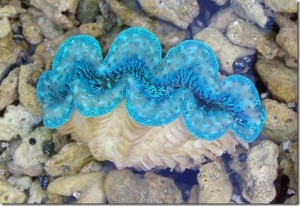
The superb shades of blue and aqua coat with iridescent lips of giant clams are useful in the solar power domain. They gather the sunlight and are a source of light for the algae in there.

The algae then use the sun rays for photosynthesis that gives energy to the clam. “It ends up being a large part of the energy budget of the clams,” said study researcher Alison Sweeney, an assistant professor of physics and astronomy at the University of Pennsylvania.

Mainly, the big mollusks, that are about 4 feet, bring the sun power naturally in their shells.

The majority of iridescent cells are dead and have a similar structure to nails and hair. But the the iridescent cells of squid and giant clams live.

So, the researchers asked themselves, “What on Earth is a giant clam doing with a living iridescent cell?” Sweeney said.

Huge clams contain a dull outer shell and a weighted shell hinge useful for pointing their lips to the light. The scientists say that iridocytes have on optical function.

They went to Palau island in Philippines to research the clams. “We put this into a computer model about how we think light propagates through the clams,” Sweeney said. “[But] nobody actually believed it,” she also said.

They went back there to develop their study and measure the light inside the clams — Tridacna derasa, T. maxima and T. crocea — with a fiber-optic probe. The iridescent cells reflected a big quantity of light into the clam, more than the scientists had firstly believed, Sweeney said. Clam tissue with iridocytes contains fivefold more particles of light, called photons, deep inside the tissue than clam tissue without iridocytes does, they say.

“We’re very excited by our surprising discovery,” said study researcher Dan Morse, a professor of biomolecular science and engineering, and director of the Marine Biotechnology Center at the University of California, Santa Barbara.

“The brilliantly reflective cells of the giant clam actually redirect photons from sunlight deeper into the clam’s tissue, gently and uniformly illuminating millions of symbiotic algae that live there, so they can provide nutrients to their animal host by photosynthesis,” Morse wrote in an email to Live Science.

The configuration of the algae is also good. But if they would spread horizontally, only their top would receive light. But the clam doesn’t have this problem, as it has vertical columns.

The study is “very interesting,” Euichi Hirose, a professor of invertebrate biology at the University of the Ryukyus in Japan, told Live Science in an email.

“Now, we know the giant-clam mantle has a more sophisticated function than we expected,” said Hirose, who was not involved in the current study. “The colorful mantle reflects useless light for photosynthesis (green and yellow) and scatters useful light (red and blue) forward, and laterally, into deep tissue.”

This clams’ can become an inspiration for new green inventions. For example, traditional solar cells function properly in direct sunlight, but not when they overheat. But with this design, a reflective sheen could ensure solar cells stay cool even when they receive intense sunlight, Sweeney said.

The study can be found in the Journal of the Royal Society Interface.

Solarcentury will construct the biggest solar carport in Africa at Garden City, Nairobi

solar carport

The biggest solar PV carport at a car park

Solarcentury (London, UK) will build the biggest solar PV carport at a car park at Garden City Mall, that is sittuated on 32-acre retail park, residential area and office development Nairobi’s Thika Superhighway. Solar energy harvested by the 858 kWp PV system will go to the retail tenants.

“We are incredibly proud to be bringing our second dual-mode solar system to Kenya, this time to build East Africa’s largest rooftop system,” commented Dr. Dan Davies, Director for Solarcentury in East Africa.

The new carport is going to be designed with the financial help of NVI Energy’s Solar4Africa, a 12 year financed solution that enables Garden City to harness the power of renewable energy, overcoming many of the barriers that can frequently beset commercial solar projects.

Besides helping with the shading, over 3000 solar panels will bring 1.256 MWh of solar energy every year and reduce carbon emissions by 745 tonnes every year.

The solution they came up with is a new one as it brings solar energy during the day and when the grid is down at night, the system also diminishes the need of diacutting the bills of Garden City’s retail tenants.

This is ideal for cities as there is few space left and the energy needs grow. The panels are useful because they are situated on an unused space. The technology also works in East Africa, on the biggest ground mount system for Williamson Tea in Kenya.

The solar system will also contribute to Garden City’s achievements in Leadership in Energy and Environmental Design (LEED) certification.

Solar sunflower accumulates energy and water

solar sunflower

Solar sunflower for clean energy

The very first “drop-in” machine can harvest renewable energy, water and heat to stand alone communities.

It is all possible with the help of a 10-metre-high sun-tracking device that has been create so that it fist in one shipping container. The project belongs to Airlight Energy of Biasca, Switzerland. Besides all this, the plant can also provide refrigeration.

The technology consists of a water-cooled solar panel made by Bruno Michel and his colleagues at IBM, for which Airlight has a patent. The procedure is very simple mirrors lead the sun rays onto 6 panels and the sunlight is amplified 2000 times.

Every panel is made of 25 photovoltaic chips cooled with the help of water found in microchannels. They take care of the heat and provide an optimal temperature. This means the Sunflower functions better than solar panel generators and is uses four times fewer panles for the same amount of power. This also means they are less expensive.

The project is made to be low-cost. The mirrors are usually made of heavy, expensive polished glass, but in this case, every 1-metre mirror consists of metallised foil. “The same material potato chip and chocolate wrapping is made of,” says Ilaria Besozzi of Airlight. The company is now looking for ways of storing the energy.

Sunflower needs help, says Erik Harvey, who is responsible for global programs such as borehole well provision at the London-based charity Water Aid. “Inventions like these create dependencies on supplies of spare parts, skills and consumables. Without a supply chain to provide those things the technology might not be sustainable once it is in place.” Airlight also announced taht the Sunflower’s does not require much maintenance.