World’s largest offshore wind farm approved by the UK Government

offshore wind farm

The world’s biggest wind farm will be built off the coast of Britain after it got the green light on Tuesday. Source.

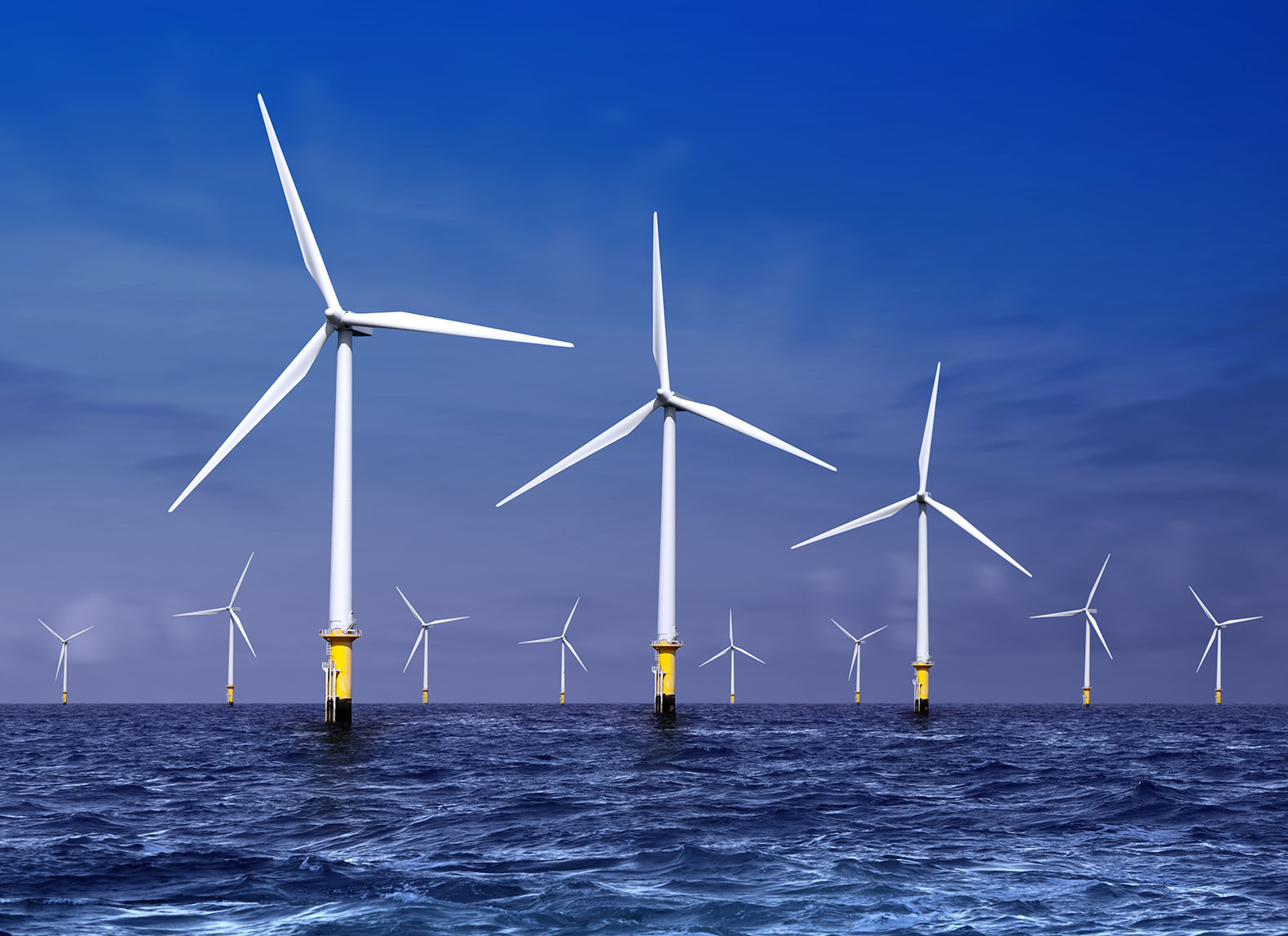
The Hornsea Project Two offshore wind farm – set to be the largest in the world – received the green light from the U.K. government on Tuesday after it was granted development consent by the Business, Energy and Industrial Strategy Secretary Greg Clark.

According to CNBC, the wind farm will consist of “up to” 300 turbines and will be situated 89 kilometers off the coast of Yorkshire, northeast England. The government added that if built to full capacity, total investment will amount to roughly £6 billion ($7.79 billion).

The project, when finished, could potentially provide as much as 1,800 megawatts of electricity to more than a million homes in the U.K., and generate nearly 2,000 construction jobs and 580 operational and maintenance positions.

“The U.K.’s offshore wind industry has grown at an extraordinary rate over the last few years, and is a fundamental part of our plans to build a clean, affordable, secure energy system,” Clark said in a statement.

“Britain is a global leader in offshore wind, and we’re determined to be one of the leading destinations for investment in renewable energy, which means jobs and economic growth right across the country,” he added.

The project is being developed by SMartWind, which is owned by DONG Energy. In a statement on Tuesday, Denmark-headquartered DONG Energy said it welcomed the decision and would now review the details of the development consent order.

“Hornsea Project Two is a huge potential infrastructure project which could provide enough green energy to power 1.6 million U.K. homes,” Brent Cheshire, U.K. country chairman for DONG Energy, said in a statement.

“A project of this size will help in our efforts to continue reducing the cost of electricity from offshore wind and shows our commitment to investing in the U.K.,” he added.

The U.K. government said it expected that 10 gigawatts of offshore wind would be installed by the end of this decade.

This floating UFO home is powered by solar, wind and water

Jet Capsule UFO home

The UFO floating home concept from mini yacht-maker Jet Capsule offers a completely off-grid existence. Image source.

Known for its exquisite cuisine, prominent fashion scene, and storied football clubs, Italy will soon have the ability to add yet another notable notch to its esteemed culture belt: manufacturer of UFOs. Also known as Unidentified Floating Objects, the UFOs coming to Italian shores in the near future aren’t exactly alien but rather an innovative solution for fighting the high costs of rent and the impending rise of the world’s sea levels.

According to Digital Trends, artistically designed by the Italy-based company Jet Capsule, the floating concept is a small autonomous vessel that’s essentially a studio apartment on water. If you get seasick easy, we don’t recommend hopping on board to invest.

Structurally, Jet Capsule’s UFOs measure just over 40 feet in diameter, with much of the vessel’s surface area taken up by a circular ring surrounding the living quarters. As seen in image renderings released by the Italian company, the outer ring could feasibly be used as a track for riding a bike, walking your dog or simply catching some rays. The mock-ups also show bits of grassy areas in sections surrounding the ring that appear to facilitate vegetable gardens and various trees.

Once inside the capsule, each floating home contains two moderately sized livable areas. The upstairs houses the concept’s kitchen area, outfitted with a table and small seating area, as well as an access point to a short staircase leading to the bottom floor. Aside from a large window giving owners a front row seat for some gorgeous underwater viewing, the downstairs quarters also house a small bathroom and bedroom. If the renderings are indicative of a final product, privacy for those in the shower is extremely limited, though, only passing fish (or the occasional scuba diver) would actually be able to see inside.

Aside from a large window giving owners a front row seat for some gorgeous underwater viewing, the downstairs quarters also house a small bathroom and bedroom. If the renderings are indicative of a final product, privacy for those in the shower is extremely limited, though, only passing fish (or the occasional scuba diver) would actually be able to see inside.

Jet Capsule’s livable UFOs are also designed to utilize the surrounding environment to produce and store energy. For instance, the company intends to install wind and water turbines to generate power while also installing solar panels on the vessel to harness solar energy. If the vessel takes in more energy than it uses, the excess is simply sent to an internal battery fitted in the base of the UFO. Owners will also have the ability to control an electric anchor from inside the ship, which is used to keep the UFO in one position. While changing locations, the vessel has the ability to travel at speeds of up to 3.5 miles per hour — not exactly a blistering pace.

If the vessel takes in more energy than it uses, the excess is simply sent to an internal battery fitted in the base of the UFO. Owners will also have the ability to control an electric anchor from inside the ship, which is used to keep the UFO in one position. While changing locations, the vessel has the ability to travel at speeds of up to 3.5 miles per hour — not exactly a blistering pace.

As of now, Jet Capsule is currently seeking investors to help it develop the first working prototypes of its aquatic UFO. Like any concept, however, the likelihood of these vessels seeing the light of day remains scarce., but if rent prices continue to skyrocket (and water levels continue to rise), living in an aquatic house might not be all that strange.

This 18-Rotor helicopter runs entirely on electricity

electric helicopter

The Volocopter uses 18 rotors, which its inventors say make it ‘safer simpler and cleaner’ that current designs. Image source.

Developed by the German company e-volo, the Volocopter VC200, a 18-rotor rotor electric helicopter (aka multicopter) completed its first official manned test flight without a hitch, and documented the whole thing on camera. The video shows the managing director Alexander Zosel of the company of E-Volo piloting the maiden manned emission-free aircraft over an airfield in southern Germany.

According to TechWorm, e-volo’s Volocopter is built from fiber composite material with a 450 kg (992 lb) take-off weight, and nine individual batteries power the all-electric motors and 18 rotors to make for a top speed of 100 km/h (62 mph).

Best described as a drone-helicopter hybrid, the Volocopter has two seats available on it, while it runs on an electric engine with precision control being manned by a single joystick that is accompanied by a handful of buttons. Despite its complex shape and strange appearance, the Volocopter is designed to bring personal flight to the masses by being easy to fly.

“It is definitely a sublime feeling to lift off, fly the first few meters, and then actually take my hand off the joystick and think that, yeah, it’s really as if I’m standing on the ground, and then I look down and there are 20-25 meters beneath me,” Zosel said. “So it’s definitely unbelievable what we’ve achieved here. It’s seriously unbelievable!”

e-volo has tested its design with over 100 unmanned flights, but now that a human has actually piloted one, it’s on to a whole new round of testing. e-volo’s first test flight program saw the Volocopter hit speeds of 25 km/h (15 mph) at only low altitudes. The second phase will test the aircraft at speeds of 50 km/h and a medium altitude, with the final phase to raise that to higher altitudes and its top speed of 100 km/h.

If things continue to happen as planned by e-volo, the company has ambitions to produce the Volocopter in “large quantities” for the air sports market. It’s also looking at the possibility of air taxi services initially for “predetermined routes as airport shuttles or at sensible traffic nodes such as bridges.”

It may be a while before we see drone-helicopter hybrids like the Volocopter hovering overhead, but if it does happen, e-volo is keen to lead the way.

Watch Zosel take-off in the Volocopter in the video below:

Scottish castle goes solar

solar-powered castle

Ayton Castle, image via everycastle.com

The 19th-century Ayton Castle’s grounds will be home to 188 solar panels, providing 50KW of electricity, after Scottish Borders Council approved the plans by the castle owners.

The special high-level mounting system means livestock can still graze the fields unprotected under the panels.

According to thenational.scot, Director of conservation charity WWF Scotland Lang Banks said: “Due to their age and construction materials, historic buildings can often be quite a challenge when it comes to trying to reduce energy use and cutting carbon. So while energy savings efforts should still be made, choosing to generate your own on-site renewable energy too makes perfect sense.”

Last week, the first large-scale solar project in Fife was also given the go-ahead, with a total of 11,000 panels planned for sites at Tayport, Wormit and Crail.

Builder Green Hedge Renewables says the 3,300-panel site at Wormit can power 1,300 homes.

The largest of the sites at Tayport will house 5000 panels at the start of October.

As well as the development at Ayton Castle, plans have been submitted for a monster 40,000-panel site.

EU finds potential for energy savings in food industry

clean energy in food industry

EU wants to save energy in food industry. Image via globalmeatnews.com

The EU’s food production industry has some catching up to do when it comes to adopting renewable energy, according to a new report that took a close look at the food sector.

Overall, renewable sources now account for 15 percent of the EU’s energy mix, but in the food production sector, that share is only about 7 percent, according to study, which acknowledges the challenges of decarbonising food production.

According to summitcountyvoice.com, farmers and industry have made some progress, but consumers could play a bigger role by reducing meat consumption, buying locally and seasonally, and reducing food waste.

To reach their conclusion, the researchers broke down the energy content of a typical European food basket composed of 17 largely consumed food products, estimating the amount of energy needed to cultivate, process, pack and bring food to European citizens’ tables.

The food basket is based on data from EU-27 in 2013 (when data for Croatia who joined the same year were not available) and accounts for about 60 percent of EU food consumption. The energy required to ensure food supply in the EU amounted to around 26 percent of the EU’s final energy consumption in 2013.

In the report, different solutions are discussed on how to lower this figure and to make it more sustainable by increasing the renewable energy share.

Consumers can also play an important role when choosing their food: reducing their energy ‘food print’ includes reducing consumption of meat and animal-related products, buying locally and seasonally, as well as reducing food waste and choosing organic food when possible.

Different food products need very different amounts of energy depending on their nature, their origin and the kind of processing they require. Refined food and products of animal origin generally need much more energy than vegetables, fruit and cereal products.

Germany to fund 125 million euros for renewable energy projects in India

Merkel in India

Renewable energy is one of the key areas of Indo-German partnership mentioned in the Joint Statement of Hannover in April 2015. Image via The Financial Express

Germany and India on Tuesday signed two loan agreements worth 125 million Euros for the Green Energy Corridors’ project in Andhra Pradesh and Himachal Pradesh.

Germany’s development bank, KFW, will fund 57 million Euro for the project at Himachal Pradesh, and 68 million Euro for the Andhra Pradesh project, a press statement from the government said.

According to The Financial Express, the agreements were signed at a time when Germany’s chancellor Angela Merkel is on a state visit in India.

Renewable Energy is one of the key areas of India-German partnership. The financing of the transmission infrastructure of renewable energy projects, the Centre and State grids will be strengthened to evacuate more green energy, the statement said.

“With the Green Energy Corridors, the intra-State network will feed the renewable energy to the respective State grids and the high capacity transmission corridors and inter-State network will connect major renewable energy pockets with the national grid,” it added.

Romanian renewable energy companies ask Government to temporarily cut the accreditations for new plants

renewable energy romania

Renewable energy investors ask Romania’s authorities to close the market for new projects. Image via ecowatch.com

“Renewable energy investors which contributed with 7 billion euros in the Romanian economy were deceived! You should not allow the collapse of renewable energy”, is the message sent by Romanian renewable energy companies.

In the open letter sent to Romania’s Prime Minister, Energy Minister and Energy Authority ANRE, four renewable energy organizations have asked them for urgent measures in order to avoid the industry’s collapse.

They requested the state to increase the share of the renewable energy in the national energy mix. The Government reduced the renewable’s share in the energy mix for captive consumers from 17% to 12.5% in 2014 and has kept it at that level in 2015.

The reduction generated a surplus of green certificates, “which are now papers without value,” according to the producers’ associations.

Romanian authorities avoid doing what all other Governments did in similar situations, which is to suspend the access to the support scheme for the new projects until viable solutions are found, producers say.

Solar-powered racing car launched by CUER student team

solar-powered racing car

Students to launch solar racing car. Image via Engineering and Technology Magazine

The launch of a new solar-powered racing car built by British students aims to highlight the potential of electric vehicles.

According Engineering and Technology Magazine, the 60-strong student organization Cambridge University Eco-Racing Team (CUER) has been designing, building and racing eco-vehicles since 2007 and later today it will unveil its latest creation – a solar-powered car called Evolution.

The vehicle will be entered into the Bridgestone World Solar Challenge, an endurance event across the Australian Outback in October – the same event which the team’s last car, Resolution, had to bow out of in 2013 after it crashed during final road testing.

Driver Alan Jamieson, who is studying for a PhD in fluid mechanics at Cambridge, said he was hoping to overcome the previous disappointment and make a splash this year in one of the “toughest” challenges in the world.

He added: “It is 3,000km with dust, fierce cross winds, bush fires and these long road trains of carriages which, as they pass, you can feel the buffeting effect of even in a Land Rover.

“We had beaten all expectations to get our vehicle Resolution to Australia in 2013. We had designed the car from scratch and built it in a year. It was completely different to anything that had gone before; it was smaller, lighter, with an efficient array of solar cells that could position themselves towards the sun.

But a big issue was, unlike the big teams participating, we were trying to study, fund-raise and build the car in our spare time.

Parts were delayed and the car wasn’t completely made when we began test driving. Also, our driving team was relatively ‘young’ in terms of experience: for example, one of our drivers signed up before she even had her driving licence.”

The team is confident the stability issues that plagued the previous iteration of the car have now been resolved and Amy Livingstone, head of the electrical team, said the new car is more powerful and its solar panels have been adjusted to allow it to absorb more solar rays.

By showcasing cutting-edge sustainable engineering, the team hopes to inspire the advent of mainstream electrically powered vehicles. Programme director Aurelia Hibbert says the team also provides valuable hands-on experience for students.

“Working on a practical engineering project is an invaluable experience to students, many of whom, like Alan and Amy, are on theoretical courses,” she said.

“The challenge for CUER has always been maintaining momentum when each year many of our core team graduate and leave the university. We have a strong engineering team, experienced drivers and an exciting and innovative entry for the 2015 Bridgestone World Solar Challenge.”

The team is supported by established firms Jaguar Land Rover, Marshall Group, Penso, Timeless Green, TTP and Viridian Sola and recently won the backing of international investor BNY Mellon.

The vehicle will be unveiled at the university’s sports ground later today and the coming months will be spent testing at the Jaguar Land Rover wind tunnel facilities and on the track at the Millbrook Proving Ground in Bedfordshire.

Swedish solar energy plants suffering from heatstroke

MVN Luftaufnahme solar plant

MVN Luftaufnahme, the largest swiss solar power plant. Image via tritec-energy.com

Switzerland’s solar energy farms are paradoxically suffering from the recent sunny weather, with the heat affecting photovoltaic plants. As a result, power generation has decreased slightly.

Although photovoltaic plants depend on a lot of sun, heat can impair energy production, according to Patrick Schaub, an energy analyst from SIG, a utility provider for canton Geneva.

“The cells’ efficiency depends on the temperature,” he explained. “The higher this climbs, the lower the efficiency. With temperatures in recent days seven or eight degrees above the seasonal average, the production of solar energy in canton Geneva has dropped by about 8%.”

The heatwave, which has so far lasted ten days, could reduce SIG’s annual energy production of 27 gigawatt hours by around 0.4%, Schaub said.

According to swissinfo.cf, Geneva saw the mercury rise to 37.1 degrees Celsius on Saturday and temperatures are set to exceed 30 degrees in many parts of the country this week. People in the capital Bern are bracing themselves for 37 degrees Celsius on Tuesday.

Schaub added that in addition to overheated photovoltaic cells, mist in the atmosphere was also causing problems. While the air gets dry at the beginning of a heatwave, evaporation tends to increase in the days that follow, reducing solar radiation. The ideal weather conditions for solar energy are therefore a sunny spring or autumn.

The same problem affects solar panels, which unlike photovoltaics are used not to generate energy but to heat water. These panels also overheat during hot periods.

Solar power provides 1% of Switzerland’s electricity needs. The country was a pioneer in photovoltaic technology 30 years ago, but it has since been overtaken by a number of other European countries in terms of production of solar power. In Germany, per capita production is more than 15 times the Swiss figure, and in the Czech Republic it is four times more.

Iconic London double-deckers go electric

hybrid double decker bus

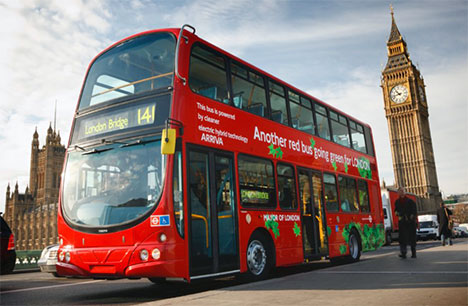
Hybrid double decker bus in London. Image via sciencehistorylover.files.wordpress.com

China-based manufacturer BYD will supply battery-powered buses to Transport for London from October. The number 16 route will be the first to go emission-free.

According to PV Magazine, passengers travelling from the Edgware Road to Victoria bus station in London will be using zero-emission transport from October onwards, announced Mayor of London Boris Johnson this week.

The Mayor, widely tipped as a future Conservative Party leader, announced at this week’s C40: Clean Bus Summit, Transport for London (TfL) has signed a deal with Chinese electric vehicle (EV) giant BYD Company Ltd to supply battery-powered buses, starting with the number 16 route.

BYD says its double-decker buses can drive for 155 miles, even in thick city traffic, on a single charge and their iron-phosphate batteries come with a 12-year warranty.

The news follows a report last week that the Delhi Metro system is considering switching to 100% solar power as public transport organisations the world over begin the migration to clean power sources.

Bus operator First West started running its biomethane-powered ‘poo bus’ between Bristol and Bath, in the west of England at the end of March. The Bio-Bus runs on human and household waste from 32,000 households.