World’s largest offshore wind farm approved by the UK Government

offshore wind farm

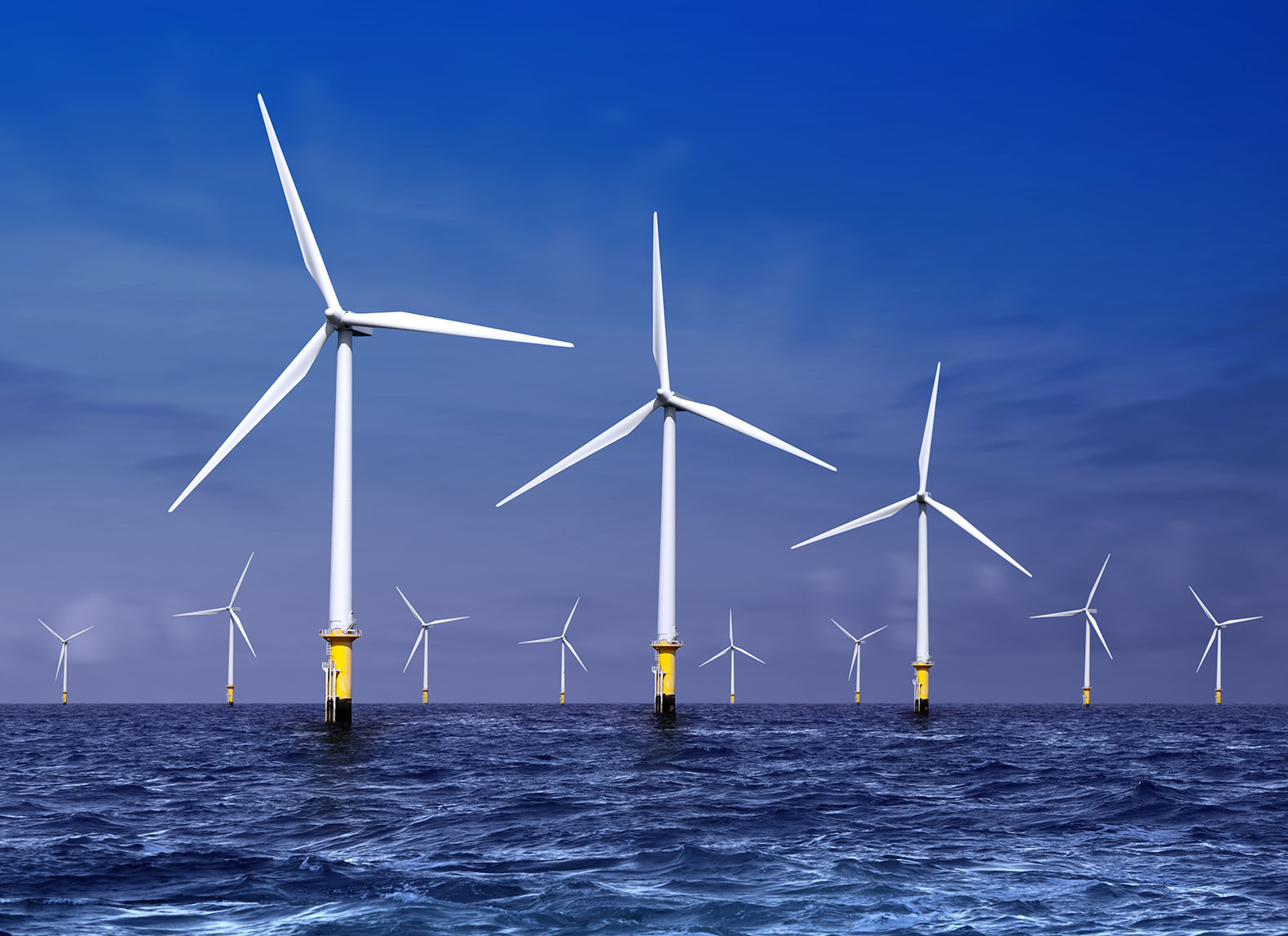
The world’s biggest wind farm will be built off the coast of Britain after it got the green light on Tuesday. Source.

The Hornsea Project Two offshore wind farm – set to be the largest in the world – received the green light from the U.K. government on Tuesday after it was granted development consent by the Business, Energy and Industrial Strategy Secretary Greg Clark.

According to CNBC, the wind farm will consist of “up to” 300 turbines and will be situated 89 kilometers off the coast of Yorkshire, northeast England. The government added that if built to full capacity, total investment will amount to roughly £6 billion ($7.79 billion).

The project, when finished, could potentially provide as much as 1,800 megawatts of electricity to more than a million homes in the U.K., and generate nearly 2,000 construction jobs and 580 operational and maintenance positions.

“The U.K.’s offshore wind industry has grown at an extraordinary rate over the last few years, and is a fundamental part of our plans to build a clean, affordable, secure energy system,” Clark said in a statement.

“Britain is a global leader in offshore wind, and we’re determined to be one of the leading destinations for investment in renewable energy, which means jobs and economic growth right across the country,” he added.

The project is being developed by SMartWind, which is owned by DONG Energy. In a statement on Tuesday, Denmark-headquartered DONG Energy said it welcomed the decision and would now review the details of the development consent order.

“Hornsea Project Two is a huge potential infrastructure project which could provide enough green energy to power 1.6 million U.K. homes,” Brent Cheshire, U.K. country chairman for DONG Energy, said in a statement.

“A project of this size will help in our efforts to continue reducing the cost of electricity from offshore wind and shows our commitment to investing in the U.K.,” he added.

The U.K. government said it expected that 10 gigawatts of offshore wind would be installed by the end of this decade.

Researchers accidentally make batteries last 400 times longer

rechargeable batteries

The gel surrounding the gold nanowires with manganese oxide coating protects from corrosion, allowing the battery to last 400 times more cycles. Image: Rajen Dutta /University of California Irvine

Smartphones, tablets, and most other electronics rely on rechargeable batteries, but after a few thousand uses the batteries start to lose their ability to hold a charge. The batteries of today are mainly lithium, and over time that lithium corrodes inside the battery.

Instead of lithium, researchers at UC Irvine have used gold nanowires to store electricity, and have found that their system is able to far outlast traditional lithium battery construction. The Irvine team’s system cycled through 200,000 recharges without significant corrosion or decline.

However, they don’t exactly know why. The original idea of the experiment was to make a solid-state battery: one that uses an electrolyte gel, rather than liquid, to help hold charge. Liquid batteries, like the common lithium variety, are extremely combustible and sensitive to temperature. The Irvine team was experimenting by substituting a much thicker gel.

“We started to cycle the devices, and then realized that they weren’t going to die,” said Reginald Penner, a lead author of the paper. “We don’t understand the mechanism of that yet.”

Although you may have never cracked one open (we hope), most of the batteries in your gadgets contain liquid. Liquid is used in part because its conductivity allows flexible and partial charging and discharging. Finding highly conductive electrolyte gels has proven difficult.

According to Popular Science, the Irvine battery technology uses a gold nanowire, no thicker than a bacterium, coated in manganese oxide and then protected by a layer of electrolyte gel. The gel interacts with the metal oxide coating to prevent corrosion. The longer the wire, the more surface area, and the more charge it can hold. Other researchers have been experimenting with nanowires for years, but the introduction of the protective gel separates UC Irvine’s work from other research.

“[The gel] does more than just hold the wire together. It actually seems to make the metal oxide softer and more fracture-resistant. It increases the fracture toughness of this metal oxide that is doing the charge storage,” Penner said.

While the technology promises consumer electronics that last 400 times longer, this initial test platform isn’t a true battery. Batteries have an anode, which allows electricity into the system, and a cathode, which outputs electricity. Instead of having both, the researchers linked together two cathodes that alternate charging each other. The continuous cycling from cathode to cathode makes a perfect system to test repeated recharging.

Penner says that it’s like pouring water back and forth between two cups. After a few hundred transfers from one cup to the other, some water will usually spill out, leaving less “charge.” That’s a normal battery. Penner’s system transferred the “water” between the “cups” 200,000 times, only losing about 5 percent.

Even though minuscule amounts of gold are being used in this experiment, that would still make these batteries be expensive to manufacture. Penner suggests that a more common metal, like nickel, could replace the gold if the technology catches on.

The lab’s future work will entail actually building batteries with this technology, and further investigating why the process works.

This floating UFO home is powered by solar, wind and water

Jet Capsule UFO home

The UFO floating home concept from mini yacht-maker Jet Capsule offers a completely off-grid existence. Image source.

Known for its exquisite cuisine, prominent fashion scene, and storied football clubs, Italy will soon have the ability to add yet another notable notch to its esteemed culture belt: manufacturer of UFOs. Also known as Unidentified Floating Objects, the UFOs coming to Italian shores in the near future aren’t exactly alien but rather an innovative solution for fighting the high costs of rent and the impending rise of the world’s sea levels.

According to Digital Trends, artistically designed by the Italy-based company Jet Capsule, the floating concept is a small autonomous vessel that’s essentially a studio apartment on water. If you get seasick easy, we don’t recommend hopping on board to invest.

Structurally, Jet Capsule’s UFOs measure just over 40 feet in diameter, with much of the vessel’s surface area taken up by a circular ring surrounding the living quarters. As seen in image renderings released by the Italian company, the outer ring could feasibly be used as a track for riding a bike, walking your dog or simply catching some rays. The mock-ups also show bits of grassy areas in sections surrounding the ring that appear to facilitate vegetable gardens and various trees.

Once inside the capsule, each floating home contains two moderately sized livable areas. The upstairs houses the concept’s kitchen area, outfitted with a table and small seating area, as well as an access point to a short staircase leading to the bottom floor. Aside from a large window giving owners a front row seat for some gorgeous underwater viewing, the downstairs quarters also house a small bathroom and bedroom. If the renderings are indicative of a final product, privacy for those in the shower is extremely limited, though, only passing fish (or the occasional scuba diver) would actually be able to see inside.

Aside from a large window giving owners a front row seat for some gorgeous underwater viewing, the downstairs quarters also house a small bathroom and bedroom. If the renderings are indicative of a final product, privacy for those in the shower is extremely limited, though, only passing fish (or the occasional scuba diver) would actually be able to see inside.

Jet Capsule’s livable UFOs are also designed to utilize the surrounding environment to produce and store energy. For instance, the company intends to install wind and water turbines to generate power while also installing solar panels on the vessel to harness solar energy. If the vessel takes in more energy than it uses, the excess is simply sent to an internal battery fitted in the base of the UFO. Owners will also have the ability to control an electric anchor from inside the ship, which is used to keep the UFO in one position. While changing locations, the vessel has the ability to travel at speeds of up to 3.5 miles per hour — not exactly a blistering pace.

If the vessel takes in more energy than it uses, the excess is simply sent to an internal battery fitted in the base of the UFO. Owners will also have the ability to control an electric anchor from inside the ship, which is used to keep the UFO in one position. While changing locations, the vessel has the ability to travel at speeds of up to 3.5 miles per hour — not exactly a blistering pace.

As of now, Jet Capsule is currently seeking investors to help it develop the first working prototypes of its aquatic UFO. Like any concept, however, the likelihood of these vessels seeing the light of day remains scarce., but if rent prices continue to skyrocket (and water levels continue to rise), living in an aquatic house might not be all that strange.

This 18-Rotor helicopter runs entirely on electricity

electric helicopter

The Volocopter uses 18 rotors, which its inventors say make it ‘safer simpler and cleaner’ that current designs. Image source.

Developed by the German company e-volo, the Volocopter VC200, a 18-rotor rotor electric helicopter (aka multicopter) completed its first official manned test flight without a hitch, and documented the whole thing on camera. The video shows the managing director Alexander Zosel of the company of E-Volo piloting the maiden manned emission-free aircraft over an airfield in southern Germany.

According to TechWorm, e-volo’s Volocopter is built from fiber composite material with a 450 kg (992 lb) take-off weight, and nine individual batteries power the all-electric motors and 18 rotors to make for a top speed of 100 km/h (62 mph).

Best described as a drone-helicopter hybrid, the Volocopter has two seats available on it, while it runs on an electric engine with precision control being manned by a single joystick that is accompanied by a handful of buttons. Despite its complex shape and strange appearance, the Volocopter is designed to bring personal flight to the masses by being easy to fly.

“It is definitely a sublime feeling to lift off, fly the first few meters, and then actually take my hand off the joystick and think that, yeah, it’s really as if I’m standing on the ground, and then I look down and there are 20-25 meters beneath me,” Zosel said. “So it’s definitely unbelievable what we’ve achieved here. It’s seriously unbelievable!”

e-volo has tested its design with over 100 unmanned flights, but now that a human has actually piloted one, it’s on to a whole new round of testing. e-volo’s first test flight program saw the Volocopter hit speeds of 25 km/h (15 mph) at only low altitudes. The second phase will test the aircraft at speeds of 50 km/h and a medium altitude, with the final phase to raise that to higher altitudes and its top speed of 100 km/h.

If things continue to happen as planned by e-volo, the company has ambitions to produce the Volocopter in “large quantities” for the air sports market. It’s also looking at the possibility of air taxi services initially for “predetermined routes as airport shuttles or at sensible traffic nodes such as bridges.”

It may be a while before we see drone-helicopter hybrids like the Volocopter hovering overhead, but if it does happen, e-volo is keen to lead the way.

Watch Zosel take-off in the Volocopter in the video below:

Wind and solar energy comprise 61% of 2015 capacity additions, gas contributes 35%

wind turbines USA

Wind accounted for 47% of new generation capacity, followed by natural gas (35%) and solar (14%). Image source.

In 2015, the U.S. Energy Information Administration predicted that capacity additions would begin to slow, and from 2018 to 2024 the agency believes additions will average less than 4 GW annually.

New capacity additions are slowing as efficiency and demand management techniques make new generation less necessary nationwide, and the new plants that are added are largely cleaner than in years past, SNL Energy reports.

A combination of wind, solar and natural gas made up the overwhelming majority of new capacity additions last year: Some 96%, according to SNL’s data. Coal and oil combined for less than 1%.

Those figures are similar to what EIA noted last year: that renewable power made up 70% of new generation in the first half of 2015. But SNL’s data appears to show gas additions made up some ground, ultimately consisting of more than a third of additions last year.

According to Utility Dive, in the end, gas and wind together totalled 11,848 MW of the 14,468 MW installed in the U.S. last year — 82% of the total. 2,010 MW of solar made it the third largest resource in capacity added in 2015, with 14% of the total.

Record low prices have driven a big “build cycle” for wind energy, according to a study from the Lawrence Berkeley National Laboratory. Low power purchase agreement prices and the Clean Power Plan could help spur wind’s growth in 2016, especially as the U.S. House of Representatives passed a $1.1 trillion omnibus spending bill that included extensions for the solar investment tax credit and wind’s production tax credit.

According to EIA, new power additions through 2017 will average about 17 GW annually, with about half of that being non-hydro renewable power. From 2018 to 2024 EIA estimates capacity additions will average less than 4 GW annually. That’s a large shift from the 26 GW added each year between 2000 and 2013.

MidAmerican is building the tallest concrete wind turbine tower

concrete wind turbine

MidAmerican Energy Company will include for the first time a concrete turbine tower at its new wind farm in Adams County in Iowa. Photo source.

MidAmerican Energy is planning to build the tallest land-based wind turbine in the country in Iowa.

According to todesmoinesregister.com, the Des Moines-based power company will get the added height by building the wind turbine tower from concrete instead of steel, a first for the company. The extra 100-plus feet enables the turbine to capture more wind energy, the utility said.

“Generally speaking, the higher the altitude, the greater the wind resource available,” said Mike Gehringer, MidAmerican’s vice president of renewable energy.

The 2.3-megawatt concrete tower turbine at the Adams County wind farm will measure 377 feet from ground to hub, compared to 263 feet for most of the turbines in use at other MidAmerican wind farms.

With blades extended, the turbine will reach a height of 554 feet, making it about as tall as the Washington Monument.

The utility has contracted with Siemens to supply and construct its new concrete tower design

Siemens and MidAmerican see the prototype as the model for other concrete turbine towers at future wind farms. It would open up “low-to-medium wind resource areas of Iowa for future wind development,” Gehringer said.

The company said the process of building a concrete tower is quite different from the process used to construct turbines with steel towers. “Instead of building the tower sections in a factory and transporting them to the site to be fitted together, crews pour the concrete in segments and manufacture the tower onsite,” Gehringer said.

The concrete turbine is one of 64 wind turbines planned for MidAmerican’s Adams County wind farm. Construction is underway on the 154-megawatt project, and all turbines are scheduled to be erected by the end of 2015.

Siemens sourced the concrete formwork from EFCO Corp. in Des Moines and supplied the wind turbine blades for the entire Adams project from the Siemens blade factory in Fort Madison.

Moving to renewable energy would create millions of jobs, study finds

solar industry jobs

Moving toward renewable energy would be a boon to the economy, studu says. Image source

A new report has found that transitioning to a clean energy economy would be an economic boon to the United States, increasing employment, reducing costs to consumers, and benefiting investors.

The report, from NextGen Climate America, showed that investment in efficiency, renewable sources of electricity, and fuel switching — such as moving from fossil fuel-powered cars to electric vehicles — would add a million jobs by 2030, and roughly 2 million jobs by 2050, while increasing GDP by $290 billion and improving household income. The researchers looked at scenarios that would reduce emissions by 80 percent below 1990 levels.

“While addressing climate change is one of our greatest challenges, it is one of our greatest opportunities to build the economy,” Tom Steyer, co-founder of NextGen and billionaire climate activist (and a board member of the Center for American Progress), said on a call with reporters Monday.

The construction industry, in particular, could see a huge bump in jobs — to the tune of 1.2 million more in 2050 than under the business-as-usual scenario. That’s because it will take a lot of people to build the wind farms, install the solar panels, and retrofit the buildings needed to reduce America’s dependence on fossil fuels.

Efforts to lower emissions are often subject to the criticism that they will hurt the economy, even though actual examples of programs have shown that efficiency and clean energy programs can actually boost economic factors like household disposable income.

“The go-to argument against [climate action] is that it’s bad for the economy and it’s a job killer,” Steyer said. This report shows otherwise. Steyer also pointed out that in the last few years, jobs in the solar industry have grown 20 times faster than the rest of the economy.

In addition, the so-called reference case — a general economic forecast — did not take into account the potential costs of not addressing climate change. Recent reports have shown climate change poses a significant financial risk.

According tothinkprogress.org, the report studiously stays away from telling policymakers how to get to 80 percent less emissions. Rather than policy recommendations, the researchers took a feasibility study and used it to build out the economic impacts.

The researchers used a 2014 report, Pathways to Deep Decarbonization in the United States by Energy and Environmental Economics, which looked at whether it was technologically feasible to reduce carbon emissions significantly enough to avoid 2°C warming.

Economist Jeffery Sachs told reporters it was critical to first determine where we want to go, and then tailor policies to achieve those end goals.

“Too often our national policy conversation jumps straight to the question, ‘Is it a tax? Is it this or that?’ Whereas what this report does, much better, in my opinion, is to show here’s where we want to go,” Sachs said.

Overall, the report painted an optimistic picture of the economy under a clean energy scenario. It’s worth noting, though, that the gains will not be across the board. Job growth in two of the nine regions was expected slow under the low-carbon scenarios. Those two regions — which include roughly the area from Montana to Texas, a fossil fuel heavy swath of the country — would have slower job growth.

That means that as the country does develop policies to achieve these goals, it will likely need to dedicate resources — educational and economic — to areas that will have a harder time getting off fossil fuels.

“To help them adapt we need to provide dedicated new resources for economic diversification, job creation, job training and other employment services for workers and communities affected by job losses at coal mines and coal-fired power plants,” the authors said.

Jobs notwithstanding, all regions were found to see increases in disposable income.

Moving to renewable energy would create millions of jobs, study finds

solar industry jobs

Moving toward renewable energy would be a boon to the economy, studu says. Image source

A new report has found that transitioning to a clean energy economy would be an economic boon to the United States, increasing employment, reducing costs to consumers, and benefiting investors.

The report, from NextGen Climate America, showed that investment in efficiency, renewable sources of electricity, and fuel switching — such as moving from fossil fuel-powered cars to electric vehicles — would add a million jobs by 2030, and roughly 2 million jobs by 2050, while increasing GDP by $290 billion and improving household income. The researchers looked at scenarios that would reduce emissions by 80 percent below 1990 levels.

“While addressing climate change is one of our greatest challenges, it is one of our greatest opportunities to build the economy,” Tom Steyer, co-founder of NextGen and billionaire climate activist (and a board member of the Center for American Progress), said on a call with reporters Monday.

The construction industry, in particular, could see a huge bump in jobs — to the tune of 1.2 million more in 2050 than under the business-as-usual scenario. That’s because it will take a lot of people to build the wind farms, install the solar panels, and retrofit the buildings needed to reduce America’s dependence on fossil fuels.

Efforts to lower emissions are often subject to the criticism that they will hurt the economy, even though actual examples of programs have shown that efficiency and clean energy programs can actually boost economic factors like household disposable income.

“The go-to argument against [climate action] is that it’s bad for the economy and it’s a job killer,” Steyer said. This report shows otherwise. Steyer also pointed out that in the last few years, jobs in the solar industry have grown 20 times faster than the rest of the economy.

In addition, the so-called reference case — a general economic forecast — did not take into account the potential costs of not addressing climate change. Recent reports have shown climate change poses a significant financial risk.

According tothinkprogress.org, the report studiously stays away from telling policymakers how to get to 80 percent less emissions. Rather than policy recommendations, the researchers took a feasibility study and used it to build out the economic impacts.

The researchers used a 2014 report, Pathways to Deep Decarbonization in the United States by Energy and Environmental Economics, which looked at whether it was technologically feasible to reduce carbon emissions significantly enough to avoid 2°C warming.

Economist Jeffery Sachs told reporters it was critical to first determine where we want to go, and then tailor policies to achieve those end goals.

“Too often our national policy conversation jumps straight to the question, ‘Is it a tax? Is it this or that?’ Whereas what this report does, much better, in my opinion, is to show here’s where we want to go,” Sachs said.

Overall, the report painted an optimistic picture of the economy under a clean energy scenario. It’s worth noting, though, that the gains will not be across the board. Job growth in two of the nine regions was expected slow under the low-carbon scenarios. Those two regions — which include roughly the area from Montana to Texas, a fossil fuel heavy swath of the country — would have slower job growth.

That means that as the country does develop policies to achieve these goals, it will likely need to dedicate resources — educational and economic — to areas that will have a harder time getting off fossil fuels.

“To help them adapt we need to provide dedicated new resources for economic diversification, job creation, job training and other employment services for workers and communities affected by job losses at coal mines and coal-fired power plants,” the authors said.

Jobs notwithstanding, all regions were found to see increases in disposable income.

Scottish castle goes solar

solar-powered castle

Ayton Castle, image via everycastle.com

The 19th-century Ayton Castle’s grounds will be home to 188 solar panels, providing 50KW of electricity, after Scottish Borders Council approved the plans by the castle owners.

The special high-level mounting system means livestock can still graze the fields unprotected under the panels.

According to thenational.scot, Director of conservation charity WWF Scotland Lang Banks said: “Due to their age and construction materials, historic buildings can often be quite a challenge when it comes to trying to reduce energy use and cutting carbon. So while energy savings efforts should still be made, choosing to generate your own on-site renewable energy too makes perfect sense.”

Last week, the first large-scale solar project in Fife was also given the go-ahead, with a total of 11,000 panels planned for sites at Tayport, Wormit and Crail.

Builder Green Hedge Renewables says the 3,300-panel site at Wormit can power 1,300 homes.

The largest of the sites at Tayport will house 5000 panels at the start of October.

As well as the development at Ayton Castle, plans have been submitted for a monster 40,000-panel site.

EU finds potential for energy savings in food industry

clean energy in food industry

EU wants to save energy in food industry. Image via globalmeatnews.com

The EU’s food production industry has some catching up to do when it comes to adopting renewable energy, according to a new report that took a close look at the food sector.

Overall, renewable sources now account for 15 percent of the EU’s energy mix, but in the food production sector, that share is only about 7 percent, according to study, which acknowledges the challenges of decarbonising food production.

According to summitcountyvoice.com, farmers and industry have made some progress, but consumers could play a bigger role by reducing meat consumption, buying locally and seasonally, and reducing food waste.

To reach their conclusion, the researchers broke down the energy content of a typical European food basket composed of 17 largely consumed food products, estimating the amount of energy needed to cultivate, process, pack and bring food to European citizens’ tables.

The food basket is based on data from EU-27 in 2013 (when data for Croatia who joined the same year were not available) and accounts for about 60 percent of EU food consumption. The energy required to ensure food supply in the EU amounted to around 26 percent of the EU’s final energy consumption in 2013.

In the report, different solutions are discussed on how to lower this figure and to make it more sustainable by increasing the renewable energy share.

Consumers can also play an important role when choosing their food: reducing their energy ‘food print’ includes reducing consumption of meat and animal-related products, buying locally and seasonally, as well as reducing food waste and choosing organic food when possible.

Different food products need very different amounts of energy depending on their nature, their origin and the kind of processing they require. Refined food and products of animal origin generally need much more energy than vegetables, fruit and cereal products.