World’s largest offshore wind farm approved by the UK Government

offshore wind farm

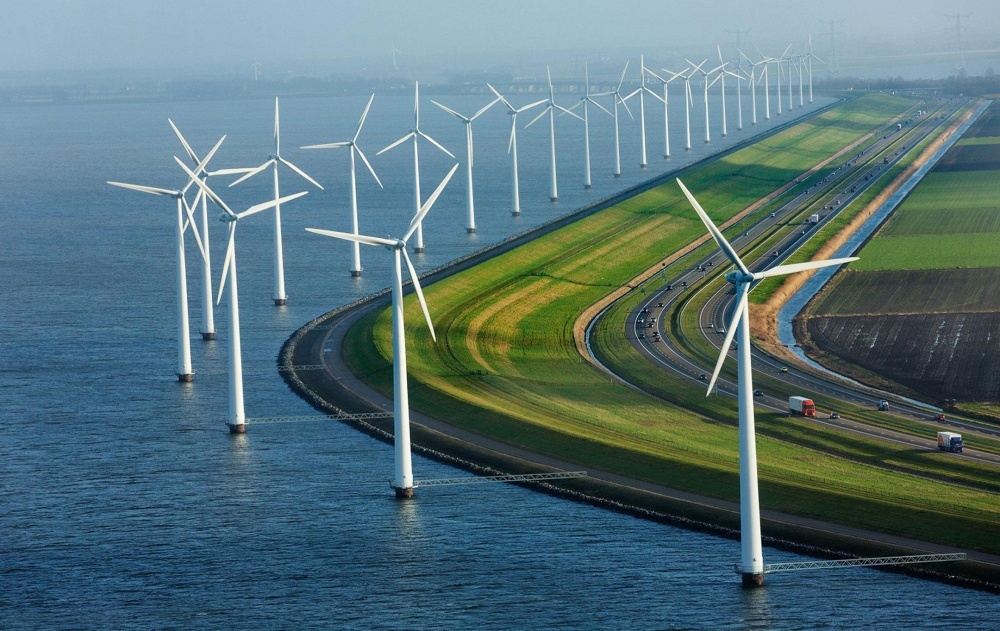
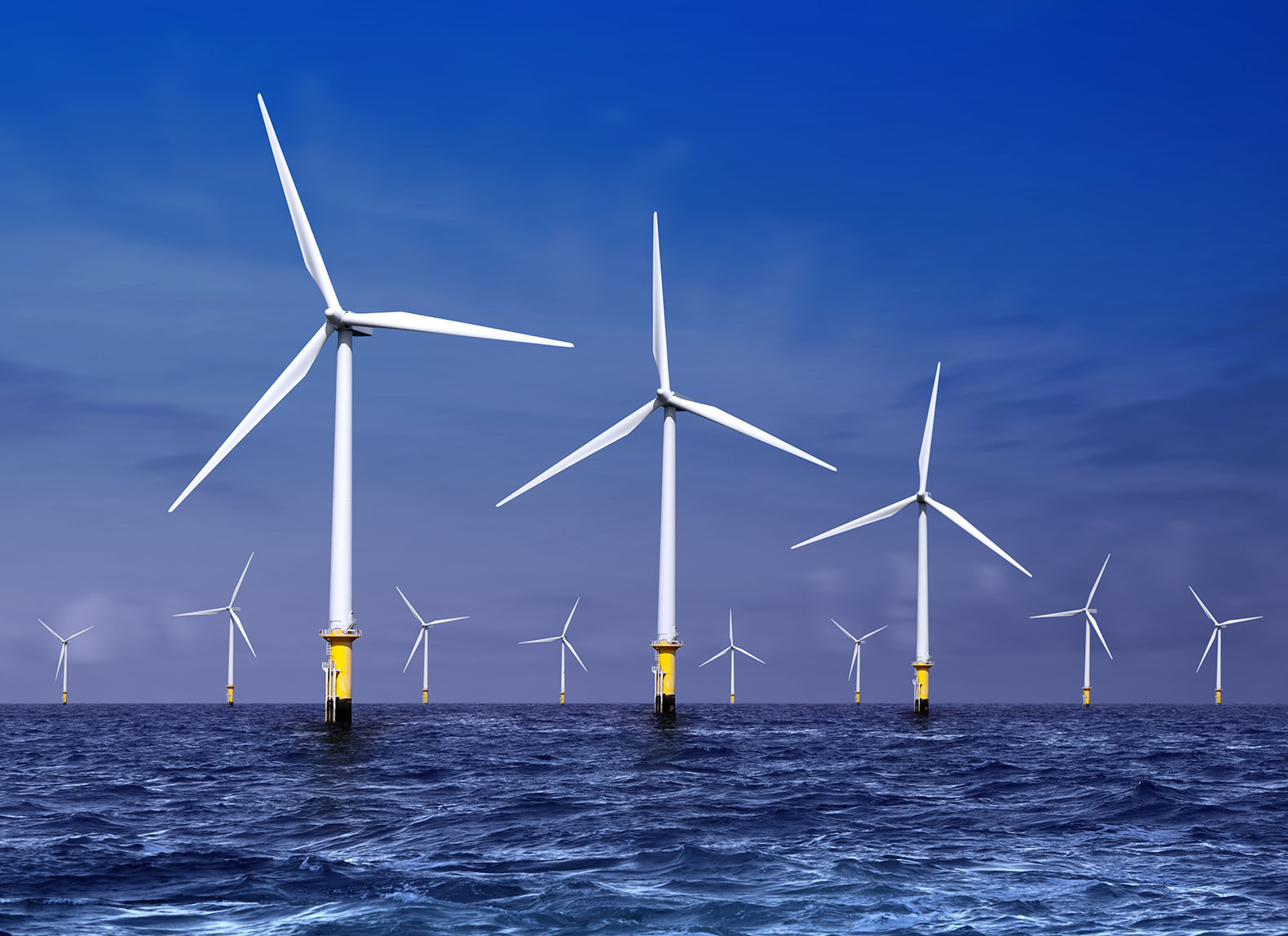
The world’s biggest wind farm will be built off the coast of Britain after it got the green light on Tuesday. Source.

The Hornsea Project Two offshore wind farm – set to be the largest in the world – received the green light from the U.K. government on Tuesday after it was granted development consent by the Business, Energy and Industrial Strategy Secretary Greg Clark.

According to CNBC, the wind farm will consist of “up to” 300 turbines and will be situated 89 kilometers off the coast of Yorkshire, northeast England. The government added that if built to full capacity, total investment will amount to roughly £6 billion ($7.79 billion).

The project, when finished, could potentially provide as much as 1,800 megawatts of electricity to more than a million homes in the U.K., and generate nearly 2,000 construction jobs and 580 operational and maintenance positions.

“The U.K.’s offshore wind industry has grown at an extraordinary rate over the last few years, and is a fundamental part of our plans to build a clean, affordable, secure energy system,” Clark said in a statement.

“Britain is a global leader in offshore wind, and we’re determined to be one of the leading destinations for investment in renewable energy, which means jobs and economic growth right across the country,” he added.

The project is being developed by SMartWind, which is owned by DONG Energy. In a statement on Tuesday, Denmark-headquartered DONG Energy said it welcomed the decision and would now review the details of the development consent order.

“Hornsea Project Two is a huge potential infrastructure project which could provide enough green energy to power 1.6 million U.K. homes,” Brent Cheshire, U.K. country chairman for DONG Energy, said in a statement.

“A project of this size will help in our efforts to continue reducing the cost of electricity from offshore wind and shows our commitment to investing in the U.K.,” he added.

The U.K. government said it expected that 10 gigawatts of offshore wind would be installed by the end of this decade.
Scotland generated more than half its electricity from renewables last year

clean energy Scotland

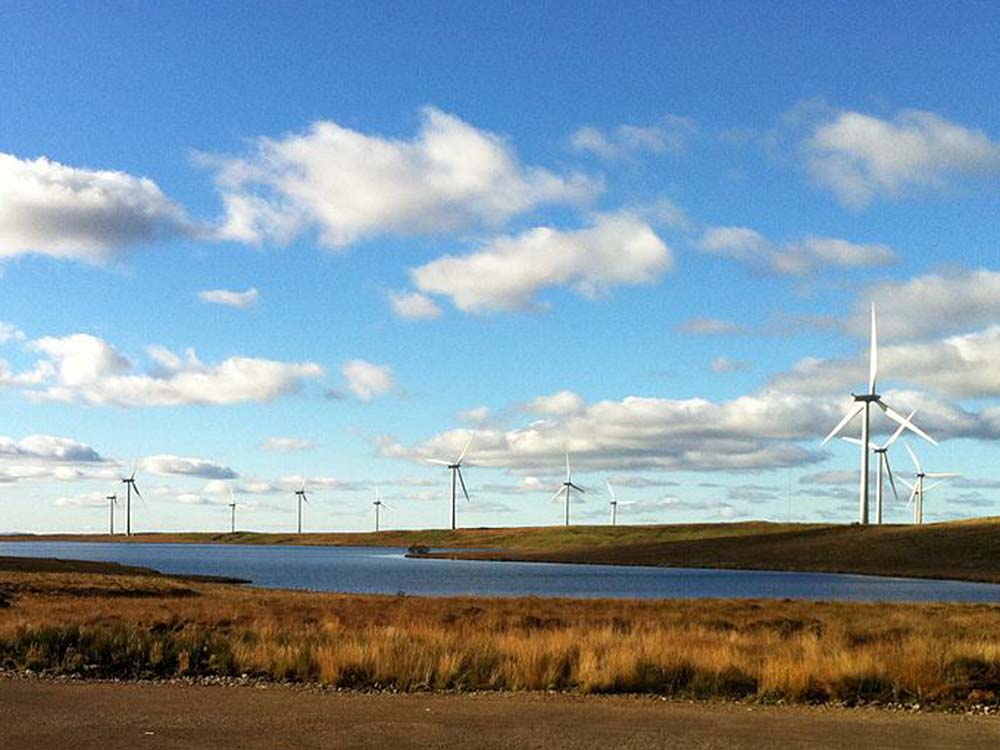
Whitelee Wind Farm, Scotland. Image source.

Scotland has reached an ambitious renewable energy milestone by generating 57.7 percent of its gross electricity consumption. It also made up about 26 percent of total UK renewable generation last year.

According to Ars Technica UK, the government’s department of energy and climate change has released provisional numbers of renewable energy generation in 2015, which revealed that renewable electricity generated in Scotland last year totalled 21,983 GWh, with around 64 percent of that figure coming from wind turbines, and another 27 percent from hydro generators. Both sources showed a year-to-year increase in generation—of 21 percent and 7 percent, respectively.

Scotland now appears to be on track to fulfil its 2020 goal of having all of the country’s electricity consumption supplied by renewables. However, plans for the next four years might prove more difficult, given the significant cuts in renewable energy subsidies announced by the UK government in late 2015.

Scottish clean energy campaigners are predictably unhappy and have attacked UK prime minister David Cameron about the reductions to renewable energy subsidies.

“This is great news and an important step in creating a fossil-free Scotland,” said Dr. Richard Dixon, Friends of the Earth Scotland director. “Despite the UK government’s ideological assault on renewable energy Scotland is storming ahead, smashing through our 50 percent target for 2015. Well done to all those in this vital industry who have helped produced a big increase from the 2014 figures.”

“Clean, green energy is essential in the fight against climate change, and Scotland needs to continue to be a champion of renewables while David Cameron continues to chase the nuclear dream in England.”

New world record set in renewable energy investments

renewable energy global investments

Record renewable energy investment in 2015. Image source.

All investments in renewables, including early-stage technology and R&D (Research and Development) as well as spending on new capacity, totalled $286 billion in 2015, some 3 per cent higher than the previous record in 2011, said the 10th edition of United Nations Environment Programme’s (UNEP) annual report — Global Trends in Renewable Energy Investment 2016.

According to Gulf News, a total of 134 gigawatts (GW) of renewable power was added worldwide in 2015 compared to 106GW in 2014 and 87GW in 2013, the report said.

It highlighted that the green investments had broadened out to a wider and wider array of developing countries, helped by sharply reduced costs and by the benefits of local power production over-reliance on imported commodities.

“Renewables are becoming ever more central to our low-carbon lifestyles, and the record-setting investments in 2015 are further proof of this trend. Importantly, for the first time in 2015, renewables in investments were higher in developing countries than developed,” said Achim Steiner, executive director at UNEP, in an official statement.

In 2015, for the first time, investments in renewable energy in developing and emerging economy nations ($156 billion, up 19 per cent compared to 2014) surpassed those in developed countries ($130 billion, down eight per cent from 2014).

Much of these record-breaking developing world investments took place in China (up 17 per cent to $102.9 billion, or 36 per cent of the world total).

Other developing countries showing increased investment included India (up 22 per cent to $10.2 billion), South Africa (up 329 per cent to $4.5 billion), Mexico (up 105 per cent to $4 billion) and Chile (up 151 per cent to $3.4 billion).

Among developed countries, investment in Europe was down 21 per cent, from $62 billion in 2014 to $48.8 billion in 2015, the continent’s lowest figure for nine years despite record investments in offshore wind projects.

Investments in the US were up by 19 per cent to $44.1 billion, and in Japan investment was much the same as the previous year at $36.2 billion.

The report was launched by the Frankfurt School-UNEP Collaborating Centre for Climate & amp; Sustainable Energy Finance and Bloomberg New Energy Finance (BNEF).

Denmark broke another world record in wind energy production

wind farm

Denmark produced 42% of its electricity from wind turbines last year. Image source.

Denmark successfully produced an astonishing 42% of its power from wind turbines in 2015, the highest proportion ever produced by any country.

According to mic.com, the figure exceeds 2014’s figure of 39%, which also set a record for national proportion of domestic energy generated via windmill. News agency Ritzau says Danish state electrical provider Energinet confirmed that in 1,460 of 8,760 hours during the year, windmill production actually exceeded the domestic power requirements of the country.

As a clean and renewable energy source, wind turbines are likely to become an important element of long-term climate and energy planning and in many countries already have.

Denmark’s successful harnessing of wind energy is the outcome of meticulous long-term investment by the country’s government. Its 7,314 miles of coastline are ideal for wind generation.

“It’s first country to build massive offshore wind parks and has an ambitious plan to run 100 percent on renewable energy by 2050: no oil, coal, or gas for electricity, heat, or even transportation,” NPR’s Lisa Desai reported in December. “The plan was set in motion in Denmark’s capital, Copenhagen, 40 years ago — not because of global warming, but because of the 1973 Arab oil embargo. With 99% of its energy then coming from the Middle East, Denmark decided to pursue energy independence.”

In the United States, wind is one of the fastest-growing energy sectors, an extended boom in U.S. wind energy may soon result in wind technology producing 4.5-5% of the country’s entire electrical supply — far behind Denmark, but significant as a measure of overall investment in a country traditionally dominated by dirty fuels.

Wind and solar energy comprise 61% of 2015 capacity additions, gas contributes 35%

wind turbines USA

Wind accounted for 47% of new generation capacity, followed by natural gas (35%) and solar (14%). Image source.

In 2015, the U.S. Energy Information Administration predicted that capacity additions would begin to slow, and from 2018 to 2024 the agency believes additions will average less than 4 GW annually.

New capacity additions are slowing as efficiency and demand management techniques make new generation less necessary nationwide, and the new plants that are added are largely cleaner than in years past, SNL Energy reports.

A combination of wind, solar and natural gas made up the overwhelming majority of new capacity additions last year: Some 96%, according to SNL’s data. Coal and oil combined for less than 1%.

Those figures are similar to what EIA noted last year: that renewable power made up 70% of new generation in the first half of 2015. But SNL’s data appears to show gas additions made up some ground, ultimately consisting of more than a third of additions last year.

According to Utility Dive, in the end, gas and wind together totalled 11,848 MW of the 14,468 MW installed in the U.S. last year — 82% of the total. 2,010 MW of solar made it the third largest resource in capacity added in 2015, with 14% of the total.

Record low prices have driven a big “build cycle” for wind energy, according to a study from the Lawrence Berkeley National Laboratory. Low power purchase agreement prices and the Clean Power Plan could help spur wind’s growth in 2016, especially as the U.S. House of Representatives passed a $1.1 trillion omnibus spending bill that included extensions for the solar investment tax credit and wind’s production tax credit.

According to EIA, new power additions through 2017 will average about 17 GW annually, with about half of that being non-hydro renewable power. From 2018 to 2024 EIA estimates capacity additions will average less than 4 GW annually. That’s a large shift from the 26 GW added each year between 2000 and 2013.

Costa Rica after 257 days with almost 100 percent renewable energy

wind farm Costa Rica

Wind farm in Costa Rica. Image source.

Data from the National Center for Energy Control (CENCE) showed that Costa Rica went 257 days on almost 100% renewable energy.

According to the Latin Correspondent, the Costa Rican Electricity Institute (ICE) reported that 98.82 percent of the electricity generated for domestic use came from renewable sources such as wind, geothermal, solar, biomass, and hydroelectric plants. Only 1.18 percent of generated electricity came from fossil fuels, used as a backup in the events of unfavorable weather conditions.

“The decline in oil imports has positively impacted electricity prices, as well as the expansion strategy and exchanges with the regional electricity market,” said ICE CEO Carlos Manuel Obregon. Luis Pacheco, ICE manager, added that their projections show the trend continuing in 2016.

ICE announced in March that the country’s initial target is to survive on 97.1 percent of clean energy.

Costa Rica has long been a leader in using renewable sources for electricity, prior to world leaders focusing on other sources of energy as a result of climate change.

Earlier this year, ICE announced that the country ran on 100 percent clean electricity for the first 75 days of the year. This was considered a huge feat by the international community, but more importantly, it was good news for consumers as electricity prices were cut by 7 to 15 percent.

The feat can be attributed to rainfall that Costa Rica received in the first part of the year, as the country mostly relies on the hydropower generation.

Costa Rica is committed to be carbon-neutral come 2021.

Aspen now running on 100% clean power

Aspen renewable energy

Aspen is 100% green! Image via everystevejobsvideo.com

Aspen is the third American city to make the transition to 100% renewable energy. Following in the footsteps of Burlington, Vermont and Greensburg, Kansas, Aspen has disconnected itself from coal power completely and is running on a clean combination of wind and hydroelectric power.

Diversifying Green Sources

According to earthtechling.com, wind energy produced by four large wind farms in nearby Nebraska and South Dakota are supplying 53% of Aspen’s energy now, and 46% is coming from hydroelectric installations at the Ruedi, Maroon Creek and Ridgway Reservoirs. The final 1% comes from landfill gas.

Aspen has tapped into solar power too, with a large photovoltaic system set up to power their water treatment plant. There are also plans to install a solar thermal system for heating the water at the local indoor pool.

No newcomer to the green energy movement, Aspen was the first American city west of the Mississippi River to adopt hydroelectric power, in 1885. Since then, the town has relied on a mixture of energy sources. As recently as last year, coal power made up 20% of the city’s energy profile. Unfortunately for Aspen, delicate mountain ecosystems are among the worst affected by coal plant emissions. They would be among the first to feel the disastrous and lasting effects of a changing climate: Aspen and other mountain towns like it are in a sense “canaries in the mineshaft” for global climate change. Getting away from coal was a necessary step for their survival.

Tracking Greenhouse Emissions and Reducing Waste

When the Aspen city council adopted the forward-thinking Canary Action Plan in 2007, they aimed to reduce overall local greenhouse emissions and promote local environmental stewardship. The plan commits to reducing the community’s remaining greenhouse emissions 30% by 2020 and 80% by 2050.

While shifting the city to renewable energy was a large part of the initiative, the Canary Action Plan also includes energy efficiency incentives for Aspen residents, and environmental programs about energy and waste reduction for elementary and middle school students.

It’s very important to the City of Aspen that its residents be involved with the move towards greener living: the municipal government has an online dashboard, updated hourly, where anyone can see how much energy is being produced by the city’s hydroelectric projects.

In order to achieve their goals, The City of Aspen government implemented an emissions tracking system. They monitor city-owned buildings and facilities for annual emissions related to energy use, and they regularly assess the emissions from local ground transportation and air travel.

With a greenhouse emissions “budget” that decreases by 2% annually, Aspen is continually finding ways to improve their energy efficiency and meet their goals. Over the decade of 2004 to 2014, they managed to reduce their total emissions by 42%, achieving far more than their goal of 30%.

By continuing to encourage home energy improvements and the use of alternative transportation, Aspen is well on its way to complete carbon neutrality.

September – a great month for wind and solar energy in Scotland

scotland solar panels and wind turbine

Wind and solar power in Scotland. Image via c1cleantechnicacom.wpengine.netdna-cdn.com

According to a WWF Scotland analysis, wind energy capacity in the country generated enough electricity to power all Scottish homes on five out of the 30 days of September.

Based on wind and solar electricity data provided by WeatherEnergy, WWF Scotland says wind turbines generated 563,835MWh of electricity, an increase of 82% compared to September 2014. Wind power alone generated around 28% of Scotland’s electricity needs for the month.

” Given the big jump in renewables output during September it’s very likely we’ll be breaking even more records this year,” said WWF Scotland’s director, Lang Banks.

According to energymatters.com, for homes with solar panels installed, there was enough sunshine to generate an estimated 65- 70% or more of the electricity needs of an average household in some of Scotland’s regions.

“Despite being well in to autumn, for the tens of thousands of homes that have installed solar panels to generate electricity or heat water, around three-fifths of their electricity or hot water needs could have been met by the sun during the month. This all helped Scotland to further reduce its reliance on polluting fossil fuels during September,” said Mr. Banks.

WeatherEnergy says as the country moves toward winter, solar output will drop off to a degree, but wind power output will start to ramp up.

In November last year, wind power generated 126% of the electricity needs of every home in Scotland. 2014 was the first time clean energy produced more power in Scotland than nuclear, coal or gas.

Scotland has set a target to generate the equivalent of 100 per cent of its gross annual electricity demand by 2020 – a goal it appears it will have no problems in reaching. Just in practical offshore renewables resources, the country has an estimated 206 GW capacity potential.

At the end Q3 2014, 7,112 megawatts of renewable electricity capacity was installed in Scotland, an increase of 10.5% from the end of the second quarter in 2013.

Last week it was reported Scotland surpassed its target of generating 500 MW of locally and community owned renewable energy five years ahead of schedule.

Scotland’s renewable energy sector is also a major employer, supporting more than 11,000 jobs (January 2014).

Wind energy is now as cheap as natural gas

wind energy

Wind power is now comparable in price to fossil fuels, new report says. Image via cdn7.triplepundit.com

Wind power is now comparable in price to fossil fuels, and solar is well on its way, according to a new report that confirms earlier predictions that renewables aren’t just the best option for the environment – they’re unequivocally the smartest long-term investment you can make on energy.

The report, by Bloomberg New Energy Finance, found that in the second half of 2015, the global average cost of onshore wind energy will be $83 per megawatt-hour of electricity (which is down $2 from the first half of the year), and for thin film solar photovoltaics, the cost is $122 per megawatt-hour (down $7 in the past six months).

The costs as they are now, and the steady drops we’ve seen in price over the past six months alone, suggest that as the technology to eke out more and more electricity from solar and wind energy gets ever-more sophisticated, those prices can only continue to fall.

“You start to go from a world where renewables are expensive, to a world where renewables are actually cheap. And that’s very meaningful,” said Seb Henbest, head of the Europe, Middle East, and Africa analysis for Bloomberg New Energy Finance. “Onshore wind is today competitive in many places in the US and around the world with coal and gas-fired generation technology.”

According to Science Alert, the report based its analysis on what’s known as the ‘levelised cost of electricity’, which takes into account several factors such as interest rates, capital expenditures, and the operating costs of facilities, and uses these to compare different energy sources on a dollar value. The team analysed over 55,000 projects around the world to come up with their global average figures.

In terms of breaking it down more specifically into locations, the report found that while coal-fired electricity costs $75 per megawatt-hour in North and South America (up from $66 per megawatt hour), in Europe, you’ll have to fork out $105 for the same amount. And gas-fired electricity costs $82 in the Americas, on average (up from $76 per megawatt hour), and $118 in Europe.

Those higher costs for fossil fuels in Europe – due in large part to government-regulated carbon policies – make it even more of a no-brainer for them to be getting into renewables, with the report finding that the average cost of wind is $85 per megawatt-hour in the UK and $80 in Germany, while the combined average for coal and natural gas was more than $100 per megawatt hour in both countries.

“In China, by contrast, coal-fired electricity generation remained extremely cheap – just $44 per megawatt hour,” Chris Mooney reports for The Washington Post. “Wind, in contrast, cost $77 and solar photovoltaics, $109.”

Mooney adds that the US is also not quite there yet, with the incredibly cheap average price of coal- and gas-fired electricity sitting at $65, while wind sit at $80 per megawatt-hour and solar at $107. The good news is that a lot of the cost of renewables is up-front – installation, construction, and the initial period of energy harvesting.

Unlike the process used to convert fossil fuels to electricity, converting renewable energy to electricity doesn’t require fuel, which means solar, wind, and even the currently expensive wave power sources will continue to get cheaper.

“Clean energy solutions like wind and solar are getting more affordable and more accessible by the day, meaning they are increasingly the smartest long-term financial investments for utilities and other electricity producers across America,” Michael Brune, the executive director of US-based environmental organisation, the Sierra Club, said in a statement. “The transition to a clean energy economy is going full speed ahead and pushing dangerous, dirty fossil fuels to the back of the line.”

Clean energy outdoes coal in the UK

renewable energy UK

Anti-coal protests across London. Image via energypage.eu

According to the data released by the Department of Energy and Climate Change, renewables produced more power than coal plants for full three-month period for the first time in the United Kingdom.

The government statistics reveal that over the second quarter of 2015 the total share of electricity generation that came from renewable sources increased to a record high of 25%, Wired.co.uk has reported.

Experts believe this is due to an increase in wind turbines and solar panels being installed over the past 12 months, as well as more favourable weather conditions.

But although on the surface these statistics appear to be promising, according to projections from the European Commission, the UK continues to be one of the lowest ranking countries in the European Union when it comes to the percentage of energy consumed that is produced by renewables.

In 2013 the UK produced 8,400,000 TOE’s (tonne of oil equivalent) through renewables, compared to more than 33,680,000 in Germany, 17,377,000 in Spain and 23,073 in France.

Most of the UK’s renewable energy is produced with biomass and waste systems (61.7%) and wind energy (29.1%), with hydropower and solar energy still lagging far behind several other countries in northern Europe.

The new data has also come at a time when the future of renewable energy funding in the UK is facing considerable uncertainty; there has been growing concern in recent months that the UK’s renewable energy efforts are likely to be cut short after Conservative ministers called for subsidies to be redistributed.