Solar powered car Bluetooth kit

You’ll no more need messy wire or cables and no need to recharge.

With the new Solar Powered car Bluetooth kit, all you need to do is sticking this device to the inside of your windshield and pair it to your mobile phone.

You now have the safest and most convenient way to talk and answer calls while driving.

If your phone has voice recognition you can even make calls by simply saying the contact’s name!

The Solar Powered Car Bluetooth Kit announces the caller name or number before you answer or reject it, making sure you don’t answer unwanted calls while driving!

This Solar Powered car Bluetooth doesn’t require batteries, thanks to eco friendly solar charger!

It has dimensions: 89mm Diameter x 45mm Depth and a Bluetooth Version 2.0.

You can buy it for just 20 euro.

World market for solar PV cells will double by 2020

According to South Korea’s Samsung SDI, the global market for solar photovoltaic cells will double by 2020, rising from 2010′s $30 billion to $70 billion.

Reuters reported early Wednesday, that the Falling prices and supportive government policies will drive the growth.

Chinese solar PV cell manufacturers will continue with aggressive overseas expansion plans the solar power industry out to 2013.

Germany and Italy, two leading EU solar power markets, have cut back on subsidies this year.

Although EU subsidies shrink in, Samsung SDI plans to aggressively expand its solar PV cell production from its current 150 MW to 3 GW by 2015, believing that its “super-efficient crystalline solar cells will differentiate” it from competitors’ products.

The company will invest 2.2 trillion won ( $2.05 million) into the business and expand into thin-film solar PV manufacturing as well.

Samsung intends to expand on US, Japanese and EU markets while considering emerging markets, such as China and India as well.

Samsung SDI acquired Samsung Electronics’ solar PV cell division for $149 million at the end of May.

Monocrystalline cells with an efficiency of 20.2 %

Schott Solar it’s able to produce monocrystalline screen-printed cells with an efficiency of 20.2 %.

The record cell with a performance of 4.92 W has been produced in industrial format, i.e. 156 mm x 156 mm.

The high efficiency technology used by Schott Solar is the same which has been using for some time for multicrystalline cells.

Since January 2011, the company has only focused intensively on substances related to monocrystallines.

To achieve more than 19% efficiency it was relatively easy, reports Schott.

To get over 20%, Schott Solar cooperated with the Schmid Group and took advantage of their selective emitter technology.

Now, Schott wants to get started with manufacturing optimization to transfer the result to new modules.

The company will announce more details at the EU PVSEC at the beginning of September in Hamburg.

How to make a solar powered charger

To build a solar powered charger you need to follow a few steps and to use some basic equipment.

Solar panels are available at affordable prices and in all possible sizes.

It’s not complicated to build a solar powered charger. You’ll see in the next steps:

1.Collect the required tools
To make a solar powered charger you will need tools like: AA batteries, Battery holders, a USB extension a/a cable, electrical tape, glue gun or tape to hold the pieces in place,terminal strip or soldering iron, blocking diode, a drill, a 6 volt solar panel.

2.Select the diode

Standard diodes drop the voltage by 0.6 V, while the Schottky diode drops it by 0.2 V which can be a deciding factor in whether the charger works or not. So it’s better to choose a standard diode which will ensure quality of the functioning of the charger.

3.Cutting the USB cable
To build the kit, you have to cut the USB cable at the end which has the jack and remove everything except the red and black wire. This cable will be used in constructing the circuit.

4. Test the solar panel
To be sure that is working, check the solar panel before connecting it to the circuit.
It should yield the output of 2 volt inside the room and 2.5 volt in bright sunlight.

5.Sticking
The next step is to stick the pieces to make a circuit. Solder the red wire of the cable to the diode and then the diode to the red wire from the solar panel. In the next step solder the black wire from the solar panel to the cable. This completes the step of soldering. Soldering creates a serial connection which adds the voltages together, giving an output between 4 and 5 V, which is the required voltage for operation of a standard charger.

6.Drilling
You need to drill a hole for the cables to make it pass through the solar panel.

7.Setup
This step involves the fitting of the components of the solar charger into the project box.

8.Tested the completed solar charger
All you have to do now is to connect any one of the gadgets with minimal power requirement to the finalized solar charger to test it out. The solar panels need to be exposed to bright light. If the solar panel does not get ample light, it will not function appropriately. It’s better to turn off the gadget while charging; it will increase the life of the solar panel.

Ferrari will never be an electric car, only hybrid

One thing’s for sure, Ferrari will never go electric.

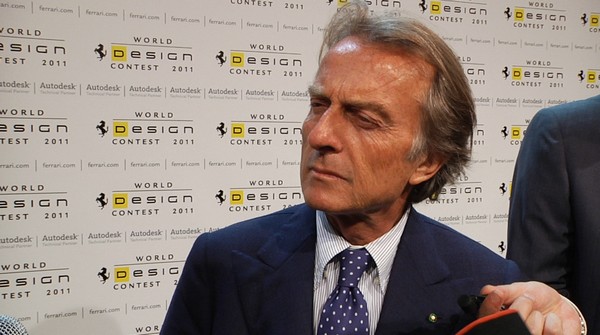
Luca di Montezemelo doesn’t believe in electric cars. He said:

“You will never see a Ferrari electric because I don’t believe in electric cars, because I don’t think they represent an important step forward for pollution or CO2 or the environment. But, we are working very, very hard on the hybrid Ferrari. This should be the future, and I hope in a couple of years you can see it.”

The new Ferrari hybrid will be more Porsche 918 than Toyota Prius.

EU biofuel consumption up 13% in 2010

The latest biofuels barometer shows that Europeans consumed 13.6% more biofuel in 2010 than in the previous year.

In 2010 biofuels continued to grow in the European Union.

In the transport sector, it increased by only 1.7 Mtoe compared to 2.7 Mtoe in 2009 which means EU biofuel consumption growth slackened off.

The total biofuel consumption for 2010 should hover at around 13.9 Mtoe.

Germany was consuming over 3 million toe of biofuel in 2010 (two third of which was biodiesel), followed by France, Spain, Italy and the UK.

The lack of interest in vegetable oil consumption is hardening (down 14.3%) and may still be due to increased German taxation on this biofuel.

Biogas fuel is almost unique to Sweden, while other EU countries struggle to develop it.

Future growth of consumption in the European Union will depend on external factors such as the increase in oil prices and the worldwide availability of biofuel.

$14.2 billion offshore wind farm in France

The offshore wind farms are located far out into the sea; they trap winds at faster speeds than they would on land, and also, save up a lot of land space.

The French government of Nicolas Sarkozy has launched a €10 billion ($14.26 billion) tender to build about 1,200 wind turbines in 5 different offshore wind farms.

France depends mostly of nuclear energy.

France wants to diversify his energy generation with renewable sources and to have 23% of France’s energy come from renewable sources by 2020.

The offshore wind farms will be located off France’s coast on the North and West and will generate about 3.5% of France’s electricity needs.

Six Slovak solar parks on the grid

Six solar parks were putted on the grid by the german Vario green energy group in the Slovak Republic in May and June 2011.

The project planning, system configuration and the delivery of all the components were done by Vario green energy Concept GmbH from Holzgerlingen near Stuttgart, together with Vario green energy Parks GmbH from Munich.

The six solar photovoltaic power plants in Poltár, Biskupice and Ruminceparks have a power of 1 to 1.2 MW each and a total power of 6.2 MW.

The assembly time was six to eight weeks, but it worth because 70,000 solar modules will feed in an annual 7 million kilowatt hours of electricity into the local grid.

The plant operators will receive a remuneration of 38.23 Eurocents, according to the current Slovak feed-in tariff.

Since 1 July the solar electricity funding will be limited to roof-top plants with a power of 100 kilowatts maximum, but despite the cuts in financial support, Vario will remain active in Slovakia and plans to concentrate only on the roof-top market.

Schneider Electric will supply photovoltaic inverters in North America

Schneider Electric, a specialist in energy management, has been selected by a major global engineering and construction company to supply photovoltaic inverters throughout 2011 in North America.

Schneider will supply an order of 100 MW of capacity, which is the largest order in Schneider Electric’s history in North America and one of the largest ever in the North American market.

“The extensive experience we have in the field, in a broad variety of operating environments, is one of the primary reasons for our company’s continued success and the satisfaction of our customers,” said Rudy Wodrich, Commercial Vice President, Americas.

With this order Schneider proves again his leadership in PV inverters and solutions.

Solar powered charger – efficient and flexible

Solar powered chargers have the serious potentiality to defy the main electricity grids, at least for charging of small appliances.

Designer Nikolay Bastrakov has made use of existing technologies to create his own version of a solar charger, whose intrinsic system counters the conventional problems to efficiently generate higher degree of power output.

He designed one of the world’s most efficient solar powered chargers.

This device is based on the user convenience of compactness, portability, and aesthetics.

The main form can be easily attached to a backpack because it has a mobile battery.

The compact form was made from silicone with an additional coating of the polymer film to form a singular structural element.

The designer had used thin film solar cells, which were assembled on a common substrate, and this substrate was connected to the main control unit housed in a silicone cell.

The advantage of thin film solar cells is to be effective on even cloudy days.

The device has a control unit which includes a converter, a small battery, micro-processor for processing the information received from the sensors.

This display system utilizes electronic ink.

This type of display forms an image does not emit and reflect light.

The bendable control unit can be attached to bags and backpacks to accentuate upon their degree of portability.