Import charges for PV products will be raised up to 67.9% by August

China_ant-dumoing_duties
Further details regarding import charges have been released by the European Commission on the crystalline photovoltaic imports from China. By August, there is a possibility that Chinese companies will be confronted by contingent charges of an average 47.6% if they fail to reach an agreement with the EU.

Such measures will be taken on August 6 by the European Commission, who will set company specific charges that can range from 37.3 to 67.9% in case of failure in an agreement between the parts.

An equable tariff of 11.8% will be put into action starting from June 6 through August 5. This tariff applies to all companies concerned.  The guidelines introduced in March making it necessary to record imports will be halted because of the anti-dumping duty.

Announced on Wednesday in the Official Journal of The European Union, granted by the EU Regulation 513/2013, the initial import duties for China’s crystalline solar trades are established in conformity with “net free-at-Union-frontier price, before duty.” Thus, these imports are “subject to the provision of a security equivalent to the amount of the provisional duty” before their release into the EU.

Lower duty rates will be granted to those companies that have stood up for EU investigations and have lower dumping allowance.
According to the EU regulation, companies that have supported EU investigations and that have lower dumping margins as well as lower injury margins for EU manufacturers will face lower duty rates.

As a consequence, Trina affronts an import duty rate of 51.5%; Jinzhou, a rate of 38.3%; Suntech 48.6%; Yingli 37.3%; 51.5%; LDK 55.9%; JA Solar 58.7%; and Delsolar an import duty rate of 67.9%.

Not only products made in China but also those exported by the country, such as crystalline photovoltaic modules, cells and wafers will face these taxes.

For 130 other companies that are part the EU investigation and are listed in the regulation annex, a preliminary duty of 47.6% will apply from Aug. 6. All other uncooperative companies with the EU investigation will be confronted with 69.7% import duties.

A concluding resolution will be made by the EU Council of Ministers on the level, likely to be sustained and be held valid in the subsequence of import charges on December 5 through the EU affiliated countries. In regard to the retroactive administration of anti-dumping control, no decision has been made yet.

Roxana Moraru

Lightway Solar, a Chinese producer, has been approved in developing a 50 MW photovoltaic sites in Prundu, Romania. The project rises to € 76 million.

€ 76 million will be invested in 50 MW PV project in Romania

Lightway Solar, a Chinese producer, has been approved in developing a 50 MW photovoltaic sites in Prundu, Romania. The project rises to € 76 million.
China Development and Reform Commission agreed with this project thus giving a boost to the solar energy harvest in Romania.
Regarding to the NDRC’s statement, the project’s cost will reach the amount of RMB 610 million, the equivalent of € 76 million.
The project has not been acquired yet. The parts of interest are still negotiating. As evidence, there hasn’t been any confirmed purchase, fact declared by a Lighway Solar spokesperson.

parc_fotovoltaic_romania_PV“We are now starting the first move in Romania where the government has introduced a series of PV policies. Lightway will cooperate with our end investors to win the support; also in Germany, our team will further upgrade for an intensified European PV market competition, including distributed generation market”, are the words of Wei Zhen, general manager of Lightway Deutschland GmbH, unraveling their European strategy.

Roxana Moraru

A new „Top Brand PV” award is given to Trina Solar in Germany

photovoltaic_plant_trina_solarA new „Top Brand PV” award is given to Trina Solar in Germany!

Taking in consideration the their brand and brand awarness, german installers have once more given Trina Solar top marks. For this achievement, EuPD Research has rewarded the manufacturer with the premium seal “Top Brand PV” for the second time running.

The PV module, solutions and services provider Trina Solar has once again been awarded the “Top Brand PV” seal in the “Modules” category in Germany. EuPD Research awards this seal only to leading photovoltaic manufacturers who have completed an in-depth quality check.

Therefore, Trina Solar now belongs to the worldwide elite brands in the solar industry. The seal is awarded each year only to those manufacturers whose brands are rated unusually highly in comparison to their competitors by installers. Trina Solar has received top marks for their brand, brand awareness and market penetration for the second time running in an independent installer survey by the Bonn based market and opinion research institute EuPD Research.

The “Top Brand PV“ seal was developed by EuPD Research in 2010 as a way of objectively evaluating the brand management strategies of module and inverter manufacturers. The branch seal is awarded after the completion of a complex market analysis based on qualified statements regarding the brand awareness of market intermediaries and the buying behavior of their customers. This way, manufacturers receive an unfiltered assessment of their own brand as well as feedback on where potential lies to optimize their brand management.

For wholesalers, installers and end customers, the PV seal provides an independent aid for orientation when choosing a premium brand. Trina Solar now once more belongs to the small group of elite brands worldwide who are qualified to carry the seal.

Ulrich Mamat, Regional Sales Director and Managing Director of Trina Solar Germany, explained: “It is an honor to receive the Top Brand PV award in back-to-back years. We have continually increased our brand awareness over the last few years – our strong local presence, with contacts on the ground, has been crucial to achieving this. Furthermore, we see ourselves as a partner to our customers, offering not only modules of the highest quality but also value-added services as a key part of our portfolio. For example, installers benefit from the training opportunities provided by the Trina Solar Training Academy, and from our popular Partner Plus program, which was very well received and played a major role in increasing awareness of the Trina Solar brand.”

Bosch confirmed exiting the crystalline solar sector

Bosch_exists_photovoltaic_sectorAfter some time of speculations, today Bosch has confirmed that the will exit the crystalline solar sector. From 2014 they will suspend the ingot, wafer and cell productions. More than 3000 employees will be affected.
Bosch
Ending a shaky week for solar – Suntech finally entered into insolvency on Monday after mounting rumors – Robert Bosch GmbH has today confirmed it will cease its solar activities, following months of speculation. The engineering and electronics company has been investing in the industry since 2008.
In addition to ceasing production of ingots, wafers and cells, Bosch has said it will “quickly” sell off its individual business units, and end all development and marketing activities. This will include selling its 150 MW photovoltaic module plant in Vénissieux, France (which opened just last year) and scrapping its Malaysian plans for a manufacturing facility.
Aleo solar AG, of which Bosch owns 90.7%, will also be heavily affected, as Bosch seeks to sell its shares. According to aleo, Bosch has “assured aleo solar AG of financing until the end of March 2014.”
In a statement, it said, “Irrespective of the search for a buyer, aleo solar AG has already taken action: We have closed our factory in Spain, commenced the liquidation of our joint venture in China and have disposed of our shares in Bosch CISTech. We are now examining further activities for improving our earnings.”
Justifying today’s decision, Bosch said that it has been unsuccessful in achieving competitiveness in the solar industry, despite having “comprehensively examined every aspect of its solar business.”
“We have considered the latest technological advances, cost-reduction potential, and strategic alignment. And there have also been talks with potential partners. However, none of these possibilities resulted in a solution for the Solar Energy division that would be economically viable over the long term,” stated Volkmar Denner, chairman of the Bosch management board.
Stefan Hartung, chairman of the Bosch Solar Energy AG supervisory board and member of the Robert Bosch GmbH management board responsible for the Energy and Building Technology business sector, added, “Despite extensive measures to reduce manufacturing cost over the past year, we were unable to offset the drop in prices, which was as much as 40 percent.”
Despite the cutbacks, Bosch has said it will keep on Bosch Solar CISTech GmbH, located in Germany’s Brandenburg. “Its future alignment will be decided at a later date,” said Bosch in a statement released. Aleo solar sold its equity stake in CISTech to Bosch in December.
A Bosch spokesperson further told pv magazine that voltwerk electronics GmbH, Conergy’s ex-photovoltaic inverter subsidiary, which was acquired by Bosch last April, will not be affected, since it is not part of the company’s solar business.
Overall, Bosch’s solar division employs 3,000 people, of which 850 are based at aleo and 150 at CISTech. It is not yet clear how many jobs will be lost.
In the figures
In January, Bosch reported that while sales rose across all its divisions by 1.6% in 2012 to total revenues of €52.3 billion (US$69.7bn), the company forced to take an impairment of as much as €1 billion from its solar business.
Meanwhile, last August, the company announced the closure of its thin film production in Erfurt. However, it also took over Ersol and Johanna Solar, as well as a part of Aleo Solar; and acquired Voltwerk, the inverter partner of Conergy.

Weltec Biopower builds 500 kW plant in France

The French project developer Methaneo agreed with Weltec Biopower to build a 500 kW biogas plant in France.

The Paris-based company has elaborated its own concept for „cooperative agricultural biogas plants“. The new biogas plant project „Cap‘Ter Methanisation SAS“ strengthens the value chains and material cycle in the vicinity of the plant location. The biogas technology is delivered by the German company Weltec.

Construction work will begin in January 2013, and the plant is to go live and starting feeding electricity into the French grid as early as July 2013. The 4,900 m³ stainless steel fermenter is to be filled with an agricultural substrate mix consisting of cattle manure, sheep manure, chicken manure and grain residue.

For Weltec it is the sixth biogas project in France. According to the French Environment and Energy Management Agency for the development of regenerative energies (ADEME) there have been twice as many project enquiries than in the prior year for biogas projects.

The largest biaxial photovoltaic system in Italy realized by REGRAN

With over 1.17 MW, 74 dual-axis, high efficiency solar trackers  each with 168 Concentrix ™ photovoltaic modules, together with two central inverters of 500 kW each to  guarantee a reliable power grid; these will produce enough electricity for 300 houses and should compensate the emission of more than 125 tonnes of carbon dioxide per year.

These are the numbers of the photovoltaic system of Santa Lucia, Belpasso, in the province of Catania, installed by REGRAN, the Sicilian company and a leader in both engineering services for large PV systems and the construction of (all inclusive) systems to generate energy from renewable sources.

The realization of the Belpasso plant is, as a matter of fact, the largest biaxial photovoltaic system in Italy, and its installment was carried out by REGRAN. The plant was built using the system of the French company Soitec, who also owns the utility.

“With the installation in Belpasso, REGRAN has confirmed its achievement of important development objectives and partnerships with leading European businesses,” said Marco Anfuso, CEO of the Sicilian company,confirming that the choice of  Soitec for REGRAN represents a starting point.

“The technology in the renewable energy field is evolving rapidly. For this reason, in order to maintain our leadership
position in southern Italy, we must continue to invest in research and development and strengthen partnerships with key players in the market.

Wind farm in the Southern Italy

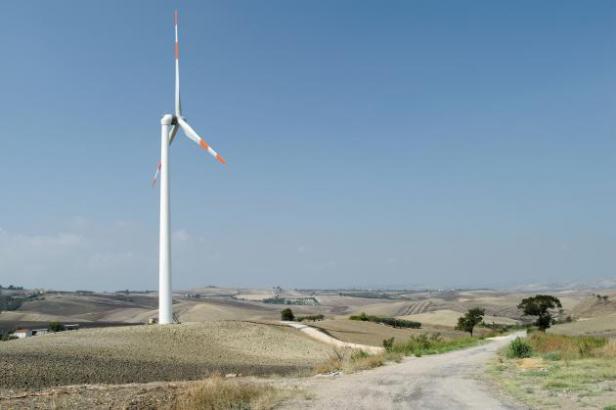
The South Tyrolean wind turbine manufacturer Leitwind will put up a 16 turbine wind farm in the region Apulia in Southern Italy by the end of this year.

Together, the turbines of the type LTW80 (1.5 MW) will produce an estimated 57 GWh of electricity annually.

The wind farm “Deliceto” in the province of Foggia will be operated by the company Elce Energia, which will invest a total of € 45 million in the project. The delivery of the turbines from Sterzing in South Tyrol, Italy, is scheduled for September 2012, and the wind farm will be completed before the end of the year.

“Leitwind is responsible for the transport, installation and commissioning of the wind park. Furthermore, a full-service contract for 15 years has been finalized,  which guarantees efficient production and optimum technical availability”, says Leitwind CEO Anton Seeber.

By the end of 2012, a total of 54 Leitwind turbines in Apulia and 82 in Italy as a whole will be generating electricity .Within a period of just five years up to the  end of 2011, Leitwind had managed to install a total of 200 turbines worldwide. Half of these were delivered in 2011, when 691 members of staff generated a turnover of € 163 million (+19%). For 2012, the management expects a turnover of € 200 million.

Vodafone McLaren Mercedes – first carbon-neutral Formula 1 team

Vodafone McLaren Mercedes has been certified as fully carbon-neutral and it becomes the world’s first ever carbon-neutral Formula 1 team.

To achieve this ambition Vodafone McLaren Mercedes has worked alongside CNI to select appropriate and relevant initiatives to offset the team’s carbon footprint.

Vodafone McLaren Mercedes became the first ever Formula 1 team to achieve the coveted Carbon Trust Standard, last December.

Implementing a series of efficiency-driven measures within the McLaren Technology Centre, it was able to achieve annual savings of more than 1500 tonnes of CO2 emissions.

“Vodafone McLaren Mercedes leads the way across F1, and certainly does so in terms of environmental initiatives: the first F1 team to achieve the Carbon Trust Standard, recognition by the Government’s Carbon Reduction Commitment Energy Efficiency Scheme and a whole host of initiatives at the McLaren Technology Centre,” said CNI co-chairman James Brown.

How to build a solar powered camera

Everyone’s dream is a solar powered camera. The best way a camera has continuous electric supply is with solar panels, harnessing uninterrupted wireless data support.

Difficulty level:
Moderate

Time Required: At least 5 to 6 hours

Resources required

1. Webcam
2. Wires
3. 12V rechargeable battery
4. Hammer
5. Drill
6. Screw and Screw driver
7. Solar Panel
8. Central hub/ Computer

Estimate cost: $100 to $500

Instructions

1. You can choose any wireless camera that you may find, powered by 12-volt battery.

2. An important criterion is the battery selection. You need to buy a long storage battery to make the operation continued in long wintery nights with reduced daylight. If the camera consumes  60 watts per day then you need to have at least 6 Amp-hours of backup from your 12 V battery.

3. The third step is to chose the solar panel. The power captured by solar panel will be used to recharge the battery. Buy the solar panel according to your light conditions. In open space with lot of sunlight hours, you can buy a solar panel of 5-10 W or you have to purchase a solar panel with high power capturing facilities.

4. Now you can start assembly the battery. You need to connect the  battery to the webcam. You can use the drill, hammer and screws to fix the whole assembly. If you are assembling it in rainforest, it is better to have solar panel mounted above the canopy of the forest. In ranches, a place above camera or anywhere inside your property is good enough as long as it is getting enough sunlight.

5. Next – mount the camera on either a tree or a pole with help of metal L brackets. You also need to mount the control box and battery in such a way that it do not get wet.

6. Connect the webcam wirelessly with your computer or central monitoring facility. When everything is ready, let the battery charge for day before the whole assembly starts working with your battery with limited charging.

European Solar Days

The European Solar Days promote the use of free unlimited renewable energy source available everywhere to everyone to generate electricity as well as heating and cooling: the sun.

The next campaign for the edition of the European Solar Days will be held from 1 to 13 May 2012.

During the fourth edition of European Solar Days, which was held from 1-15 May 2011, it was demonstrated the increasing support for solar energy, with more than 8,000 events organised in 19 countries throughout Europe, attracting the participation of half a million citizens.

20 participants from 16 countries gathered last week in Prague for the second edition of the European Solar Days Annual Conference to plan next year’s events.

The countries who are taking part at the European Solar Days are expected to continue to grow this year.