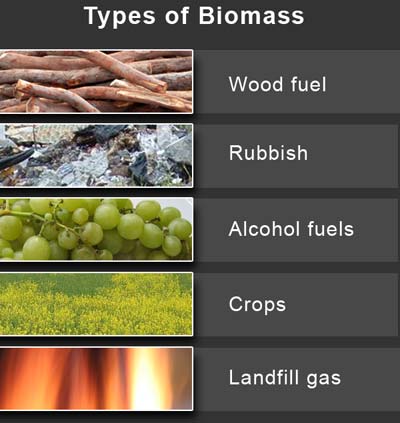
New study regarding sustainable biomass

More efficient land use could see England produce enough biomass to meet around four per cent of current UK electricity demand without affecting environmental sustainability or food production.
That is the conclusion of a major new study funded by the UK Energy Research Centre examining the potential of planting short rotation energy crops on unused agricultural land.
It suggests that growing lignocellulosic crops such as willow and poplar on marginal land could yield 7.5 million tons of biomass, of which the South West and North West could produce around a third.
The researchers said that converting marginal land to biomass plantations would not only be sufficient to generate approximately four per cent of current UK electricity demand, but would meet approximately one per cent of total energy demand, including heat.
This would represent a considerable increase on today’s levels, whereby dedicated energy crops account for less than 0.1 per cent of UK electricity, despite biomass being listed in 2009’s Renewable Energy Strategy as having “an important role” in meeting government targets of sourcing 30 per cent of electricity, 12 per cent of heat and 10 per cent of transport energy from renewable sources by 2020.
The use of biomass and biofuels has been hindered by fears over sustainability, EU standards which the UK government has failed to enact, and concerns that using land for energy crops damages food supplies.
But the paper said that new technology will mean that fuels can increasingly be produced from short rotation lignocellulosic crops without affecting food production because the trees can be grown on poor quality agricultural land – unlike current cellulosic biofuels typically derived from wheat and maize.
Source: www.businessgreen.com

Dutch Company to Invest in Bulgarian Solar Power Park

Dutch company Infinity Energy Holding AG will invest EUR 50 M in a solar power installation near the Bulgarian town of Devnya, near the Black Sea city of Varna.The announcement was made by the Chair of the Management Board of the company, Tjalling Halbertsma, after a meeting with the governor of the Varna district, Dancho Simeonov.
At present, the company is building the first part of the installation, which is expected to have a power of 5 MW. It has to be completed by the end of the year. In Bulgarian, Infinity energy Holding AG has contacts and is working with the company Solarpro. In Halbertsma’s words, the construction of the second part of the solar park, which will have a power of 10 MW, will begin after the Bulgarian Parliament adopts the law which defines the rates for sale of electricity from solar installations.
He also said that his company is interested in building wind farms in Bulgaria as well
The interest in Renewable Energy and in specific PV has been steadily growing for a number of years in the Balkan region. This region will continue to develop, and present opportunities for local and international businesses. A strong will to become less depended on fossil fuels is driving the market development.
Source: www.renewableenergyworld.com

Mid-sized solar projects will be ditched if incentive cuts go through UK legislation

The chilling effect of the coalition’s proposed cuts to feed-in tariff incentives on planned solar projects with 50kW capacity was hammered home last week with the release of new data suggesting that virtually no mid-sized installations will go ahead if the incentives are slashed as planned.
Officials from the Department of Energy and Climate Change (DECC) last week hosted a workshop alongside the Micropower Council and the British Photovoltaic Association where they were presented with detailed evidence on how the proposed feed-in tariff cuts of between 40 and 70 per cent are expected to result in a freeze on all projects with over 50kW capacity, including community-owned and public sector projects.
“We’ve all had our rant about the cuts, now we need to help ministers with the evidence they need to make decisions,” Dave Sowden, chief executive of the Micropower Council, told BusinessGreen. “It is still a bun-fight, but it is turning into an evidence-based bun-fight.”
Officials saw presentations from three solar developers – building giant Kingspan, solar specialist Suntech and insulation and solar technology installer Mark Group – all of which demonstrated that the scale of the feed-in tariff cuts proposed in the government’s ongoing review will make the full range of 50kw plus projects unviable.
Most notably, Kingspan used three real life projects with capacities of 100kW, 250kW and 500kW to undertake a detailed analysis of the rates of return available to firms at different locations and under the current and proposed tariff regimes.
The analysis found that, with the current tariffs, firms deploying the projects could expect to receive rates of return before tax ranging from 7.1 per cent for a 100kW installation in Edinburgh to 11 per cent for a 500kW array in Plymouth.
In contrast, once the tariff proposed in the government’s consultation is applied, none of the projects attains the five per cent rate of return DECC has said in its impact assessment that it wants to achieve. The best rate of return is 4.7 per cent for a 100kW array in Plymouth, while all other projects would deliver returns of between 3.8 and -1.2 per cent.
Significantly, Kingspan’s analysis is based on real life projects and the company has offered to make all of its calculations, invoices and contracts available to DECC officials.
A DECC spokeswoman said that the workshop was part of the government’s efforts to support its ongoing consultation exercise, adding that the department was in “listening mode” and committed to ensuring that “everyone gets the chance to put their view across”.
Source: businessGreen

Japan’s Kyocera to build second solar panel plant in Čzech Republic

Kadan, March 31 (CTK) – Japanese company Kyocera has launched the construction of its second solar panel plant in the industrial zone in Kadan in the Usti nad Labem region, northern Bohemia, Stepanka Filipova of the government agency CzechInvest told CTK Thursday.
Kyocera is going to invest Kc700m in the new plant.
At present it employs around 600 people in the region. In the autumn it is going to hire another 400 employees.
Usti nad Labem is a region with the highest employment in the country. In February it registered 60,612 jobless people.
According to the Kyocera management, the Kadan enterprise is its base for the European market.
The new plant is to have a capacity of 360 MW. Kyocera’s total solar panel production in both Kadan plants should reach 560 MW annually.
The Kadan company supplies solar panels to the entire Europe. Besides the Czech Republic, Kyocera has plants in Japan, China, Mexico and the USA.

Source: http://praguemonitor.com/2011/04/01/japans-kyocera-build-another-solar-panel-plant-%C4%8Dr

Green house built by The Fab Academy

Built by the Institute for Advanced Architecture of Catalonia (IAAC), Fab Lab House is a fully constructed project to provide energy efficiency and sustainability.
One of the features that impressed with this project is that the house is capable of generating up  to three times more energy due to rooftop solar panels. A detail of the construction are the plywood panels that are standardized (1220 x 1440mm) and used throughout the project in this dimension.
The Institute for Advanced Architecture of Catalonia is one of the leading educational and research center dedicated to the development of an architecture to address the global challenges in building comfort in the 21 century. Based on the 22 @ district of Barcelona, one of the main cities in the world of architecture and urban planning, IAAC is a platform for sharing knowledge with teachers and students from over 25 countries including USA, China. India, Poland, Italy, Mexico and Sudan. The students work on multiple scales
(urban, design, production) and in various fields (ecology, energy, digital manufacturing, new technologies), to pursue their  own research to develop an integrated skills to effectively in their home country or the world.
IAAC organizes the Master in Advanced Architecture of Vicente Guallart, Willy Müller and Marta Malé Alemany, in collaboration with the Polytechnic University of the UPC. Open-process inventory is open to students of the Master of Architecture PhD worldwide. The Fab Academy is part of the worldwide network of Fab Labs with the MIT Center for Bits and Atoms connected.
Source:www.ecosystemdiscovery.com/2011/02/eco-fab-lab-house.html

UK needs to recycle its stockpile of waste plutonium into fuel

Former chief scientific adviser to the government Sir David King has today urged the government to recycle its giant stockpile of waste plutonium into fuel for new-build nuclear reactors, as part of a major new report calling for an overhaul of the UK’s nuclear energy sector.
The report from the Smith School of Enterprise and the Environment at Oxford University investigates how the UK should manage its huge stocks of separated plutonium, reprocessed uranium and spent fuel.
It examines the costs, risks and environmental impacts of four possible scenarios, three of which analyse different options for recycling spent fuel into new fuel, and one that considers what would happen if the UK continued to treat spent fuel as waste for disposal.
Speaking at the launch of the report this morning, King insisted that there is no need for the UK to delay or scrap the new nuclear build programme in light of the crisis in Japan, arguing that there is “a massive economic economic opportunity for converting plutonium, which is a potential danger, into fuel”.
The report warns that all four scenarios would be expensive, but maintains that there is no cheaper “do nothing” option because the UK must deal with its stocks of nuclear materials and spent fuel.
Significantly, the report suggests that the cost of recycling waste materials could be paid for by the private sector and offset by the value of the new fuel produced. In contrast, treating spent fuel as waste would not generate any income and the cost would almost inevitably fall to taxpayers.
However, the report also warns that the government must adapt its nuclear policy and establish incentives to encourage investment in order to start recycling fuel.
Source: www.businessgreen.com/bg/news/2038151/uk-urged-recycle-spent-plutonium-power-nuclear-reactors

The Risø energy report regarding RE

It is now certain that the current energy systems and technological advancements available in the world are not sufficient to make the planet free from the carbon dioxide that is emitted from those resources. To solve this problem, there is a scope to build new technologies and to bring the existing technologies together to get maximum benefit from the entire energy system including energy production, transformation, to energy transportation and distribution. Work in this direction will have to be taken at both macro and micro level.
The world will have to switch to renewable energy resources very fast, because despite the availability of renewable energy resources, a large part of the world is still dependent on traditional energy sources such as coal and gas. This over-dependence of these traditional resources will lead to a situation where by the end of 21st century, resources like coal and gas will become extinct from the world. Thus, continuous efforts need to be made to switch over to renewable energy resources. This switch can help many countries make a successful environment policy and reduce the consumption of imported oil and gas.
If Risø National Laboratory for Sustainable Energy is to be believed, by the year 2050, the world will be in a position to use sources of energy with very low or no carbon emissions. The global energy system with low emissions will now have to use this new energy system in such a way that the cost of using these resources is also reduced.
The Risø energy report 9 gives a list of a number of energy technologies that will be commercially available for use in times to come. These technologies with no emission of greenhouse gases will help in reducing pollution.
The Risø energy reports, which have been prepared by the joint efforts of Danish and international experts look at energy issues of today and tomorrow from the perspective of the needs of Danish people, the region and the world. These reports are monitored by an independent panel of international experts and are based on scientific material that is internationally recognized.
Source: www.alternative-energy-news.info/renewable-energy-macro-micro/

I-GET project – regarding geothermal energy

People utilize geothermal energy to heat their homes and to produce electricity. This is achieved by digging deep wells and pumping the heated underground water or steam to the surface. But we can also use the stable temperatures near the surface of the earth to heat and cool buildings.
Dr. Ernst Huenges is the head of Geothermal Research at the institute GFZ – German Research Centre for Geosciences. He is of the opinion, “The new methods deliver important decision-support for the selection of sites for future geothermal projects. With this we can considerably reduce the risk of expensive misdrills,”
Geothermal energy is making its presence felt worldwide and Iceland is the best example of the utilization of geothermal power. In fact Iceland leads the world in the development of geothermal utilization. They have doubled their annual power supply capping it up around 500 MW as far as electricity supply is concerned. Germany is also emerging as a major user of geothermal energy. Germany is deriving its 100 MW of heat from geothermal energy. Italy is not far behind. A team of European scientists, in the region of Travale (Italy), is planning to tap the potential of localized geothermal reservoirs. If this project is completed it will produce energy akin to a potential of around 1,000 wind power plants. This is one of the projects discussed at the international final conference of “I-GET” (Integrated Geophysical Exploration Technologies for deep fractured geothermal systems) in Potsdam.
The European Union is also feeling the “heat” of geothermal energy. European nations are waking up to the potential of geothermal energy. This conference aimed at the development of state-of-the art technology with potential geothermal reservoirs. Seven European nations participated in this “I-GET” conference. They want to explore more and more geothermal reservoirs and utilize it for clean and green energy. The project “I-GET” could be a substantial step towards renewable energy source.
The newly developed techniques have been tried at four European geothermal locations. They are combining different geological and thermo¬dynamic conditions. High-temperature reservoirs have been examined in Travale/Italien having metamorphic rocks and in Hengill/Island (volcanic rocks). They are also examining two deposits with medium-temperature in deep sediment rocks in Groß-Schönebeck/Germany and Skierniewice/Poland.
The implications of the results of “I-GET” would be felt worldwide. Geothermal experts from Indonesia, New Zealand, Australia, Japan and the USA also participated in the “I-GET” project. There were 120 scientists and industry representatives from the 20 countries.
“Reliable geothermal technologies are in demand worldwide. Even countries with a long experience in geothermal energy such as Indonesia and New Zealand are interested in the results acquired in I-GET,” says Dr. Ernst Huenges. Therefore, we hope that this “I-GET” will give the necessary push to the geothermal research. GFZ is currently establishing an International Centre for Geothermal Research, which will, focus on carrying out application-oriented large-scale projects on a national and international level.
Source: www.alternative-energy-news.info/geothermal-energy-intelligent-use-of-earths-heat/