Solar market is estimated to value $134 billion until 2020

solar_vs_conventional

Annual income gathered from PV installations is to overcome $134 billion in the next seven years. Moreover, solar will not net supporstarting from 2017, as Navigant Research report announces.

Navigant Research, a market analyst, forecasted the annual revenues from PV installations worldwide will top US$134 billion by 2020.

438 of modules and installments from around the world will be gathered in the upcoming seven years, as the company’s Solar PV Market Forecasts shows. This report also predicts government alternative energy installation targets will rise in the close future.

Navigant Research also forecasted that the time when solar energy can face conventional energy has finally arrived. They say that by 2017, a year after the tax credit for solar investment in th U.S will drop by 10% is probably the period when all this will take palce.

It is also forecasted that solar can and will be competitive with conventional electricity almost around the world by 2020.

Roxana Moraru

Standards for large scale solar are to be prepared by the UK government

UK_large_sale_solar
The concern of loosing agricultural land may not be put apart by commitments to sustainability. The problems may be determined by incentives that can not stir rooftop and mid-size schemes.

The irresponsible installers from the UK are causing problems for large scale solar farms that are supported by the UK government who wants to introduce guidelines to increase their development.

A debate regarding the details was organized by Sarah Wollaston. The worries about visual impact of large scale solar farms, named hard-pressed farmers try to diversify their businesses, were summarized by Wollaston. Those who do not support solar farms also pointed out the loss of agricultural land.

Solar Trade Association, the UK trade body, is choosing 10 commitments responsible planning and development of solar farms but the UK government is planning further restrictions.

According to the STA, the problem seems to be a solar policy that doesn’t reward enough the mid-size installations.

“We’d all like to see more roof-mounted, community and mid-sized schemes and that came over loud and clear in the (parliamentary) debate. But the fact is the UK FIT scheme is failing these important applications. If that’s what the minister and MPs want to see – and they say they do – that situation must now also be addressed”, in term of Leonie Greene, STA’s head of external communications.

Roxana Moraru

China does not apply any punishment for importing polysilicon from the EU

anti_dumping_for_Chna_PV

It was told once more by the german Economics Ministry that no vindictive duties shall be given by China due to conflicting imports from the EU. Thursday the statements were backed up by the Ministry of Economics, no increase in punitive tariffs is to be made in regard with import of polysilicon.

The Economics spokesperson Stefan Rouenhoff declared: “To our knowledge, there will be no Chinese punitive tariffs on European polysilicon imports to China, Negotiations between the EU and China regarding the EU anti-dumping and anti-subsidy cases against solar panels from China are continuing. The aim of the Federal Ministry of Economy is to continue to contribute to an amicable solution between the EU and China.”

Beijing had not made any obligation to dictate anti-dumping punishment on the polysilicon line from the EU. This remains to be given by an unknown source related to China’s Ministry of Commerce giving a feedback on the polysilicon factor  between Chinese minister of commerce Gao Hucheng and German economics minister Philipp Rösler.

Further bargains are taken by  a Chinese delegation in Brussels this week on the EU’s anti-dumping fees in Chinese PV imports after a 3 week delegation made by EU in Beijing.  Negotiations continue, said Helen Banner, the spokesperson of EU trade agent Karel De Gucht.
The EU Agency aproved a phased admittance  in June in which anti-dumping fees are to be raised 11.8% on Chinese imports, even though a sound confronting was given by a large number of EU member states.

For months, authoritative taxes were taken into consideration regarding polysilicon imports from the EU by China, the Ministry of Commerce started an investigation in the imports of European polysilicon in the end of  the last year in a short while after EU Commison began its investigation into the claimed anti-dumping procedures by Chinese producers.

Roxana Moraru

Berlin-Beijing’s argue about polysilicon is to be resolved

China_denies_anti_dumping_duties_for_Berlin

China denied punitive tariffs on EU polysilicon imports as a sign of conciliation with Germany. 

The German Federal Ministry of Economics approved a report by German financial daily Handelsblatt that shows that German economics minister Philipp Rösler and Chinese minister of commerce Gao Hucheng came to an understanding regarding polysilicon imports.

In spite of the fact the everyone expected another move from China, for instance to deny European polysilicon imports, the two countries reached a settlement. This could be a first step up regarding a resolution of the trade dispute that grew in Europe’s PV industry.

In this year’s June, the European Commission, imposed anti-dumping tariffs of 11.8% on Chinese PV imports to Europe even though a large amount of EU states din not agree and neither did the European PV industry.

China has been thinking about imposing EU and U.S duties on polysilicon as well, but the new settlement shows that China has reached out towards Germany, Europe’s biggest polysilicon producer, which would have had a lot to suffer from the tariffs.
.

 Roxana Moraru

Renewable energy supply will go beyond gas by 2016 at a global scale

Renwable_energy_will_surpass_gas
Gas will be exceeded by renewable energy worldwide until 2016, reaching almost a quarter of the planet’s power supply by 2018, by 2016 it will exceed that from gas and be the twice of that of nuclear plants. It has already exceeded overall consumption of electricity in China by 2012.

Broadcasted on Wednesday, this year’s second Medium-Term Renewable Energy Market Report anticipates that alternative power will rise by 40% in the coming 5 years, although the economic context has seen better days. Renewable energy is by now the quickest-growing power producing sector and will be in 2018 at 25% of global supply exceeding with approximate 5% the ratio from 2011.

Thus, the portion of non-hydro sources like geothermal or bioenergy, wind and solar energy will be doubled by 2018, reaching 8%, up from 4% by in 2011, and half that in 2006.

IEA Executive Director, Maria van der Hoeven stated from the report: “As their costs continue to fall, renewable power sources are increasingly standing on their own merits versus new fossil-fuel generation, this is good news for a global energy system that needs to become cleaner and more diversified, but it should not be an excuse for government complacency, especially among OECD countries.”
This report, however warns that renewable energy growth is evolving in complexity and presents challenges, such as an increasing discussion regarding the expenses of renewable sustenance policies in various European countries who are affected by a stagnate economy and energy request.

There are two positive factors that sustain optimism: First of all, acceleration has been observed at the coming-out markets in investment and placement, where renewable energy is helping to approach the rapid increase of energy demand, the variation on energy producers and local pollution responsibilities. Second, along with hydropower, geothermal and bioenergy, solar energy is drawing attention in markets with high billing prices, like those produced by oil-fired energy. Plus the fact that photovoltaic energy production can be a lower expense than one centralized supplier.

Roxana Moraru
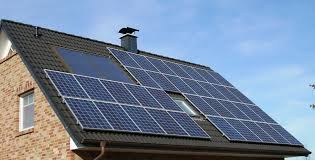
Climate change policy announced by Obama puts solar in a better place

Obama_puts_solar_energy_in_a_better_place

The climate change policy in U.S.A offers a new role for solar. Other positions were also settled, as natural gas, nuclear and CCS were defined, among solar, as “clean energy technologies.” As a follow up, agreements show a 13 GW increase of renewables by 2025.

What was meant to be an announcement for tougher carbon standards for power stations and a warning for climate changes, turned out to be a feature on solar and other renewables.

In his speech, the president also announced a new goal for the Department of the interior to allow a further 10 GW of renewables on public lands until 2020, since in 2012 10 GW were already permitted.

America’s biggest energy consumer, The Defense Department, promised to use 3 GW if unconventional energy for military use by 2025. Federal agencies also committed to distribute 10 MW of installed renewables capacity by 2020.

The speech added a presidential memorandum towards green energy into America’s grid network.

On the other hand, solar watchers are not as excited as Obama’s energy policy still looks up to fracking and shale gas, as well as nuclear. Obama also announced that the U.S public money will no longer be used to support the coal-fired power plants, and the fossil fuel will no longer be tax free.

“The U.S. will work with trading partners to launch negotiations at the World Trade Organization towards global free trade in environmental goods, including clean energy technologies such as solar”, as the president said.

Roxana Moraru

New inverters designed by Sungow, present at Intersolar 2013

New_Pv_inverters
A new set of inverters were presented by Sungrow in this year’s Intersolar.

Sungrow brings three brand new inverters at the exposition after enjoying a great success with the launching of 5-30kW string inverters and the releasing of SG500MX at SNEC 2013 in Shanghai. The new products are: SG800MX, the veiled central PV inverter; SG8/10/12KTL-EC-series string inverter, intelligent residential PV system, and SH10KTL, residential energy storage systems.

The outdoor inverter unit with an 800kW capacity, SG800MX, is one of world’s greatest single-machine power PV inverters. Throughout the stunning surprise elements are the SVG function during night, operation temperature ranges -25℃~+55℃. Moreover, it met German BDEW directives and obtained the certificates for grid-connection in America and Canada. The series to which it belongs have a great deal of amazing features such as: natural cooling function, higher conversion efficiency and lower cost and built-in monitoring system. To sum up, SG800MX is an intelligent residential PV system solution designed for Europe and America.

As for SH10KTL, Sungrow’s newest product for energy storage system of residential PV plant, it has an energy storage function integrated and it can switch seamlessly between grid-connected mode and off-grid mode

And last but not least, SG30KTL, is a wall-mounted string inverter with the largest single-machine power that can be found. This solution was the choice of many Europeans since its launch in 2012. The inverter remarks itself through the granted double “A” results from Photon’s test and VDE-ASIG reliability certificate.

Roxana Moraru

Three PV solar parks were constructed in Romania

Romanian_sola_parks

Romania’s solar capacity increased after the contraction of three PV solar parks was finished by Et Solar group. The parks have the combined capacity of 28 MW. So, an increase of 48 MW was made over the last eight months, after the company installed a total of 50 MW this year.

The solar parks are owned by Romania’s top electricity supplier and trader. The new PV systems are located in Targu Carbunesti, Gorjcounty, and Simnicu de Sus, Dolj county.

The PV modules were provided by ET Solar Group and the engineering procurement and construction services and the financing also were supplied by ET Solutions AG, its Munich-based subsidiary to be precise. The ET Solutions’ Romanian branch will be in charge of operations and maintenance.

ET Solar Group president and CEO Dennis She says that “the achievement of grid connection for these three photovoltaic plants is a result of seamless coordinated work among our team in Munich and Bucharest”. “It further demonstrates that we are transforming ourselves into a global EPC company. We are committed to further growing our project solutions business to other emerging markets.”

Romania had only 2 MW PV capacity in the last October, so the industry has come a long way in this country. However it was not easy. The Romanian government imposed new measures in June which were meant to frighten foreign investors. Between them is one ordinance that is meant to disapprove two out of six six green certificates given to photovoltaic energy producers per megawatt hour fed into the national grid. The Romanian energy regulatory Authority will still assign PV solar plants plants six green certificates but repress two of them until March 2017.

Roxana Moraru

Siemens solar division will close down

Siemes_solar_division

The solar division from Siemens will shut down after they failed to sell the unit that has not been functioning for nine months.

The company would be shut down production and the division according to sources from the company. Yet still, current ongoing projects will be completed and warranty obligations will be fulfilled, as announced by a company spokesperson.

As a result, 280 people will loose their jobs. The majority of them are located in in Israel, where the solar thermal subsidiary Solel Solar Systems, a Munich-based group operates.

Siemens spokesman To


Wolf also claims that “the current and future market for solar receivers remains low. As a result, it was difficult to agree on a business plan for a sale that took into sufficient account the interests of both the buyer and seller.”
rsten Wolf said that „After seven months of intensive sales efforts for the solar thermal business, it’s clear that due to the increasingly difficult market situation, no investor could be found for the business.” He also announced that the company was unable to reach an agreement that “provided due consideration for the interests of customers, employees, investors and Siemens.”

The latest engineering company, Siemens, purchased Solei in 2009 with $418 million. The group has reported $1 billion losts and Siemens put its solar unit on the block.

Roxana Moraru

New 4.5 MW solar park accomplished by the german Conergy in France

New_solar park_completed_in_France

Today’s Conergy realization is a solar park for the financier UEM, the local energy producer and framework operant, sheltered on an area of 9.5 hectares with the capacity of 4.5 MW.
This project holds 18,000 Conergy “P Series” units, it is situated in La Fare-les-Oliviers of Southern France, and will provide about 6,500 MWh annually, or plenty electricity to sustain about 1,800 homes.
Although the market is difficult and the price competition is forceful, the german provider Conergy continues to accomplish and provide for projects in European investors from Greece, Spain and Portugal. It also remains active in Southeast Asian markets like Thailand.
Conergy did not only provide PV units, but also brought to operation the design and installment for the entire project. In addition, it will carry on its involvement in sustenance and functional administration for the solar park.
Along with this project, Conergy backed up Sunlap in the building of two carport plants in La Fare-les-Oliviers with “P-Series” units and IPG15T inverters. It will sustain almost 127 MWh annually.

Conergy’s Managing Director Philippe Pflieger revealed a positive point of view. “With its decision to increase both, market volume and subsidies, the government has given a boost to the solar sector. Although the economic situation in this country remains tense, we believe that these steps will restore a good outlook for solar energy in our country.”

Roxana Moraru