Two giant Israeli solar plants to provide nearly 2 percent of the country’s electricity

solar power plants Israel

Istrael to invest in 121-megawatt solar power plant. Photo via Think Progress

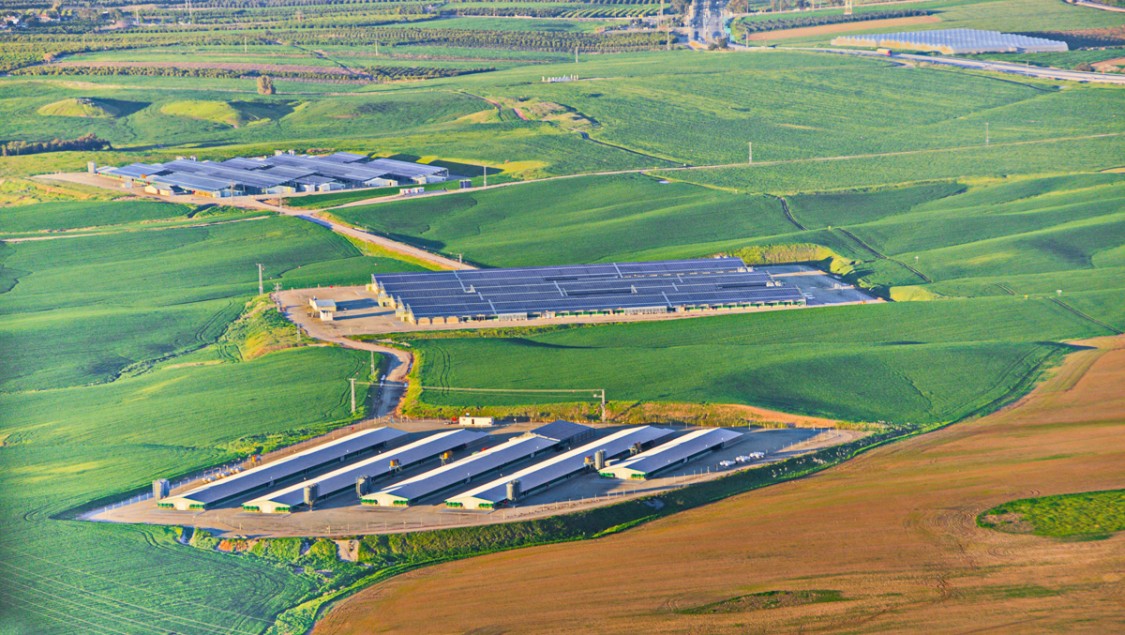
Las week, Israel inked a $1 billion deal to build what will become the second 121-megawatt solar power plant under construction on a swath of country’s southern Negev desert.

When completed in early 2018, the two plants, along with a smaller 30-megawatt photovoltaic plant slated for the site, will provide 2 percent of the country’s total electricity production. Israel has a target of getting 10 percent of its electricity from renewable sources by 2020.

According to Climate Progress, the Israeli Finance Ministry said the overall site, named after the nearby town of Ashalim, will be the biggest of its kind in the world, and will have electricity storage options on top of solar power generation.

The 121-megawatt Megalim Solar Power Ltd. project is already under construction and is expected to be completed by 2017. The newly financed project — to be built by Abengoa, a Spanish firm that focuses on innovative technologies in sustainability, and the Israeli global infrastructure group Shikun & Binui — is expected to break ground next month. It is being financed by the Overseas Private Investment Corporation and the European Investment Bank as well as several local commercial banks.

The newly financed solar park will produce energy for more than 69,000 households, and prevent 463,000 tons of carbon dioxide emissions annually.

“This agreement is a milestone for renewable energy projects in the country,” said Yariv Nehama, deputy accountant general for the Finance Ministry. “The project is unusual in its scope and technological innovation, which combines capacity with energy storage.”

Both of these two large solar plants are concentrating solar power (CSP) — otherwise known as thermal solar — plants. Instead of converting solar power directly into energy, as photovoltaic plants do, CSP plants focuse the sun’s rays using parabolic troughs.

The reflected sunlight then heats a fluid, such as molten salt, that runs a generator which creates electricity. The Ashalim plant in Israel will be able to use the molten salt — salt that has been turned into a liquid due to high heat — to store thermal energy for 4.5 hours.

The International Energy Agency’s (IEA) 2014 CSP Technology Roadmap determined that CSP has a promising future due to its cheap and efficient storage qualities, and that 11 percent of global electricity will be generated by concentrating solar thermal power in 2050.

While growth of CSP has been slower than expected — in many ways due to the rapid drop of the cost of PV power — CSP has started to see significant growth.

In Israel, a sun-soaked desert country, solar power has been slow to catch on in large part due to the recent proliferation of natural gas, two large offshore reserves of which were discovered in the last decade.

Since 2011, natural gas has gone from providing about a third of Israel’s electricity to around half. As the Wall Street Journal recently reported, after the offshore gas reserves were discovered, the government stopped approving the addition of new solar projects to the grid.

Right now renewable energy only makes up about 2 percent of Israel’s electricity supply, far short of the 10 percent by 2020 goal.

The Israeli government expects electricity demand to double within the next 20 years due to population growth, higher living standards, and climate change that will create a need for more air conditioning.

Israel’s Environmental Protection Ministry recently recommended that the country cut its greenhouse gas emissions by 30 percent by 2030.

“Israel has all the conditions necessary to lead to an advanced climate policy: We have gas, sun, financing and brains that know how to find solutions,” Environmental Protection Minister Avi Gabai said earlier this month. “Our plan will leverage all of these advantages to create a growth engine for the economy, and the technology developed here will provide solutions for dealing globally with climate change.”

Apple wants to use solar power on mouse, keyboard, and trackpad

Apple solar-powered gadgets

Apple patent suggests future devices could be solar-powered. Photo via imgick.oregonlive.com

In theory, the technology would eliminate the need for AA batteries which are now required to power peripherals such as the Magic Mouse.

While Bluetooth-powered keyboards, mouse and trackpads may be commonplace now, we could soon see solar power replacing the current technology.

The U.S. Patent & Trademark Office published Apple Inc.

“Wireless communications circuitry transmits the touch input to the external equipment using the electrical power from the solar cell”.

According to TV Newsroom, the tech giant Apple has just been granted a patent for solar cells to be embedded underneath iPhone touchscreens, like those used in a Macbook trackpad, iPhone, iPad or Apple Watch display. The company is looking to harness solar energy for these future accessories.

So, the solar cell being a light based power source gathers and converts ambient light into usable electrical energy, which is the stored into some relevant storage system like a battery or regulated capacitor. The new patent shows transparent solar cells embedded on the touch display surface to have the battery charged on the go.

Using solar power to better the battery life of devices while they are in use will be a good addition to the company’s desktop peripherals.

Unfortunately, as is the case with all patents, there’s no way of telling whether Apple will ever roll out such technology to its devices.

Whether Apple will eventually integrate this solar energy system into its physical devices is anybody’s guess.

Today’s patent application is credited to Apple reliability engineer Matthew Lang, who already has several eco-friendly engineering projects under his belt – such as designing and building an Eco-Marathon vehicle to compete in the annual Shell Eco-Marathon Americas competition.

Now, a New York Times report has revealed that Apple is considering incorporating wireless or solar charging capabilities into the Apple Watch.

An illustration of Apple’s solar cell as it appears on the patent application.

It’s also not clear whether solar energy is really sufficient to keep a device like a keyboard alive in perpetuity.

IBM’s machine-learning crystal ball to foresee clean energy availability

IBM renewable energy technology

IBM’s SMT system uses weather patterns gleaned from thousands of data points and predict how much solar and wind power will be available weeks in advance. Credit: IBM via Computer World

IBM has developed a computer system that can learn about weather from thousands of data points and predict days — even weeks — in advance how much power from solar and wind farms will be available for the U.S. power grid.

According to Computer World, the new system is as much as 30% more accurate than today’s state-of-the-art weather prediction systems used by organizations such as the National Weather Service, according to the National Renewable Energy Laboratory.

“It’s providing a forecast for solar, wind and other environmental parameters. It learns from solar plants [and] weather stations, and constantly adjusts and improves the forecast,” said Hendrik Hamann, Research Manager at the IBM T.J. Watson Research Center.

Because the system can better predict how much renewable energy will be available, the nation’s power grids are better able to integrate that electricity with traditional forms of power.

IBM’s new computer algorithm, called Self-Learning Weather Model and Renewable Forecasting Technology (thankfully known as SMT), uses big data analytics and machine learning to improve solar forecasts. The system works by combining more than 1TB of data gleaned daily through more than 1,600 weather-monitoring stations and solar and wind plants in the continental U.S., as well as from weather satellites.

“The more data you put in, the smarter it gets,” said Hamann.

The SMT system continuously analyzes data to learn from and improve renewable energy forecasts. The data is derived from thousands of weather models around the continental U.S., as well as weather satellite images and images from cameras mounted at wind and solar farms that watch the sky for weather patterns.

In contrast, most current forecasting techniques rely on individual weather stations that offer a narrower view of the variables that affect the availability of renewable energy.

“By continuously training itself using historical records from thousands of weather stations and real time measurements, IBM’s system combines predictions from a number of weather models with geographic information and other data to produce the most accurate forecasts — from minutes to weeks ahead,” Siyuan Lu, Physical Analytics Researcher at IBM, said in a statement.

Today, only about 5% of U.S. electricity is generated from wind and solar resources, but the amount of power from renewables is growing rapidly.

Solar power, for example, is predicted to supply as much as 14% of the nation’s power in just 15 years and 27% by 2050. Currently, about 65% of U.S. power is derived from fossil fuel-generated power, such as coal, according to the U.S. Energy Information Administration (EIA).

Over the past two years, solar energy has been the second-largest source of new electricity generating capacity in the U.S., exceeded only by natural gas.

As the amount of solar and wind capacity continues to grow, it’s critical for regional power grids to know how much renewable electricity they’ll have in advance to better plan their capacity needs.

Power transmission in the U.S. is controlled by regional independent system operators (ISOs), which receive electricity from member utilities. For example, ISO New England Inc. manages the operation of the region’s bulk electric power system and transmission lines.

Power from traditional sources, such as fossil-fuel power plants and hydroelectric dams, is relatively stable and easy to predict. Renewable power, however, is at the whim of the weather; clouds, humidity and wind can affect how much renewable energy is generated from solar and wind turbines.

IBM’s SMT system takes in new data every 15 minutes, allowing it to predict and then inform ISOs how much energy is likely to be produced from solar and wind farms.

“By improving the accuracy of forecasting, utilities can operate more efficiently and profitably,” said Bri-Mathias Hodge, who oversees the Transmission and Grid Integration Group at the National Renewable Energy Laboratory (NREL), a collaborator in the SMT project. “That can increase the use of renewable energy sources as a more accepted energy generation option.”

Study: Brains ‘excited’ by wind turbines

wind farm

Wind turbines are not linked to health complaints, study says. Image via power-eng.com

Groundbreaking research from Germany on low-frequency “infra­sound” adds to the recent body of work that is challenging wind energy proponents’ insistence that turbines are not linked to health complaints reported by those living close by.

According to The Australian, the international project led by the National Metrology Instit­ute of Germany (PTB) concludes that exposure to infrasound below the range of hearing could stimul­ate parts of the brain that warn of danger. It finds that humans can hear sounds lower than had been assumed and the mechanisms of sound perception are much more complex than previously thought.

The researchers do not claim the results are definitive regard­ing wind turbines and health impacts, and say more work is needed.

But the research builds on recen­t work in Japan and Iran — and investigations by NASA dating back to the 1980s — that suggests the health science of wind energy is far from decided and would benefit from further inquiry, though it is unlikely to persuade prominent wind farm advocate, Simon Chapman.

Dr Chapman, who did not respond to questions from The Australian about the German work, told a Senate inquiry into wind farms and health last month that he was not persuaded by other recent­ research.

“I believe there is much evidence that belief in the harms of wind farms is the cause of harm from wind farms and that those who are intent on spreading this fear are largely responsible for that harm,” he told the inquiry.

The Clean Energy Council was unavailable to comment. But others in the renewables industry say they are open to further inquiry.

Oliver Yates, the chief executive officer of the Clean Energy Finan­ce Corporation, which has less than 20 per cent of its portfolio invested in wind farms, said that “environmental considerations” were critical in any project.

Asked at a conference in Sydney yesterday if the corporation was concerned about increased health risks, he replied: “I encourage any necessary additional support or research people feel that they need to have in relation to this matter to get clarity and satisfaction within their own mind.”

The National Health and Medical Research Council is currently reviewing the evidence on wind turbines and health. The Australian Medical Association will review its position on the issue once the NHMRC reports. Until then, its position is that available Australian and international evidence does not link adverse health effects to wind farms.

The AMA’s vice-president, Geoffrey Dobb, said there was “no accepted physiological mechanism where sub-audible infrasound could cause health effects”.

The German study suggests the impact of very low frequency noise on some people is poorly understood. Scientists in Japan measured brain function and reported last year that it showed the brains of Japanese wind turbine workers could not achieve a relaxed state.

In a similar vein, a study of 45 people in three groups by Tehran University, published earlier this year, said “despite all the good benefits of wind turbines, it can be stated that this technology has health risks for all those exposed to its sound.”

Work by Neil Kelley and NASA in the 1980s on early model wind turbines found impacts from infrasound and led to design changes.

It identified a direct causal link between wind turbine infrasound and low-frequency noise and neighbours’ health problems including sleep disturbance, collect­ively described as “annoyance”.

As the number and size of wind turbines has increased, the number and spread of complaints has also grown. The German research says infrasound is pervasive and generates from an increasing number of sources, including renew­able energy sources such as wind parks and heat pumps.

“Although commonly declared as ‘non-audible’, the number of complaints about infrasound expos­ure has been increasing expon­entially in Germany and also in other countries serious problems exist,” the research paper says.

“It has been agreed that infrasound is perceived by humans and it represents an almost unknown hazard to human health.” Project leader Christian Koch told The Australian the intention of the PTB researc­h was to investigate how infrasound can be perceived by humans.

“We think this is a contribution to the many questions we have within this field but it is too early to conclude seriously about wind turbines­ and their impact,” Dr Koch said.

As part of the German research, laboratory tests were conducted using very pure low-frequency signals.

Test subjects were asked to describe their experience and their brain responses were measured using magnetoencephalography and functional magnetic resonance imaging technologies.

The results showed that human­s could hear sounds of eight hertz, a whole octave lower than had been previously assumed, and that excita­tion of the primary auditory cortex could be detected down to this frequency.

A PTB report on the research findings said all participants had explicitly stated that they had heard something.

Clinical observations showed a reaction in certain parts of the brain which play a role in emotions. “This means that a human being has a rather diffuse perception, saying that something is there and that this might involve danger,” Dr Koch said.

PTB said the wind energy sector and authorities had often tried to appease concerns of health impacts from wind farms by declaring that the sounds generated were inaudible and too weak to be the source of health problems.

But Dr Koch said the issue must be taken seriously. “Neither scaremongering nor refuting everything is of any help in this situation,” he said. Investigations were only beginning and further research was urgently needed.

The Australia-based Waubra Foundation has long been recommending independent research into the effects of industrial sound and vibration from wind turbines and other sources. The foundation said the German research had helped “demonstrate objectively and visually via functional MRI scans that an infrasound stimulus triggered physiological responses that were hardwired into the mammalian brain”.

Dubai installed solar “palm trees” that charge phones at parks and beaches

solar palm trees

Smart palms in Dubai. Image via fastcoexist.com

Dubai has recently installed “Smart palms” that store solar energy during the day and discharge power at night.

According to Fast Coexist, Smart Palm, the company, has set up two so far—one on Surf Beach, another in a park near the waterfront. It plans to plant them in 103 locations under a contract with the United Arab Emirates city.

The palms stand about 20 feet high, with solar fronds measuring 194 square feet (18 meters square). There are eight charging points and the palms have Wi-Fi range of 100 meters, according to the company. Less attractively, they also have screens and security cameras.

“For us, it was important to translate the important cultural identity of the date palm from being a plant that provided shelter, building materials, shade and sustenance, to our Smart Palm, designed to provide data, connectivity, energy and all in a sustainable manner,” says Viktor Nelepa, Smart Palm’s founder, in a press release.

In an email, spokesperson Vangel lvanov says the cost is yet to be finalized because the startup will probably be shifting to a 3-D printing manufacturing process.

Of course, you might want to avoid the palms during the day, at least in summer when temperatures get into the hundreds. But they do seem like a useful and playful addition at night, assuming they’re not too expensive.

Solar-powered racing car launched by CUER student team

solar-powered racing car

Students to launch solar racing car. Image via Engineering and Technology Magazine

The launch of a new solar-powered racing car built by British students aims to highlight the potential of electric vehicles.

According Engineering and Technology Magazine, the 60-strong student organization Cambridge University Eco-Racing Team (CUER) has been designing, building and racing eco-vehicles since 2007 and later today it will unveil its latest creation – a solar-powered car called Evolution.

The vehicle will be entered into the Bridgestone World Solar Challenge, an endurance event across the Australian Outback in October – the same event which the team’s last car, Resolution, had to bow out of in 2013 after it crashed during final road testing.

Driver Alan Jamieson, who is studying for a PhD in fluid mechanics at Cambridge, said he was hoping to overcome the previous disappointment and make a splash this year in one of the “toughest” challenges in the world.

He added: “It is 3,000km with dust, fierce cross winds, bush fires and these long road trains of carriages which, as they pass, you can feel the buffeting effect of even in a Land Rover.

“We had beaten all expectations to get our vehicle Resolution to Australia in 2013. We had designed the car from scratch and built it in a year. It was completely different to anything that had gone before; it was smaller, lighter, with an efficient array of solar cells that could position themselves towards the sun.

But a big issue was, unlike the big teams participating, we were trying to study, fund-raise and build the car in our spare time.

Parts were delayed and the car wasn’t completely made when we began test driving. Also, our driving team was relatively ‘young’ in terms of experience: for example, one of our drivers signed up before she even had her driving licence.”

The team is confident the stability issues that plagued the previous iteration of the car have now been resolved and Amy Livingstone, head of the electrical team, said the new car is more powerful and its solar panels have been adjusted to allow it to absorb more solar rays.

By showcasing cutting-edge sustainable engineering, the team hopes to inspire the advent of mainstream electrically powered vehicles. Programme director Aurelia Hibbert says the team also provides valuable hands-on experience for students.

“Working on a practical engineering project is an invaluable experience to students, many of whom, like Alan and Amy, are on theoretical courses,” she said.

“The challenge for CUER has always been maintaining momentum when each year many of our core team graduate and leave the university. We have a strong engineering team, experienced drivers and an exciting and innovative entry for the 2015 Bridgestone World Solar Challenge.”

The team is supported by established firms Jaguar Land Rover, Marshall Group, Penso, Timeless Green, TTP and Viridian Sola and recently won the backing of international investor BNY Mellon.

The vehicle will be unveiled at the university’s sports ground later today and the coming months will be spent testing at the Jaguar Land Rover wind tunnel facilities and on the track at the Millbrook Proving Ground in Bedfordshire.

3D printing garbage off the planet

3d printing garbage

Transforming garbage into products with 3D printing. Photo via wagingnonviolence.org

AlphaPura is a global initiative to fund and develop 3D printers capable of repurposing the bulk of meltable human garbage on Earth into new products, and into global solutions.

The story of AlphaPura began with Frederick Janson, a former research professional at Stanford University School of Medicine, and graduate business professor, who developed a 3D printed water filter, which did not require a filter or electricity to purify water.

According to 3D Printing Progress, Janson envisioned that his product could convert the oceans, seas, and waterways of the world into drinkable water, to serve a hungry and thirsty market of no less than 2 billion people. Though Janson had developed no elaborate marketing campaign for this invention, in a single day it went viral, with thousands of people taking an interest in this global solution to the fresh water crisis and famine crisis.

The problem was that 3D printing building materials were cost prohibitive and did not allow Janson’s invention to compete with substitutes on the market, and so Janson shelved this global solution to develop a global solution to reduce the cost of 3D printing consumables, whereafter he designed the AlphaPura 3D printer, to be able to 3D print using meltable waste, effectively developing an additional global solution, that of reducing human waste materials by transforming human waste into a “free” building material. To summarize, Janson designed a way to repurpose the world’s meltable trash.

To be able to turn these ideas into reality, Janson built the first prototype for these global solutions out of an EV3 robotics set made by Lego. The first design was one that was “off the grid”, such that it could use renewable energy sources and/or non-renewable energy sources to recharge this 3D printer, so that it could be used in emergency situations.

The former design employed a programmable fresnel lens on a robotic arm and tungsten funnel-extruder combination to superheat meltable materials in a controlled manner, by employing a programmable swinging shade between the Sun and the fresnel lens in such a manner as to achieve the optimal melting temperature of most objects.

A more ambitious and future design employs a laser in addition to a fresnel lens (which is ideal for “off-the-grid” usage, but requires sunshine to be able generate energy through a steam engine and to melt materials, and thus is limited as to where it can be used, though other renewable energy technologies could be used here instead of a fresnel lens) to superheat meltable waste into the molten state required to repurpose the waste into a 3D printed object or mold.

The current design and the one currently being proposed for funding simplifies the design by removing the solar panel, external energy inputs and associated renewable energy generators, the rechargeable battery of this device, and the fresnel lens robotic arm with the shading mechanism, which would otherwise swing into the maker space as needed — features they plan to offer in an a-la-carte and customized build-your-own printer in the future, along with other novel swing-in features on robotic arms, including, but not limited to, miniature power tools, and along with different maintenance service plans, training service plans, and do-it-yourself kits, the latter of which will allow users to swap in dedicated tungsten extruder-repurposer “printer heads” for each material type they seek to repurpose, to eliminate the need for cleaning extruders between material types they are repurposing.

Tungsten Design for this Invention

As this technology seeks to repurpose the bulk of human solid waste on Earth, some of the AlphaPura 3D printer needs to be made out of an abundant and inexpensive building material with a melting temperature above that of most solid waste, and such, tungsten has been selected as the primary building material, as it has one of the highest melting temperatures on Earth, 6000+ degrees F, more than a couple of thousand degrees hotter than the temperatures being generated by a fresnel lens, on the order of 3800 degrees F, which is hotter than the melting temperature of most metals, glass, and plastics, whose range is between 150-3000 degrees F, with plastics at the lower end, glass in the middle, and metals at the higher end, with respect to melting temperatures.

The inventors believe they can build, test, and deliver a functional prototype in the next 18 months with financial support. A likely risk is that they won’t be able to configure the 3D printer software to melt down all of the different types of plastic, glass, metal, concrete, and other meltable waste within 18 months, and so are committed to releasing software updates on a continuing basis, until there is a program for every waste material that can be repurposed.

Japan is turning its abandoned golf courses into solar farms

golf course in Japan

Solar energy plants on abandoned golf courses in Japan

Faced with too many abandoned golf courses, Japan has now turned to transforming them into solar energy plants.

Back in the 1980s, golf courses were huge in Japan. So huge that memberships cost millions of dollars. Not surprisingly, a boom followed in the 1990s and early 2000s, and now…there are just too many of them not being used.

The solution? Well, thanks to Japan’s energy strategy post-Fukushima that now calls for roughly doubling the amount of renewable power sources in the country by 2030, Kyocera and its partners announced they had started construction on a 23-megawatt solar plant project located on an old golf course in the Kyoto area.

According to ecorazzi.com, the project, which is scheduled to be operational in September 2017, will generate a little over 26,000 megawatt hours per year, or enough electricity to power approximately 8,100 typical local households.

And Kyocera is not stopping there. They have plans for a larger project in the Kagoshima area on land that had been designated for a golf course more than 30 years ago but was ultimately abandoned. That project is expected to generate nearly 100,000 megawatt hours per year, or enough to power about 30,500 households.

Apparently Kyocera isn’t alone with this bright idea, and is facing competition from Tokyo-based Pacifico Energy, which is building a 42-megawatt solar plant on an old golf course in Okayama.

But the idea for using solar power plants on abandoned golf courses isn’t remaining in Japan. Plans for similar projects are already underway in the U.S., including New York and Minnesota. And with golf courses already wrecking havoc on the environment, this could very well be their redemption.

Charge your phone in 2.5 hours with this paper thin solar charger

Solar technology is getting better and better, with a new Kickstarter campaign having been started for “Solar Paper”, which is touted as the world’s smallest solar chargers.

According to Tech Times, the chargers are available in four different models, with each offering different wattages, and the creators say that in the sun, the devices can charge an iPhone 6 in around 2.5 hours, which is a similar speed as a wall charger.

At only a little larger than a dollar bill and 0.45 inches thick at its thickest, the solar charger, built by Yolk, is only 13 percent of the size of the previous largest solar charger and only 26 percent of the weight of the main competitor.

While the charger is very small, that’s not the only selling point for it. Other solar chargers require users to unplug devices and then plug them back in when the charger gets covered by a shadow. Solar Paper, however, simply stops charging due to not getting enough sunlight and will start charging again when it does get enough.

paper thin solar charger

Types of Solar Paper by YOLK. Image via Tech Times

While the chargers are available in four models, different “models” include different numbers of panels, with each panel representing 2.5 W. Basically, the 5 W model is simply two panels, the 7.5 W model is three panels and the 10 W model is four panels.

The 2.5 W model, as the page explains, is not powerful enough to charge something like a smartphone, however, it is enough to charge an external battery. The 7.5 W model is recommended for smartphones and is able to charge an iPhone 6 in 2.5 hours. The 10 W version is recommended for things like an iPad.

This is also not the first crowdfunding campaign that Yolk has gone through. The company previously attempted to fund a solar charger called Solarade, which did not meet its funding goal. The company did, however, learn a lot through that campaign, such as one thing that users asked for after the last campaign being LED lights that indicate the charging status of the device. Yolk, however, took things a step further by offering an LCD display showing how much electrical current is being passed through the solar panel. This will give users a better understanding of solar technology and how it works.

“We would not put [an] LCD if we do not have [confidence] about our technology and the product,” says the company on its Kickstarter page. “We can display the power output because we are confident about our product and do not over advertise.”

For those interested in donating to the cause and getting their own Solar Paper charger, there are prizes between $49 for a 2.5 W model to $10,000 for a customized solar panel.

Swedish solar energy plants suffering from heatstroke

MVN Luftaufnahme solar plant

MVN Luftaufnahme, the largest swiss solar power plant. Image via tritec-energy.com

Switzerland’s solar energy farms are paradoxically suffering from the recent sunny weather, with the heat affecting photovoltaic plants. As a result, power generation has decreased slightly.

Although photovoltaic plants depend on a lot of sun, heat can impair energy production, according to Patrick Schaub, an energy analyst from SIG, a utility provider for canton Geneva.

“The cells’ efficiency depends on the temperature,” he explained. “The higher this climbs, the lower the efficiency. With temperatures in recent days seven or eight degrees above the seasonal average, the production of solar energy in canton Geneva has dropped by about 8%.”

The heatwave, which has so far lasted ten days, could reduce SIG’s annual energy production of 27 gigawatt hours by around 0.4%, Schaub said.

According to swissinfo.cf, Geneva saw the mercury rise to 37.1 degrees Celsius on Saturday and temperatures are set to exceed 30 degrees in many parts of the country this week. People in the capital Bern are bracing themselves for 37 degrees Celsius on Tuesday.

Schaub added that in addition to overheated photovoltaic cells, mist in the atmosphere was also causing problems. While the air gets dry at the beginning of a heatwave, evaporation tends to increase in the days that follow, reducing solar radiation. The ideal weather conditions for solar energy are therefore a sunny spring or autumn.

The same problem affects solar panels, which unlike photovoltaics are used not to generate energy but to heat water. These panels also overheat during hot periods.

Solar power provides 1% of Switzerland’s electricity needs. The country was a pioneer in photovoltaic technology 30 years ago, but it has since been overtaken by a number of other European countries in terms of production of solar power. In Germany, per capita production is more than 15 times the Swiss figure, and in the Czech Republic it is four times more.