Monocrystalline cells with an efficiency of 20.2 %

Schott Solar it’s able to produce monocrystalline screen-printed cells with an efficiency of 20.2 %.

The record cell with a performance of 4.92 W has been produced in industrial format, i.e. 156 mm x 156 mm.

The high efficiency technology used by Schott Solar is the same which has been using for some time for multicrystalline cells.

Since January 2011, the company has only focused intensively on substances related to monocrystallines.

To achieve more than 19% efficiency it was relatively easy, reports Schott.

To get over 20%, Schott Solar cooperated with the Schmid Group and took advantage of their selective emitter technology.

Now, Schott wants to get started with manufacturing optimization to transfer the result to new modules.

The company will announce more details at the EU PVSEC at the beginning of September in Hamburg.

Hurricane Irene has negligible impact on renewable

While Hurricane Irene lashed the eastern Seaboard and the Canadian Maritimes over the weekend, killing 31 people there have been absolutely no reports of damage to renewable energy facilities.

“No damage,” he wrote in an email early Monday morning. “The facility is intact, and there are no turbines in the water at present” said Matthew Lumley, communications director for the Fundy Ocean Research Centre for Energy in Halifax, Nova Scotia.

Irene passed on US Coast over the proposed sites of several wind projects, but none had progressed so far as to be in harm’s way.

Until the hurricane was downgraded to a tropical storm more than 5.9 million were without power in 14 states.

Ferrari will never be an electric car, only hybrid

One thing’s for sure, Ferrari will never go electric.

Luca di Montezemelo doesn’t believe in electric cars. He said:

“You will never see a Ferrari electric because I don’t believe in electric cars, because I don’t think they represent an important step forward for pollution or CO2 or the environment. But, we are working very, very hard on the hybrid Ferrari. This should be the future, and I hope in a couple of years you can see it.”

The new Ferrari hybrid will be more Porsche 918 than Toyota Prius.

EU biofuel consumption up 13% in 2010

The latest biofuels barometer shows that Europeans consumed 13.6% more biofuel in 2010 than in the previous year.

In 2010 biofuels continued to grow in the European Union.

In the transport sector, it increased by only 1.7 Mtoe compared to 2.7 Mtoe in 2009 which means EU biofuel consumption growth slackened off.

The total biofuel consumption for 2010 should hover at around 13.9 Mtoe.

Germany was consuming over 3 million toe of biofuel in 2010 (two third of which was biodiesel), followed by France, Spain, Italy and the UK.

The lack of interest in vegetable oil consumption is hardening (down 14.3%) and may still be due to increased German taxation on this biofuel.

Biogas fuel is almost unique to Sweden, while other EU countries struggle to develop it.

Future growth of consumption in the European Union will depend on external factors such as the increase in oil prices and the worldwide availability of biofuel.

A new solar academy is opened in Kenya

Three German PV companies have launched a solar academy in Nairobi.

It is a partnership between Energiebau Solarstromsysteme Gmbh, Schott Solar, Solar Technology and the German Company for International Cooperation.

The German Solar Academy opened with a one-week training activity, which took place in mid June.

About 40 participants from Kenya, Tanzania and Rwanda were attended.

In addition to gaining knowledge on PV systems, including background information on the planning, installation, operation and maintenance of off-grid and grid-connected systems, the participants also visited the PV systems at the new UNEP headquarters.

Schott says that further training will be offered biannually.

400 new green jobs to Arizona

400 new green jobs in Arizona thanks to the giant 290-megawatt Agua Caliente Solar Power Project.

The new facility is sponsored by the solar giant NRG and will use two cutting edge technologies that improve the stability of power supply from the plant to the grid.

The two technologies are new to the solar industry, so their successful application in the Agua Caliente project could make them industry standards throughout the U.S.

The solar-giant NRG recently cancelled two nuclear power plants  planned for Texas, following the Fukushima nuclear disaster.

NRG is also the force behind the Department of Energy’s super-ambitious distributed-power solar project, called Project Amp who was announced earlier this summer, involves the installation of $1.4 billion worth of rooftop solar panels on hundreds of buildings, basically doubling U.S. solar capacity over 2010 levels.

24 Hour Solar System

By combining a concentrated solar power system with a molten salt heat storage system, the researchers from the Massachusetts Institute, have discovered how to deliver low cost solar energy at night as well as during the day.

As you know concentrated solar and salt storage are two familiar technologies.

The researchers are focusing their system on bringing down installation, operating and maintenance costs.

This concept could help small towns and communities take themselves off the grid with a reliable, steady stream of clean energy.

Concentrated solar power means using mirrors to focus sunlight on a central tower and when is combined with molten salt in the conventional manner, the salt will be heat with solar energy, then the energy will be transferred to the water which generates steam that turns a turbine to produce electricity.

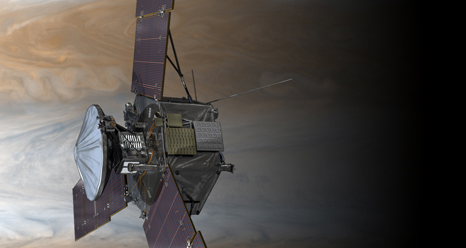
A NASA spacecraft will fly to Jupiter using solar power

NASA’s new mission to Jupiter will be undertaken by a windmill-shaped spacecraft.

The spacecraft will be powered almost entirely by solar power.

Named Juno, the spacecraft will have 2 billion mile journey ahead.

The Juno explorer will be the most distant probe ever powered by the sun.

The spacecraft is outfitted with three huge solar panels and is scheduled to lift off from the Kennedy Space Centre in the US state of Florida on Friday morning.

An unmanned Atlas V rocket will carry her into space.

Scott Bolton, Juno’s principal investigator, said the mission, coming just two weeks after the final flight of the manned space shuttle, shows that NASA is not fading into oblivion.

It will take Juno five years to reach its target, five times farther from the sun than Earth. No spacecraft has ever ventured so far, powered by solar wings.

The European Union’s solar-powered, comet-chasing Rosetta probe made it as far as the asteroid belt between the orbits of Mars and Jupiter.

The three wings of Juno are 29 feet long and 9 feet wide, necessary given that Jupiter receives 25 percent less sunlight than Earth.

Juno’s panels will provide 400 watts of power. In orbit around Earth, these panels could generate 35 times as much power.

NASA is preparing a new solar mission next month – the Grail mission during which two spacecraft will be fly to the moon – will also be solar powered.

BMW will convert landfill methane in to hydrogen

BMW is one of the most eco-friendly manufacturers in the world and he make green efforts for the environment conservation.

BMW is all set to research on extracting hydrogen from methane gas found in a specified local landfill.

BMW’s North American plant in Spartanburg, South Carolina, currently has a fleet of over 100 material handling vehicles that are powered by hydrogen.

It is one of the very few automobile plants that houses majority of the systems under a single roof.

The automaker hopes to build the infrastructure needed to power the entire fleet from hydrogen.

The plant already has hydrogen storage and a distribution area, which could be integrated into a full-scale version of the new project.

The project will cost a million dollars and will go through multiple phases.

The German automaker had actually saved $5 million per year after the implementation of high efficient technology.

An amazing solar tower in Arizona will power 150.000 homes

EnviroMission has decided to set up a solar tower with huge dimensions in the desert of Arizona.

The tower will instantly become one of the world’s tallest buildings because it measure some 2625 ft in height and 130 meters in diameter.

The structure will produce 200MW electricity, enough to power 150,000 US homes.

This project would also be a good money eater, costing a sensational US$750 million to the participants.

Arizona being a desert has an air temperature as high as 40 degrees Celsius.

As we know that air rises up making space for a cooler gush, the heated air at the bottom of the tower would rise up and the temperature at the ground level can be raised to 80 – 90 degrees.

Turbines would be integrated into the system such that when the hot air makes its upward move, it rotates the turbines and electricity is generated.

The temperature will be greater between the layers of air if the tower is planned tall and more energy would be generated.

No continuous raw feed would be required to keep the system working. Nature would take that responsibility.

This arrangement can be expected to keep working for 80 years without any maintenance need.