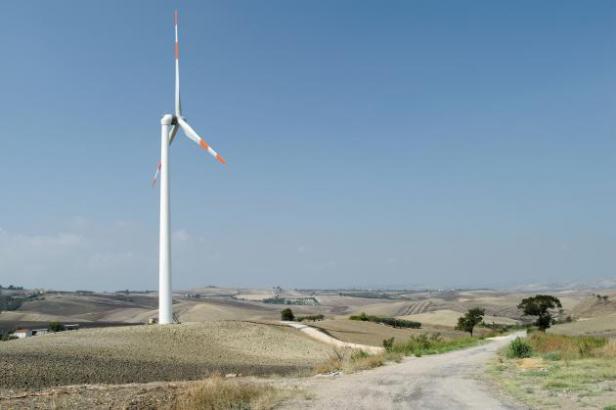
Drastic cuts for Bulgarian green electricity producers

In Bulgaria, the support for the production of electricity from renewable energy sources has been drastically reduced.

Seems that energy regulator DKEVR (english: SEWRC) has retroactively cut feed-in tariffs for electricity from PV and wind generation sources.

SEWRC based its decision from 14 September on requests from network operators to temporarily increase access prices to the transmission grid.

According to the energy regulator, expenditures of the electricity networks have massively increased due to the great number of new renewable energy sources feeding into the grid. In order to cover the costs, remuneration per kWh fed into the grid by renewable power sources had to be reduced.

Renewable electricity producers’ associations characterised the commission’s decision of September 14 as illegal and demanded its withdrawal. The reason would be that the cuts contradicted the renewable energy law, guaranteeing investors fixed prices over long time periods.

According to the Bulgarian Wind Energy Association (BGWEA), “The drastic cuts will push the majority of all existing renewable energy projects into bankruptcy, as with income losses of 10 % to 39 % most projects will not be able to make their loan repayments anymore. This means that several billion Leva worth of domestic and foreign investment along with hundreds of newly created jobs have been destroyed overnight.”

Moreover, due to the retroactive cuts the Bulgarian banking system would run the risk to end up with a massive amount of bad loans on its books.

The branch is appealing against the decision in Brussels. The European Wind Energy Association (EWEA) has expressed its protest in a letter to EU Energy Commissioner Günther Öttinger.

At the same time, renewable energy producers in Bulgaria plan to increase pressure on the government. The Bulgarian PV Association (BPVA) has published an appeal that calls upon the members of the branch to meet for a protest meeting in front of the DKEVR building in Sofia on Monday 24, September at 9.30 local time.

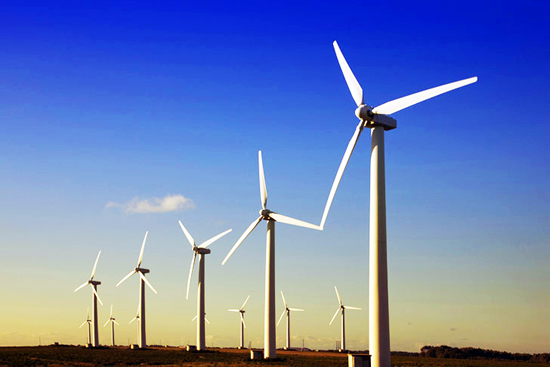
A new wind farm in Austria

Stephan Pernkopf, Lower Austria’s Secretary of the Environment, Agriculture, and Energy, officially opened the Dürnkrut-Götzendorf wind farm in Lower Austria.

Ten Vestas V90 turbines, each with a hub height of 105 m, rotor diameter of 90 m and a nominal capacity of 2.0 MW comprise the wind farm.

Stephan Pernkopf says that “Gänserndorf District is number one in wind power in Lower Austria. With the new wind farm, the district now has more than 100 windmills in operation. They generate twice as much power as is needed to supply 36,000 households.”

The Dürnkrut-Götzendorf wind farm alone is expected to supply environmentally friendly electricity to 15,000 households.

Currently, 377 wind turbines are in operation in Lower Austria, providing energy for 340,000 households. That is more than 11% of Lower Austria’s total electricity udemand.

More than half of all of the wind turbines in Austria are located in Lower Austria.

China’s wind-energy industry grows 96% in six years

China has on previous account been pulled up for constantly pumping dreadful emissions in the air and has taken up the cause to go green.

Growing from 2,000 megawatts to 52,580 megawatts in just six years time, the country has managed to surpass the United States and is currently drawing plans to reach a whopping 200,000 megawatts by 2020.

China’s wind energy industry has grown nearly 96%, enough to make similarly-prosperous countries around the globe go red-faced.

The country seems to have lived up to its word, surprising the world with its continual wind-power growth.

Vestas decided to close production plant in China

After internal analysis revealed a declining demand for kilowatt-class wind turbines, the Danish manufacturer Vestas has decided to cease production of its V52-850 kW and V60 850 kW turbines and consequently also to close its factory in Hohhot, China.

A total of 300 to 350 workers are affected by this closure.

Vestas plans to cease production in Hohhot “in the course of the summer” and expects annual savings of approx. € 10 million. After that, Vestas will still be represented in China by its production plants in Tianjin and Xuzhou as well as its two offices in Beijing and Shanghai. The total number of Vestas employees will then amount to around 2,600.

Although the Danes are withdrawing from Hohhot, confidence in the long-term outlook for the Chinese Market still exists, the company said. Outstanding supply agreements for the affected turbines will, of course, still be honoured. Maintenance and servicing of the installed turbines is to remain an area of business for Vestas.

Wind farm in the Southern Italy

The South Tyrolean wind turbine manufacturer Leitwind will put up a 16 turbine wind farm in the region Apulia in Southern Italy by the end of this year.

Together, the turbines of the type LTW80 (1.5 MW) will produce an estimated 57 GWh of electricity annually.

The wind farm “Deliceto” in the province of Foggia will be operated by the company Elce Energia, which will invest a total of € 45 million in the project. The delivery of the turbines from Sterzing in South Tyrol, Italy, is scheduled for September 2012, and the wind farm will be completed before the end of the year.

“Leitwind is responsible for the transport, installation and commissioning of the wind park. Furthermore, a full-service contract for 15 years has been finalized,  which guarantees efficient production and optimum technical availability”, says Leitwind CEO Anton Seeber.

By the end of 2012, a total of 54 Leitwind turbines in Apulia and 82 in Italy as a whole will be generating electricity .Within a period of just five years up to the  end of 2011, Leitwind had managed to install a total of 200 turbines worldwide. Half of these were delivered in 2011, when 691 members of staff generated a turnover of € 163 million (+19%). For 2012, the management expects a turnover of € 200 million.

Innovative wind prospecting system power plant discovered by University of Barcelona

University of Barcelona has discovered an innovative wind prospecting system.

It is specially designed for marine environments and it is based on a hot air balloon that has a module with the meteorological sensors.The sensors help keep track of the magnitude and strength of the wind.

Andriy Lyasota, a Russian aeronautical engineer developed the concept.The balloon can withstand wind speed of 150km/h, thanks to its design and it rises to a height of 150 meters with the help of a cable that hold 600 kilos.

We strongly believe that wind energy will mainly be developed for marine environments in the future.

The system of a floating balloon proposed will significantly reduce costs, thus it become the more particle choice for tomorrow.

Approval for the first stage of offshore connector on the East Coast

Alternate energy options are growing every day and the most popular form seems to be solar power.Also wind energy is catching up fast with latest developments.

Modern wind turbines and new ways to tap into off-shore wind energy and even high altitude wind power means that it is no longer undependable and can produce energy that is close to being a constant power source.

A group of researchers projected a stimulating plan that would take the wind energy and convert it into an alternate source of power.

The main step of this research would be to take all collectively all the wind farms off the East Coast and convert them into one colossal generating system.A local  source of wind power is dependent always on the weather conditions prevailing in the region.

If the weather remains tranquil, the chances of rousing up things in the vicinity will be good.The researchers thought of spreading wind generators up and down the coast, which would always be producing power.

The grids in only some areas will be receiving wind power, while the rest will again be striving for some pother source of power generation. This project, which was proposed in the last few years, planned of connecting them all together, through a single conduction system, and supplying that into a restricted number of areas.

The East coast is also looking forward to an offshore wind construction area, though this dream is far from reality but it has already attracted a large number of enthusiastic investors.

Chinese farmer builds wind powered vehicle with 90mph speed

A Chinese farmer has built a wind powered vehicle that he says can travel at 90mph.

It looks little like a conventional car with a large fan in front and wings at the rear. What is really amazing is that the creator built the car from scratch with little outside help.Tang Zhengping is the name of the creator.

He loved electronics since he was a child and used his expertise to create this eco friendly car.The vehicle measures 3 meters in length and 1 meter in height, its colour is blue and its maximum speeds is about 90mph.

It took 3 months for Tang Zhengping to built this car. It isn’t just the wind that propels the car, but also solar energy was used for wings at the rear to support  electricity generation. He used two electric generators that enables it to travel at high speeds.

The generators and the batteries take turns charging while one works when the car moves.

The spinning fans help recharge the two batteries.Countries like China are at the forefront of wind energy.

Five years ago, China had no infrastructure for wind energy, but it’s now leading the world at this segment.

A new jack-up vessel specially designed to install offshore wind turbines

A2SEA (owned 51 % by Dong Energy and 49 % by Siemens Wind Power) has signed has signed a contract with a Chinese company for the construction of a new jack-up vessel  specially designed to install offshore wind turbines.

The value of the contract is about US$ 155 million.

The vessel will be identical to “Sea Installer”, ordered in 2010, but extended by a longer crane able to lift up to 900 tons. The new vessel will be 132 m long and 39  m wide and its speed will be around 12 knots.

It will operate at water depths of up to 45 m, and is expected to be delivered in 2014.

Jens Frederik Hansen,A2SEA says that:
“With the fast growing offshore market in Northern Europe, we can already today see that the demand for installation vessels will grow dramatically. With the new vessel  we take a big step continuing to shorten the time of installation and thereby bringing down the cost of energy from offshore wind energy.”

Hurricane Irene has negligible impact on renewable

While Hurricane Irene lashed the eastern Seaboard and the Canadian Maritimes over the weekend, killing 31 people there have been absolutely no reports of damage to renewable energy facilities.

“No damage,” he wrote in an email early Monday morning. “The facility is intact, and there are no turbines in the water at present” said Matthew Lumley, communications director for the Fundy Ocean Research Centre for Energy in Halifax, Nova Scotia.

Irene passed on US Coast over the proposed sites of several wind projects, but none had progressed so far as to be in harm’s way.

Until the hurricane was downgraded to a tropical storm more than 5.9 million were without power in 14 states.