Brooklyn has the world’s largest rooftop greenhouse

It is not usual that people in big cities get to grow their own fresh vegetables and fruits.

But due to hydroponics and some innovative designs people can cultivate fruits and vegetables on rooftops.This represents one of the latest that helps both financial system and local produce.

This farm will be constructed on Brooklyn’s industrial waterfront. The greenhouse crops are not grown in the soil as is usually done in other farms,it is about  a new technology, according to which nutrients are taken up by the crops exactly from the water in which the plants are grown.

With this new technology new employment avenues will open up for people in Brooklyn and this will give a plus for the local economy.

This farm will provide the right amount of produce for the needs of  a number of people living in New York. The new development encourages a healthy living throughout the city.

This greenhouse farm by Bright Farms will be one of the biggest farms of the world and will provide up to a million pounds of local produce every year. The greenfarm will contribute to improve New York City’s food system. This means that the farm will bring a remarkable increase in the local food production and also a positive effect concerning a healthy life.

IKEA uses 100% renewable energy

IKEA is a 100% green company, its 2011 Sustainability Report affirms its green status.

From September 2010 to August 2011 IKEA set aside approximately $670 million to invest in renewable energy which includes installations that have both been brought into operation or will be completed in the next 1.5 years.

The company’s current renewable energy portfolio will increase. Now it boasts 69 wind turbines and 124 photovoltaic (PV) projects (40 operational and 84 approved).

The company declared its future plans to add 11 new PV solar projects to its current portfolio. The aim is to aid rooftops of each of the brand’s stores with solar PV panels and generate approximately 7000KW of clean energy. The base of this future planning is strengthened by IKEA’s success at the completion of its geothermal project at Denver, Colorado.

In a separate announcement, released just hours before the Sustainability Report, IKEA said it has plugged in its 15th solar energy project in the United States. REC Solar installed 4,984 solar panels atop IKEA’s 148,200 square foot store located in College Park, Maryland. The solar panels will combine to generate 1,196 KW of renewable energy.

IKEA is one of the most lucrative businesses on the planet, is not using this model — the retailing juggernaut owns and operates each of the systems installed on its buildings.

IKEA says it has 22 solar projects underway in the US which, when complete, will hoist the company’s solar energy portfolio to 30.8 MW.

Google – investments in green energy

Web companies like Google are also investing in renewable energy with handsome profits. Google has invested over $915 million in this sector. The company has also taken it upon itself to make use of green and sustainable energy. Some of their corporate campuses utilize photovoltaic systems for solar energy and cogeneration units that make use of landfill gas to generate electricity. Google has also completed two PPAs with a commitment to purchase renewable energy from certain sources.

Google projects:

1. The project: Large scale solar PV in California

Google has invested $94 million in Recurrent Energy, a Sacramento-based company, for solar projects. The investment wil cover four solar projects that is hoped will significantly benefit California’s energy needs.
88MW of power being produced, enough to sustain 13,000 homes.

2. The project: Clean Power Finance – providing financing for rooftop solar panels.

Startup company, Clean Power Finance, is being financed by Google to help third party installers place solar panels on rooftops as part of solar rooftop projects. The investment of $75 million will see about 10,000 homes being benefited by solar power.

3. The project: SolarCity – solar for thousands of residential rooftops. In one of the biggest investments by Google, $280million has gone into funding SolarCity for its residential solar market.

4. The project: Atlantic Wind Connection – a superhighway for clean energy transmission

Google’s 37.5 equity stake in the Atlantic Wind Connection project by Trans-Elect Development Company will be able to generate a substantial 6000MW of power to large population centers in the Mid-Atlantic region.

5. The project: Shepherd’s Flat – the world’s largest wind farm. The investment: $100 million

Hawaii partner with Boeing in aviation biofuel

Boeing has announced an agreement to work with Hawaii BioEnergy, to create aviation fuel.

The companies will work together to identify biofuel sources and supporting technologies for producing sustainable jet fuel in Hawaii.

“As an Asia Pacific gateway and leading tourism destination, Hawaii can play a meaningful role in helping aviation reduce carbon emissions, while increasing regional energy resources,” said Boeing Commercial Airplanes Vice President of Environment and Aviation Policy, Billy Glover. “This collaborative effort will allow us to examine potential local options, while protecting the beauty and culture these islands have to offer.”

NASA to demonstrate largest solar sail

NASA plans to play in the sky with the world’s largest solar sail ever conceived.

The new upcoming missions are intended to transform its space communications, deep space navigation and in-space propulsion capabilities.

For these missions who should be launching in 2015 and 2016, have been selected tree projects.

One of the three projects is the solar sail measures a whopping 100 square feet (9.29 square meters)and spans 409 square feet, or 38 square meters.

Do you wonder what are they going to do with such a big sail?

The answer is simple: The sail could be used to gather orbital debris over a period of several years and included to a satellite’s payload, activating towards the end of the mission dragging the satellite out of its orbit.

The project is being led by California’s L’Garde Inc., in collaboration with the National Oceanic and Atmospheric Administration and NASA and the solar sail should be ready in three years.

Hurricane Irene has negligible impact on renewable

While Hurricane Irene lashed the eastern Seaboard and the Canadian Maritimes over the weekend, killing 31 people there have been absolutely no reports of damage to renewable energy facilities.

“No damage,” he wrote in an email early Monday morning. “The facility is intact, and there are no turbines in the water at present” said Matthew Lumley, communications director for the Fundy Ocean Research Centre for Energy in Halifax, Nova Scotia.

Irene passed on US Coast over the proposed sites of several wind projects, but none had progressed so far as to be in harm’s way.

Until the hurricane was downgraded to a tropical storm more than 5.9 million were without power in 14 states.

400 new green jobs to Arizona

400 new green jobs in Arizona thanks to the giant 290-megawatt Agua Caliente Solar Power Project.

The new facility is sponsored by the solar giant NRG and will use two cutting edge technologies that improve the stability of power supply from the plant to the grid.

The two technologies are new to the solar industry, so their successful application in the Agua Caliente project could make them industry standards throughout the U.S.

The solar-giant NRG recently cancelled two nuclear power plants  planned for Texas, following the Fukushima nuclear disaster.

NRG is also the force behind the Department of Energy’s super-ambitious distributed-power solar project, called Project Amp who was announced earlier this summer, involves the installation of $1.4 billion worth of rooftop solar panels on hundreds of buildings, basically doubling U.S. solar capacity over 2010 levels.

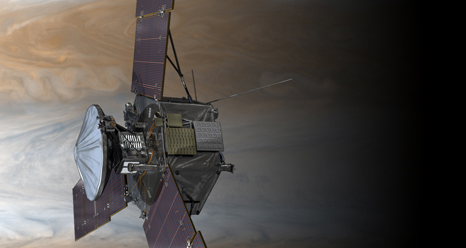
A NASA spacecraft will fly to Jupiter using solar power

NASA’s new mission to Jupiter will be undertaken by a windmill-shaped spacecraft.

The spacecraft will be powered almost entirely by solar power.

Named Juno, the spacecraft will have 2 billion mile journey ahead.

The Juno explorer will be the most distant probe ever powered by the sun.

The spacecraft is outfitted with three huge solar panels and is scheduled to lift off from the Kennedy Space Centre in the US state of Florida on Friday morning.

An unmanned Atlas V rocket will carry her into space.

Scott Bolton, Juno’s principal investigator, said the mission, coming just two weeks after the final flight of the manned space shuttle, shows that NASA is not fading into oblivion.

It will take Juno five years to reach its target, five times farther from the sun than Earth. No spacecraft has ever ventured so far, powered by solar wings.

The European Union’s solar-powered, comet-chasing Rosetta probe made it as far as the asteroid belt between the orbits of Mars and Jupiter.

The three wings of Juno are 29 feet long and 9 feet wide, necessary given that Jupiter receives 25 percent less sunlight than Earth.

Juno’s panels will provide 400 watts of power. In orbit around Earth, these panels could generate 35 times as much power.

NASA is preparing a new solar mission next month – the Grail mission during which two spacecraft will be fly to the moon – will also be solar powered.

An amazing solar tower in Arizona will power 150.000 homes

EnviroMission has decided to set up a solar tower with huge dimensions in the desert of Arizona.

The tower will instantly become one of the world’s tallest buildings because it measure some 2625 ft in height and 130 meters in diameter.

The structure will produce 200MW electricity, enough to power 150,000 US homes.

This project would also be a good money eater, costing a sensational US$750 million to the participants.

Arizona being a desert has an air temperature as high as 40 degrees Celsius.

As we know that air rises up making space for a cooler gush, the heated air at the bottom of the tower would rise up and the temperature at the ground level can be raised to 80 – 90 degrees.

Turbines would be integrated into the system such that when the hot air makes its upward move, it rotates the turbines and electricity is generated.

The temperature will be greater between the layers of air if the tower is planned tall and more energy would be generated.

No continuous raw feed would be required to keep the system working. Nature would take that responsibility.

This arrangement can be expected to keep working for 80 years without any maintenance need.

Wind energy market saw decreased demand in 2010

In 2010 the U.S. wind energy market took a hit with a decrease in investment compared with 2008 and 2009.

According to the Department of Energy’s, the report investment in terms of how much wind energy capacity was built and connected to the national electric grid.

In U.S. in 2010 were installed about 5 gigawatts’ worth of wind energy farms representing an $11 billion investment, according to the report.

Compare to the 10 gigawatts that were installed in 2009 in the U.S., and the 8 gigawatts in 2008, 2010 represents a decrease in wind energy installations.

“The combination of the delayed impact of the global financial crisis, relatively low natural gas and wholesale electricity prices, and slumping overall demand for energy outweighed the ongoing availability of existing federal and state incentives for wind energy deployment, resulting in a steep drop in capacity additions relative to both 2008 and 2009,” according to the
report.

China was the world’s fastest-growing market and U.S. was still the second-fastest-growing wind energy market in the world in 2010.

Wind turbine component manufacturing in the U.S. grew in 2010 and about 68 percent of components used in U.S. wind projects installed between 2009 and 2010 were made in the U.S.