September – a great month for wind and solar energy in Scotland

scotland solar panels and wind turbine

Wind and solar power in Scotland. Image via c1cleantechnicacom.wpengine.netdna-cdn.com

According to a WWF Scotland analysis, wind energy capacity in the country generated enough electricity to power all Scottish homes on five out of the 30 days of September.

Based on wind and solar electricity data provided by WeatherEnergy, WWF Scotland says wind turbines generated 563,835MWh of electricity, an increase of 82% compared to September 2014. Wind power alone generated around 28% of Scotland’s electricity needs for the month.

” Given the big jump in renewables output during September it’s very likely we’ll be breaking even more records this year,” said WWF Scotland’s director, Lang Banks.

According to energymatters.com, for homes with solar panels installed, there was enough sunshine to generate an estimated 65- 70% or more of the electricity needs of an average household in some of Scotland’s regions.

“Despite being well in to autumn, for the tens of thousands of homes that have installed solar panels to generate electricity or heat water, around three-fifths of their electricity or hot water needs could have been met by the sun during the month. This all helped Scotland to further reduce its reliance on polluting fossil fuels during September,” said Mr. Banks.

WeatherEnergy says as the country moves toward winter, solar output will drop off to a degree, but wind power output will start to ramp up.

In November last year, wind power generated 126% of the electricity needs of every home in Scotland. 2014 was the first time clean energy produced more power in Scotland than nuclear, coal or gas.

Scotland has set a target to generate the equivalent of 100 per cent of its gross annual electricity demand by 2020 – a goal it appears it will have no problems in reaching. Just in practical offshore renewables resources, the country has an estimated 206 GW capacity potential.

At the end Q3 2014, 7,112 megawatts of renewable electricity capacity was installed in Scotland, an increase of 10.5% from the end of the second quarter in 2013.

Last week it was reported Scotland surpassed its target of generating 500 MW of locally and community owned renewable energy five years ahead of schedule.

Scotland’s renewable energy sector is also a major employer, supporting more than 11,000 jobs (January 2014).
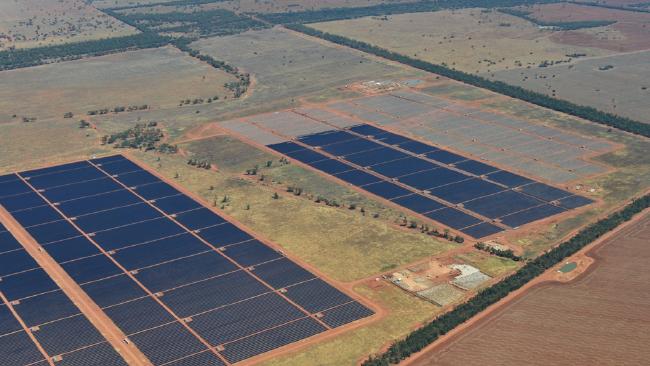
Broken Hill mega-plant solar panels lift the roof

solar plant

The Broken Hill plant will work in conjunction with the AGL solar plant in Nyngan in NSW. Image via theaustralian.com.au

The final panels on the biggest solar power station in the southern hemisphere will be installed at Broken Hill this week, paving the way for the plant to be fully operational by year’s end.

The 53-megawatt solar plant, a partnership between AGL and First Solar, will work in conjunction with the 102MW Nyngan solar plant to produce enough electricity to power about 50,000 average Australian homes. The Nyngan plant began operating six months ago.

“There is a real sense of momentum driving large-scale solar in Australia today,’’ Australian Renewable Energy Agency acting chief executive Ian Kay said.

According to The Australian, The large-scale solar plant begins operation as more than 1.4 million households in Australia have solar panels on their roofs, providing the highest penetration at the household level in the world.

However, the government is trying to drive more solar uptake at the commercial level as part of the 23.5 per cent renewable energy target.

Environment Minister Greg Hunt has set a priority of increasing the uptake of utility- scale solar as part of the government’s renewable energy mix.

The government through ARENA had provided $166.7 million towards the $440m AGL Solar Project.

“As well as powering Australian homes with renewable energy, this project is also assisting AGL to transition towards a decarbonised economy. It’s a win-win scenario,’’ Mr Hunt said.

Mr Kay said there was $350m available through ARENA and the Clean Energy Finance Corporation to further accelerate growth in the sector.

ARENA has a $100m large-scale solar round that could double the capacity of large-scale solar.

AGL executive general manager group operations Doug Jackson said the Broken Hill Solar Plant was already generating up to 27MW of renewable energy into the grid and the remaining 26MW was expected to be brought online this month.

First Solar’s regional manager for the Asia Pacific, Jack Kay, said the project combined industry-leading thin film modules and construction techniques.

He said the Broken Hill plant contained 677,760 of First Solar’s advanced PV modules. The Cadmium Telluride modules offered significant efficiency and reliability advantages over typical crystalline silicon modules, Mr Curtis said.

Germany and China lead in solar installed capacities

solar capacity statistics

Top 10 solar countries with solar power installed vs growth rates

According to new statistics released by Demnag, in the top 10 solar countries who have installed the most solar capacity, Germany leads the pack with 38,200 MW in installed capacity. China comes in the second place with 28,199 MWs & Japan in third place with 23,300MW.

Germany’s top place in the ranking is not surprising given its Energiewende focus to transition away from fossil fuels & its declared war on coal. Here is The Economist’s take on Energiewende:

“Wholesale electricity prices will be 70% higher by 2025, predicts the Karlsruhe Institute of Technology. Germany must build or upgrade 8,300km (5,157 miles) of transmission lines (not including connections to offshore wind farms). Intermittent wind and sun power creates a need for backup generators while playing havoc with business models that justify investing in them. Hans-Peter Keitel, president of the Federation of German Industry, likens the Energiewende to “open-heart surgery”.

But if it pays off Germany will have created yet another world-beating industry, say the gamblers. Alone among rich countries, Germany has “the means and will to achieve a staggering transformation of the energy infrastructure”, says Mark Lewis, an analyst at Deutsche Bank.

While Germany ranks the highest in installed capacity, China has a much higher growth rate 60% & that too with a high base of nearly 28,000 MW. In China too, the government has given solar a high priority in reducing pollution.

Analysts believe that China’s recent announcement of the Cap & Trade policy will encourage a boom in solar power generation infrastructure. This will turn kick of another race to move to solar by other countries such as India.

Solar module efficiency: Panasonic says they topped SolarCity at 22.5%

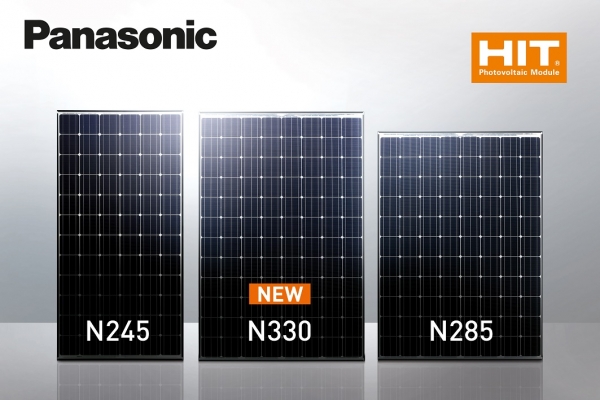
panasonic solar panels

Panasonic’s new N330 module will be on show at SEUK next week, alongside the company’s record-setting prototype. Image: Panasonic.

Panasonic claims to have toppled a world record for module efficiency announced a few days ago by SolarCity and will be demonstrating the new module at next week’s Solar Energy UK exhibition organised by PV Tech’s publisher, Solar Media.

Last Friday SolarCity announced it had recorded 22.04% efficiency in a rooftop module from its pilot line, however this morning Panasonic has revealed its recorded module conversion efficiency of 22.5% on a commercial-sized prototype module, verified by the Japanese National Institute of Advanced Industrial Science and Technology.

According to pv-tech.org, Panasonic said the new record built on cell-level efficiencies of 25.6% recorded last year. “The new panel efficiency record demonstrates once again Panasonic’s proven leadership in photovoltaics and our ongoing commitment to move the needle in advanced solar technology,” said Daniel Roca, senior business developer at Panasonic Eco Solutions Europe.

The technology manufacturer has also announced the launch of its new HIT N330 module, a 96-cell, 330W panel which features 19.7% module-level efficiency and claims to deliver 27% more peak power compared to mainstream 260W multicrystalline modules.

Both products will be on show at next week’s SEUK expo, held at Birmingham’s NEC.

Wind energy is now as cheap as natural gas

wind energy

Wind power is now comparable in price to fossil fuels, new report says. Image via cdn7.triplepundit.com

Wind power is now comparable in price to fossil fuels, and solar is well on its way, according to a new report that confirms earlier predictions that renewables aren’t just the best option for the environment – they’re unequivocally the smartest long-term investment you can make on energy.

The report, by Bloomberg New Energy Finance, found that in the second half of 2015, the global average cost of onshore wind energy will be $83 per megawatt-hour of electricity (which is down $2 from the first half of the year), and for thin film solar photovoltaics, the cost is $122 per megawatt-hour (down $7 in the past six months).

The costs as they are now, and the steady drops we’ve seen in price over the past six months alone, suggest that as the technology to eke out more and more electricity from solar and wind energy gets ever-more sophisticated, those prices can only continue to fall.

“You start to go from a world where renewables are expensive, to a world where renewables are actually cheap. And that’s very meaningful,” said Seb Henbest, head of the Europe, Middle East, and Africa analysis for Bloomberg New Energy Finance. “Onshore wind is today competitive in many places in the US and around the world with coal and gas-fired generation technology.”

According to Science Alert, the report based its analysis on what’s known as the ‘levelised cost of electricity’, which takes into account several factors such as interest rates, capital expenditures, and the operating costs of facilities, and uses these to compare different energy sources on a dollar value. The team analysed over 55,000 projects around the world to come up with their global average figures.

In terms of breaking it down more specifically into locations, the report found that while coal-fired electricity costs $75 per megawatt-hour in North and South America (up from $66 per megawatt hour), in Europe, you’ll have to fork out $105 for the same amount. And gas-fired electricity costs $82 in the Americas, on average (up from $76 per megawatt hour), and $118 in Europe.

Those higher costs for fossil fuels in Europe – due in large part to government-regulated carbon policies – make it even more of a no-brainer for them to be getting into renewables, with the report finding that the average cost of wind is $85 per megawatt-hour in the UK and $80 in Germany, while the combined average for coal and natural gas was more than $100 per megawatt hour in both countries.

“In China, by contrast, coal-fired electricity generation remained extremely cheap – just $44 per megawatt hour,” Chris Mooney reports for The Washington Post. “Wind, in contrast, cost $77 and solar photovoltaics, $109.”

Mooney adds that the US is also not quite there yet, with the incredibly cheap average price of coal- and gas-fired electricity sitting at $65, while wind sit at $80 per megawatt-hour and solar at $107. The good news is that a lot of the cost of renewables is up-front – installation, construction, and the initial period of energy harvesting.

Unlike the process used to convert fossil fuels to electricity, converting renewable energy to electricity doesn’t require fuel, which means solar, wind, and even the currently expensive wave power sources will continue to get cheaper.

“Clean energy solutions like wind and solar are getting more affordable and more accessible by the day, meaning they are increasingly the smartest long-term financial investments for utilities and other electricity producers across America,” Michael Brune, the executive director of US-based environmental organisation, the Sierra Club, said in a statement. “The transition to a clean energy economy is going full speed ahead and pushing dangerous, dirty fossil fuels to the back of the line.”

Germany to fund 125 million euros for renewable energy projects in India

Merkel in India

Renewable energy is one of the key areas of Indo-German partnership mentioned in the Joint Statement of Hannover in April 2015. Image via The Financial Express

Germany and India on Tuesday signed two loan agreements worth 125 million Euros for the Green Energy Corridors’ project in Andhra Pradesh and Himachal Pradesh.

Germany’s development bank, KFW, will fund 57 million Euro for the project at Himachal Pradesh, and 68 million Euro for the Andhra Pradesh project, a press statement from the government said.

According to The Financial Express, the agreements were signed at a time when Germany’s chancellor Angela Merkel is on a state visit in India.

Renewable Energy is one of the key areas of India-German partnership. The financing of the transmission infrastructure of renewable energy projects, the Centre and State grids will be strengthened to evacuate more green energy, the statement said.

“With the Green Energy Corridors, the intra-State network will feed the renewable energy to the respective State grids and the high capacity transmission corridors and inter-State network will connect major renewable energy pockets with the national grid,” it added.

SolarCity says it has created the world’s most efficient solar panel

solarcity solar panels

Solar panels created by SolarCity. Image via cdn.zmescience.com

SolarCity, the sun-powered startup founded by Elon Musk’s cousins Lyndon and Peter Rive, announced that it has created the world’s most efficient solar panel, with a 22 percent module-level efficiency.

Bright, a startup out of Y Combinator that installs solar panels in Mexico, agreed that if SolarCity’s new panel is indeed producing a 22 percent module-level efficiency, it would make the panels the most efficient. At least on the surface.

“The big caveat is that once you use more expensive materials, such as GaAs, the efficiency for modules can go way up (north of 40 percent),” Bright founder Jonah Greenberger told TechCrunch.

According to techcrunch.com, SolarCity created its new panel via a proprietary process that it claims not only ups the performance, but also significantly reduces the manufacturing cost relative to other high-efficiency technologies at the same size as other solar panels, adding an additional 30 to 40 percent more power per panel.

The percentages of overall energy production and module-level can be confusing but don’t get lost in them. The gist is these panels promise to have a higher output at a lower production cost – and SolarCity says it is the most efficient solar panel at the moment, reducing waste – cuttings costs for both consumer and company and adding an attractive amount of power performance.

SolarCity backs up the claim with third-party, independent testing from the Renewable Energy Test Center, an energy services and certification testing facility for solar panel products.

The sun-powered provider expects to install these new panels on rooftops and carports, initially and then move to commercial installations.

SolarCity plans to produce a small batch of the new modules out of its 100 MW pilot facility in Fremont, California this month and then will move production to SolarCity’s 1 GW facility in Buffalo, N.Y. The company expects to produce 9,000 to 10,000 solar panels per day when production is in full swing.

The company recently announced an initiative to lower the cost of sun power for lower-income families. In a partnership with solar panel installation firm Everyday Energy, SolarCity will work with affordable-housing developers to install its solar systems in California.

Clean energy outdoes coal in the UK

renewable energy UK

Anti-coal protests across London. Image via energypage.eu

According to the data released by the Department of Energy and Climate Change, renewables produced more power than coal plants for full three-month period for the first time in the United Kingdom.

The government statistics reveal that over the second quarter of 2015 the total share of electricity generation that came from renewable sources increased to a record high of 25%, Wired.co.uk has reported.

Experts believe this is due to an increase in wind turbines and solar panels being installed over the past 12 months, as well as more favourable weather conditions.

But although on the surface these statistics appear to be promising, according to projections from the European Commission, the UK continues to be one of the lowest ranking countries in the European Union when it comes to the percentage of energy consumed that is produced by renewables.

In 2013 the UK produced 8,400,000 TOE’s (tonne of oil equivalent) through renewables, compared to more than 33,680,000 in Germany, 17,377,000 in Spain and 23,073 in France.

Most of the UK’s renewable energy is produced with biomass and waste systems (61.7%) and wind energy (29.1%), with hydropower and solar energy still lagging far behind several other countries in northern Europe.

The new data has also come at a time when the future of renewable energy funding in the UK is facing considerable uncertainty; there has been growing concern in recent months that the UK’s renewable energy efforts are likely to be cut short after Conservative ministers called for subsidies to be redistributed.

Butterflies inspire new technology for better solar panels

cabbage white butterfly inspire solar technology

How butterflies are revolutionizing solar power. Image via gillianplummerphotography.co.uk

The Cabbage White Butterfly, also known as the Cabbage Moth, is the bane of farmers and vegetable garden ownerers. However, some of its attributes may lead to more efficient solar panels.

Cabbage Whites are able take flight before other butterflies on cloudy days – and it’s all in the unique way they use their wings.

According to Energy Matters, a team of researchers from the University of Exeter found the optimal angle for the butterfly to hold its wings to increase its body temperature (known as reflectance basking) was around 17 degrees, which increased the moth’s body temperature by 7.3 degrees Celsius compared to horizontal.

The team have demonstrated that by mimicking the v-shaped posture assumed by Cabbage White butterflies to heat up their flight muscles, the amount of electricity by solar panels can increase by almost 50 per cent.

The researchers also state by replicating the simple mono-layer of scale cells found in the butterfly’s wings, it could dramatically improve the power-to-weight ratios of future solar concentrators – up to 17-fold – making them much lighter and consequently more efficient.

“This proves that the lowly Cabbage White is not just a pest of your cabbages but actually an insect that is an expert at harvesting solar energy,” said Professor Richard Ffrench-Constant, an expert in butterfly mimicry.

The team, from the Environment and Sustainability Institute (ESI) and the Centre for Ecology and Conservation based at the University, have released a paper on their research; White Butterflies As Solar Photovoltaic Concentrators.

“Biomimicry in engineering is not new. However, this truly multidisciplinary research shows pathways to develop low cost solar power that have not been done before,” said Professor Tapas Mallick, lead author of the paper.

Butterflies and moths have inspired other solar related research. The atomic structure of a moth’s eye has played a role in creating new water-repelling, anti-reflective glass coatings that could increase the efficiency of solar panels. Moth eye structure has also been used to create anti-reflective films.

The Swallowtail Butterfly has incredibly black wings and a unique scale structure that absorb a great deal of sunlight. Its attributes have been used to extract hydrogen from water.

Romanian renewable energy companies ask Government to temporarily cut the accreditations for new plants

renewable energy romania

Renewable energy investors ask Romania’s authorities to close the market for new projects. Image via ecowatch.com

“Renewable energy investors which contributed with 7 billion euros in the Romanian economy were deceived! You should not allow the collapse of renewable energy”, is the message sent by Romanian renewable energy companies.

In the open letter sent to Romania’s Prime Minister, Energy Minister and Energy Authority ANRE, four renewable energy organizations have asked them for urgent measures in order to avoid the industry’s collapse.

They requested the state to increase the share of the renewable energy in the national energy mix. The Government reduced the renewable’s share in the energy mix for captive consumers from 17% to 12.5% in 2014 and has kept it at that level in 2015.

The reduction generated a surplus of green certificates, “which are now papers without value,” according to the producers’ associations.

Romanian authorities avoid doing what all other Governments did in similar situations, which is to suspend the access to the support scheme for the new projects until viable solutions are found, producers say.