Study: Brains ‘excited’ by wind turbines

wind farm

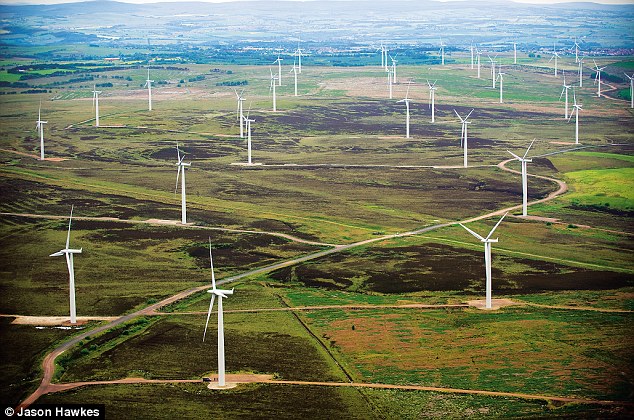
Wind turbines are not linked to health complaints, study says. Image via power-eng.com

Groundbreaking research from Germany on low-frequency “infra­sound” adds to the recent body of work that is challenging wind energy proponents’ insistence that turbines are not linked to health complaints reported by those living close by.

According to The Australian, the international project led by the National Metrology Instit­ute of Germany (PTB) concludes that exposure to infrasound below the range of hearing could stimul­ate parts of the brain that warn of danger. It finds that humans can hear sounds lower than had been assumed and the mechanisms of sound perception are much more complex than previously thought.

The researchers do not claim the results are definitive regard­ing wind turbines and health impacts, and say more work is needed.

But the research builds on recen­t work in Japan and Iran — and investigations by NASA dating back to the 1980s — that suggests the health science of wind energy is far from decided and would benefit from further inquiry, though it is unlikely to persuade prominent wind farm advocate, Simon Chapman.

Dr Chapman, who did not respond to questions from The Australian about the German work, told a Senate inquiry into wind farms and health last month that he was not persuaded by other recent­ research.

“I believe there is much evidence that belief in the harms of wind farms is the cause of harm from wind farms and that those who are intent on spreading this fear are largely responsible for that harm,” he told the inquiry.

The Clean Energy Council was unavailable to comment. But others in the renewables industry say they are open to further inquiry.

Oliver Yates, the chief executive officer of the Clean Energy Finan­ce Corporation, which has less than 20 per cent of its portfolio invested in wind farms, said that “environmental considerations” were critical in any project.

Asked at a conference in Sydney yesterday if the corporation was concerned about increased health risks, he replied: “I encourage any necessary additional support or research people feel that they need to have in relation to this matter to get clarity and satisfaction within their own mind.”

The National Health and Medical Research Council is currently reviewing the evidence on wind turbines and health. The Australian Medical Association will review its position on the issue once the NHMRC reports. Until then, its position is that available Australian and international evidence does not link adverse health effects to wind farms.

The AMA’s vice-president, Geoffrey Dobb, said there was “no accepted physiological mechanism where sub-audible infrasound could cause health effects”.

The German study suggests the impact of very low frequency noise on some people is poorly understood. Scientists in Japan measured brain function and reported last year that it showed the brains of Japanese wind turbine workers could not achieve a relaxed state.

In a similar vein, a study of 45 people in three groups by Tehran University, published earlier this year, said “despite all the good benefits of wind turbines, it can be stated that this technology has health risks for all those exposed to its sound.”

Work by Neil Kelley and NASA in the 1980s on early model wind turbines found impacts from infrasound and led to design changes.

It identified a direct causal link between wind turbine infrasound and low-frequency noise and neighbours’ health problems including sleep disturbance, collect­ively described as “annoyance”.

As the number and size of wind turbines has increased, the number and spread of complaints has also grown. The German research says infrasound is pervasive and generates from an increasing number of sources, including renew­able energy sources such as wind parks and heat pumps.

“Although commonly declared as ‘non-audible’, the number of complaints about infrasound expos­ure has been increasing expon­entially in Germany and also in other countries serious problems exist,” the research paper says.

“It has been agreed that infrasound is perceived by humans and it represents an almost unknown hazard to human health.” Project leader Christian Koch told The Australian the intention of the PTB researc­h was to investigate how infrasound can be perceived by humans.

“We think this is a contribution to the many questions we have within this field but it is too early to conclude seriously about wind turbines­ and their impact,” Dr Koch said.

As part of the German research, laboratory tests were conducted using very pure low-frequency signals.

Test subjects were asked to describe their experience and their brain responses were measured using magnetoencephalography and functional magnetic resonance imaging technologies.

The results showed that human­s could hear sounds of eight hertz, a whole octave lower than had been previously assumed, and that excita­tion of the primary auditory cortex could be detected down to this frequency.

A PTB report on the research findings said all participants had explicitly stated that they had heard something.

Clinical observations showed a reaction in certain parts of the brain which play a role in emotions. “This means that a human being has a rather diffuse perception, saying that something is there and that this might involve danger,” Dr Koch said.

PTB said the wind energy sector and authorities had often tried to appease concerns of health impacts from wind farms by declaring that the sounds generated were inaudible and too weak to be the source of health problems.

But Dr Koch said the issue must be taken seriously. “Neither scaremongering nor refuting everything is of any help in this situation,” he said. Investigations were only beginning and further research was urgently needed.

The Australia-based Waubra Foundation has long been recommending independent research into the effects of industrial sound and vibration from wind turbines and other sources. The foundation said the German research had helped “demonstrate objectively and visually via functional MRI scans that an infrasound stimulus triggered physiological responses that were hardwired into the mammalian brain”.

GE uses holograms and the industrial internet to make wind farms more efficient

wind farm

GE plans to make generating wind energy 2o percent better. Photo via clevescene.com

Two new products that rely on data and the industrial internet will help GE make wind farms more efficient.

The secret to generating more electricity from wind turbines may not rest in better blade designs but in better communication between those turbines and holograms, according to Steve Bolze, the president & CEO of GE’s Power & Water division. At the American Wind Energy Association Windpower event, GE is expected to announce two products that will make wind farms 20% more efficient through the use of GE’s industrial internet software and sensors.

According to Fortune, the overall idea is to look at wind farms as a whole, instead of focusing on the turbines individually. GE has optimized turbines in the last decade using its PowerUp program that saw a 5% increase in efficiency thanks to better designed blades. That’s all well and good for boosting a renewable energy source that met 4.5% of the U.S. energy demands in 2013, but GE is aware that it needs to do more. So it turned to holograms.

In what it calls its Digital Twin product, GE takes data from a future wind farm site and starts simulating the future farm, modeling what turbines should go where, how high they should sit, and how fast they should turn. The resulting data is turned into a hologram of the future site so engineers can visualize other problems to see what computers might not.

The second product is another mess of data, only this time, it’s generated by the actual turbines in the wind farm. But instead of sharing the data about wind speed solely back to GE so it could optimize the blade design, as happened in the PowerUp project, now the turbines talk to each other. This means the sensors on turbines in the wind farm can communicate with turbines far back in formation to share data about the wind. Instead of each turbine working alone, it now works as part of a team. This Digital Wind Farm technology works with turbines made by GE, and with turbines made by GE’s competitors.

There is a huge benefit to including all of the turbines. Depending on the algorithms that GE writes, it’s possible that techniques such as having turbines at the outer edge operate at 70% capacity and having those further back operate at 80% generates the optimal amount of electricity when accounting for wear and tear on the turbines. Such communication can also help account for turbines that might be out of commission.

It’s through this better forecasting in the planning stages and then, better communication once operating, that GE hopes to keep wringing the efficiency out of the wind generation business. Bolze says that since the products are just being announced, there are no customers yet, but he expects them before the end of the year.

Japan anticipates clean energy will edge out nuclear power

solar energy Japan

Clean energy in Japan. Photo via inventorspot.com

Japan anticipates that by 2030 clean energy such as solar and hydro will generate slightly more of the nation’s electricity than nuclear power plants.

According to renewableenergyworld.com, clean energy sources will supply as much as 24 percent of Japan’s electricity in 15 years, while atomic power will account for as much as 22 percent, according to a draft report from the Ministry of Economy, Trade and Industry on what Japan’s electricity mix should look like by 2030.

Though the eagerly-awaited report — the result of months of study by a ministry panel debating the electricity mix — continues to see a need for nuclear, the draft proposes a diminished role compared with before the Fukushima disaster of March 2011. Nuclear power accounted for more than a quarter of Japan’s electricity generation before the meltdowns at the Fukushima Dai-Ichi reactors.

Even the 22 percent level is doubtful for a nation with one of the world’s oldest nuclear fleets and where the majority of the public has opposed atomic generation since Fukushima, environmental group Greenpeace, which campaigns against nuclear power, said in a statement.

Nuclear’s role has been the central focus of the panel’s discussions. The 2011 disaster triggered strong opposition to atomic power among the public, while the subsequent spike in electricity prices has seen business groups lobby intensively for the nation’s nuclear reactors to resume operations.

Operable Reactors

Nuclear provided about 29 percent of Japan’s electricity in fiscal 2010, while clean energy sources supplied 9.6 percent with most of that coming from hydro. None of Japan’s commercially operable nuclear reactors are working at the moment.

If all 24 nuclear reactors currently under review for a restart by the country’s nuclear watchdog are allowed to switch back on, they would still not be able to generate more than 16 percent of Japan’s power, Greenpeace estimates. At least 10 more reactor units need to resume operations to reach the government’s target for nuclear, the group said.

Such a mass-scale restart is unlikely, according to Shaun Burnie, a nuclear specialist at Greenpeace Germany.

“The scale of the challenges facing the nuclear industry are such that generation from reactors is likely to collapse during the coming decade,” Burnie said in the statement. “Many reactors will never restart, and most reactors over the coming years will be too old to operate.”

Latest Proposal

The latest proposal signals less reliance on nuclear than a previous plan released in 2010. Japan had been envisioning nuclear and renewable sources supplying 53 percent and 21 percent of power, respectively, by 2030, under the government led by the Democratic Party of Japan.

The DPJ’s stance shifted following the Fukushima disaster, with the party eventually calling for all nuclear to be phased out. The DPJ was replaced by a coalition led by the Liberal Democratic Party in December 2012.

The draft foresees hydro power accounting for as much as 9.2 percent of Japan’s total power generation, with solar at 7 percent, wind at 1.7 percent, biomass coming in at as much as 4.6 percent and geothermal as much as 1.1 percent, according to the release.

By 2030, gas will supply 27 percent while coal and oil will provide 26 percent and 3 percent, respectively.

The release came a day after the trade ministry issued draft estimates of power generation costs. Nuclear is estimated to be the cheapest source, as low as 10.1 yen per kilowatt hour, by 2030.

Large-scale solar was estimated to cost 12.7 yen to 15.5 yen, while onshore wind was projected to cost 13.9 yen to 21.9 yen, according to the ministry.

Post-Fukushima Japan turns to wind as solution for energy crisis

wind energy Japan

Japan turns to wind energy to solve energy crisis

The kamikaze pilots that flew bombing raids and suicide missions against the Allies in World War Two were inspired by a “divine wind” that they believed was keeping their planes aloft in the service of the Japanese Empire. Legend has it that the divine wind from which the word “kamikaze” is translated, referred to a typhoon that saved the Japanese islands from invasion by a Mongol fleet in 1281.

Seventy years after the end of the Second World War, nature continues to exert a powerful influence on the Japanese nation, and we only have to look back four years to see the devastation caused by the Great East Japan Earthquake, as it is known there.

Now, the threat to Japan comes not from outside enemies, but from her own internal weaknesses, particularly the lack of natural resources requiring Japan to either import coal and liquefied natural gas in large quantities, or maintain aging nuclear power plants that remain vulnerable to earthquakes and tsunamis.

According to oilprice.com, in 2015, the wind that once inspired kamikaze pilots is once again being pressed into service, only now the goal is not a wartime victory, but to move Japan a step closer to energy independence.

As a far-flung island nation, Japan appears to be ideally suited to capturing power from the wind. The country has the sixth largest sea surface in the world, including economic zones allowing resource exploitation, and in Japan the wind blows strong especially during typhoon season.

However, up to now, wind power in Japan has been underutilized, particularly compared to solar. While the Japanese photovoltaic market has risen 7-fold, from 1GW in 2010 to almost 7GW in 2013, growth in wind power has underwhelmed.

The country produces less than one percent of its power from wind turbines, and in 2013 Japan installed 100 times more solar power than wind. According to Wind Power Monthly, Japan has just 2.6GW of installed wind capacity, virtually all of it onshore.

The publication notes that Japan’s reluctance to develop offshore wind is down to three factors:

“First, 80% of its offshore resources are in depths greater than 100 meters, far beyond the reach of the conventional fixed-bottom foundations that support the offshore projects on northern Europe’s continental shelf. Second, the climate and conditions – typhoons and tsunamis – present formidable challenges to installation and upkeep of wind turbines. Third, Japan’s powerful maritime logistics and fishing industries have strongly opposed sharing ocean space with wind developers.”

Another factor is Japan’s feed-in tariff requiring electrical utilities to buy renewable energy at set rates. While the tariff has resulted in a big increase in solar panel investment, largely because photovoltaics are relatively easy to install, for wind producers the tariff is less attractive, because high installation costs make small-scale generators unprofitable, according to manufacturers of small wind farms – those whose windmill diameter is less than 7 meters and with generation capacity of 20 kW or lower.

There are encouraging signs however, that Japan’s wind-power industry is starting to blow a lot stronger. Following the Fukushima disaster in 2011, the Japanese government approved a budget of 12.5 billion yen (US$12.2 million) to encourage wind power development, and shortly thereafter, a consortium of 10 companies led by Marubeni Corp began building a floating wind farm offshore of the Fukushima prefecture. The farm, powered by a 2MW turbine, has been generating power since November 2013. A second phase is currently under development to install an additional two 7MW turbines.

Marubeni notes the Fukushima Recovery/Floating Offshore Wind Farm Experimental Project has three themes: “By a team comprising only Japanese members,” “to pioneer Japan’s new international business,” and “to contribute to the recovery of Fukushima.”

Marubeni was also recently selected to construct 145MW of offshore wind capacity in northern Japan by 2021. The project is divided into two wind parks. The first park off the northwestern coast of Honshu will have 13 5MW turbines. A second park, located near Noshiro port, will have 16 turbines also providing 5MW each.

If the planned wind farms off Honshu go ahead as planned, they will mean a huge expansion in wind power for a nation that has until very recently shown little interest in the renewable energy form.

According to the World Nuclear Association Japan’s electricity utilization rate at the end of 2012 was 295GWe for nuclear, compared to 2.5 GWe for wind, 6.6GWe for solar and 0.5GWe geothermal. The rest of Japan’s energy requirements were met from hydro, at 45 GWe, 36 GWe from coal and 47 GWe from natural gas.

The Japan Wind Power Association estimates the country has the potential for 622GW of offshore wind, and 168GW onshore (the association has a goal of 50MW by 2050), however, one must ask to what degree the Japanese citizenry would tolerate such a massive expansion of wind power.

Marubeni’s Fukushima offshore wind project was lauded for its ability to produce utility-scale power with equivalent output to a nuclear reactor, but the project also drew criticism from Japanese fisheries unions who opposed it for its potential to destroy fishing grounds and prevent trawler fishing.

Wind skeptics in Japan also point to delays in setting up an offshore wind tariff, and local opposition to onshore wind – proving that the Japanese are no different from other countries in their NIMBYist attitude to wind farms near homes, schools and businesses.

The Japanese government solved the first problem a year ago with the introduction of a 36-yen-a-kilowatt-hour subsidy for offshore wind, but the NIMBY issue is obviously more intractable and presents a challenge to the further expansion of wind power in Japan, even in rural areas.

A 2013 study by Ryukoku University in Kyoto showed that while over 80 percent of respondents approved of large-scale wind power projects, 69 percent worried about such projects in their neighborhoods.

NIMBYism was likely a key factor in why Japan has moved its wind farms offshore, so it will be interesting to see whether more ocean wind power proceeds unobstructed, or whether industry lobby groups, like the Fukushima fishermen, will lobby to prevent further incursions into traditional Japanese industrial activities.

Historic low price on wind power in Denmark

cheap wind energy in Denmark

Cheap wind energy for Denmark

A massive new offshore wind farm off the west coast of Jutland will provide power at nearly one third the price of existing wind parks, the Danish Climate Ministry announced Friday.

According to The local DK, a new offshore Danish wind farm, Horns Rev 3, will be built by the Swedish state-owned company Vattenfall. The Swedes guaranteed a price of 10.31 euro cents per kilowatt hour, which the Climate Ministry said will save Danish consumers around 2.2 billion kroner (295 million euros) over the next 12 years.

The ministry said that although direct comparisons are difficult, the Horns Rev 3 project is likely to be the cheapest wind farm in Europe and one of the cheapest in the world.

“With Horns Rev 3, Denmark is making windmill history through realizing a significant reduction in the cost of establishing offshore wind farms. There is no doubt that the power from offshore wind turbines will continue to be an essential part of the green transition and contribute effectively to reducing CO2 in the atmosphere,” Climate Minister Rasmus Helveg Petersen said in a statement.

The ministry said that Horns Rev 3 will produce wind power at nearly one third the price of the most recent Danish offshore wind farm, the Anholt Offshore Wind Farm located in the Kattegat.

The Horns Rev 3 project will receive state subsidies until the wind park has produced a determined amount of energy. Although the Climate Ministry’s press release didn’t include a specific figure, Petersen said that the subsidies would like last 11-12 years, after which point the windmills will produce electricity at the market price.

Denmark is a global leader in wind energy. In 2014, the nation set a record by producing 39 percent of all electricity through wind power. By 2020, the Danish government plans to have half of all electricity produced by wind power.

But for wind power to truly take off internationally, energy experts say that costs need to come down significantly. Petersen said the Horns Rev 3 deal could help set a precedent for cheaper wind power.

“The low price is not just good for Denmark, but also for the international green transition. The general decline in prices in the market for wind power means that offshore wind power is now well on its way to becoming a viable competitive alternative to traditional fossil fuels,” he said.

First autonomous public lighting system that runs on solar and wind energy

solar and wind public light

Solar and wind public lighting system

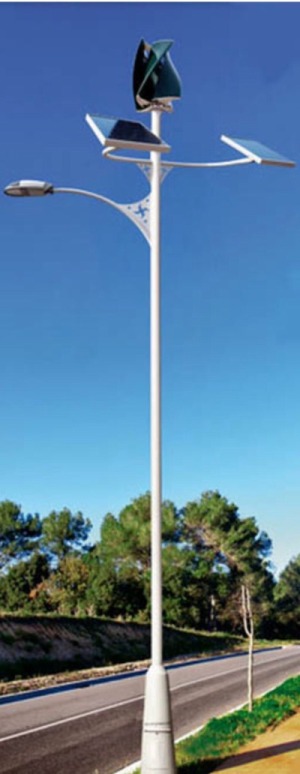
The first autonomous industrialized public lighting system that is running on nothing but solar and wind energy was recently created by researchers at the Universitat Politècnica de Catalunya, in cooperation with Eolgreen.

The system is designed for use along inter-urban roads and motorways, and in urban parks and various public areas and is reported to reduce total costs by as much as 20%, as compared to conventional systems, Clean Technica writes.

According to a recent press release, the prototype is 10-meters high and is fitted with a solar panel, a wind turbine and a battery. The turbine runs at a speed of 10 to 200 revolutions per minute (rpm) and has a maximum output of 400 watts (W). The developers’ aim is to make the lighting system even more environmentally efficient, so work is being done on a second prototype generator that runs at a lower speed (10 to 60 rpm) and has a lower output (100 W). An electronic control system manages the flow of energy between the solar panel, the wind turbine, the battery and the light.

“It takes very little wind to produce energy. The generator that has been developed can start working at a wind speed of only 1.7-meters per second (m/s), whereas current wind turbines need more than 2.5 m/s,” states creator Ramon Bargalló, a researcher in the Department of Electrical Engineering at the Barcelona College of Industrial Engineering of the Universitat Politècnica de Catalunya.

The system can reportedly provide up to 6 nights of electricity with no wind or sun.

As it stands, Eolgreen has already signed agreements with the port of Huelva, the municipal authorities of Sant Boi de Llobregat + Girona, and a number of towns in Andalusia. The company is planning to produce ~700 of these street lights in 2015.

Vermont is 100% renewable

green cities

Vermont goes 100% green

Vermont’s biggest city has succeeded to convert all its energy sources in renewable ones and it is 100% renewable with the help of wind, water and biomass.

Burlington Electric Department managed to achieve the 7.4-megawatt Winooski 1 hydroelectric project on the Winooski River at the city’s edge. To do so, the 7.4-megawatt Winooski 1 hydroelectric project on the Winooski River at the city’s edge that gathers about 11,000 clients in the city.

‘‘It shows that we’re able to do it, and we’re able to do it cost effectively in a way that makes Vermonters really positioned well for the future,’’ reports Christopher Recchia, the commissioner of the Vermont Department of Public Service.

It is all part of a program that has the purpose to get 90% of Vermont’s energy from renewable resources by 2050, including electricity, heating, and transportation.

The movement is bigger than this, as governments and businesses and businesses search better ways to get rid of unenvironmentally friendly fuels.

Diane Moss, the founding director of the Southern California-based Renewables 100 Policy Institute, believes that it is a big achievement for cities all around the country to have such purposes.

‘It shows that we’re able to do it, and we’re able to do it cost effectively in a way that makes Vermonters really positioned well for the future.’

Almost 1000 local businesses managed to commit to 100%

‘‘They are selling the renewable energy credits to customers in other states. Those customers have the renewable and clean energy benefits of that power,’’ Sandy Levine, of the Vermont office of the Conservation Law Foundation said. ‘‘Simply using accounting measures to make claims about clean energy doesn’t get us there.’’

Wind energy to reduce electricity bills

wind energy

Wind energy can reduce electricity bills

Green energy has always been seen as a great opportunity for the environment and the energy costs. If we take a deeper look into the economic aspects, we should pay attention to the cost of the feed-in tariff systems. First of all, we should take into account the aspects of the incentives and whether they are as expensive as they have always been and secondly we should analise whether the effect of wind is similar to other renewables.

A study made by the UPV/EHU’s Bilbao Energy Research Team (BERT) shows that wind is the most profitable of all green energy producers and in the meantime, solar is growing.

The UPV/EHU study takes a look at the power market in Spain between 2008 and 2012, a period of prosperity for the green energy in the country. Then, power production within the Special Scheme has a 57% increase- and quantifies its cost.

In order to make this happen, they had to measure the market savings made by green power sources but also had to calculate the quantity of incentives in renewable energy. The difference between them is the net cost of green energy.

This study is different from others because in this work the separate results for renewable technology are presented for the first time, demonstrating that the general conclusions cannot be applied to all the technologies across the board,” says Cristina Pizarro-Irizar, the lead author of the research.

The most important results are those obtained in 2008-2009 when the installed capacity was small, buut the savings generated on the electricity market had outcome the costs of the system. “It signified savings of between 25 and 45 euros per megawatt hour (MWh), depending on the year,” added Pizarro-Irizar.

Still, from 2010 onwards when green generation began to rise, the regulatory costs grew much, making a positive net cost on the system. “The penetration of renewable energy starts to be so high that the market prices do not fall any further and yet the costs of the incentives do in fact rise. There is a turning point and it is at that precise moment that the system is no longer sustainable. On the Spanish electricity market, that turning point was reached in 2010,” points out Cristina Pizarro-Irizar.

UK renewables embraced by foreign investors

UK green energy

Foreing investments in UK

61 green energy projects in the UK were targeted by foreign investors in 2013, fact that come as a confirmation that this domain is considered one of the most attractive ones for abroad investments, as the latest government report shows.

UK Trade and Industry yesterday announced that 2013/14 was a cosmic one for away investment. This was confirmed by the last report in the country, report that also says the biggest number of inbound was recorded in the 1980s.

The new report focuses on green energy through the first 12 sectors for inward investment, counting over 60 projects that were supported last year and 46 a year before that.

Offshore wind reveals a surprisingly tempting sector as the British countries carries on as the market leader and has wants to produce at least 10GW of capacity until 2020. In 2013 saw Canadian pension fund La Caisse plough £644m in London Array, the world’s biggest offshore wind farm.

In the meantime, Swedish utility Vattenfall put £400m Peny Cymoedd onshore wind farm located in the Wales, that is said to generate 300 jobs.

BP, AB Sugar and DuPont also last year opened up the £350m Vivergo bioethanol plant in Hull, that can generate 420 million liters of the renewable transport fuel every year at full capacity.

The report was opened in front of the Commonwealth Games Business Conference in Glasgow, that begins tomorrow, and wants to attract more investors to the UK. It reveals that through the economy, the British country captivates support for 14% more projects that in the years before, and help the country with 66,390 new jobs, a number overcomed only in 2001.

Still, the report also tells us that the oil and gas sector also became an important part of the investments as contributions were made by foreigners for 52 projects in the past year. Software and computer services are still the most attractive area, even if investment fell slightly from 261 projects in 2012 to 229 projects last year.

“Part of our long-term economic plan for the UK is about promoting every part of our country to the world and Glasgow’s Commonwealth Games will give us another fantastic platform to do this. I promise this government will continue to work on behalf of every hardworking business in the UK to drum up trade, encourage investment and pave the way for growth so we can generate jobs, pay our way in the world, and create stability, security and a brighter future for our country,” said Prime Minister David Cameron in a statement.

New record high for green energy price with the construction of expensive wind turbines at the sea

energy price

The green energy price boosted up as annual bill

The green energy price boosted up as annual bill for users reached £2.5bn. There are more plants to be built and the price goes up with each one of them.

The cost of generating renewable electricity has reached record high because subsidies belong to expensive offshore wind farms and household solar panels, as new figures are revealed. More and more turbines are constructed and a lot of homeowners put solar panels on their homes. So, the annual bill for these users reached £2.5bn.

Every unit of renewable energy is now more expensive, as new figures tell and they reached 66.97 per MWh in 2012-13. The rise was high as it comes from £54.26 in 2012, even if the ministers requested a weigh down of the costs.

The rise shows the force to build turbines offshore, that will get twice as much subsidy in comparison to the ones at shore, as the latter are quite controversial. Companies that built this large scale plants received subsides that reached £2bn, from £1.5bn the former year. This shows that there is a surge of householders to put solar panels on their homes at this kind of subsides before the support was reduced in March 2012. They got £500m in 2012-13, coming from £150m the year before.

The director of Renewable Energy Foundation, Dr. John Constable, reports : “DECC is subsidizing renewables to meet arbitrary and over-ambitious EU targets, so it was inevitable that we would move rapidly up the cost curve once the ‘cheaper’ opportunities had either been fully developed like landfill gas or exceeded the limits of public acceptability like onshore wind.

Subsidy costs are now spiraling out of control – the annual burn is about £3bn a year and rising fast. There still is a good case for experimenting with renewables, but building so much capacity when the whole sector is still fundamentally uneconomic is bound to end in tears.”

A spokesman for the Department of Energy and Climate Change said: “As we move closer to achieving the government’s renewables target it is inevitable we will start using more expensive forms of renewable energy such as offshore wind, which can be deployed at far greater scale than other renewable technologies. By supporting these technologies now we are driving down their costs. Nonetheless the support levels for each technology are coming down over time and our analysis suggests household electricity bills will be on average £41 lower per year between 2014-30 compared to meeting the our targets using current measures.”