Solar power stealing sea slug can be first plant-animal hybrid ever descovered

Elysia chlorotica

Elysia chlorotica

Scientists discovered an animal that rely on sunshine for its nutrition. A new study published in The Biological Bulletin belive that Elysia chlorotica might be the first plant-animal hybrid ever discovered, as the emerald green slug steals its solar power by feeding on algae and storing the algae’s photosynthesis performing plastids in its large transparent digestive glands.

According to the Immortal News, the emerald green elysia acquires its solar power by feeding on algae. In the process of feeding on the submerged vegetation, the slug consumes green organelles which capture energy from the sun, combine it with carbon dioxide and water, and produce food. As the chloroplasts are stored in the slug’s digestive glands, it’s able to adopt the plant-like ability of photosynthesis.

Chloroplasts are tiny capsules inside green leaves which use sunlight to power chemical reactions plants require to survive.

Scientific American’s Ferris Jabr wrote that most slugs digest chloroplasts right away, but some species like the emerald green slugs, store the algal chloroplasts for weeks to months.

This storage turns the sea slugs brilliant shades of green. Jabr goes on to say that the chloroplasts inside an alga depend on a lot of genes in the alga’s own nuclear and the proteins for which they code.

“In order to photosynthesize, the chloroplasts inside an alga depend on many genes in the alga’s own nucleus and the proteins for which they code. Tearing chloroplasts out of algal cells and asking them to make food inside a slug’s gut is like expecting the bottom half of a blender to puree some carrots sans the blade and glass jar.”

The research team used fluorescent DNA markers to illuminate the algal genes in the genetic material of adult and larva slugs, the researchers reported in the Biological Bulletin.

Professor Sidney K. Pierce, the study’s co-author and a biologist at the University of South Florida as well as the University of Maryland, indicated that there’s no way the genes from alga should work inside of an animal cell, yet they do.

” There is no way on earth that genes from an alga should work inside an animal cell […] And yet here, they do. They allow the animal to rely on sunshine for its nutrition. So if something happens to their food source, they have a way of not starving to death until they find more algae to eat.”

If the findings in the study are confirmed, this would be the first case of gene transfer from one multicellular organism to another. The report also notes that bacteria do this all the time, however, the sea slug would be the first plant-animal hybrid ever discovered.

Functional gene transfer between multicullular species is the goal of gene therapy which aims to correct genetically-based human diseases.

According to the Daily Mail, Elysia chlorotica is found in salt marshes and shallow pools along the east of the U.S., particularly in New York, Maryland, Florida, Texas, Connecticut, and Massachusetts.

The solar-powered sea slugs can produce carbohydrates and lipids for itself for up to nine months.
Planetary Society to launch solar sail test flight in May

solar spacecraft

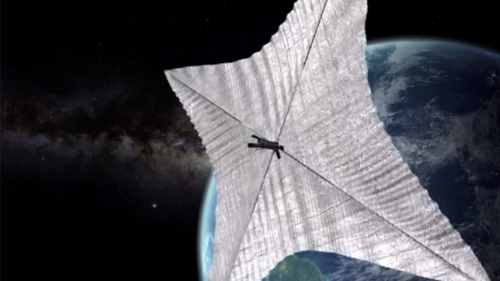
Solar sails are designed to capture the momentum from solar energy photons using large mirrored surfaces.

A tiny spacecraft designed to be pushed through space by ultra-thin “solar sails” will be launched in May by a U.S.-based non-profit group, 10 years after its first failed attempt.

The Planetary Society announced recently that its LightSail spacecraft will blast off on a test flight aboard an Atlas V rocket. The society is a non-profit space advocacy organization co-founded by the late astronomer Carl Sagan and headed by Bill Nye, best known as the Science Guy from his popular TV show.

According to CBC News, the LightSail spacecraft, a tiny cube satellite about the size of a loaf of bread, is expected to unfurl its four solar sails in June. The triangular sails are made of Mylar, about a quarter of the thickness of a garbage bag, and have a combined area of 32 square metres — equivalent to two parking spaces.

Solar sails are designed to capture the momentum from solar energy photons using large, mirrored surfaces. The small, continuous acceleration allows a spacecraft propelled by solar sails to reach high speeds over time.

“As LightSail breezes around the Earth, its shiny sails will be visible from the ground,” the Planetary Society says on its website for the project.

According to a blog post by Jason Davis, the society’s digital editor, the spacecraft won’t fly high enough to escape Earth’s atmospheric drag and demonstrate “true” solar sailing.

But it will gather time-lapse images of the sails’ deployment and engineering data that show how they perform in microgravity.

That, in turn, will be used to prepare for a second flight in 2016, at a higher altitude of 720 kilometres that will demonstrate “true solar sailing.”

The Planetary Society is collaborating on the project with California Polytechnic State University and the Georgia Institute of Technology, which will help collect data from the spacecraft, and two private space technology companies, Stellar Exploration Inc., which built the spacecraft, and Ecliptic Enterprises Corp., which conducted flight testing.

Five years later, the first solar sails were deployed by Japan’s Venus-bound IKAROS spacecraft and NASA’s NanoSail-D satellite in low-Earth orbit.

NASA has two upcoming solar sail missions, one to the moon and the other to an asteroid, scheduled for 2018.

Bacteria discovered that exist on pure energy

electric bacteria microbial nanowires

Electric bacteria connect to form wires

Microbiologists from California have discovered bacteria that survive by eating pure electrons rather than food, bringing an entirely new method of existence to awareness and raising questions about possibilities for alien life.

According to Extreme Tech, the ‘electric bacteria’ – as they have been dubbed by the team that discovered them – take energy from rocks and metal by feasting directly on their electrons. The hair-like filaments the bacteria produce carry electrons between the cells and their environment.

These bacteria yet again prove the almost miraculous tenacity of life — but, from a technology standpoint, they might also prove to be useful in enabling the creation of self-powered nanoscale devices that clean up pollution. Some of these bacteria also have the curious ability to form into ‘biocables,’ microbial nanowires that are centimeters long and conduct electricity as well as copper wires — a capability that might one day be tapped to build long, self-assembling subsurface networks for human use.

As you may recall from high school biology, almost every living organism consumes sugar to survive. When it gets right down to it, everything you eat is ultimately converted or digested into single molecules of glucose. Without going into the complexities of respiration and metabolism (ATP!), these sugars have excess electrons — and the oxygen you breathe in really wants those electrons. By ferrying electrons from sugar to oxygen, a flow of electrons — i.e. energy — is created, which is then used to carry out various vital tasks around your body (triggering electrons, beating your heart, etc.)

These special bacteria, however, don’t need no poxy sugars — instead, they cut out the middleman and feed directly on electrons. To discover these bacteria, and to cultivate them in the lab, the USC biologists quite simply scooped up some sediment from the ocean, took it back to the lab, stuck some electrodes into it, and then turned on the power. When higher voltages are pumped into the water, the bacteria “eats” electrons from the electrode; when a lower voltage is present, the bacteria “exhales” electrons onto the electrode, creating an electrical current (which could be used to power a device, if you were so inclined). The USC study very carefully controlled for other sources of nutrition — these bacteria were definitely eating electrons directly.

 All told, various researchers around the world have now discovered upwards of 10 different kinds of bacteria that feed on electricity — and, interestingly, they’re all pretty different (they’re not from the same family), and none of them are like Shewanella or Geobacter, two well-known bacteria that have interesting electrical properties. Kenneth Nealson of USC, speaking to New Scientist about his team’s discovery, said: “This is huge. What it means is that there’s a whole part of the microbial world that we don’t know about.

As for the repercussions of finding bacteria that eat and excrete electrons, the most obvious use is in the growing fields of molecular motors and nanomachines. These bacteria, at their most basic, are machines that consume raw electricity — and so, with some clever (genetic?) engineering, it stands to reason that we might one day use them to power tiny machines that can perform tasks that are currently carried out by expensive, human-operated machines (cleaning up chemical spills, for example). These bacteria might also allow us to find out exactly how much energy a living cell needs to survive; put them in a test tube, and then slowly dial back the electrode voltage until they die. A cruel experiment, but one that would yield very informative results.

IKEA to build Missouri’s largest rooftop solar array

ikea solar project

IKEA’s 42nd solar project in the U.S

IKEA has selected Inovateus Solar for the development and installation of 1.28 MW customized solar power system. PV installation will begin this spring with the store opening scheduled for the fall 2015, which will be Missouri’s largest rooftop solar array.

The 259,000 square-foot solar array will incorporate 4,085 panels that are expected to produce approximately 1.78 GWh of electricity annually for the store. The generated power will be equivalent to reducing 1,227 tons of carbon emission annually, Greentech Lead writes.

This installation will be IKEA’s 42nd solar project in the U.S, contributing to the IKEA roof top solar presence around 90 percent of its U.S. locations, with a total generation goal of 40 MW.

IKEA operates its own solar PV energy system atop the buildings and has so far installed around 700,000 roof top solar panels and 157 wind turbines across Europe and Canada.

In addition, IKEA has planned a global renewable energy investment of $1.8 billion through 2015, with a target of becoming totally energy independent by 2020.

Last month, IKEA projected plans for a possible store in the City of Memphis and Shelby County, Tennessee increasing its presence in the Southeastern United States as its first store in the state.

In another development, IKEA proposed plans to increase the solar array atop its Detroit-area store in Canton, MI. The new panels will be installed from spring 2015 with a completion expected by summer.

Besides, IKEA has plans to produce only LED bulbs by 2016 and also has installed electric vehicle charging stations at 13 stores, with further plan for more locations.

There are currently more than 360 IKEA stores in 47 countries, including 40 in the U.S. IKEA incorporates sustainability into day-to-day business and supports initiatives that benefit children and the environment.

Ukraine’s Association of Alternative Fuel and Energy Market Participants is now part of Global 100% Renewables

Ukraine's renewble Assocation, Ukraine solar, Ukraine's independence

Ukraine Renewable energy

The renewable energy from Ukraine is going global as their biggest organization in the clean energy sector is now part of the worldwide infrastructure that has the purpose of providing 100% of the electric power we neeed.

As the Ukrainian association’s President, Vitaliy Daviy, claims, this collaboration between them and the Association of Global 100% Renewables can result in creating a sure path for the European country on the road to the global energy community but also to develop a place where people contribute to the growth of renewable energy at a national level.

Renewable energy for Ukraine’s independence

“Today as never before, Ukraine needs an active and effective implementation of the sustainable development principles in the energy sector, in particular in the development of renewable energy. Ukraine is tied to Russia in accordance with gas supply and nuclear fuel. The only way to avoid this destructive addiction is a fundamentally new model of energy supply for the country. Global Initiative 100% Renewables aims to complete rejection of the world economy from traditional fuels and energy. This is our vector of the development,” reports the head of APEU .

One of the most remarkable personalities of Global 100% Renewables is the person who created the European legislative “green” tariff model for the development of renewable energy, also former member of the Bundestag Hans-Josef Fell.

Gas and oil versus alternative energy

He believes that Ukraine’s best solution for independence is green energy, in addition the rejection the Russian gas and the diminishment of nuclear energy. This being said, the collaboration between APEU and Global 100 % Renewables can be an important incentive for the fulfillment of this strategy.

“Gas and oil dependence of Ukraine has always been one of the key reasons of political crises in the country. Wind and solar power, biogas production can potentially make Ukraine independent of energy imports in a few years. Moreover, the development of renewable energy is a very efficient way to promote the overall growth of the national economy,” as  international experts announce.

Ukraine’s Association of Alternative Fuel and Energy Market Participants is now part of Global 100% Renewables

Ukraine's renewble Assocation, Ukraine solar, Ukraine's independence

Ukraine Renewable energy

The renewable energy from Ukraine is going global as their biggest organization in the clean energy sector is now part of the worldwide infrastructure that has the purpose of providing 100% of the electric power we neeed.

As the Ukrainian association’s President, Vitaliy Daviy, claims, this collaboration between them and the Association of Global 100% Renewables can result in creating a sure path for the European country on the road to the global energy community but also to develop a place where people contribute to the growth of renewable energy at a national level.

Renewable energy for Ukraine’s independence

“Today as never before, Ukraine needs an active and effective implementation of the sustainable development principles in the energy sector, in particular in the development of renewable energy. Ukraine is tied to Russia in accordance with gas supply and nuclear fuel. The only way to avoid this destructive addiction is a fundamentally new model of energy supply for the country. Global Initiative 100% Renewables aims to complete rejection of the world economy from traditional fuels and energy. This is our vector of the development,” reports the head of APEU .

One of the most remarkable personalities of Global 100% Renewables is the person who created the European legislative “green” tariff model for the development of renewable energy, also former member of the Bundestag Hans-Josef Fell.

Gas and oil versus alternative energy

He believes that Ukraine’s best solution for independence is green energy, in addition the rejection the Russian gas and the diminishment of nuclear energy. This being said, the collaboration between APEU and Global 100 % Renewables can be an important incentive for the fulfillment of this strategy.

“Gas and oil dependence of Ukraine has always been one of the key reasons of political crises in the country. Wind and solar power, biogas production can potentially make Ukraine independent of energy imports in a few years. Moreover, the development of renewable energy is a very efficient way to promote the overall growth of the national economy,” as  international experts announce.

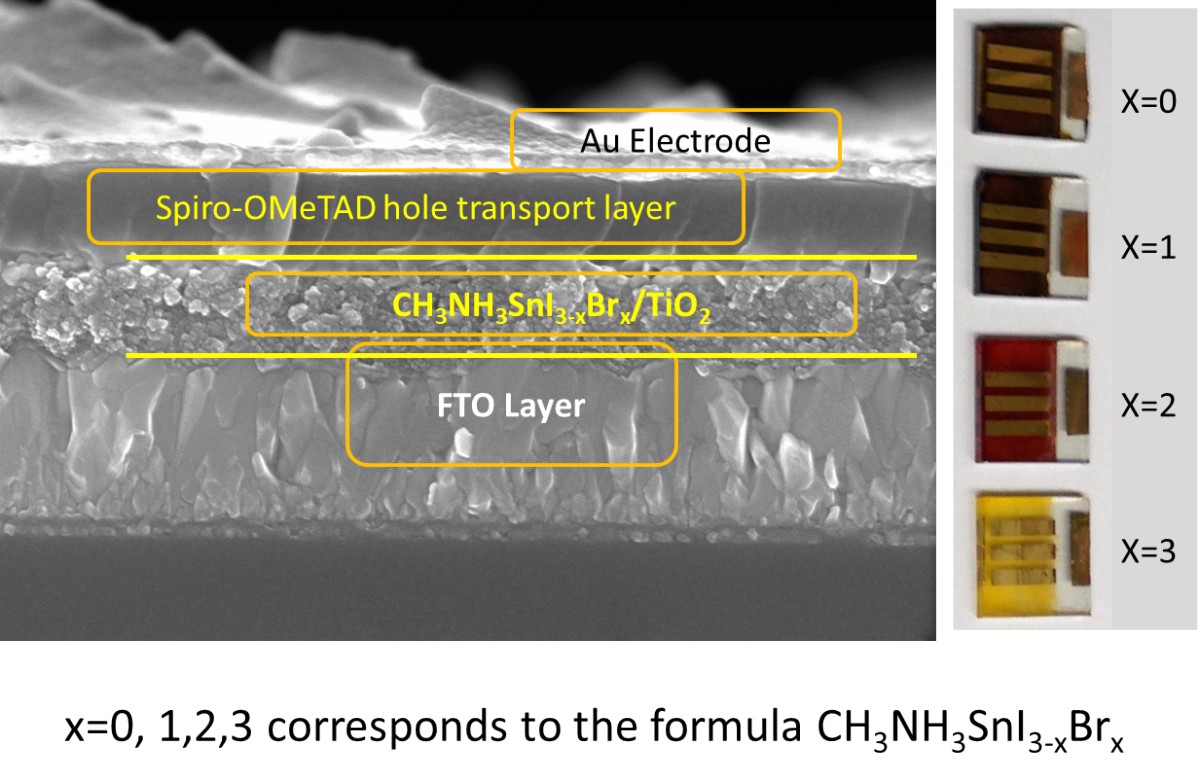
Solar energy is now more efficient by replacing lead with tin

This aolr cells, this based solar cells

Tin-based solar cells

It has been a long time since human kind first started using the sun’s en energy for their activity. Not so long ago solar cells were invented. With their help people are able free energy in the everyday activities, for different devices from calculators to satellites.

Scientists are always trying to develop ways to improve these cell’s efficiency. With this in mind they created a special solar cell. This type of cell uses tin and not lead perovskite as the way to harvest the light. This was quickly seen as the next boom of the photovoltaic industry.

This type of cell is also eco-friendly and it was first developed by American scientists from the Northwestern University in Illinois. They were the ones to find out ways in which the new type of cell can be used with “bench” chemistry or the traditional method where scientists do the chemical mixing themselves. The type of chemistry mentioned is not always safe as some of the chemical reactions may be harmful to humans. As far as lead is concerned, it is considered to be a toxic element and it is poisonous not only if you swallow it but also if you inhale it. The first type of solar cells are made of lead perovskite.

The new types of solar cells are consisted of tin-based perovskite and they can be as efficient as the lead-based ones and they harvest light in the same way with the help of two electronic layers that make them safe to use. In addition to this, tin made solar cells are absorbing most of the visible light spectrum, and the salt in perovskite can be dissolved and come back to normal state with no heating needed, as the scientists report.

“This is a breakthrough in taking the lead out of a very promising type of solar cell, called a perovskite.Tin is a very viable material, and we have shown the material does work as an efficient solar cell. While tin and lead belong to the same group in the table of elements, the lead-free solar cell already recorded an efficiency of six percent, which the researchers considered as a very good starting point” are the words of lead author of the study Mercouri G. Kanatzidis, a Charles E. and Emma H. Morrison Professor of Chemistry in the Weinberg College of Arts and Sciences.

Google collaborates with SunPower for leasing solar panels to homeowners

Goggle Inc. and solar panel producer Sun Power Corp shaking hands for leasing

The two companies will put $250 million in leasing solar systems to homeowners. The search engine giant is investing nearly $100 million, while the solar panel maker is contributing with $150 million. Google declared that the purpose of this program is to facilitate the procces of going green for thousands of homeowners in the U.S.A.

“Using the fund… we buy the solar panel systems. Then we lease them to homeowners at a cost that’s typically lower than their normal electricity bill”, said Google.

Gooogle supports green energy

Google and SunPower put $250 million in solar panels leasing program

Google invests in solar

The Mountain View technology giant’s plans come after a major boost in financing methodes. The number of homeowners that can benefit from the leasing program is growing and than they buy them outright.

Solar energy based companies are also in search of creative methods of investing in their business.

Solar leasing not for everyone

Solar producers that collaborate with homeowners regularly have difficulties when they are trying to pursue traditional banks to put their money into anything that isn’t a large-scale project, as analysts report. A lot of investment firms do not know the uncertainties that come with solar energy and don’t want to wait out the payout period, that can last many years.

Google seems to be very interested in long term investments in solar energy project in the upcoming years.

The company mentioned has invested in solar leasing before with the help of SolarCity and Clean Power Finance. In November, the company announced its plans to contribute with up tp $80 million for six utility scale solar facilities in two states: California and Arizona.

Apple wants to go 100% green

Apple has plans to embrace green energy

Apple adopts a green policy in order to reduce pollution

Apple goes green

Apple announced initiatives Monday to offer free recycling of its products, as well as plans to use renewable energy sources at its 420 worldwide stores.

Apple is willing to recycle freely all the old products and promises to use green energy for all the stores, offices and data centers in order to bring down the pollution level made by tits devices and online services.

The technology giant gave more details about a greener Apple company in a special section at the section made especially for clean energy launched on Monday. This section’s purpose is to accentuate the iPhone and iPad producer is enlarging confidence in renewable energy and is polluting less with its used electronics.

Apple goes green policy

The electronics company has been rewording its customers from the over 400 stores if they brought iPhones and iPods that could be recycled. They were rewarded with gift card. The company founded by Steve Jobs is now recycle any used Apple device with zero costs.

Taking into account the fact that Apple sold more than 1 billion iPhones, iPods, iPads and Mac computers, this comes as a huge progress. The procedure is valid for electronics that cannot be thrown away as they contain toxins. Their products sand for about 2% of the emissions in 2012 as the statistics from Greenpeace say. Some of the largest electricity demands come from data center that house the stacks of computers that process search requests, store photos and email, and stream video. These services often consume more electricity than China, the U.S., Japan, India and Russia. Being the world’s largest technology company, Apple wants to bring more environmental solutions than problems.

Moreover, the company is not doing this just for good publicity. As a recent review says, Greenpeace is praising Apple and it describes it to be “the most innovative and most aggressive in pursuing its commitment to be 100 percent renewably powered.”

Google to purchase solar based drone company

The search engine giant takes New Mexico – based Titan Aerospace a company that is producing unmanned, solar-powered jets conceived to fly many years at a time.

The new Google purchase was announced this Monday and Titan Aerospace for a confidential amount in a step that brings the technology giant in a race for the unmanned skies.

Solar power drones bought by Google

Titan Aerospace Solar purchased by Google

Titan Aerospace Solar purchased by Google

After Facebook’s $20 million acquisition of U.K. – based aerospace company Ascenta – that was developing the unmanned, solar-powered aerial drones for some time – the search engine giant moved quickly to take over the expected bid for Facebook to purchase the Titan Aerospace too.

The company from New Mexico has also been interested in developing solar powered drones made to fly continuously for many years as, a solar science that Google needs to use mainly to expand its prestige and be available in as many places on earth as possible.

Even if the amount that Google paid to a close source said that the technology giant was willing to pay more than anyone from Facebook for the Titan Aerospace. The purchased company only has a staff of 20 people and its location will remain New Mexico to carry on with its work and help Google provide internet in different corners on earth that are currently without cellphone towers or telephone wires.

Solar-powered drones bring an interesting aspect for companies such as Google and Facebook because of the reliability and stability in all kinds of weather conditions, whereas fossil fuel- or battery-powered unmanned aircraft are way more expensive and less promising.

Google gets better quality images

The two companies will work together to provide the material and to design the drone’s components and also to research algorithms that assure an improved traverse wind patterns and flight routes. The purpose is to gather real-time, high quality images of the earth with a lot more details needed for Google Maps but not only.

“It is still early days, but atmospheric satellites could help bring internet access to millions of people, and help solve other problems, including disaster relief and environmental damage like deforestation”, said a Google statement announcing the acquisition.