Mobile device charging is not so green as it causes a big amount of greenhouse gases. The latest report says

green mobile

“Green Mobile: The Complete Guide to Vendor Strategies & Future Prospects 2014-2019”

Green energy and sustainable life do not generate as much consciousness as we might think as the new Juniper Research report shows. The report also tells us that, five years from now, a simple mobile recharge can make as much as over 13 megatons CO2 of greenhouse gasses per year, globally, and in the current year 6.4 megatons is predicted.

The emissions in 2019 reach the emissions produced by 1.1 million cars in a year.

Almost half of the emissions made until 2019 will be produced by Asian electricity grids that function with the help of coal. As the Juniper report shows, the vendors are responsible for convincing companies connected to the mobile industry to use green energy.

The report named “Green Mobile: The Complete Guide to Vendor Strategies & Future Prospects 2014-2019” also says the in situations when where ICT (information and communication technologies) companies are intransigent about green energy regarding their electricity grids, energy companies are offering to give other customers green energy supplies. The report has a requirement that implies that this view should attract as much attention as possible in order to diminish emission related to the mobile industry.

But this approach is not only an advantage for the firms, but also for the environment, as this could be a way of determining mobile users to pay more attention to green issues. For example prolonging battery life would be useful for both users and surroundings. So this could lead to emissions cut until 2019.

The study also teaches us that supply chain emissions are still a big issue for the industry. If the providers would begin making the necessary changes now, until 2019 57.8 megatons in greenhouse gas emissions would be saved.

Moreover, the report reveals the fact that the phone appearance plays a major role depending on the recycling strategy. A number of designs can be expensive in the recycling process. In order to avoid the growing e-waste problem, vendors need to begin to make a plan for the devices that are no longer functioning.

Copenhaga found a new way of harvesting solar energy: A giant floating Duck

clean energy

The giant “green”duck

The inovative structure is designed to provide, in theory, a green city with solar power and hydropower.

An interesting way of supporting sustainability was found by a team of British designers and artist. They came up with a floating tourist attraction that will also attract solar power in Copenhagen Harbor as the Danish city plans to become carbon-neutral until 2025.

The giant sea duck shaped structure is as high as 12-story.

Constructed from lightweight steel and wrapped in solar panels, the “energy duck” could collect the rays of sun during the day and at night could bask the harbor in LED lights that change color in rhythm with the hydro turbines inside it, as the blog designboom says.

So the city’s visitors could be able to cherish the shows of lights from a distance, but also they could get on board of the energy duck and take a look at the inside work of it.

The giant bird was designed and constructed with the help of the designers and artists Pochee, Adam Khan, Louis Leger, and Patrick Fryer in a competition lead by Land Art Generator Initiative, a project that has the purpose to bring together art and sustainable design in order to discover more solutions regarding renewable energy.

Someday, this beautiful concept could be a reality.


iPhone 6 goes solar

solar smartphone

iPhone 6 will be manufactured with solar energy

The technology giant that in the past drew fire from campaigners for the fossil fuel dependence, is nowadays the leaders of companies for taking control of its own energy resources. Even if the solar farm owned by Apple is not doing great, the people in control of the environmental areas make use of the power harvested by the panels and place Apple on the green power-friendly companies map.

As we can remember, all the data centers were converted to clean energy and Apple is obliged to use solar power, the sapphire screens for the iPhone 6 will be manufactured with solar energy, in a factory in Arizona.

To minimize carbon footprints

In the past year, the telegenic Jackson was the front woman for Barack Obama’s environmental plans as the administrator of the Environmental Protection Agency. At present, she is responsible with the needs of minimizing the carbon footprint that Apple is causing. She also needs to be certain that the company does what it takes to decarbonize its products.

Big amounts of electricity are required by the data centers in order to preserve climatic conditions and keep the servers running and supplying all the electronic transactions on a daily basis.

Thanks to this new initiatives, users can be sure that when they need to download something or chat with somebody they will not be responsible for contributing to the carbon pollution, as Jackson reports.

“If you are using your iPhone, iPad, Siri or downloading a song, you don’t have to worry if you are contributing to the climate change problem in the world because Apple has already thought about that for you. We’ve taken care of that. We’re using clean energy,” she added.

Apple is also planning to use solar and geothermal energy for a manufacturing site in the U.S., a plant in Mesa, Arizona that produces sapphire glass.

“We are aware that almost 70% of our carbon footprint is in our supply chain,” Jackson said. “We are actively working right now on the facilities that we have here in the United States”.

This new investments represent a reversal for the company that faced a lot of critics for the working environment and the toxic chemicals dependence especially in Chinese factories and for the use of carbon-based sources as coal.

Google to give $1 Million in Portable Renewable Energy Source Challenge

Google clean energy

More clean energy from Google

Search engine is giving a $1 Million prize for the construction of a compact idea for turning green energy into a power source that can be utilized in the house.

Google, together with the Institute of Electrical and Electronic Engineers (IEEE), has begun a ‘Little Box Challenge’ to come up with and construct a kW-scale power inverter, that can be useful to transform in renewable energy, meaning solar and wind, until turning it into convenient current for houses and automobiles.

The competition is challenging because the new object needs to not be bigger than a little laptop, meaning maximum roughly 1/10th of the current size.

“We are looking for someone to build a kW-scale inverter with a power density greater than 50W per cubic inch. Do it best and we will give you a million bucks,” Google said in a blog post.

Google is certain that this will help “change the future of electricity”.

“We believe that inverters will become increasingly important to our economy and environment as solar PV, batteries, and similar power sources continue their rapid growth,” Google added.

It added that the innovation coming in will have wide applicability across areas, will increase the performance drive down price tags and open up new use cases.

Google announced the construction of a smaller power inverter could provide a bigger number of hoses that function with green energy, more practical electrical grids distributed wisely and could also bring a benefits to the isolated areas on earth.

“A smaller inverter could help create low-cost microgrids in remote parts of the world. Or allow you to keep the lights on during a blackout via your electric car’s battery. Or enable advances we haven’t even thought of yet,” Eric Raymond from Google’s Green Team reports.

The due date for the competition is this year’s September and the winner of the contest will be unveiled in the first month of 2016.

Microsoft announces they will power their datacenters with green energy

Microsoft wind farm

Green energy for Microsoft

The soft giant said they will power a number of datacenters with wind power. In order to do that, they signed a 20-year contract with a wind farm from Illinois.

The deal with EDF Renewable Energy is very much alike with the one the company signed last fall for a wind farm from Texax.

This Pilot Hill Wind Project is among the company’s biggest wind investment until now since it is 60% larger than the one in Texas, Keechi Wind Project

The leas with EDF Renewable Energy will see Microsoft assets up to an approximately 675,000 MWh of green energy from the 175MW wind farm every year.

Robert Bernard, Microsoft chief environmental strategist, reports in a blog post that the company is “committed to reducing our environmental footprint, and over the past two years we continue to meet our goal of becoming carbon neutral”.

“By purchasing wind, we will reduce the overall amount of emissions associated with operating Microsoft facilities and hopefully spur additional investment in renewable energy. Because the Chicago datacentre draws power from the Illinois power grid, projects like Pilot Hill help provide a non-polluting source of energy that displaces greenhouse gas emissions from conventional power.” he added.

The site construction has already begun at will be finished next year.

The senior energy campaigner at Greenpeace, David Pomerantz, believes Microsoft’s wind energy acquisition reveals that they are willing to compete with other cloud computing companies on the renewable front.

“Microsoft‘s large purchases of wind energy in Illinois and Texas, taken alongside the commitments by cloud competitors Rackspace and Google to power their respective operations with 100 per cent renewable energy, highlight the failure by Amazon Web Services to reach even the starting line in the race to build a clean cloud and green internet. As other companies move to embrace solar and wind, AWS risks losing business from customers that are beginning to expect their cloud to be powered by renewable energy” he also said.

Ukraine’s Association of Alternative Fuel and Energy Market Participants is now part of Global 100% Renewables

Ukraine's renewble Assocation, Ukraine solar, Ukraine's independence

Ukraine Renewable energy

The renewable energy from Ukraine is going global as their biggest organization in the clean energy sector is now part of the worldwide infrastructure that has the purpose of providing 100% of the electric power we neeed.

As the Ukrainian association’s President, Vitaliy Daviy, claims, this collaboration between them and the Association of Global 100% Renewables can result in creating a sure path for the European country on the road to the global energy community but also to develop a place where people contribute to the growth of renewable energy at a national level.

Renewable energy for Ukraine’s independence

“Today as never before, Ukraine needs an active and effective implementation of the sustainable development principles in the energy sector, in particular in the development of renewable energy. Ukraine is tied to Russia in accordance with gas supply and nuclear fuel. The only way to avoid this destructive addiction is a fundamentally new model of energy supply for the country. Global Initiative 100% Renewables aims to complete rejection of the world economy from traditional fuels and energy. This is our vector of the development,” reports the head of APEU .

One of the most remarkable personalities of Global 100% Renewables is the person who created the European legislative “green” tariff model for the development of renewable energy, also former member of the Bundestag Hans-Josef Fell.

Gas and oil versus alternative energy

He believes that Ukraine’s best solution for independence is green energy, in addition the rejection the Russian gas and the diminishment of nuclear energy. This being said, the collaboration between APEU and Global 100 % Renewables can be an important incentive for the fulfillment of this strategy.

“Gas and oil dependence of Ukraine has always been one of the key reasons of political crises in the country. Wind and solar power, biogas production can potentially make Ukraine independent of energy imports in a few years. Moreover, the development of renewable energy is a very efficient way to promote the overall growth of the national economy,” as  international experts announce.

Ukraine’s Association of Alternative Fuel and Energy Market Participants is now part of Global 100% Renewables

Ukraine's renewble Assocation, Ukraine solar, Ukraine's independence

Ukraine Renewable energy

The renewable energy from Ukraine is going global as their biggest organization in the clean energy sector is now part of the worldwide infrastructure that has the purpose of providing 100% of the electric power we neeed.

As the Ukrainian association’s President, Vitaliy Daviy, claims, this collaboration between them and the Association of Global 100% Renewables can result in creating a sure path for the European country on the road to the global energy community but also to develop a place where people contribute to the growth of renewable energy at a national level.

Renewable energy for Ukraine’s independence

“Today as never before, Ukraine needs an active and effective implementation of the sustainable development principles in the energy sector, in particular in the development of renewable energy. Ukraine is tied to Russia in accordance with gas supply and nuclear fuel. The only way to avoid this destructive addiction is a fundamentally new model of energy supply for the country. Global Initiative 100% Renewables aims to complete rejection of the world economy from traditional fuels and energy. This is our vector of the development,” reports the head of APEU .

One of the most remarkable personalities of Global 100% Renewables is the person who created the European legislative “green” tariff model for the development of renewable energy, also former member of the Bundestag Hans-Josef Fell.

Gas and oil versus alternative energy

He believes that Ukraine’s best solution for independence is green energy, in addition the rejection the Russian gas and the diminishment of nuclear energy. This being said, the collaboration between APEU and Global 100 % Renewables can be an important incentive for the fulfillment of this strategy.

“Gas and oil dependence of Ukraine has always been one of the key reasons of political crises in the country. Wind and solar power, biogas production can potentially make Ukraine independent of energy imports in a few years. Moreover, the development of renewable energy is a very efficient way to promote the overall growth of the national economy,” as  international experts announce.

Solar energy is now more efficient by replacing lead with tin

This aolr cells, this based solar cells

Tin-based solar cells

It has been a long time since human kind first started using the sun’s en energy for their activity. Not so long ago solar cells were invented. With their help people are able free energy in the everyday activities, for different devices from calculators to satellites.

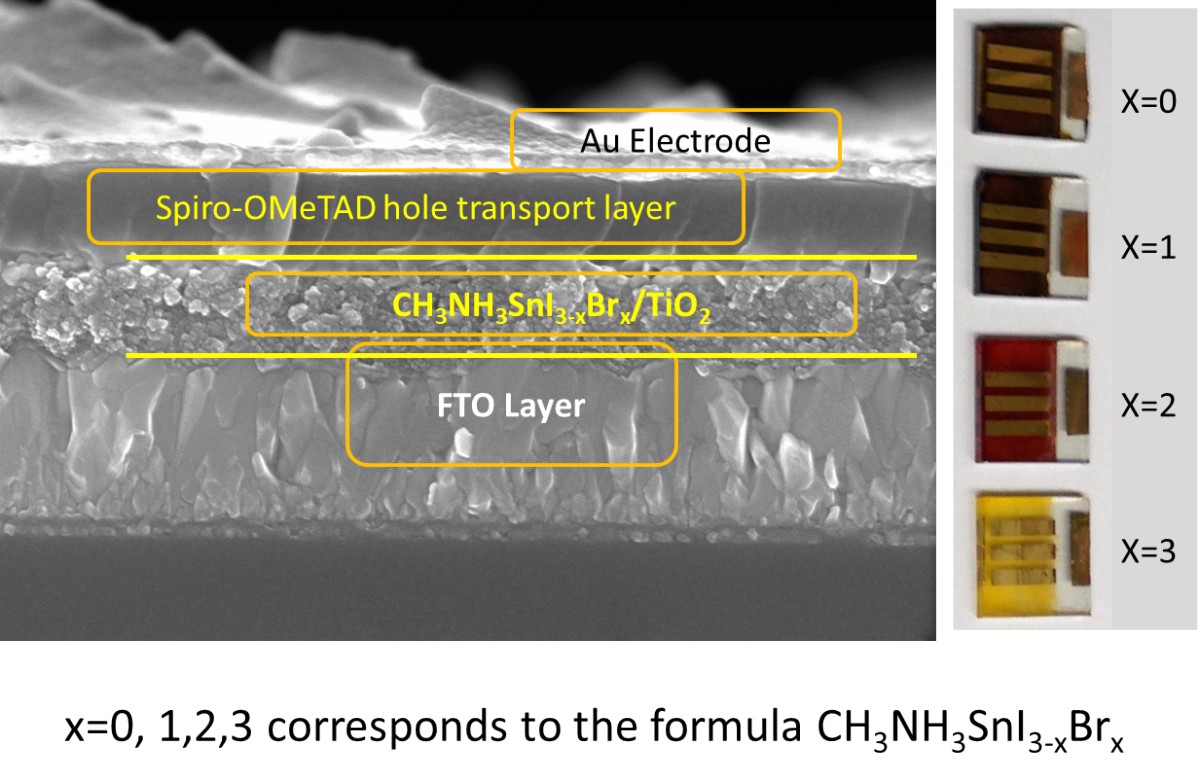
Scientists are always trying to develop ways to improve these cell’s efficiency. With this in mind they created a special solar cell. This type of cell uses tin and not lead perovskite as the way to harvest the light. This was quickly seen as the next boom of the photovoltaic industry.

This type of cell is also eco-friendly and it was first developed by American scientists from the Northwestern University in Illinois. They were the ones to find out ways in which the new type of cell can be used with “bench” chemistry or the traditional method where scientists do the chemical mixing themselves. The type of chemistry mentioned is not always safe as some of the chemical reactions may be harmful to humans. As far as lead is concerned, it is considered to be a toxic element and it is poisonous not only if you swallow it but also if you inhale it. The first type of solar cells are made of lead perovskite.

The new types of solar cells are consisted of tin-based perovskite and they can be as efficient as the lead-based ones and they harvest light in the same way with the help of two electronic layers that make them safe to use. In addition to this, tin made solar cells are absorbing most of the visible light spectrum, and the salt in perovskite can be dissolved and come back to normal state with no heating needed, as the scientists report.

“This is a breakthrough in taking the lead out of a very promising type of solar cell, called a perovskite.Tin is a very viable material, and we have shown the material does work as an efficient solar cell. While tin and lead belong to the same group in the table of elements, the lead-free solar cell already recorded an efficiency of six percent, which the researchers considered as a very good starting point” are the words of lead author of the study Mercouri G. Kanatzidis, a Charles E. and Emma H. Morrison Professor of Chemistry in the Weinberg College of Arts and Sciences.

SMA Launches the Sunny Boy Smart Energy

Niestetal, April 25, 2014—SMA Solar Technology AG (SMA) launches the new Sunny Boy Smart Energy in Germany. The first wall-mountable, mass-produced PV inverter with an integrated lithium-ion battery is immediately available for delivery.

The new inverter Sunny Boy

The new inverter Sunny Boy


This new product awarded the Product Innovation Prize at Intersolar 2013 is currently the simplest storage solution available for typical residential PV applications. Furthermore, it can also be used as part of the SMA Integrated Storage System Solution.

Using solar electricity even longer

With the Sunny Boy Smart Energy, owner-operators can now use solar power even after sunset. Thanks to the integrated battery with a capacity of approximately 2 kWh, generated PV electricity that is not needed in the home can be stored for later use. This increases self-consumption—which makes a positive contribution to the environment and great sense financially—and therefore independence from rising electricity prices. “When combined with the Sunny Home Manager, self-sufficiency quotas of 50% are common on an annual average basis,” said Product Manager Thomas Thierschmidt.

Optimized battery capacity

The VDE-certified lithium-ion battery integrated in the Sunny Boy Smart Energy has an effective, application-oriented capacity of approximately 2 kWh. This value is crucial because it enables ideal economical operation of the battery. Because the increase in self-consumption levels off with increasing storage capacity, the battery utilization factor decreases. In addition, thanks to the battery, virtually all generated PV energy can be used, even with active power limitation. “Our long-standing expertise in storage systems shows us time and again that the small storage battery is not only extremely viable but also affordable,” said Thierschmidt.

A core component in the SMA Integrated Storage System

The Sunny Boy Smart Energy, which is available in power ranges of 3.6 kW and 5 kW, is one of the core components of the SMA Integrated Storage System alongside the Sunny Home Manager. As the first wall-mountable, mass-produced PV inverter with an integrated lithium-ion battery, this new product awarded the Product Innovation Prize at Intersolar 2013 is currently the simplest storage solution available for typical residential PV applications.

For greater independence, for the success of the energy transition

The Sunny Boy Smart Energy fosters greater independence in the scope of the intelligent energy management of SMA Smart Home. It is also perfectly designed to help fuel the energy transition, thanks to its storage function. “The future Smart Grid for the decentralized and renewable electricity supply must rely on electrical storage systems. To be able to establish a system-appropriate storage capacity within the utility grid capacity, an easy-to-install and affordable product is needed. In this respect, the Sunny Boy Smart Energy supports the energy transition unlike virtually any other device,” said Thierschmidt.

About SMA

The SMA Group generated sales of €932.5 million in 2013 and is the global market leader for solar inverters, a key component of all PV plants. As an energy management group, SMA offers innovative key technologies for future powersupply structures. It is headquartered in Niestetal, near Kassel, Germany, and is represented in 21 countries.

UK at the top of the list in European PV: largest market of the year

UK solar, European Pv

UK PV market

Who would have said that a country where is mostly rains would end up being so solar-friendly? Well apparently it is possible as U.K is rapidly moving towards the top on the list with the largest markets of the year. Developing more than 120 big scale PV farms, UK grew the attraction for project developers, as NPD Solarbuzz says.

UK at the top in EU PV market, as the ground-mounted solar PV farms develop

Over 100 large-scale solar PV farms in the British country have been approved and are said to be finished this year as NPD Solarbuzz UK Deal Tracker reports.

NPD Solarbuzz Vice President, Finlay Colville, says “In the past six months, the Department of Energy and Climate Change released the United Kingdom’s Solar PV Roadmap and Solar PV Strategy reports, restating aspirations to hit 20 GW of cumulative capacity by 2020.”

As far as the amount of new solar PV capacity is concerned, the analysts say that U.K is at 2.875 GW for 2014, meaning that approximately 1.72 GW will be added in this semester.

Even the last leader of the market, Germany, didn’t reach this figure as it has 2.6 GW.

Future plans for the UK PV market

The main purposes of the solar market leader will also concern rooftop and ground-mounted systems and solar PV farms are said to be the main provider in 2014.

Until the end of the month , over 325 PV farms in the 10 MW category will be completed. This means over 60 different sites will be installed. Moreover, 444 large-scale ground-mounted solar PV farms are being installer at the time, with the help of Renewable Obligation scheme. The last one are to be completed until the beginning of the next year.

“With the U.K. projected to be the largest solar PV market in Europe in 2014, global component suppliers and project developers need to quickly understand the dynamics of the U.K. solar PV industry,” added Colville. “Aligning with suitable partners and choosing the most attractive PV projects in the pipeline will ultimately determine the winners and losers over the next 12 months.”