V3Solar Spin Cell vs conventional solar panels

As technology progresses, solar power harvesting systems are quickly receiving long-awaited upgrades.

Recently, we stumbled across this revolutionary new solar energy harvester called the V3Solar Spin Cell. Developed by V3Solar, this cone-shaped apparatus is capable of generating roughly about 20 times more energy than the traditional flat solar panel.

Using concentrating lenses, dynamic spin, a conical shape and advanced electronics, the V3Solar Spin Cell sports two cones, one of which uses hundreds of triangular PV cells. The outer cone works as a static hermetically-sealed outer lens concentrator.

V3Solar Spin Cell is capable of generating more energy from the rays of the sun than its peers, making it the next best way to power up the world today.

Sharp unveils new semi-transparent solar panels

Sharp unveils new semi-transparent solar panels with 6.8% conversion efficiency.

See-through solar panels have been a long standing dream of many, and Sharp has just given the world its first taste of the revolutionary technology.

Designed specifically for use as balcony railings and skyscraper windows, these solar panels have a semi-transparent black finish with a solar power conversion efficiency of about 6.8%.

These panels pack a maximum output of 95 watts and measure in at 4.5-feet wide by 3.2-feet tall. Now the efficiency of these panels might not match up to those conventionally used, but replacing windows with these is bound to turn just about any building greener!

Also, Sharp has not revealed the pricing details and we hope as technology progresses, these transparent panels will turn a little more efficient!

Great Britain could become gigawatt market in 2012

If installations keep developing at the same rate, Great Britain could join the ranks of the GW markets in 2012.

According to statistics from the Department of Energy and Climate Change (DECC), PV systems with a peak capacity of 1.15 GW currently produce electricity on British roofs and open land areas. This means that around half a GW (around 128,000 systems) has been added since the start of the year.

The PV specialist Ray Noble of the Solar Trade Association (STA) commented: “The previous ups and downs were obviously not sustainable, but the feedback we are getting from the industry shows that the number of new installations will continue to rise. We need to increase the current level to around 21 MW/week if we want to reach the annual target of 800 to 1000 MW set by the government.”

There are some risks ahead, such as the reduction of the feed-in tariff planned for August, which would, for example, reduce the rate for systems smaller than 4 kW from 21 pence/kWh to 16 pence/kWh. But despite this, STA head Paul Barwell is optimistic: “We are now quite certain that the British PV market is recovering.” He sees the latest rise in installations as a clear sign of the sustainable development of the sector.

After the large reductions in support made in the spring, the STA is focusing its efforts on ensuring that users and investors regain confidence in the feed-in tariff system. “We are working hard on spreading the message that solar power
remains a great investment.” In April of this year, the government halved the tariff to the current level of 21 pence/kWh for small systems under 4 kW.

New on the market: the T-Series Panels

Centrosolar Canada announced the release of the new photovoltaic modules: T-Series photovoltaic

Engineered in Europe and manufactured in Ontario it is designed for residential and also for commercial applications.It is designed for optimum capture of available sun to generate very high efficiency of power.

Centrosolar Canada’s T-Series is available in two versions: 60 cell and 72 cell. They are designed to rezist when it comes for harsh weather as snow, storm, ice, hail, high humidity and the intense thermal fluctuation associated with Canadian weather patterns.

T-Series Panels are made with high-quality materials, including top-branded EVA and high-transmittance glass for maximum durability and performance over the life of the installation. The modules are powered by monocrystalline and polycrystalline high-efficiency silicon cells, providing higher power output per module: up to 255Wp and 300Wp.

One of the benefits of the Centrosolar T-Series is its certification to withstand hail impact. wind and snow loads up to 5.4n/m.The Centrosolar T-series provides a tolerance rating of 0/+4.99W, which translates into more power out of the 255W and 300W module per DC wattage than other comparably rated modules.

The T-Series is also offered as part of Centrosolar Canada’s CentroPack System that provides installers with a turnkey system, pre-packaged with all the components  needed to install an approved residential or commercial roof-top PV system.

The CentroPack contains the T-Series panels, mounting systems, inverters and all the electrical and other hardware needed. Site plans, wiring diagrams and mechanical and structural details are also available as required.

Vodafone McLaren Mercedes – first carbon-neutral Formula 1 team

Vodafone McLaren Mercedes has been certified as fully carbon-neutral and it becomes the world’s first ever carbon-neutral Formula 1 team.

To achieve this ambition Vodafone McLaren Mercedes has worked alongside CNI to select appropriate and relevant initiatives to offset the team’s carbon footprint.

Vodafone McLaren Mercedes became the first ever Formula 1 team to achieve the coveted Carbon Trust Standard, last December.

Implementing a series of efficiency-driven measures within the McLaren Technology Centre, it was able to achieve annual savings of more than 1500 tonnes of CO2 emissions.

“Vodafone McLaren Mercedes leads the way across F1, and certainly does so in terms of environmental initiatives: the first F1 team to achieve the Carbon Trust Standard, recognition by the Government’s Carbon Reduction Commitment Energy Efficiency Scheme and a whole host of initiatives at the McLaren Technology Centre,” said CNI co-chairman James Brown.

Hawaii partner with Boeing in aviation biofuel

Boeing has announced an agreement to work with Hawaii BioEnergy, to create aviation fuel.

The companies will work together to identify biofuel sources and supporting technologies for producing sustainable jet fuel in Hawaii.

“As an Asia Pacific gateway and leading tourism destination, Hawaii can play a meaningful role in helping aviation reduce carbon emissions, while increasing regional energy resources,” said Boeing Commercial Airplanes Vice President of Environment and Aviation Policy, Billy Glover. “This collaborative effort will allow us to examine potential local options, while protecting the beauty and culture these islands have to offer.”

NASA to demonstrate largest solar sail

NASA plans to play in the sky with the world’s largest solar sail ever conceived.

The new upcoming missions are intended to transform its space communications, deep space navigation and in-space propulsion capabilities.

For these missions who should be launching in 2015 and 2016, have been selected tree projects.

One of the three projects is the solar sail measures a whopping 100 square feet (9.29 square meters)and spans 409 square feet, or 38 square meters.

Do you wonder what are they going to do with such a big sail?

The answer is simple: The sail could be used to gather orbital debris over a period of several years and included to a satellite’s payload, activating towards the end of the mission dragging the satellite out of its orbit.

The project is being led by California’s L’Garde Inc., in collaboration with the National Oceanic and Atmospheric Administration and NASA and the solar sail should be ready in three years.

24 Hour Solar System

By combining a concentrated solar power system with a molten salt heat storage system, the researchers from the Massachusetts Institute, have discovered how to deliver low cost solar energy at night as well as during the day.

As you know concentrated solar and salt storage are two familiar technologies.

The researchers are focusing their system on bringing down installation, operating and maintenance costs.

This concept could help small towns and communities take themselves off the grid with a reliable, steady stream of clean energy.

Concentrated solar power means using mirrors to focus sunlight on a central tower and when is combined with molten salt in the conventional manner, the salt will be heat with solar energy, then the energy will be transferred to the water which generates steam that turns a turbine to produce electricity.

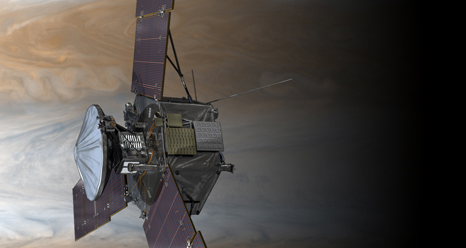
A NASA spacecraft will fly to Jupiter using solar power

NASA’s new mission to Jupiter will be undertaken by a windmill-shaped spacecraft.

The spacecraft will be powered almost entirely by solar power.

Named Juno, the spacecraft will have 2 billion mile journey ahead.

The Juno explorer will be the most distant probe ever powered by the sun.

The spacecraft is outfitted with three huge solar panels and is scheduled to lift off from the Kennedy Space Centre in the US state of Florida on Friday morning.

An unmanned Atlas V rocket will carry her into space.

Scott Bolton, Juno’s principal investigator, said the mission, coming just two weeks after the final flight of the manned space shuttle, shows that NASA is not fading into oblivion.

It will take Juno five years to reach its target, five times farther from the sun than Earth. No spacecraft has ever ventured so far, powered by solar wings.

The European Union’s solar-powered, comet-chasing Rosetta probe made it as far as the asteroid belt between the orbits of Mars and Jupiter.

The three wings of Juno are 29 feet long and 9 feet wide, necessary given that Jupiter receives 25 percent less sunlight than Earth.

Juno’s panels will provide 400 watts of power. In orbit around Earth, these panels could generate 35 times as much power.

NASA is preparing a new solar mission next month – the Grail mission during which two spacecraft will be fly to the moon – will also be solar powered.

BMW will convert landfill methane in to hydrogen

BMW is one of the most eco-friendly manufacturers in the world and he make green efforts for the environment conservation.

BMW is all set to research on extracting hydrogen from methane gas found in a specified local landfill.

BMW’s North American plant in Spartanburg, South Carolina, currently has a fleet of over 100 material handling vehicles that are powered by hydrogen.

It is one of the very few automobile plants that houses majority of the systems under a single roof.

The automaker hopes to build the infrastructure needed to power the entire fleet from hydrogen.

The plant already has hydrogen storage and a distribution area, which could be integrated into a full-scale version of the new project.

The project will cost a million dollars and will go through multiple phases.

The German automaker had actually saved $5 million per year after the implementation of high efficient technology.