Total global solar PV capacity will increase by 27% in 2015, despite policy changes says report

global solar PV capacity

Total global solar PV capacity will increase by 27% in 2015 – Global solar PV capacity rises to 223GW despite policy changes says report. Image source.

A new report predicts that the global cumulative installed capacity for solar PV energy will hit 223.2 GW by the end of this year compared to 2014’s 175.4 GW.

And this, says the study, is despite the anticipated declines in the annual installations of several key countries.

According to Power Engineering, the report from research firm GlobalData, states that China will remain the world’s largest market for annual solar PV installations in 2015, adding around 17.6 GW this year.

The US will follow with almost 8.2 GW of additions while India will witness strong demand in its solar PV market thanks to growing policy and political support.

However, despite this overall growth, Ankit Mathur, GlobalData’s head of power, said adjustments in the government policies of Germany and Japan will see their annual solar PV installations fall this year.

“After amending its renewable energy law in August 2014, Germany is expected to attain an annual installed capacity of around 1.8 GW in 2015 and will fail to hit the annual solar PV installation target of between 2.4 and 2.6 GW. This is due to ongoing feed-in tariff digressions, along with the €0.0617 [$0.0688] surcharge on self-consumption in 2015.”

Mathur added that Germany “is implementing initial measures to move away from expensive renewable energy subsidies and towards a reverse auction system by 2017. Two rounds of auctions took place in Germany earlier in 2015, with the third round expected to take place in December.”

Similarly, Japan’s lucrative solar PV policies, which had been attracting strong investment in recent years, have seen cuts in 2015 that will mean a reduction in installed capacity additions, compared with 2014’s record-breaking figure of 10 GW.

Mathur said: “With the arrival of the first solar PV FiT cut in April 2015, Japan’s FiT level decreased from $0.27 per kilowatt hour in 2014 to $0.24 per kWh, and further to $0.22 per kWh from July 1, 2015.

“These cuts, put forward by the Ministry of Economy, Trade and Industry, ended the premium rates for solar PV, and were triggered by a maturing market that has seen the cost of solar operation and maintenance fall.”

Leonardo DiCaprio’s company is making ethical diamonds using solar energy

diamonds created with solar power

Sustainable diamonds created with solar power. Image source.

Diamond Foundry, launched last week, was founded by Leonardo DiCaprio with the goal of reinventing the $100B diamond industry from “mine to finger” by setting a new standard for social and environmental good.

“I’m proud to invest in Diamond Foundry Inc. — reducing the human and environmental toll of the diamond industry by sustainably culturing diamonds without the destructive use of mining,” says Leonardo DiCaprio

According to diamondfoundry.com, the founding team of M.I.T., Stanford, and Princeton engineers previously developed pioneering breakthroughs in solar power technology – and had a hunch that techniques used to harness the energy of the sun could also be used to make a better diamond, atom by atom.

“We started by studying the laws of nature. Diamonds are born from a fiery heat, so we set out to create a plasma of unprecedented energy density. We coded software to run tens of thousands of physics-based simulations. In a warehouse just south of San Francisco, we built novel plasma reactors with hundreds of individually precision-engineered parts. Then, we formed plasma as hot as the outer layer of the sun,” says the Diamond Foundry.

The researchers discovered a plasma by which they can attach atoms to an earth-extracted diamond and grow it in size. One by one, the atoms stack on top of a thin slice of earth diamond and extend its unique crystal structure. Layer by layer, it grows into a pure, cultured, jewelry-grade diamond of larger size. After this step, the team slice off and reuse the original any number of times.

“We are now able to produce stunning diamonds in our San Francisco foundry. Each is a unique crystal of pure diamond, just like industrially mined diamonds but morally pure as well.

We use solar power credits to reduce our carbon footprint to zero, and we guarantee the characteristics and provenance of our diamonds: each is born at our foundry in California. The ultimate diamond: 100% pure. 100% ethical. Each unique.”

Moving to renewable energy would create millions of jobs, study finds

solar industry jobs

Moving toward renewable energy would be a boon to the economy, studu says. Image source

A new report has found that transitioning to a clean energy economy would be an economic boon to the United States, increasing employment, reducing costs to consumers, and benefiting investors.

The report, from NextGen Climate America, showed that investment in efficiency, renewable sources of electricity, and fuel switching — such as moving from fossil fuel-powered cars to electric vehicles — would add a million jobs by 2030, and roughly 2 million jobs by 2050, while increasing GDP by $290 billion and improving household income. The researchers looked at scenarios that would reduce emissions by 80 percent below 1990 levels.

“While addressing climate change is one of our greatest challenges, it is one of our greatest opportunities to build the economy,” Tom Steyer, co-founder of NextGen and billionaire climate activist (and a board member of the Center for American Progress), said on a call with reporters Monday.

The construction industry, in particular, could see a huge bump in jobs — to the tune of 1.2 million more in 2050 than under the business-as-usual scenario. That’s because it will take a lot of people to build the wind farms, install the solar panels, and retrofit the buildings needed to reduce America’s dependence on fossil fuels.

Efforts to lower emissions are often subject to the criticism that they will hurt the economy, even though actual examples of programs have shown that efficiency and clean energy programs can actually boost economic factors like household disposable income.

“The go-to argument against [climate action] is that it’s bad for the economy and it’s a job killer,” Steyer said. This report shows otherwise. Steyer also pointed out that in the last few years, jobs in the solar industry have grown 20 times faster than the rest of the economy.

In addition, the so-called reference case — a general economic forecast — did not take into account the potential costs of not addressing climate change. Recent reports have shown climate change poses a significant financial risk.

According tothinkprogress.org, the report studiously stays away from telling policymakers how to get to 80 percent less emissions. Rather than policy recommendations, the researchers took a feasibility study and used it to build out the economic impacts.

The researchers used a 2014 report, Pathways to Deep Decarbonization in the United States by Energy and Environmental Economics, which looked at whether it was technologically feasible to reduce carbon emissions significantly enough to avoid 2°C warming.

Economist Jeffery Sachs told reporters it was critical to first determine where we want to go, and then tailor policies to achieve those end goals.

“Too often our national policy conversation jumps straight to the question, ‘Is it a tax? Is it this or that?’ Whereas what this report does, much better, in my opinion, is to show here’s where we want to go,” Sachs said.

Overall, the report painted an optimistic picture of the economy under a clean energy scenario. It’s worth noting, though, that the gains will not be across the board. Job growth in two of the nine regions was expected slow under the low-carbon scenarios. Those two regions — which include roughly the area from Montana to Texas, a fossil fuel heavy swath of the country — would have slower job growth.

That means that as the country does develop policies to achieve these goals, it will likely need to dedicate resources — educational and economic — to areas that will have a harder time getting off fossil fuels.

“To help them adapt we need to provide dedicated new resources for economic diversification, job creation, job training and other employment services for workers and communities affected by job losses at coal mines and coal-fired power plants,” the authors said.

Jobs notwithstanding, all regions were found to see increases in disposable income.

Moving to renewable energy would create millions of jobs, study finds

solar industry jobs

Moving toward renewable energy would be a boon to the economy, studu says. Image source

A new report has found that transitioning to a clean energy economy would be an economic boon to the United States, increasing employment, reducing costs to consumers, and benefiting investors.

The report, from NextGen Climate America, showed that investment in efficiency, renewable sources of electricity, and fuel switching — such as moving from fossil fuel-powered cars to electric vehicles — would add a million jobs by 2030, and roughly 2 million jobs by 2050, while increasing GDP by $290 billion and improving household income. The researchers looked at scenarios that would reduce emissions by 80 percent below 1990 levels.

“While addressing climate change is one of our greatest challenges, it is one of our greatest opportunities to build the economy,” Tom Steyer, co-founder of NextGen and billionaire climate activist (and a board member of the Center for American Progress), said on a call with reporters Monday.

The construction industry, in particular, could see a huge bump in jobs — to the tune of 1.2 million more in 2050 than under the business-as-usual scenario. That’s because it will take a lot of people to build the wind farms, install the solar panels, and retrofit the buildings needed to reduce America’s dependence on fossil fuels.

Efforts to lower emissions are often subject to the criticism that they will hurt the economy, even though actual examples of programs have shown that efficiency and clean energy programs can actually boost economic factors like household disposable income.

“The go-to argument against [climate action] is that it’s bad for the economy and it’s a job killer,” Steyer said. This report shows otherwise. Steyer also pointed out that in the last few years, jobs in the solar industry have grown 20 times faster than the rest of the economy.

In addition, the so-called reference case — a general economic forecast — did not take into account the potential costs of not addressing climate change. Recent reports have shown climate change poses a significant financial risk.

According tothinkprogress.org, the report studiously stays away from telling policymakers how to get to 80 percent less emissions. Rather than policy recommendations, the researchers took a feasibility study and used it to build out the economic impacts.

The researchers used a 2014 report, Pathways to Deep Decarbonization in the United States by Energy and Environmental Economics, which looked at whether it was technologically feasible to reduce carbon emissions significantly enough to avoid 2°C warming.

Economist Jeffery Sachs told reporters it was critical to first determine where we want to go, and then tailor policies to achieve those end goals.

“Too often our national policy conversation jumps straight to the question, ‘Is it a tax? Is it this or that?’ Whereas what this report does, much better, in my opinion, is to show here’s where we want to go,” Sachs said.

Overall, the report painted an optimistic picture of the economy under a clean energy scenario. It’s worth noting, though, that the gains will not be across the board. Job growth in two of the nine regions was expected slow under the low-carbon scenarios. Those two regions — which include roughly the area from Montana to Texas, a fossil fuel heavy swath of the country — would have slower job growth.

That means that as the country does develop policies to achieve these goals, it will likely need to dedicate resources — educational and economic — to areas that will have a harder time getting off fossil fuels.

“To help them adapt we need to provide dedicated new resources for economic diversification, job creation, job training and other employment services for workers and communities affected by job losses at coal mines and coal-fired power plants,” the authors said.

Jobs notwithstanding, all regions were found to see increases in disposable income.

Trina Solar announces new efficiency record of 21.25% for multi-crystalline silicon solar cell

trina solar pv record

Chinese PV producer announces new efficiency record of 21.25% efficiency for multi-crystalline silicon solar cell. Image source

Trina Solar, a global leader in photovoltaic modules, solutions and services, today announced that its State Key Laboratory of PV Science and Technology of China has set a new world record for a high-efficiency p-type multi-crystalline silicon solar cell.

According to a press release, the record-breaking p-type multi-crystalline silicon solar cell was fabricated on a high-quality mc-Si substrate with a process that integrates advanced Honey Plus technologies including back surface passivation and local back surface field.

The 156×156 mm2 solar cell reached a total area efficiency of 21.25%. The result has been independently confirmed by the Fraunhofer ISE CalLab in Germany. This efficiency record breaks the previous 20.76% efficiency world record for mc-Si solar cells also established by Trina Solar one year ago. To set this new record, only low-cost industrial processes which can be easily integrated into large-volume production were used.

“We are very pleased to announce the new efficiency results achieved by our scientists and researchers at the State Key Laboratory of PV Science and Technology. To the best of our knowledge, this is the first time ever that a multi-crystalline silicon solar cell has been able to achieve a conversion efficiency of over 21%,” said Dr. Pierre Verlinden, Vice-President and Chief Scientist of Trina Solar.

“This exciting result shows that the development path toward higher efficiencies continues to be bright, even for silicon. Our aim is to continuously integrate innovative technological developments to improve the efficiency and lower the cost of our PV products. This technology advancement in efficiency will strengthen our leadership in the PV industry and allow us to continue providing affordable solar power to the world.”

50,000 battery packs to power Israeli thermal solar plant

solar thermal plant in Israel

BrightSource heliostat fields generate solar thermal energy. Image via israel21c.org

50,000 lithium-ion rechargeable battery packs will be supplied by Tadiran Batteries to BrightSource’s 121 MW Shalim Thermal Solar Power Station in Israel. These batteries have been designed to last 25 years, even in harsh environments. Tadiran is a subsidiary of the better-known Saft Group.

According to solarlove.org, BrightSource Energy, Alstom, and NOY Infrastructure & Energy Investment Fund are partners in the thermal solar station project. Oakland, CA–based BrightSource will be the provider of the concentrating solar power technology that some call a “solar power tower.”

Over 50,000 computer-controlled heliostats — which function like mirrors — will be combined with the tower that is over 200 meters tall to generate electricity. The Tadiran battery packs will be used to help manage these controllable mirrors, which track the sun on two axes. Using batteries instead of expensive cabling reduces the overall project cost.

This CSP plant will generate copious amounts of steam to turn turbines that generate electricity. It has been estimated that when the thermal solar plant is operational, it will generate enough electricity to power about 120,000 homes in the area. The construction site is the Negev desert, and up to 1,000 jobs will be created by the project.

Igal Carmi, President and CEO at Tadiran Batteries, explained, “We are proud to have been selected by BrightSource Energy to supply our state-of-the-art range of rechargeable lithium-ion battery systems for this innovative project. Awarded by a new client in a new sub-segment of energy harvesting, this order represents a significant commercial breakthrough for Tadiran and highlights the recognition by the industry for the excellence of its batteries.”

This project is exciting for a number of reasons. You can imagine how much sunlight is available in an Israeli desert, so it makes no sense not to utilize some of it. Secondly, battery technology is being used and this type of technology is beginning to emerge as a clean energy solution in a number of settings. Thirdly, the potential to provide electricity to well over 100,000 homes from one clean energy source is remarkable. Israel is also considered to be a technology leader, so it “makes sense” that clean energy technology would take root there.

How is the world’s first solar powered airport faring?

solar-powered-airport

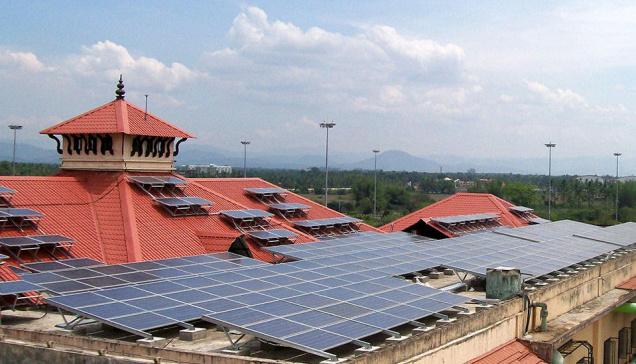
Cochin International Airport. Image via thehindubusinessline.com

As an airplane hovers over Cochin International Airport, one is struck by the dazzling array of reflective panels near the runway.

Standing out in a field of green are more than 46,000 solar panels tapping the power of the bright sunlight and converting it into energy.

Located in the southern state of Kerala, Cochin is now the first airport in the world to run completely on solar power.

According to BBC News, the airport started with a small pilot project by installing a solar energy plant with 400 panels on its rooftop in 2013. When that experiment succeeded, it decided to go all the way.

In August this year, the airport became totally self sufficient in meeting its energy needs after it installed a 12 megawatt solar plant close to the cargo terminal.

The airport’s managing director VJ Kurian says it was the huge power bills that prompted them to look at greener solutions.

Challenge

The airport, which is the seventh busiest in India handling more than 1,000 flights a week, consumes nearly 48,000 units costing 336,000 rupees ($5,160; £3,364) every day.

Today, with its solar power plant it produces more energy than it needs and banks the rest with the state power grid for rainy days and night-time requirements.

Mr Kurian says airports across the country have approached him to learn more about the “Cochin model”. A team from Liberia is also interested to learn more about harnessing the sun’s energy.

The installation of the solar plant cost nearly $9.5m (£6.27m) and took around six months to complete. The company is hopeful of recouping the costs in less than six years. So far it has been a smooth journey for the airport, says Mr Kurian.

The challenge though is just around the corner.

The airport is looking to inaugurate a new international wing in January comprising nearly 1.5m sq ft which will require more energy than what the existing plant is generating.

Additional solar panels will have to be set up if the authorities wants to hang onto the “first fully solar powered airport” tag.

Cochin may have shown the way forward but the rest of India is not far behind in tapping the vast potential of the sun. As most parts of the country receive sunshine for over 300 days a year, the possibilities are plenty.

Recognising this, Prime Minister Narendra Modi has outlined his vision of increasing the country’s solar power capacity to 100,000 megawatts by 2022.

This is a dream that can be realised by having photovoltaic panels on the rooftop of every home in India, generating enough power to reduce the country’s massive fuel bill and dependence on fossil fuels.

Solar energy is also a much cleaner source of energy than conventional forms of energy like thermal and nuclear. Considering the global debate on climate change, developing economies like India with its ever increasing need for energy to fuel growth can turn to the sun to power ahead.

Concerns

But it is not a simple process, despite the presence of abundant sunshine.

As Ashish Khanna, chief of Tata Power Solar points out, “We don’t have the [electricity] grid stability which can take the kind of power we are talking about. Also the quality of power is important.”

“We in India are very cost conscious and when we are talking about rooftop power, people may take decisions involving inexpensive pieces of equipment that may not contribute to the kind of quality we are talking about. The challenge right now is that there are no standards in place.”

Meanwhile, the solar plant at Cochin airport will produce 18 million units of power from the sun annually which is enough to meet the energy needs of 10,000 homes for one year.

The bonus is the environmental benefit of reducing carbon dioxide emissions by more than 300,000 metric tonnes which is equal to planting three million trees or not driving 750 million miles.

In a country where more than 300 million people still have no access to power, going solar may just be the solution that is needed to light up their lives.

Aspen now running on 100% clean power

Aspen renewable energy

Aspen is 100% green! Image via everystevejobsvideo.com

Aspen is the third American city to make the transition to 100% renewable energy. Following in the footsteps of Burlington, Vermont and Greensburg, Kansas, Aspen has disconnected itself from coal power completely and is running on a clean combination of wind and hydroelectric power.

Diversifying Green Sources

According to earthtechling.com, wind energy produced by four large wind farms in nearby Nebraska and South Dakota are supplying 53% of Aspen’s energy now, and 46% is coming from hydroelectric installations at the Ruedi, Maroon Creek and Ridgway Reservoirs. The final 1% comes from landfill gas.

Aspen has tapped into solar power too, with a large photovoltaic system set up to power their water treatment plant. There are also plans to install a solar thermal system for heating the water at the local indoor pool.

No newcomer to the green energy movement, Aspen was the first American city west of the Mississippi River to adopt hydroelectric power, in 1885. Since then, the town has relied on a mixture of energy sources. As recently as last year, coal power made up 20% of the city’s energy profile. Unfortunately for Aspen, delicate mountain ecosystems are among the worst affected by coal plant emissions. They would be among the first to feel the disastrous and lasting effects of a changing climate: Aspen and other mountain towns like it are in a sense “canaries in the mineshaft” for global climate change. Getting away from coal was a necessary step for their survival.

Tracking Greenhouse Emissions and Reducing Waste

When the Aspen city council adopted the forward-thinking Canary Action Plan in 2007, they aimed to reduce overall local greenhouse emissions and promote local environmental stewardship. The plan commits to reducing the community’s remaining greenhouse emissions 30% by 2020 and 80% by 2050.

While shifting the city to renewable energy was a large part of the initiative, the Canary Action Plan also includes energy efficiency incentives for Aspen residents, and environmental programs about energy and waste reduction for elementary and middle school students.

It’s very important to the City of Aspen that its residents be involved with the move towards greener living: the municipal government has an online dashboard, updated hourly, where anyone can see how much energy is being produced by the city’s hydroelectric projects.

In order to achieve their goals, The City of Aspen government implemented an emissions tracking system. They monitor city-owned buildings and facilities for annual emissions related to energy use, and they regularly assess the emissions from local ground transportation and air travel.

With a greenhouse emissions “budget” that decreases by 2% annually, Aspen is continually finding ways to improve their energy efficiency and meet their goals. Over the decade of 2004 to 2014, they managed to reduce their total emissions by 42%, achieving far more than their goal of 30%.

By continuing to encourage home energy improvements and the use of alternative transportation, Aspen is well on its way to complete carbon neutrality.

September – a great month for wind and solar energy in Scotland

scotland solar panels and wind turbine

Wind and solar power in Scotland. Image via c1cleantechnicacom.wpengine.netdna-cdn.com

According to a WWF Scotland analysis, wind energy capacity in the country generated enough electricity to power all Scottish homes on five out of the 30 days of September.

Based on wind and solar electricity data provided by WeatherEnergy, WWF Scotland says wind turbines generated 563,835MWh of electricity, an increase of 82% compared to September 2014. Wind power alone generated around 28% of Scotland’s electricity needs for the month.

” Given the big jump in renewables output during September it’s very likely we’ll be breaking even more records this year,” said WWF Scotland’s director, Lang Banks.

According to energymatters.com, for homes with solar panels installed, there was enough sunshine to generate an estimated 65- 70% or more of the electricity needs of an average household in some of Scotland’s regions.

“Despite being well in to autumn, for the tens of thousands of homes that have installed solar panels to generate electricity or heat water, around three-fifths of their electricity or hot water needs could have been met by the sun during the month. This all helped Scotland to further reduce its reliance on polluting fossil fuels during September,” said Mr. Banks.

WeatherEnergy says as the country moves toward winter, solar output will drop off to a degree, but wind power output will start to ramp up.

In November last year, wind power generated 126% of the electricity needs of every home in Scotland. 2014 was the first time clean energy produced more power in Scotland than nuclear, coal or gas.

Scotland has set a target to generate the equivalent of 100 per cent of its gross annual electricity demand by 2020 – a goal it appears it will have no problems in reaching. Just in practical offshore renewables resources, the country has an estimated 206 GW capacity potential.

At the end Q3 2014, 7,112 megawatts of renewable electricity capacity was installed in Scotland, an increase of 10.5% from the end of the second quarter in 2013.

Last week it was reported Scotland surpassed its target of generating 500 MW of locally and community owned renewable energy five years ahead of schedule.

Scotland’s renewable energy sector is also a major employer, supporting more than 11,000 jobs (January 2014).

Broken Hill mega-plant solar panels lift the roof

solar plant

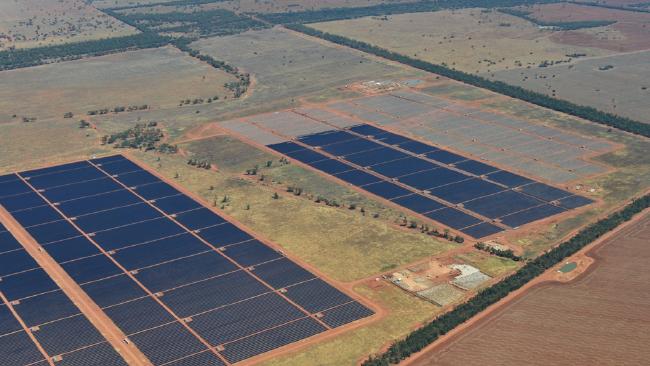
The Broken Hill plant will work in conjunction with the AGL solar plant in Nyngan in NSW. Image via theaustralian.com.au

The final panels on the biggest solar power station in the southern hemisphere will be installed at Broken Hill this week, paving the way for the plant to be fully operational by year’s end.

The 53-megawatt solar plant, a partnership between AGL and First Solar, will work in conjunction with the 102MW Nyngan solar plant to produce enough electricity to power about 50,000 average Australian homes. The Nyngan plant began operating six months ago.

“There is a real sense of momentum driving large-scale solar in Australia today,’’ Australian Renewable Energy Agency acting chief executive Ian Kay said.

According to The Australian, The large-scale solar plant begins operation as more than 1.4 million households in Australia have solar panels on their roofs, providing the highest penetration at the household level in the world.

However, the government is trying to drive more solar uptake at the commercial level as part of the 23.5 per cent renewable energy target.

Environment Minister Greg Hunt has set a priority of increasing the uptake of utility- scale solar as part of the government’s renewable energy mix.

The government through ARENA had provided $166.7 million towards the $440m AGL Solar Project.

“As well as powering Australian homes with renewable energy, this project is also assisting AGL to transition towards a decarbonised economy. It’s a win-win scenario,’’ Mr Hunt said.

Mr Kay said there was $350m available through ARENA and the Clean Energy Finance Corporation to further accelerate growth in the sector.

ARENA has a $100m large-scale solar round that could double the capacity of large-scale solar.

AGL executive general manager group operations Doug Jackson said the Broken Hill Solar Plant was already generating up to 27MW of renewable energy into the grid and the remaining 26MW was expected to be brought online this month.

First Solar’s regional manager for the Asia Pacific, Jack Kay, said the project combined industry-leading thin film modules and construction techniques.

He said the Broken Hill plant contained 677,760 of First Solar’s advanced PV modules. The Cadmium Telluride modules offered significant efficiency and reliability advantages over typical crystalline silicon modules, Mr Curtis said.