 After some time of speculations, today Bosch has confirmed that the will exit the crystalline solar sector. From 2014 they will suspend the ingot, wafer and cell productions. More than 3000 employees will be affected.
Bosch
Ending a shaky week for solar – Suntech finally entered into insolvency on Monday after mounting rumors – Robert Bosch GmbH has today confirmed it will cease its solar activities, following months of speculation. The engineering and electronics company has been investing in the industry since 2008.
In addition to ceasing production of ingots, wafers and cells, Bosch has said it will “quickly” sell off its individual business units, and end all development and marketing activities. This will include selling its 150 MW photovoltaic module plant in Vénissieux, France (which opened just last year) and scrapping its Malaysian plans for a manufacturing facility.
Aleo solar AG, of which Bosch owns 90.7%, will also be heavily affected, as Bosch seeks to sell its shares. According to aleo, Bosch has “assured aleo solar AG of financing until the end of March 2014.”
In a statement, it said, “Irrespective of the search for a buyer, aleo solar AG has already taken action: We have closed our factory in Spain, commenced the liquidation of our joint venture in China and have disposed of our shares in Bosch CISTech. We are now examining further activities for improving our earnings.”
Justifying today’s decision, Bosch said that it has been unsuccessful in achieving competitiveness in the solar industry, despite having “comprehensively examined every aspect of its solar business.”
“We have considered the latest technological advances, cost-reduction potential, and strategic alignment. And there have also been talks with potential partners. However, none of these possibilities resulted in a solution for the Solar Energy division that would be economically viable over the long term,” stated Volkmar Denner, chairman of the Bosch management board.
Stefan Hartung, chairman of the Bosch Solar Energy AG supervisory board and member of the Robert Bosch GmbH management board responsible for the Energy and Building Technology business sector, added, “Despite extensive measures to reduce manufacturing cost over the past year, we were unable to offset the drop in prices, which was as much as 40 percent.”
Despite the cutbacks, Bosch has said it will keep on Bosch Solar CISTech GmbH, located in Germany’s Brandenburg. “Its future alignment will be decided at a later date,” said Bosch in a statement released. Aleo solar sold its equity stake in CISTech to Bosch in December.
A Bosch spokesperson further told pv magazine that voltwerk electronics GmbH, Conergy’s ex-photovoltaic inverter subsidiary, which was acquired by Bosch last April, will not be affected, since it is not part of the company’s solar business.
Overall, Bosch’s solar division employs 3,000 people, of which 850 are based at aleo and 150 at CISTech. It is not yet clear how many jobs will be lost.
In the figures
In January, Bosch reported that while sales rose across all its divisions by 1.6% in 2012 to total revenues of €52.3 billion (US$69.7bn), the company forced to take an impairment of as much as €1 billion from its solar business.
Meanwhile, last August, the company announced the closure of its thin film production in Erfurt. However, it also took over Ersol and Johanna Solar, as well as a part of Aleo Solar; and acquired Voltwerk, the inverter partner of Conergy.
Category: Analysis & Features
IKEA uses 100% renewable energy
 IKEA is a 100% green company, its 2011 Sustainability Report affirms its green status.
From September 2010 to August 2011 IKEA set aside approximately $670 million to invest in renewable energy which includes installations that have both been brought into operation or will be completed in the next 1.5 years.
The company’s current renewable energy portfolio will increase. Now it boasts 69 wind turbines and 124 photovoltaic (PV) projects (40 operational and 84 approved).
The company declared its future plans to add 11 new PV solar projects to its current portfolio. The aim is to aid rooftops of each of the brand’s stores with solar PV panels and generate approximately 7000KW of clean energy. The base of this future planning is strengthened by IKEA’s success at the completion of its geothermal project at Denver, Colorado.
In a separate announcement, released just hours before the Sustainability Report, IKEA said it has plugged in its 15th solar energy project in the United States. REC Solar installed 4,984 solar panels atop IKEA’s 148,200 square foot store located in College Park, Maryland. The solar panels will combine to generate 1,196 KW of renewable energy.
IKEA is one of the most lucrative businesses on the planet, is not using this model — the retailing juggernaut owns and operates each of the systems installed on its buildings.
IKEA says it has 22 solar projects underway in the US which, when complete, will hoist the company’s solar energy portfolio to 30.8 MW.
Google – investments in green energy
 Web companies like Google are also investing in renewable energy with handsome profits. Google has invested over $915 million in this sector. The company has also taken it upon itself to make use of green and sustainable energy. Some of their corporate campuses utilize photovoltaic systems for solar energy and cogeneration units that make use of landfill gas to generate electricity. Google has also completed two PPAs with a commitment to purchase renewable energy from certain sources.
Google projects:
1. The project: Large scale solar PV in California
Google has invested $94 million in Recurrent Energy, a Sacramento-based company, for solar projects. The investment wil cover four solar projects that is hoped will significantly benefit California’s energy needs.
88MW of power being produced, enough to sustain 13,000 homes.
2. The project: Clean Power Finance – providing financing for rooftop solar panels.
Startup company, Clean Power Finance, is being financed by Google to help third party installers place solar panels on rooftops as part of solar rooftop projects. The investment of $75 million will see about 10,000 homes being benefited by solar power.
3. The project: SolarCity – solar for thousands of residential rooftops. In one of the biggest investments by Google, $280million has gone into funding SolarCity for its residential solar market.
4. The project: Atlantic Wind Connection – a superhighway for clean energy transmission
Google’s 37.5 equity stake in the Atlantic Wind Connection project by Trans-Elect Development Company will be able to generate a substantial 6000MW of power to large population centers in the Mid-Atlantic region.
5. The project: Shepherd’s Flat – the world’s largest wind farm. The investment: $100 million
World market for solar PV cells will double by 2020
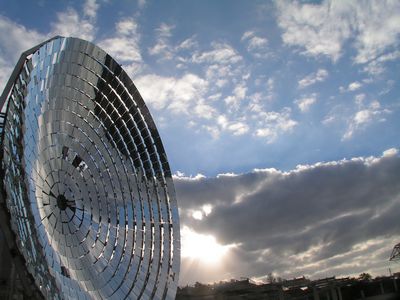
According to South Korea’s Samsung SDI, the global market for solar photovoltaic cells will double by 2020, rising from 2010′s $30 billion to $70 billion.
Reuters reported early Wednesday, that the Falling prices and supportive government policies will drive the growth.
Chinese solar PV cell manufacturers will continue with aggressive overseas expansion plans the solar power industry out to 2013.
Germany and Italy, two leading EU solar power markets, have cut back on subsidies this year.
Although EU subsidies shrink in, Samsung SDI plans to aggressively expand its solar PV cell production from its current 150 MW to 3 GW by 2015, believing that its “super-efficient crystalline solar cells will differentiate” it from competitors’ products.
The company will invest 2.2 trillion won ( $2.05 million) into the business and expand into thin-film solar PV manufacturing as well.
Samsung intends to expand on US, Japanese and EU markets while considering emerging markets, such as China and India as well.
Samsung SDI acquired Samsung Electronics’ solar PV cell division for $149 million at the end of May.
Hurricane Irene has negligible impact on renewable
 While Hurricane Irene lashed the eastern Seaboard and the Canadian Maritimes over the weekend, killing 31 people there have been absolutely no reports of damage to renewable energy facilities.
“No damage,” he wrote in an email early Monday morning. “The facility is intact, and there are no turbines in the water at present” said Matthew Lumley, communications director for the Fundy Ocean Research Centre for Energy in Halifax, Nova Scotia.
Irene passed on US Coast over the proposed sites of several wind projects, but none had progressed so far as to be in harm’s way.
Until the hurricane was downgraded to a tropical storm more than 5.9 million were without power in 14 states.
EU biofuel consumption up 13% in 2010
 The latest biofuels barometer shows that Europeans consumed 13.6% more biofuel in 2010 than in the previous year.
In 2010 biofuels continued to grow in the European Union.
In the transport sector, it increased by only 1.7 Mtoe compared to 2.7 Mtoe in 2009 which means EU biofuel consumption growth slackened off.
The total biofuel consumption for 2010 should hover at around 13.9 Mtoe.
Germany was consuming over 3 million toe of biofuel in 2010 (two third of which was biodiesel), followed by France, Spain, Italy and the UK.
The lack of interest in vegetable oil consumption is hardening (down 14.3%) and may still be due to increased German taxation on this biofuel.
Biogas fuel is almost unique to Sweden, while other EU countries struggle to develop it.
Future growth of consumption in the European Union will depend on external factors such as the increase in oil prices and the worldwide availability of biofuel.
A new solar academy is opened in Kenya
 Three German PV companies have launched a solar academy in Nairobi.
It is a partnership between Energiebau Solarstromsysteme Gmbh, Schott Solar, Solar Technology and the German Company for International Cooperation.
The German Solar Academy opened with a one-week training activity, which took place in mid June.
About 40 participants from Kenya, Tanzania and Rwanda were attended.
In addition to gaining knowledge on PV systems, including background information on the planning, installation, operation and maintenance of off-grid and grid-connected systems, the participants also visited the PV systems at the new UNEP headquarters.
Schott says that further training will be offered biannually.
Wind energy market saw decreased demand in 2010
 In 2010 the U.S. wind energy market took a hit with a decrease in investment compared with 2008 and 2009.
According to the Department of Energy’s, the report investment in terms of how much wind energy capacity was built and connected to the national electric grid.
In U.S. in 2010 were installed about 5 gigawatts’ worth of wind energy farms representing an $11 billion investment, according to the report.
Compare to the 10 gigawatts that were installed in 2009 in the U.S., and the 8 gigawatts in 2008, 2010 represents a decrease in wind energy installations.
“The combination of the delayed impact of the global financial crisis, relatively low natural gas and wholesale electricity prices, and slumping overall demand for energy outweighed the ongoing availability of existing federal and state incentives for wind energy deployment, resulting in a steep drop in capacity additions relative to both 2008 and 2009,” according to the
report.
China was the world’s fastest-growing market and U.S. was still the second-fastest-growing wind energy market in the world in 2010.
Wind turbine component manufacturing in the U.S. grew in 2010 and about 68 percent of components used in U.S. wind projects installed between 2009 and 2010 were made in the U.S.

Spanish solar market is rising
 The statistics for the PV market for 2010 released by the Spanish photovoltaic association ASIF, according to which the Spanish PV industry is moving strongly into the international market.
Thanks to the changes in the Spanish solar energy promotion policies and because a yearly cap of 500 MW was set, the international sales in 2010 increased by 130% compared to the previous year.
The total capacity of Spanish PV production was 1.000 MW in 2010, of this, 70% was exported and only 30% installed locally.
In Spain itself, 392 MW of new photovoltaic systems were installed, of which a good 60% were locally produced.
2009 was a bad year for Spanish market because subsidies were massively cut and the sales in Spain only reached 17 MW.
However, a large portion of the projects completed in 2010 were actually old projects, the completion of which was delayed by the crisis of the year before.
The ASIF predicts that Spanish solar market will increase more in the coming years, and expects only 300 MW of new capacity to be installed in 2013.
Gamesa a world leader in wind turbines
 During 2011 Gamesa made progress in offshore strategy, technological design and development of the G11X-5.0 MW platform which will be equipped with a 128-metre rotor diameter.
Gamesa has a 15 years experience in the design, manufacture, installation and maintenance of wind turbines, having installed 21,000 MW in over 30 countries across four continents, with over 13,600 MW under maintenance.
All this makes her a world leader.
Recently, in Liverpool Gamesa showcased theG128-5.0 MW offshore wind turbine.
The first prototypes are scheduled for completion in the last quarter of 2012.
The company plans to invest over €150 million between now and 2014 in the UK wind power offshore.