Recreational Vehicles: A new step for comfortable trips

RV (Recreational Vehicles) are the best inventions for a perfect trip.

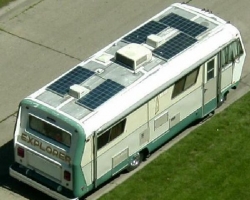
RV requires energy to provide you all comforts of a home while you are on the road. Solar installations  will allow more independence in creating home comforts and also save fuel.

The solar instalations consist of solar panels and also the mount on which the panels will rest.Your camper and batteries will get charged directly from the sun.A problem with RV’s is that for their power needs they may not get access to a power outlet so you need to install a generator.

Specially designed for smaller quarters a Solar Power Ventilator can further enhance the efficiency of renewable energy. Solar installations represent a green solution for saving the fuel, but they will also be a rescuer through times when power supply gets cut off.

New developement:solar cells thinner than spider silk

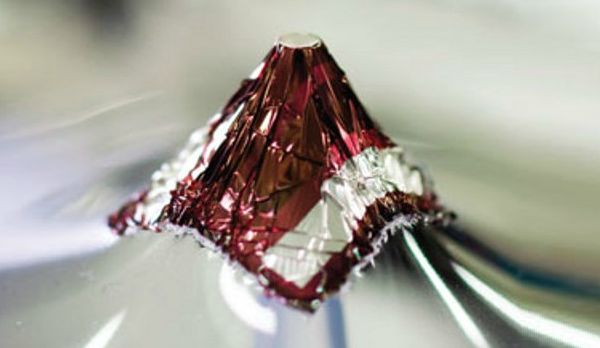
A team of Austrian and Japanese researchers created micro thin solar cells that are thiner than the strand of  spider silk.

It consists of electrodes on plastic foil and measures a mere 1.9 micro meters thick, 10 times thinner than  all available solar cells.
It could change the development of electronic textiles, synthetic skin and advanced robotics.

The device can be attached to a person’s clothes to collect  solar electricity and help elderly individuals wearing sensors to monitor their health.People will not feel the weight of these cells and the elasticity helps using it in many other applications .

The researchers aims to increase the overall rate of the device’s sunlight electricity conversion.The power generated by solar cells increases with size and specialist said that the cells could be made larger to increase their efficiency.
Now, the cells aren’t powerful enough for any gadget but the research team work to be ready for the market in another five years.

Google – investments in green energy

Web companies like Google are also investing in renewable energy with handsome profits. Google has invested over $915 million in this sector. The company has also taken it upon itself to make use of green and sustainable energy. Some of their corporate campuses utilize photovoltaic systems for solar energy and cogeneration units that make use of landfill gas to generate electricity. Google has also completed two PPAs with a commitment to purchase renewable energy from certain sources.

Google projects:

1. The project: Large scale solar PV in California

Google has invested $94 million in Recurrent Energy, a Sacramento-based company, for solar projects. The investment wil cover four solar projects that is hoped will significantly benefit California’s energy needs.
88MW of power being produced, enough to sustain 13,000 homes.

2. The project: Clean Power Finance – providing financing for rooftop solar panels.

Startup company, Clean Power Finance, is being financed by Google to help third party installers place solar panels on rooftops as part of solar rooftop projects. The investment of $75 million will see about 10,000 homes being benefited by solar power.

3. The project: SolarCity – solar for thousands of residential rooftops. In one of the biggest investments by Google, $280million has gone into funding SolarCity for its residential solar market.

4. The project: Atlantic Wind Connection – a superhighway for clean energy transmission

Google’s 37.5 equity stake in the Atlantic Wind Connection project by Trans-Elect Development Company will be able to generate a substantial 6000MW of power to large population centers in the Mid-Atlantic region.

5. The project: Shepherd’s Flat – the world’s largest wind farm. The investment: $100 million

How to build a solar powered camera

Everyone’s dream is a solar powered camera. The best way a camera has continuous electric supply is with solar panels, harnessing uninterrupted wireless data support.

Difficulty level:
Moderate

Time Required: At least 5 to 6 hours

Resources required

1. Webcam
2. Wires
3. 12V rechargeable battery
4. Hammer
5. Drill
6. Screw and Screw driver
7. Solar Panel
8. Central hub/ Computer

Estimate cost: $100 to $500

Instructions

1. You can choose any wireless camera that you may find, powered by 12-volt battery.

2. An important criterion is the battery selection. You need to buy a long storage battery to make the operation continued in long wintery nights with reduced daylight. If the camera consumes  60 watts per day then you need to have at least 6 Amp-hours of backup from your 12 V battery.

3. The third step is to chose the solar panel. The power captured by solar panel will be used to recharge the battery. Buy the solar panel according to your light conditions. In open space with lot of sunlight hours, you can buy a solar panel of 5-10 W or you have to purchase a solar panel with high power capturing facilities.

4. Now you can start assembly the battery. You need to connect the  battery to the webcam. You can use the drill, hammer and screws to fix the whole assembly. If you are assembling it in rainforest, it is better to have solar panel mounted above the canopy of the forest. In ranches, a place above camera or anywhere inside your property is good enough as long as it is getting enough sunlight.

5. Next – mount the camera on either a tree or a pole with help of metal L brackets. You also need to mount the control box and battery in such a way that it do not get wet.

6. Connect the webcam wirelessly with your computer or central monitoring facility. When everything is ready, let the battery charge for day before the whole assembly starts working with your battery with limited charging.
European Solar Days

The European Solar Days promote the use of free unlimited renewable energy source available everywhere to everyone to generate electricity as well as heating and cooling: the sun.

The next campaign for the edition of the European Solar Days will be held from 1 to 13 May 2012.

During the fourth edition of European Solar Days, which was held from 1-15 May 2011, it was demonstrated the increasing support for solar energy, with more than 8,000 events organised in 19 countries throughout Europe, attracting the participation of half a million citizens.

20 participants from 16 countries gathered last week in Prague for the second edition of the European Solar Days Annual Conference to plan next year’s events.

The countries who are taking part at the European Solar Days are expected to continue to grow this year.

Hawaii partner with Boeing in aviation biofuel

Boeing has announced an agreement to work with Hawaii BioEnergy, to create aviation fuel.

The companies will work together to identify biofuel sources and supporting technologies for producing sustainable jet fuel in Hawaii.

“As an Asia Pacific gateway and leading tourism destination, Hawaii can play a meaningful role in helping aviation reduce carbon emissions, while increasing regional energy resources,” said Boeing Commercial Airplanes Vice President of Environment and Aviation Policy, Billy Glover. “This collaborative effort will allow us to examine potential local options, while protecting the beauty and culture these islands have to offer.”

NASA to demonstrate largest solar sail

NASA plans to play in the sky with the world’s largest solar sail ever conceived.

The new upcoming missions are intended to transform its space communications, deep space navigation and in-space propulsion capabilities.

For these missions who should be launching in 2015 and 2016, have been selected tree projects.

One of the three projects is the solar sail measures a whopping 100 square feet (9.29 square meters)and spans 409 square feet, or 38 square meters.

Do you wonder what are they going to do with such a big sail?

The answer is simple: The sail could be used to gather orbital debris over a period of several years and included to a satellite’s payload, activating towards the end of the mission dragging the satellite out of its orbit.

The project is being led by California’s L’Garde Inc., in collaboration with the National Oceanic and Atmospheric Administration and NASA and the solar sail should be ready in three years.

Solar panels help the growth of coral reefs

Just like the rest of the environment around us the world’s coral reefs are in trouble, because of climate change and habitat destruction.

The researchers found a solution- to use electrified artificial reefs instead, called Biorocks.

Biorock start off as a Rebar skeleton structure or electrically-conductive wire mesh, called a Coral Ark, which it’s partially sunken or anchored into the seafloor with a solar panel floating on the surface above it, which provides a steady electrical current.

The electricity collected by the solar panels results in accretion coating the Ark with a natural concrete material very similar to that of clam shells.

With this, the structures can grow indefinitely—at a rate of 5cm annually—as precipitated materials add to the structure’s rigidity and will even repair themselves if damaged.

When these structures will solidify on the seafloor and will start more closely resemble natural reefs, they will begin to provide the same benefits of natural reefs which means a greater resistance to the incoming wave actions reduces the energy with which each wave hits the beach, allowing more suspended sand particles to be dropped on the beach.

Ferrari will never be an electric car, only hybrid

One thing’s for sure, Ferrari will never go electric.

Luca di Montezemelo doesn’t believe in electric cars. He said:

“You will never see a Ferrari electric because I don’t believe in electric cars, because I don’t think they represent an important step forward for pollution or CO2 or the environment. But, we are working very, very hard on the hybrid Ferrari. This should be the future, and I hope in a couple of years you can see it.”

The new Ferrari hybrid will be more Porsche 918 than Toyota Prius.

400 new green jobs to Arizona

400 new green jobs in Arizona thanks to the giant 290-megawatt Agua Caliente Solar Power Project.

The new facility is sponsored by the solar giant NRG and will use two cutting edge technologies that improve the stability of power supply from the plant to the grid.

The two technologies are new to the solar industry, so their successful application in the Agua Caliente project could make them industry standards throughout the U.S.

The solar-giant NRG recently cancelled two nuclear power plants  planned for Texas, following the Fukushima nuclear disaster.

NRG is also the force behind the Department of Energy’s super-ambitious distributed-power solar project, called Project Amp who was announced earlier this summer, involves the installation of $1.4 billion worth of rooftop solar panels on hundreds of buildings, basically doubling U.S. solar capacity over 2010 levels.