A huge floating solar power plant to be built in India

solar technology

Floating solar power plant in India

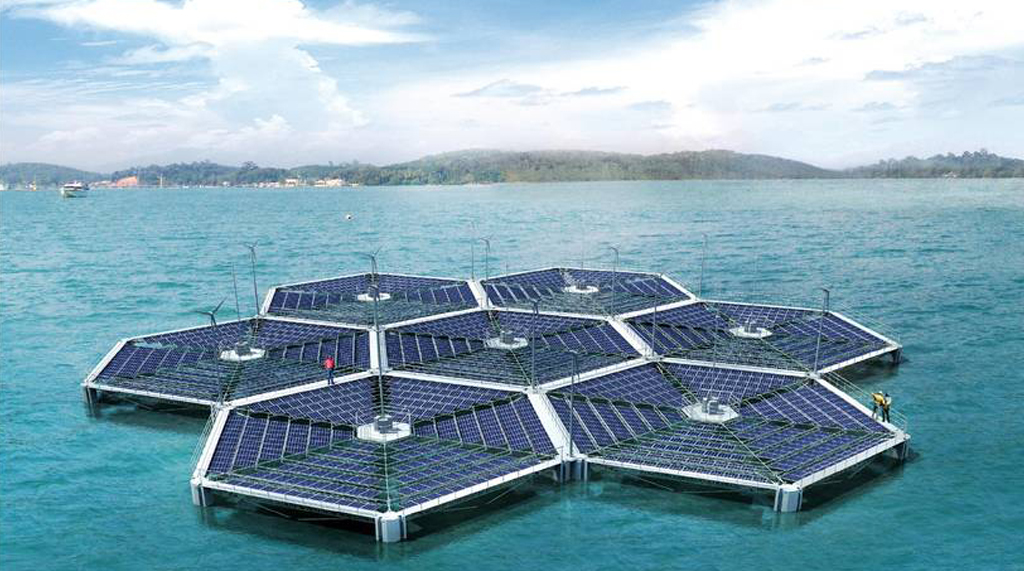
The National hydroelectric power company in India announced that they are going to construct a great solar power plant that will sail on top of a lake.

India has previously announced their strategy to build a 10 megawatt solar situated on some of the its canals, the Asian country took their idea to another level and want to construct a floating power station that will be situated on one of the large stretches of water in Kerala, India.

This particular floating solar power plant machinery was expanded by India’s Renewable Energy College and it is going to be implemented by the National Hydro Power Corporation, India’s national energy company. The very first of its plants will be authorized this fall.

“NHPC had contacted us for offering technical know-how and installation assistance for their proposed 50-mw plant,” reports the chairman of the Renewable Energy College, Gon Choudhury. “Each station would require around 3000 square feet of space to generate 20 kilowatt of power. There are many water bodies that could be used for this,” he added.

The project is also said to be eco-friendly and it will have a small impact on the surroundings, as Choudhury illustrates:

“The ecology of the water body is not likely to be affected much and it will also reduce evaporation, thus helping preserve water levels during extreme summer. Solar panels installed on land face reduction of yield as the ground heats up. When such panels are installed on a floating platform, the heating problem is solved to a great extent. This isn’t an ideal solution, it’s not as though we can go and cover the world’s oceans with photovoltaic cells, but it’s certainly a solid intermediary step until we get those space-based solar farms up and running.”

This project looks a lot like one of Japan’s offshore solar power plants built in 2013. The 70MW Kagoshima Nanatsujima Mega Solar Power Plant was conceived as part of the move towards a more green energy area as a follow-up of the 2011 Fukushima meltdown and is located in Japan’s Kagoshima Prefecture.

A huge floating solar power plant to be built in India

solar technology

Floating solar power plant in India

The National hydroelectric power company in India announced that they are going to construct a great solar power plant that will sail on top of a lake.

India has previously announced their strategy to build a 10 megawatt solar situated on some of the its canals, the Asian country took their idea to another level and want to construct a floating power station that will be situated on one of the large stretches of water in Kerala, India.

This particular floating solar power plant machinery was expanded by India’s Renewable Energy College and it is going to be implemented by the National Hydro Power Corporation, India’s national energy company. The very first of its plants will be authorized this fall.

“NHPC had contacted us for offering technical know-how and installation assistance for their proposed 50-mw plant,” reports the chairman of the Renewable Energy College, Gon Choudhury. “Each station would require around 3000 square feet of space to generate 20 kilowatt of power. There are many water bodies that could be used for this,” he added.

The project is also said to be eco-friendly and it will have a small impact on the surroundings, as Choudhury illustrates:

“The ecology of the water body is not likely to be affected much and it will also reduce evaporation, thus helping preserve water levels during extreme summer. Solar panels installed on land face reduction of yield as the ground heats up. When such panels are installed on a floating platform, the heating problem is solved to a great extent. This isn’t an ideal solution, it’s not as though we can go and cover the world’s oceans with photovoltaic cells, but it’s certainly a solid intermediary step until we get those space-based solar farms up and running.”

This project looks a lot like one of Japan’s offshore solar power plants built in 2013. The 70MW Kagoshima Nanatsujima Mega Solar Power Plant was conceived as part of the move towards a more green energy area as a follow-up of the 2011 Fukushima meltdown and is located in Japan’s Kagoshima Prefecture.

Ukraine’s Association of Alternative Fuel and Energy Market Participants is now part of Global 100% Renewables

Ukraine's renewble Assocation, Ukraine solar, Ukraine's independence

Ukraine Renewable energy

The renewable energy from Ukraine is going global as their biggest organization in the clean energy sector is now part of the worldwide infrastructure that has the purpose of providing 100% of the electric power we neeed.

As the Ukrainian association’s President, Vitaliy Daviy, claims, this collaboration between them and the Association of Global 100% Renewables can result in creating a sure path for the European country on the road to the global energy community but also to develop a place where people contribute to the growth of renewable energy at a national level.

Renewable energy for Ukraine’s independence

“Today as never before, Ukraine needs an active and effective implementation of the sustainable development principles in the energy sector, in particular in the development of renewable energy. Ukraine is tied to Russia in accordance with gas supply and nuclear fuel. The only way to avoid this destructive addiction is a fundamentally new model of energy supply for the country. Global Initiative 100% Renewables aims to complete rejection of the world economy from traditional fuels and energy. This is our vector of the development,” reports the head of APEU .

One of the most remarkable personalities of Global 100% Renewables is the person who created the European legislative “green” tariff model for the development of renewable energy, also former member of the Bundestag Hans-Josef Fell.

Gas and oil versus alternative energy

He believes that Ukraine’s best solution for independence is green energy, in addition the rejection the Russian gas and the diminishment of nuclear energy. This being said, the collaboration between APEU and Global 100 % Renewables can be an important incentive for the fulfillment of this strategy.

“Gas and oil dependence of Ukraine has always been one of the key reasons of political crises in the country. Wind and solar power, biogas production can potentially make Ukraine independent of energy imports in a few years. Moreover, the development of renewable energy is a very efficient way to promote the overall growth of the national economy,” as  international experts announce.

Ukraine’s Association of Alternative Fuel and Energy Market Participants is now part of Global 100% Renewables

Ukraine's renewble Assocation, Ukraine solar, Ukraine's independence

Ukraine Renewable energy

The renewable energy from Ukraine is going global as their biggest organization in the clean energy sector is now part of the worldwide infrastructure that has the purpose of providing 100% of the electric power we neeed.

As the Ukrainian association’s President, Vitaliy Daviy, claims, this collaboration between them and the Association of Global 100% Renewables can result in creating a sure path for the European country on the road to the global energy community but also to develop a place where people contribute to the growth of renewable energy at a national level.

Renewable energy for Ukraine’s independence

“Today as never before, Ukraine needs an active and effective implementation of the sustainable development principles in the energy sector, in particular in the development of renewable energy. Ukraine is tied to Russia in accordance with gas supply and nuclear fuel. The only way to avoid this destructive addiction is a fundamentally new model of energy supply for the country. Global Initiative 100% Renewables aims to complete rejection of the world economy from traditional fuels and energy. This is our vector of the development,” reports the head of APEU .

One of the most remarkable personalities of Global 100% Renewables is the person who created the European legislative “green” tariff model for the development of renewable energy, also former member of the Bundestag Hans-Josef Fell.

Gas and oil versus alternative energy

He believes that Ukraine’s best solution for independence is green energy, in addition the rejection the Russian gas and the diminishment of nuclear energy. This being said, the collaboration between APEU and Global 100 % Renewables can be an important incentive for the fulfillment of this strategy.

“Gas and oil dependence of Ukraine has always been one of the key reasons of political crises in the country. Wind and solar power, biogas production can potentially make Ukraine independent of energy imports in a few years. Moreover, the development of renewable energy is a very efficient way to promote the overall growth of the national economy,” as  international experts announce.

Solar energy is now more efficient by replacing lead with tin

This aolr cells, this based solar cells

Tin-based solar cells

It has been a long time since human kind first started using the sun’s en energy for their activity. Not so long ago solar cells were invented. With their help people are able free energy in the everyday activities, for different devices from calculators to satellites.

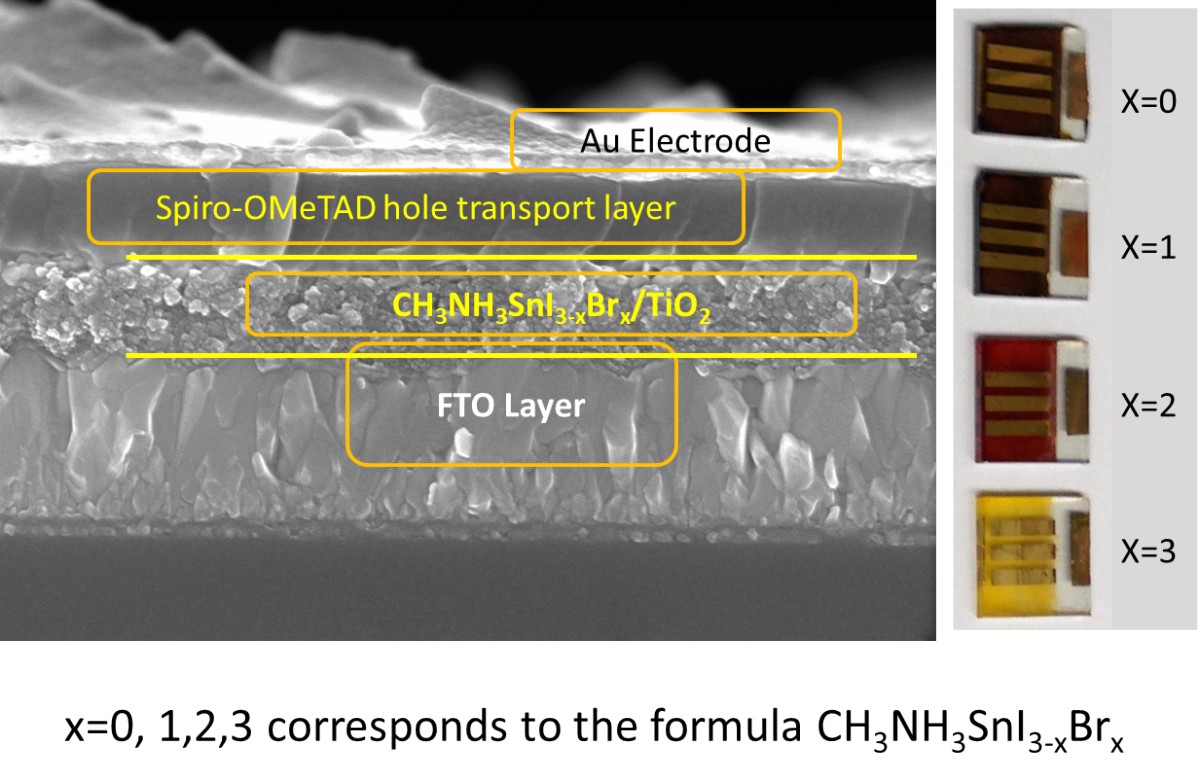
Scientists are always trying to develop ways to improve these cell’s efficiency. With this in mind they created a special solar cell. This type of cell uses tin and not lead perovskite as the way to harvest the light. This was quickly seen as the next boom of the photovoltaic industry.

This type of cell is also eco-friendly and it was first developed by American scientists from the Northwestern University in Illinois. They were the ones to find out ways in which the new type of cell can be used with “bench” chemistry or the traditional method where scientists do the chemical mixing themselves. The type of chemistry mentioned is not always safe as some of the chemical reactions may be harmful to humans. As far as lead is concerned, it is considered to be a toxic element and it is poisonous not only if you swallow it but also if you inhale it. The first type of solar cells are made of lead perovskite.

The new types of solar cells are consisted of tin-based perovskite and they can be as efficient as the lead-based ones and they harvest light in the same way with the help of two electronic layers that make them safe to use. In addition to this, tin made solar cells are absorbing most of the visible light spectrum, and the salt in perovskite can be dissolved and come back to normal state with no heating needed, as the scientists report.

“This is a breakthrough in taking the lead out of a very promising type of solar cell, called a perovskite.Tin is a very viable material, and we have shown the material does work as an efficient solar cell. While tin and lead belong to the same group in the table of elements, the lead-free solar cell already recorded an efficiency of six percent, which the researchers considered as a very good starting point” are the words of lead author of the study Mercouri G. Kanatzidis, a Charles E. and Emma H. Morrison Professor of Chemistry in the Weinberg College of Arts and Sciences.

SMA Launches the Sunny Boy Smart Energy

Niestetal, April 25, 2014—SMA Solar Technology AG (SMA) launches the new Sunny Boy Smart Energy in Germany. The first wall-mountable, mass-produced PV inverter with an integrated lithium-ion battery is immediately available for delivery.

The new inverter Sunny Boy

The new inverter Sunny Boy


This new product awarded the Product Innovation Prize at Intersolar 2013 is currently the simplest storage solution available for typical residential PV applications. Furthermore, it can also be used as part of the SMA Integrated Storage System Solution.

Using solar electricity even longer

With the Sunny Boy Smart Energy, owner-operators can now use solar power even after sunset. Thanks to the integrated battery with a capacity of approximately 2 kWh, generated PV electricity that is not needed in the home can be stored for later use. This increases self-consumption—which makes a positive contribution to the environment and great sense financially—and therefore independence from rising electricity prices. “When combined with the Sunny Home Manager, self-sufficiency quotas of 50% are common on an annual average basis,” said Product Manager Thomas Thierschmidt.

Optimized battery capacity

The VDE-certified lithium-ion battery integrated in the Sunny Boy Smart Energy has an effective, application-oriented capacity of approximately 2 kWh. This value is crucial because it enables ideal economical operation of the battery. Because the increase in self-consumption levels off with increasing storage capacity, the battery utilization factor decreases. In addition, thanks to the battery, virtually all generated PV energy can be used, even with active power limitation. “Our long-standing expertise in storage systems shows us time and again that the small storage battery is not only extremely viable but also affordable,” said Thierschmidt.

A core component in the SMA Integrated Storage System

The Sunny Boy Smart Energy, which is available in power ranges of 3.6 kW and 5 kW, is one of the core components of the SMA Integrated Storage System alongside the Sunny Home Manager. As the first wall-mountable, mass-produced PV inverter with an integrated lithium-ion battery, this new product awarded the Product Innovation Prize at Intersolar 2013 is currently the simplest storage solution available for typical residential PV applications.

For greater independence, for the success of the energy transition

The Sunny Boy Smart Energy fosters greater independence in the scope of the intelligent energy management of SMA Smart Home. It is also perfectly designed to help fuel the energy transition, thanks to its storage function. “The future Smart Grid for the decentralized and renewable electricity supply must rely on electrical storage systems. To be able to establish a system-appropriate storage capacity within the utility grid capacity, an easy-to-install and affordable product is needed. In this respect, the Sunny Boy Smart Energy supports the energy transition unlike virtually any other device,” said Thierschmidt.

About SMA

The SMA Group generated sales of €932.5 million in 2013 and is the global market leader for solar inverters, a key component of all PV plants. As an energy management group, SMA offers innovative key technologies for future powersupply structures. It is headquartered in Niestetal, near Kassel, Germany, and is represented in 21 countries.

UK at the top of the list in European PV: largest market of the year

UK solar, European Pv

UK PV market

Who would have said that a country where is mostly rains would end up being so solar-friendly? Well apparently it is possible as U.K is rapidly moving towards the top on the list with the largest markets of the year. Developing more than 120 big scale PV farms, UK grew the attraction for project developers, as NPD Solarbuzz says.

UK at the top in EU PV market, as the ground-mounted solar PV farms develop

Over 100 large-scale solar PV farms in the British country have been approved and are said to be finished this year as NPD Solarbuzz UK Deal Tracker reports.

NPD Solarbuzz Vice President, Finlay Colville, says “In the past six months, the Department of Energy and Climate Change released the United Kingdom’s Solar PV Roadmap and Solar PV Strategy reports, restating aspirations to hit 20 GW of cumulative capacity by 2020.”

As far as the amount of new solar PV capacity is concerned, the analysts say that U.K is at 2.875 GW for 2014, meaning that approximately 1.72 GW will be added in this semester.

Even the last leader of the market, Germany, didn’t reach this figure as it has 2.6 GW.

Future plans for the UK PV market

The main purposes of the solar market leader will also concern rooftop and ground-mounted systems and solar PV farms are said to be the main provider in 2014.

Until the end of the month , over 325 PV farms in the 10 MW category will be completed. This means over 60 different sites will be installed. Moreover, 444 large-scale ground-mounted solar PV farms are being installer at the time, with the help of Renewable Obligation scheme. The last one are to be completed until the beginning of the next year.

“With the U.K. projected to be the largest solar PV market in Europe in 2014, global component suppliers and project developers need to quickly understand the dynamics of the U.K. solar PV industry,” added Colville. “Aligning with suitable partners and choosing the most attractive PV projects in the pipeline will ultimately determine the winners and losers over the next 12 months.”

Good news in the renewable market: solar-powered laptops are available for $350

renewable energy, solar-powered lapotop, solar energy computer

Solar-powered laptop

The very first solar-powered laptop was released by Ubuntu Sol. The new personal computer guarantees 10 hours of battery life with a two hour charge.

The company that developed the what appears to be a premiere in both solar and it industry is a Canadian one and it is called WeWi Telecommunications. This announcement was made as in 2011 Samsung launched a solar netbook NC215S that is also working with the help of solar energy but is not considered to be a laptop computer

$350 solar-powered computer

The recently launched laptop is said to release for only US$350, with an impressive list of specifications. The computer has an integrated GPS, Bluetooth 4.0, WIFI, 3G/4G LTE capabilities and a 10 hour-lasting battery that is completely charged in about two hours of sunlight.

When charging the Sol laptop is completely transformed. When it is not being charged, the laptop seems a little bigger than other laptops in its category, but that is only because the upper side is converted into a portable solar array. This array charges the laptop if it is unfolded into four solar panels connected to the laptop with a power cable.

David Snir, Ubuntu Sol’s creater, believes that solar panels have to be placed in direct sunlight in order to be able to charge the battery of the computer while every panel produces about 10 W per square foot.

Solar based laptop, suitable for everyone with adventure need

The laptop has generally been received with good remarks from reviewers. Still, the opinions varied especially when it came to the time needed for charging. So, while some claim half a day is no enough to fully charge the laptop, others reported their device charged after only a couple of hours of clear sky.

The laptop designed to be rough, long-lasting and portable is suited for everyone but may be useful to military, adventurers, researchers and students that use computers in locations with no or little power.

European scientists just made the first “green” jet fuel that uses sunlight

European scientist made the first green jet fuel

Green jet fuel

The project is called Solar-Jet and it exploits the sun for heating metal oxide. After that, 700 °C water and carbon monoxide go into the reactor. This leads to the creation of a synthetic gas that combines of hydrogen and carbon monoxide. The final step is the compression of that and the conversion into a fuel that imitates kerosene.

If this works on a bigger scale, it can lead to a source of sustainable and ascendable supply of fuel for planes, cars and some other vehicles.

With the purpose of reducing toxic emissions, Europeans created the first renewable jet fuel that works on water and carbon dioxide

If this is proved on a larger scale, this project could mean a new beginning in the renewable energy industry by making possible an on-demand reserve of fuel that are used in planes, cars and other different type of vehicles.

The achievement was made public by the researchers that have been working on the Solar-Jet project for the past four years and spent the last years developing a solar reactor that utilizes focused sunlight to heat up metal oxide.

The renewable jet fuel could be useful to planes, cars and other vehicles

“The basic idea is to reverse the combustion process. What we do is take carbon dioxide and water vapour, and introduce energy to produce fuel” said the person in charge of at the DLR Institute of Combustion Technology in Stuttgart, Patrick Le Clercq, according to dailymail.

The fallowing step is the compression. After that the gas is sent to Shell, where it is converted into a hydrocarbon fuel that is a lot like kerosene during a process called Fischer-Tropsch.

“This large-scale method is already in widespread use throughout the world and has been certified for aviation purposes. This means the fuel produced using this technique will not need to undergo any new, extensive testing and certification procedures,” added Le Clercq.

The project is currently at the experimental stage and only has a glassful of jet fuel produced in laboratory conditions that use simulated rays. Still, scientists think that this could represent a way cheaper and environmentally-friendly fuel.

Solar-Jet collaborates with German Aerospace Center (DLR), ETH Zürich, Bauhaus Luftfahrt and Shell.

Russia is going put $4.2 billion in the solar sector until 2020

Solar PV blooms in Russia

Solar PV blooms in Russia

The technology giant in the state’s propriety, Rusnano, together with the conglomerate Renova are important pieces the European – Asian country’s solar energy field.

PV devlelopers in Russia are willing to install PV plants in sunny southern regions

The main investing in this sector is said to be made by both state and private parts, as the The Russian Ministry of Energy expects. Taking all this into account, Russia will get to RUB 150 billion (US$ 4.2 billion) by 2020.

The corporate affairs director at Hevel Solar, Anton Usachev is certain that solar power plants will find their home in the southern and southwestern Russian regions of Altai, Bashkortostan, Orenburg, Samara and Omsk in upcoming six years. This words come from Russia’s biggest module producer. He also states that until 2020, approximately 1.5 GW of solar are going to function in the country.

Rusian solar boosts with the help of companies collaborations

The above mentioned company, a collaboration between state-owned tech giant Rusnano and Russian conglomerate Renova, is also planning to settle PV manufacturing plants in Russia. The biggest one is said to be commissioning in June in Chuvashia with an expected capacity of more than 100 MW a year.

Another company included in Renove and France’s Schneider Electric Avelar Energy Group, is willing to launch an inverter production facility in the upcoming years.

Not a long time ago, things were the invested sum in solar energy development did not exceed a $1 billion a year. Besides that, almost 90% had gone to biomass processing projects. But this is going o change along with the arrival of PV in the country.