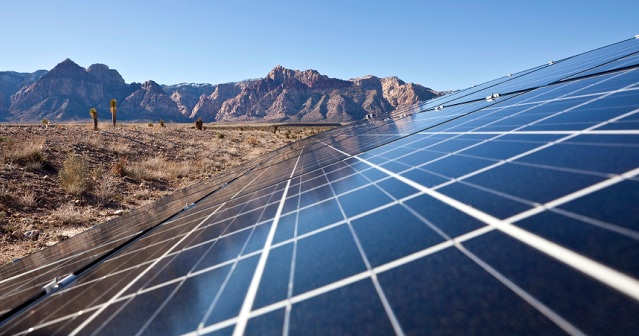
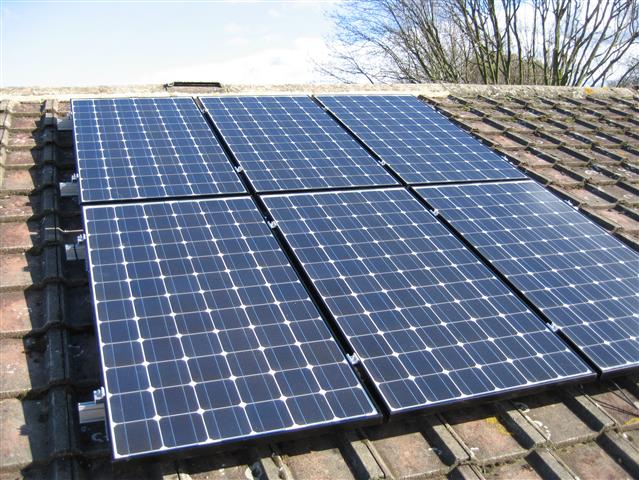
The white House will have a new PV system

The White House's new photovoltaic system is expected to generate 19,700 kWh a year

Obama reported the instalation of new PV on the White House

The president of the U.S, Barack Obama has announced he will commit to his arrangement on installing solar PV on the White House. This step is seen as a big one for the industry, although he is not the first U.S president doing so.

Ronald Reagan was the first president to do that, 30 years ago. It was then when he took down the ones his predecessor, Jimmy Carter, installed.

The new solar panels are a little late, as the president announced his intention of purchasing new American-made solar panels at 1600 Pennsylvania Avenue in 2010

To “improve the overall energy efficiency of the building”, the White house reported the installing begin this week.

The manufacturer, the supplier, or the costs were not revealed. Still, it is known that the PV system is an American one. One of the purposes of this project is to demonstrate the fact that historic buildings can incorporate solar energy an energy efficiency solutions. The cost will be amortized in eight years.

Three years ago, the Energy Secretary Steven Chu reported a plan to install solar panels on the White House.

“This project reflects President Obama’s strong commitment to U.S. leadership in solar energy and the jobs it will create here at home,” Chu announced at the time. “Deploying solar energy technologies across the country will help America lead the global economy for years to come.”

“Installing solar panels on the First Family’s official residence, arguably the most famous building in America, underscores the growing popularity of solar energy nationwide,” reported Rhone Resch, CEO of the Solar Energy Industries Association (SEIA).

“We applaud President Obama for, once again, leading by example. Today, solar is generating enough electricity to power more than 1.3 million American homes, and we’re extraordinarily proud to be adding the White House to this constantly-growing list,” Resch added.

The new PV system is said to generate 19,700 kWh in a year.

Roxana Moraru

The taiwanese group, Foxcon is considering to enlarge solar operations


Flexcon will enter solar industry

Fexcon to built 6 PV plants

Foxcon, a taiwanese electronics group, which is willing to diminish its dependence upon Apple, is said to decide by the end of the year if it would enlarge it’s solar operations.

The producer of Apple iPhones and iPads, Foxcon, is preparing an entrance into a solar sector.

The taiwanese electronic giant administrates a little solar panel factory in the east of China. In April, the factory signed a deal with SunEdison to produce 350 MW of solar modules for the company in Juarez, Mexico, at a manufacturing facility.

In spite of the arrangement, Foxcon it still considered to be testing the solar waters and yet to commit to an industry hit hard by overcapacity and falling prices. Still, if the timing is right, Foxcon could profit from this entrance into the sector, as market analysts predict.

The electronic group is willing to decide about it’s entrance by the end of the year, as Reuters announced. The company has the opinion that “renewable energy is a potentially good trend” but also that it was “an industry we probably need to know more about”, in Foxconn’s spokesman words, Simon Hsing.

Foxconn didn’t report its investment in solar, but Reuters disclosed the fact that that with $22.7 billion in cash on its balance sheet as of March, the firm could easily expand in into the field.

Moreover, Foxconn has a preliminary agreement with solar silicon producer GCL-Poly Energy Holdings to set up solar-related ventures in northern China, but the deal hasn’t paid off yet.

The company is said to be eager to diminish its trustworthiness on Apple, which accounted for aproximatly 60% of its revenue in the past year.


New solar mounting system to be launched by Schletter

new mounting system for PV released by Schletter

New PV mountig system released by Schletter

Schletter has been working on a PVMini ballasted ground PV mount system with proprietary rails for long spans and bigger levels of system efficiency.

A world wide manufacturer of solar mounting systems, Schletter, reports the launching of PvMini a lightweight, ballasted ground mount system for landfills, brownfields, and areas with rocky terrain. Bigger spans and less ballast weight are some of the fact that make the system’s system’s triangle supports and proprietary new ProfiPlus XT™ to be an excellent system.

The ProfiPlus XT rail is designed to optimize the system’s efficiency to nearly 100% in most cases by letting more lightweight components and increased spans between foundations. The newest system is created especially for single-row vertical or two-row horizontal module configurations and it comes partly pre-assembled for faster installation and no using of heavy machinery necessary.

The PvMini combines elements from two of our most popular systems: The PvMax and Windsafe,” announced Dr. Wolfgang Fritz, VP of Engineering for Schletter Inc. “Our engineering department continually evaluates systems to determine where we can be more efficient; to drive down costs while maintaining a high standard of quality. The PvMini is the latest innovation to come as a result of this commitment”, added Fritz

As the company says, the new system has a standard 20-year warranty, PE stamped drawings, and features integrated, ETL-listed grounding with the Rapid2+ module clamp. The PvMini is currently accessible and it’s been produces in the United States of America and in Canada.


PV could consist o third of the US energy until 2050

PV will deliver a third of US energy

Two computers developed by the NREL were upgraded

Computer moddelers consider that $1/W can replace gas, nuclear and CCS and pay the price of introducing a carbon cap.

A computer model was designed by scientists of the University of California, Berkeley. The computer proves that solar PV power produced for US$1/W could supply one-third of the electricity needs in the western US.

The Department of Energy’s SunShot Initiative plans to lower the costs of PV energy until to $1/W and the creators of the SWITCH computer model calculated if the purpose is achieved, solar power could replace gas as the provider of electricity generation in the ‘medium term’ and nuclear and carbon capture and storage technology by 2050.

The computer looks at the electricity grid of the western U.S. and predicts that solar will conquer even more if gigawatt-scale storage is used.

The Berkeley modellers also calculated the costs of introducing a cap or tax on carbon could be mitigated by the energy cost savings of $1/W solar supplying one-third of western U.S. electricity.

After SunShot Initiative’s calculations, $1/W solar energy can lower energy costs until 14% , leading to annual saving of up to $20 billion by 2050.

Furthermore, the Department of Energy also reports that the beta of two popular online solar tools developed by the National Renewable Energy Laboratory (NREL) will be launced.

Visitors can enjoy an upgraded version of launch- that can estimate the cost of of energy production and grid connected PV energy costs globally, and the System Advisor Tool (SAM) that developers use to estimate the performance and financial modelling of planned solar projects.

A boom in PV is predicted for Middle East and North Africa

renewables are growing in the MENA region

Solar energy is growing in the MENA region

The latest report regarding the examination of green energy in the Middle East and North Africa region shows that “PV is experiencing rapid growth due to its tremendous potential and continuously decreasing technology costs,” with a current pipeline of 2.3 GW.

The report was written by The International Renewable Energy Agency (IRENA), the Renewable Energy Policy Network for the 21st Century (REN21) and the United Arab Emirates’ Directorate of Energy and Climate Change.

A project pipeline to exploit the MENA region’s unconventional energy resources rises. Also the renewable power investment is growing.

To be precise the report shows that the total primary energy supply increased until 3.3 % of the total of 1200 TWH total power generation given that, from 2007 to 2010 represented only 1% of the energy supply.

Moreover, the non-hydropower renewable more than doubled and almost reached 3TWH, but the hydropower is still dominating.

The biggest non-hydro renewable remains wind, but solar power generation grew the most in the past years. This is due to “a significant increase in photovoltaic installed capacity and production from a low-starting base, and to the recent introduction of concentrating solar power,” the report says. Solar water heating technologies are also becoming bigger.

The report also says that investment in renewable energy in the MENA region is said to continue to grow in the near future. Precisely, is says that since this year’s April , there were 106 non-hydro renewable energy projects in the pipeline in the region summing up a total of over 7.5 GW of new electric generation capacity.

 Roxana Moraru

EU journal gives details on the trade case

There was a settlement in the Eu-China trade

The EC published details of the China trade, some questions are still unanswered.

The trade dispute over Chinese modules and cells regarding the minimum import price was approved on Friday. Still, some questions have not been answered.

Some details about the EC’s trade dispute have been published in the 6th of August edition of the Official Journal. The EU reported that it agreed with the compromise.

The decision reveals details about the way that the negotiation lead to a minimum price for the freely imported PV. The first step the commission took was to verify whether a minimum price could be associated with the indexes of some commodities. PV modules do not permit an easy correlation between the commodity prices and retail prices. It is implied the the EC used indexes compiled by Bloomberg and pvXchange.

The Commission says the following aboutthe impact of the minimum prices: “In order to assess whether that price undertaking removes the injurious effect of dumping, the Commission has analysed, inter alia, the current export prices and the level of provisional duty. On that basis, it was concluded that the price undertaking removes the injurious effect of dumping.”

However details about the specific minimum prices will nor be revealed. But, accordind to the media reports the price range is between €0.56 and €0.57 per watt with the ceiling on imports from China set at 7 GW.

The pertinent questions the have not been answered are:
-Imports of participating companies will reflect current annual levels. But what is the correct annual level in such a fast changing market?
-What happens if the targeted annual level is exceeded, and how will individual producers, in this context, be coordinated?
-Price indexes compiled by Bloomberg and pvXchange were used for the negotiated minimum price. The document does not explain how changes in the minimum price will be negotiated.

-How will modules be treated that are not manufactured in China nor the EU, but that contain Chinese cells?

Roxana Moraru

New researches predict the use of black metals in PV industry

There is a possibility that black metals will be a part of PV

Black metal is said to be a part of PV industry

The development of more efficient solar cells helped researchers at Lawrence Livermore National Laboratory (LLNL) from U.S.A make an important discovery: black metals in PV production. 

The work with nanostructurated metals which are made to have low reflectivity and high absorption of visible and infrared light paid off for The LLNL Materials Engineering Division research team.

Working with nanostructurated metals involved the work with non-classic black metals which are considered to be a kind of extension of the black silicon concept. This means that when silicon is treated in a special way, fro example when it is being roughened at the nanoscale level, it gathers light by multiple reflections and helps to increase the absorption. This is a result of the silicon’s black surface that is capable of better trapping full sun’s wavelength spectrum.

The experiment team led by LLNL engineer Tiziana Bond helped with the discovery of the way that an absorption can trap a bigger quantity of solar wavelengths by improving and controlling the efficiency of the absorption and transform the metals in black metals. This kind of technology may be used in PV development. Moreover, similar black metals are developed by all kinds of nanostructuring between silver and gold but without the certainty of a full solar absorption.

“Our article was picked for the cover story of Applied Physics Letters because it represents cutting-edge work in the area of plasmonics, the broadband operation obtained with a clear design and its implication for the photovoltaic yield,” as Bond announced.

Roxana Moraru

A raise is predicted to come in the Residential PV storage global market

residential solar Pv is to grow

home solar PV systems

The latest report done by the research group IHS shows that installations of residential PV storage systems will go up to 2.5 GW until 2017. The report also says the Germany’s energy storage subsidy has quick started the flow.

If encouragements and With incentives and bonuses like FITs being cut keep coming, than it is highly desirable for end-consumers to self-consume. Lately, the idea of sending the extra energy generated by a PV system into the grid and retail electricity prices became very unattractive.

“Residential PV customers are striving to maximize their own consumption of the energy they are generating,” announced Abigail Ward, PV analyst at IHS. “This is because rising electricity prices and decreasing feed-in-tariffs (FITs) are serving as a disincentive for consumers to export their power to the electricity grid”, he added.

The total amount of installations is said to grow up to 2.5 GW by 2017, a leap from 12 MW in 2012. The number of PV residential energy storage installations is predicted to be higher than the total number of residential solar systems in Germany today.

“An energy storage solution enables a PV system owner to shift energy from when it is generated to a later time for consumption,” in Ward’s terms . “As a result, demand for residential energy storage products will continue to accelerate as PV energy reaches grid-parity in a number of countries.”

 Roxana Moraru

The lowest module price in UK solar industry needs to be malleable

EU_China_PV_trade

The deal between EU and China regarding the solar panel prices should have been over by now, the minimum price should be lower, and the government of the UK should, soften the blow of ‘Brussels’ meddling as the Solar Trade Association announces.

The STA , a solar trade body, disagrees with the ongoing situation between the two continents, regarding solar panel imports.

The EU trade commissioner, Kerel De Gucht, confirmed that a settlement has been made. This decision is about a minimum price for Chinese modules but also about an annual volume cap on imports to the EU, as STA reports. They also believe the Uk government must constrain it’s support policy for the sake of solar projects in the country.

The STA also says the if the minimum price for Chinese modules , €0.56 per watt, is also applied to the UK the existing projects might not be economic.
Moreover, in a press release they asked that the duration of Brussels agreement to be shortened for a better fluctuation of the minimum price.
“Thank God we’ve moved a long way from the original proposals, which were truly appalling and without justification” as STA chief executive Paul Barwell announced.

“However, we’re concerned the deal reached by China and the commission will ultimately achieve little, as German manufacturers are unlikely to be able to compete long-term with the Asian giants. Meanwhile in the short term, the proposals could do real damage to the U.K. downstream solar industry and to national deployment levels. They leave the U.K. non-domestic solar industry in a very difficult position, when in fact the U.K. is one of the major EU growth markets, and ought to remain so”, he added.

“It would make little sense from a public value-for-money perspective for the U.K. government to allow the solar industry to grind to a halt because of Brussels’ meddling” STA PV specialist Ray Noble concluded.

Roxana Moraru


Negotiations between E.U and China are standing still

EU_and_Chinese_negotiations_on_PV_price

The subject of cheaper Chinese PV important is still a reason of discussion since Beijing is not satisfied with the minimum import price of €0.57/W for modules suggested by E.U.

The European Commission and the Chinese Ministry of Commerce are still negotiating about the import of cheaper crystalline modules, cells and wafers. The two parts didn’t reach a conclusion.

The chance of settling was still possible until the Friday. The Commission was planning to implement a maximum import ceiling of 7 GW on Chinese modules and a minimum module import price of €0.57/W (US$0.76/W).

Beijing was suppose to report a settlement on the import ceiling for modules with the EU, but after the minimum import price became a sensible matter on Friday, the negotiations were postponed. The cause of the discontinue of the negotiations was the fact that the Chinese delegation didn’t agree with the minimum import price.

€0.57 is not a good offer for China because the Asian and European manufacturers who purchase cells from Asia offered acceptable prices before the negotiations. So, the import ceiling compromise of 7GW is not an option either.

The strategy of the Chinese delegation will be negotiated on Sunday and the new offer should be available by the 5th of August.

Roxana Moraru