Vodafone McLaren Mercedes – first carbon-neutral Formula 1 team

Vodafone McLaren Mercedes has been certified as fully carbon-neutral and it becomes the world’s first ever carbon-neutral Formula 1 team.

To achieve this ambition Vodafone McLaren Mercedes has worked alongside CNI to select appropriate and relevant initiatives to offset the team’s carbon footprint.

Vodafone McLaren Mercedes became the first ever Formula 1 team to achieve the coveted Carbon Trust Standard, last December.

Implementing a series of efficiency-driven measures within the McLaren Technology Centre, it was able to achieve annual savings of more than 1500 tonnes of CO2 emissions.

“Vodafone McLaren Mercedes leads the way across F1, and certainly does so in terms of environmental initiatives: the first F1 team to achieve the Carbon Trust Standard, recognition by the Government’s Carbon Reduction Commitment Energy Efficiency Scheme and a whole host of initiatives at the McLaren Technology Centre,” said CNI co-chairman James Brown.


European Solar Days

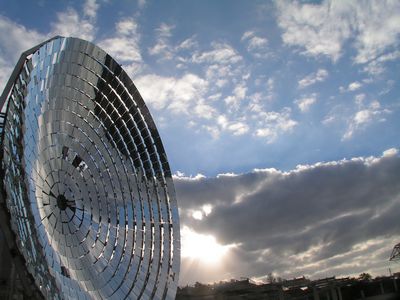
The European Solar Days promote the use of free unlimited renewable energy source available everywhere to everyone to generate electricity as well as heating and cooling: the sun.

The next campaign for the edition of the European Solar Days will be held from 1 to 13 May 2012.

During the fourth edition of European Solar Days, which was held from 1-15 May 2011, it was demonstrated the increasing support for solar energy, with more than 8,000 events organised in 19 countries throughout Europe, attracting the participation of half a million citizens.

20 participants from 16 countries gathered last week in Prague for the second edition of the European Solar Days Annual Conference to plan next year’s events.

The countries who are taking part at the European Solar Days are expected to continue to grow this year.

Hawaii partner with Boeing in aviation biofuel

Boeing has announced an agreement to work with Hawaii BioEnergy, to create aviation fuel.

The companies will work together to identify biofuel sources and supporting technologies for producing sustainable jet fuel in Hawaii.

“As an Asia Pacific gateway and leading tourism destination, Hawaii can play a meaningful role in helping aviation reduce carbon emissions, while increasing regional energy resources,” said Boeing Commercial Airplanes Vice President of Environment and Aviation Policy, Billy Glover. “This collaborative effort will allow us to examine potential local options, while protecting the beauty and culture these islands have to offer.”

Solar power in Abu Dhabi

The Court of HH Mohammed bin Zayed bin Sultan Al Nahyan, the Crown Prince of Abu Dhabi, has been equipped with solar panels.

The installation of photovoltaic panels on the roof of the building was completed in record time by Gulf International Trading Group.

The installation on the roof of the building is hooked up to the Department of Electricity and Water Authority’s main generator.

This project further goes to prove the economic visions for the Emirate of Abu Dhabi 2030.

NASA to demonstrate largest solar sail

NASA plans to play in the sky with the world’s largest solar sail ever conceived.

The new upcoming missions are intended to transform its space communications, deep space navigation and in-space propulsion capabilities.

For these missions who should be launching in 2015 and 2016, have been selected tree projects.

One of the three projects is the solar sail measures a whopping 100 square feet (9.29 square meters)and spans 409 square feet, or 38 square meters.

Do you wonder what are they going to do with such a big sail?

The answer is simple: The sail could be used to gather orbital debris over a period of several years and included to a satellite’s payload, activating towards the end of the mission dragging the satellite out of its orbit.

The project is being led by California’s L’Garde Inc., in collaboration with the National Oceanic and Atmospheric Administration and NASA and the solar sail should be ready in three years.

World market for solar PV cells will double by 2020

According to South Korea’s Samsung SDI, the global market for solar photovoltaic cells will double by 2020, rising from 2010′s $30 billion to $70 billion.

Reuters reported early Wednesday, that the Falling prices and supportive government policies will drive the growth.

Chinese solar PV cell manufacturers will continue with aggressive overseas expansion plans the solar power industry out to 2013.

Germany and Italy, two leading EU solar power markets, have cut back on subsidies this year.

Although EU subsidies shrink in, Samsung SDI plans to aggressively expand its solar PV cell production from its current 150 MW to 3 GW by 2015, believing that its “super-efficient crystalline solar cells will differentiate” it from competitors’ products.

The company will invest 2.2 trillion won ( $2.05 million) into the business and expand into thin-film solar PV manufacturing as well.

Samsung intends to expand on US, Japanese and EU markets while considering emerging markets, such as China and India as well.

Samsung SDI acquired Samsung Electronics’ solar PV cell division for $149 million at the end of May.

Monocrystalline cells with an efficiency of 20.2 %

Schott Solar it’s able to produce monocrystalline screen-printed cells with an efficiency of 20.2 %.

The record cell with a performance of 4.92 W has been produced in industrial format, i.e. 156 mm x 156 mm.

The high efficiency technology used by Schott Solar is the same which has been using for some time for multicrystalline cells.

Since January 2011, the company has only focused intensively on substances related to monocrystallines.

To achieve more than 19% efficiency it was relatively easy, reports Schott.

To get over 20%, Schott Solar cooperated with the Schmid Group and took advantage of their selective emitter technology.

Now, Schott wants to get started with manufacturing optimization to transfer the result to new modules.

The company will announce more details at the EU PVSEC at the beginning of September in Hamburg.

Hurricane Irene has negligible impact on renewable

While Hurricane Irene lashed the eastern Seaboard and the Canadian Maritimes over the weekend, killing 31 people there have been absolutely no reports of damage to renewable energy facilities.

“No damage,” he wrote in an email early Monday morning. “The facility is intact, and there are no turbines in the water at present” said Matthew Lumley, communications director for the Fundy Ocean Research Centre for Energy in Halifax, Nova Scotia.

Irene passed on US Coast over the proposed sites of several wind projects, but none had progressed so far as to be in harm’s way.

Until the hurricane was downgraded to a tropical storm more than 5.9 million were without power in 14 states.

Ferrari will never be an electric car, only hybrid

One thing’s for sure, Ferrari will never go electric.

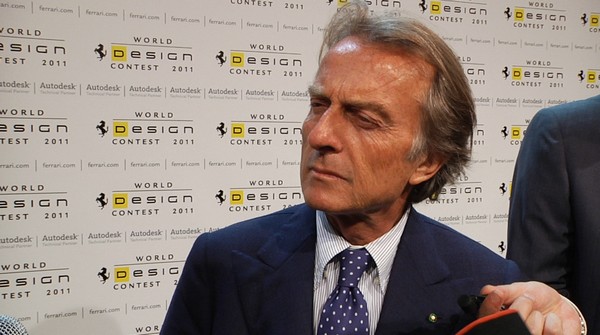
Luca di Montezemelo doesn’t believe in electric cars. He said:

“You will never see a Ferrari electric because I don’t believe in electric cars, because I don’t think they represent an important step forward for pollution or CO2 or the environment. But, we are working very, very hard on the hybrid Ferrari. This should be the future, and I hope in a couple of years you can see it.”

The new Ferrari hybrid will be more Porsche 918 than Toyota Prius.

EU biofuel consumption up 13% in 2010

The latest biofuels barometer shows that Europeans consumed 13.6% more biofuel in 2010 than in the previous year.

In 2010 biofuels continued to grow in the European Union.

In the transport sector, it increased by only 1.7 Mtoe compared to 2.7 Mtoe in 2009 which means EU biofuel consumption growth slackened off.

The total biofuel consumption for 2010 should hover at around 13.9 Mtoe.

Germany was consuming over 3 million toe of biofuel in 2010 (two third of which was biodiesel), followed by France, Spain, Italy and the UK.

The lack of interest in vegetable oil consumption is hardening (down 14.3%) and may still be due to increased German taxation on this biofuel.

Biogas fuel is almost unique to Sweden, while other EU countries struggle to develop it.

Future growth of consumption in the European Union will depend on external factors such as the increase in oil prices and the worldwide availability of biofuel.