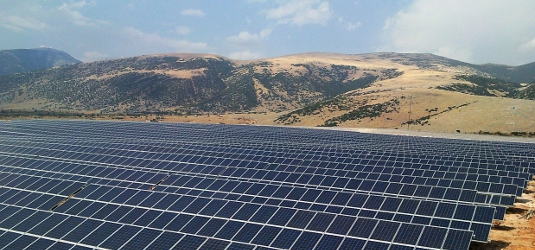
Enel will purchase over 100 MW in Greece

Enel has new PV projects in the Greece market

Enel purchased 100 MW project in Greece

In kind of a secret action, Italian ultility company Enel has acquired licenses for rising 102.5 MW of new solar PV parks in Greece.

The Italian company Enel has recently achieved 26 Greek licenses for the constructon of new solar parks in the country.

To be precise, Enel bought 17 licences where as 73.46 MW are from Enexon Hellas, seven licenses for 25.57 MW from Kalenta and two licenses for 3.54 MW from Solar Thessalias.

Enel Green Power and Mismats Holdings Ltd. respectively own 88.81% and 11.19% of Enexon Hellas’ 17 licenses. Enel Green Power and Sharp similarly own 100% of Kalenta’s seven licences while Enel Green Power fully owns Solar Thessalias’ two licenses.

Greece’s regulatory authority for energy, RAE agreed with the purchase deals in May. What was important in the decision making process was Enel’s submission for strong clues that the company had secured or was able to secure appropriate resources for a long lasting reliable on going projects.

This last purchases were not included in the company’s business plan for the year, plan made public in April. That only combined installations by 2017 of 55 MW and 21 MW of new photovoltaic capacity in Romania and Italy, respectively.

Still this kind of achievement is not a surprise for Enel. For example, in Januay, the company purchased 19 new photovoltaic plants with a capacity of around 42 MW online in Greece. The projects were supposed to happen in 2012-2016. Moreover, Yet the company also connected to the Greek grid a further 15 MW of solar PV operated by ESSE, a 50/50 joint venture between Enel Green Power and Sharp that aims to develop photovoltaic power in the

Mediterranean region, that month. And since since Enel purchased the majority of the Greek PV licenses through joint ventures, it was not necessary for the anticipated Greek projects to be included in the 2013-2017 business plan.

An important factor of this move is that it demonstrates that Greeks financial troubles do not need to be an impediment for foreign investors to put their money into the Greek PV market.


Cameron was blamed for the pledge to restore green regs

David_Cameron_pledge_for_restoring_of_green_regulations
The Prime Minister of the UK was criticized after he vowed to change ‘green regulations’ for the lowering of the energy bills. The STA announces that the degree of public debate regarding clean energy is ‘frustrating.’

The STA, a UK trade body the Solar Trade Association, talked about the consequences regarding the ‘reactionary’ nature of the political debate set off by David Cameron’s comments about ‘rolling back green regulations.’

The leader of the Tory-Lib Dem coalition government, at Wednesday’s weekly Prime Minister’s questions promised to lower the ‘green levies‘ that come with the household energy bills. He also talked about introducing a higher level of competition between energy dealers to lighten the burden on households.

The Prime Minister did not succeed to give additional details when he was inquired about the questions addressed by the STA’s spokespersons Labour leader Ed Milliband and Leonie Greene that said “To say they (green taxes) are going to be rolled back is pre-judging a review into green levies announced by the government recently,” said Greene, “although, that said, there seems to be no consultation related to that review. It’s very frustrating for the industry, all this reactionary stuff, the level of the political debate is quite frustrating and doesn’t help investors.”

Greene also announced coalition government partners the Lib Dems had quickly distanced themselves from Cameron’s comments on green regulations.

“Nick Clegg said the Lib Dems were very annoyed by David Cameron’s statement,” added Greene, “and they said nothing will be rolled back and he doesn’t understand what the Prime Minister means. The good thing to come out of this debate is that people in the UK – who consistently support solar in polls – are starting to understand that the so-called green levies applied to energy bills are not solely related to renewables obligations and FIT schemes.”

Moreover, “renewables-related levies are actually only about a third of the amount added to bills, the rest is taken up by programs like the ECO scheme to improve the energy efficiency of vulnerable households as well as the EU levy to finance its ETS (emissions trading scheme).”

The prime Minister was also criticized by Renewable Energy Association. Dr Nina Skorupska, the chief executive believes that “David Cameron must clarify which levies he is looking to roll back and how, or risk severely undermining investor confidence at a time when this country desperately needs investment in new low carbon capacity. Renewables policy makes up only 3% of average bills overall. It is the ever-increasing cost of gas which has been the main cause of rising bills in recent months and years.”

On the other hand the UK government’s Department of Energy and Climate Change (DECC), report: “This review will be led by OFGEM (the Office of Gas and Electricity Markets) in conjunction with the OFT (Office of Fair Trading) and drawing on the expertise of the new Competition and Markets Authority, when it comes into existence. The details will be developed by the regulators and we do not want to prejudice that, but the assessment may look at prices, profits, barriers to new entrants and how easy it is for customers to get the best deal. DECC will come forward with further details shortly.”


The black polycristaline modules are going to be introduced in the European market by AxSun Solar

black polycristaline module introduced by AxSun

Black polycristaline module available from next year

A new 60 cell black polycrystaline module belonging to AxSun, named AX P-60 premium black “black poly hammer” was successfully been brought to the public, into the European PV market.

The AxSun 60 cells module range has been expanded with the Wp fully black module that includes black cells, black back sheet and black frame. Because the cell technology has been improved with the help of a 260 Wp black poly module will bee accessible to the public starting next year

The CEO of the AxSun, Axel Skuthan, has the following opinion: “AxSun Solar always ensures that the latest technical know-how incorporates into the enhancement of our products. The new black poly module is a great option for homeowners who focus on aesthetical matters.”

The householders but also the installing firms are happy with the idea that they can purchase black polycrystalline modules rather than the more expensive black monocrystalline modules. AxSun Solar have credits for designing modules that are not only remarkable for their longevity, high quality workmanship and above-average performance and also for their robustness.

“We are proud that all AxSun PV-systems that are located in the specific South German area where severe hail storms have damaged almost every house in late July, have withstood the hail stones which reached the size of golf and tennis balls,” as AxSun area partner, Mr. Voehringer, said. AxSun solar modules come with a 12 year product warranty and a 25 year linear performance warranty.

A new research center for solar energy was launched in Wales with a EUR 7 million investment

Solar research center chaired by Prof. Durrant

New PV research center built in Wales

Financed by the Welsh government Swansea University has inaugurated the Ser Solar Initiative at Baglan Energy Park, lead by Professor James Durrant.

In Swansea was built brand new solar energy research center worth €7 million or $10.5 million. The center is located at the Baglan Energy Park in Swansea and was constructed by local higher education establishment, Swansea University.

The Ser Solar initiative, as the research center is named, was supported financially by the Welsh government and has been inaugurated this week by Welsh Government economy minister Edwina Hart. The center will be lead by one of the most honored research scients, Professor James Durrant of Imperial College London

“I am very pleased to welcome Professor Durrant to Wales and Swansea University, where his experience and knowledge will help to create a world-class research team in the field of solar energy,” in Hart’s words.

“The Ser Cymru programme is helping us deliver our commitment to developing science and innovation in Wales, which is an important driver in economic growth.”

“This research in the field of low carbon energy will also help us meet our commitments to reducing carbon emissions and tackling climate change.”

When asked about the competitions with China Prof. Durrant replied honestly that it wouldn’t make sense to compete with China in domains as PV production and solar cell manufacturing, and highlighted the fact that for countries such as the U.K. would be best if they concentrated on research and development.

“We have to realize that the current solar market is dominated by cells made in China,” he said.

“These cells are efficient, stable and not that expensive. Therefore, if the U.K. is going to be part of the manufacturing of new solar technology there is no point trying to compete with China at what they are good at.

“We have to build on what we are good at, which is innovation, and develop technologies that are not just cheaper and more stable but things that are fundamentally different to the current technologies.”

The professor applauded the commitment of the Welsh government and its purpose to accelerate the de-carbonization process of Wales and the U.K.
Professor Richard B. Davies, Swansea University’s vice chancellor, says: “The Ser Solar initiative is brave and bold, but I really believe it is going to develop big time for Wales. “It is very much based on building strengths. We know we cannot create world-leading excellence over night” he added.

The center will collaborate with the Imperial College London and local scientists, Bangor University working in close collaboration with Swansea University in order to study the solar progress.

The second biggest manufacturer in China is to launch new inversters

 Zeversolar in partnership with Proinso

Zeversolar to launch new Pv inverter

The Chinese from Zeversolar reported a cooperation with Proinso at the Solar Energy UK.

The second biggest PV inverter manufacturer from China, Zeversolar, is now associated with a leading global distributor of solar equipment, Proinso, for the introduction of new inverters to selected global markets. This announcement was made at the Solar Energy exhibition that took place in Solar Energy exhibition in the 8th of October this year. There was where Zeversolar brought to light its latest portfolio.

So, starting this month Prosino will deliver Zeversolar’s inverter-line. Prosino is known as a global distributor being popular in 15 countries. This firm has distributed next to 1.4GW until now and employed has 2407 Qualified Installers worldwide.

Zeversolar comes in with a wide variety of superefficient string-inverters for solar energy systems that already got certified in the UK, i.e. single phase inverters with a nominal input power ranging from 1,5 KWp to 5 KWp and three phase inverters with nominal ranging from 4 KWp to 20 KWp. These inverters have a 96% European efficiency and nominal output power reaching up to 1,5 KWp – 20KWp. Because of all these, they are an excellent choice both for commercial and for domestic purposes.  Regardless of their power, all the inverts have either the G83, or the G59/2 certificate.

“With Proinso we have found a reliable partner, who maintains a well established customer network in UK as well as in other international markets, such as Australia and India. Our portfolio represents an excellent mix of quality, liability and budget price point. We are looking forward to meet visitors in Birmingham to show them the updated product line and its possibilities for the UK market,” said the Executive Vice President for Sales, Service and Marketing at Zeversolar, Sven Schreiber.

This was confirmed by the head of Prosino, Mark Randall “with Zeversolar we found a well established inverter manufacturer from China. Proinso has always been extremely careful in selecting inverter partners and with Zeversolar we have found a supplier, who complements our very high profile inverter portfolio, with inverters addressing the budget segment in major markets.”

New photovoltaic plants are going to give energy in Romania

The Colibasi plant brings up PV energy in Romania

Romania solar potential is building up

The energy supplier, Enel Green Power has connected to the  PV plant situated in Colibaşi, located south-eastern Romanian county of Giurgiu, to the grid.

More capacity was accepted to the grid by Romania during this week when Rome-based Enel Green Power wired its 6.5 MW Colibasi PV plant.

This plant is situated in the south-east of the country, in Giurgiu county to be precise, and it is said to be responsible for generating nearly eight million kWh of power per year. This supply is said to be able to provide green energy for 7,000 Romanian households and minimize carbon emissions in the region by as much as 4,000 tones each and every year.

The plant from Colibaşi is the third solar installation in Romania from Enel Green Power, an institution that now has have 26 MW of solar PV capacity in the country. The other two Photovoltaic plants owned by them are Berceni 1 and Berceni 2.

Still, the company manages to go all the way until its solar output matches the 498 MW wind capacity they currently boast in the country.

As a recent IHS reports shows, Romania is said to be situated within the fastest-growing solar markets in Europe, considering the 175.5 of solar power available since the first half of 2013 and the 2.7 GW about to be installed in the next couple of years.

The retailer IKEA will sell solar panels in all UK stores


Ikea is going to sell Pv systems

Ikea will sell solar panels

The Swedish furniture retailer is going to sell solar panels in all 17 of it’s U.K. chain store in the up coming 10 months pursuing a succesful pilot within 10 months following a successful pilot business in one Essex store.

IKEA is responsible for a big amount of potency for the solar industry by deciding to sell solar panels into 17 British stores over the next ten moths.

This sale is going to be a premiere as it is the first time the world’s biggest furniture retailer is selling solar panels on a wide scale. This comes after the store tried a pilot scheme at the IKEA store at Lakeside, Essex (just east of London) that sold a PV system almost daily.

Customers have to give from thei pockets at least €6,800 for 18 panels, the cost of a thin-film PV panels made by China’s Hanergy Holding Group Ltd. An IKEA case study shows that homeowners that put money in this investment will recover the expenses in seven years.

“We know that our customers want to live more sustainably and we hope working with Hanergy to make solar panels affordable and easily available helps them do just that,” reported Joanna Yarrow , IKEA’s head of sustainability in the U.K. and Ireland,.
Like an in-store consultation sugests, customers will also beneft of installation and maintenance of the German-made panels.

This sale is part of IKE’s plan to gain a greener image. The sweedish retailer has a plan to gain a clean energy target and to recieve 70% of the energy the stores need fronm solar and wind power until 2015 it self.

The move is a further step by IKEA towards a greener image. The Swedish company has set its own ambitious clean energy target – to source at least 70% of the energy it needs from solar and wind power by 2015, and all of it by 2020.

The company already has solar panels on its factories, warehouses and stores, and owns some wind farm in Europe.

Greek municipalities decided to go solar

Greeks to install PV in municipalities

Greek Pv will be installed in municipalities

A program of which purpose is to bring up to date the local governments’ infrastructure and also the installation of solar photovoltaic systems in building throughout municipalities in Greece was approved by the Greek Ministry of the Interior

This ministry will take use of European Union funds for the upgrade of the local government infrastructure and management practices. The purpose of the project is to help local governments to have better services but also to reduce their cost and boost their income.

The ministry also chose the areas of action in need of reform. Throughout these areas are is renewable energy and environmental protection also. With the project of installation of PV in municipalities the governments intends to minimize reduce the environmental impact of the local government and provide income by selling the extra generated power.

When funding the project the ministry announced that €6 million and will come specifically through the National Strategic Reference Framework (NSRF), the reference document used for the security of European Union funds at the national level.

In the meantime, the capital of Elis in western Peloponnese, the Pyrgos municipality, said that solar PV systems are to be installed on over 200 bus stops.

The project is estimated at €301,305, a sum which includes the supply and the installation of solar systems, and is going to be auctioned in the next weeks. At the funding will also participate NSRF funds via the Environment and Sustainable Development Program, managed by the Greek Ministry of Energy. The cumulated capacity will be 6 KW. Another purpose of the project is to increase public awareness.

A new record was set by a cell structure

The four-junction solar cell set a new record

New efficiency record was set by a solar cell

A solar cell structure with four sub-cells has set a new world record efficiency regarding solar sunlight conversion. The cell succeeded to set a new record efficiency hitting 44.7% and it is the creation of researchers from the Fraunhofer Institute for Solar Energy Systems ISE, Soitec, CEA-Leti and the Helmholtz Center Berlin.

The German-French team from the mentioned associations made the announce of a a 43.6% efficiency for the german-french solar cell in this year’s May. But they managed to develop that groundwork and succeeded to expand the efficiency of the solar cell to 44.7%. This efficiency was measured at a concentration of 297 suns. This means that 44.7% of the solar spectrum’s energy, from ultraviolet through to the infrared, is transformed into electricity.

This four-junction solar cells have a utility in concentrated PV or CPV and are formed by several cells made out of different III-V semiconductor materials(composed of elements from III-V groups of the periodic table) one on top the other. The single sub-cells attract absorb different wavelength ranges of the solar spectrum.

“This four-junction solar cell contains our collected expertise in this area over many years. Besides improved materials and optimization of the structure, a new procedure called wafer bonding plays a central role. With this technology, we are able to connect two semiconductor crystals, which otherwise cannot be grown on top of each other with high crystal quality. In this way we can produce the optimal semiconductor combination to create the highest efficiency solar cells,” as Frank Dimroth, Department Head and Project Leader in charge of the development work at Fraunhofer ISE describes the success.

Soitec’s CEO and Chairman André-Jacques Auberton-Hervé thinks that with the accomplishment of this record this four-junction solar cell design based on Soitec’s bonding techniques and expertise can actually be a part of the competitiveness of Soitec’s own CPV systems.

EIB will help Indian renewable energy project by loaning EUR 80 million


EIB loans India  €80 milion for renewable pojects

India gets a €80 milion loan for renewable energy

The European Investment Bank (EIB), helped Italian export credit agency SACE S.p.A, signs EUR 40 million loans as first instalment to SREI Infrastructure Finance Limited (SREI) for financing green energy programs in India.

The EIB and Italy’s SACE S.p.A signed a €40 million long-term loan agreement with India’s SREI for helping with the finance of some investments which have the role of mitigating climate changes in the country.

This triplet cooperation is the first movement within an €80 million pledge and it was created to promote Italian exports, help with India’s renewable energy objectives and benefit economies in the European Union.

Some parts of the loan is dedicated to renewable energy projects in India, that are mostly under the wing of private sector companies. To be precise, the loan will help electricity and heat generation schemes, meaning photovoltaic energy and wind power.

The loan is a bid made by all the parts to help India with it’s struggle for environmentally sustainable power. Moreover, it will help stimulate portions of the Indian economy although there is a development of domestic energy resources, improved energy efficiency and a reduction in airborne pollutants and carbon emissions.

This loan is a part of the EIB’s largest nergy Sustainability and Security of Supply Facility (ESF) fund, that has, until now contributed with more that €4.9 billion regarding a long term investments programs in the Asian continent, and €2.2 billion of that has been ploughed into the energy sector.