Switzerland stops nuclear power

We all know how dangerous nuclear power is after the disaster in Japan.

Many countries have begun protest to give up nuclear energy and Switzerland is one of them.

The last reactor in Switzerland will finally go offline in 2034 because the Swiss government just voted on Wednesday to abandon nuclear power in their country.

No reactors will be built and the last five reactors will slowly be phased out.

People’s confidence in the feasibility of nuclear energy has collapsed since the nuclear meltdown disaster in Japan.

Germany also decided to reject nuclear, and has accelerated the shuttering of a number of its aged reactors.

Over 20,000 people protested against nuclear power in Switzerland; the demonstration was the largest anti-nuclear power march since the eighties.

Clean energy collaboration between Moscow and Stockholm

Russia and Sweden will cooperate on energy efficiency and international trade; the government ministers from Russia and Sweden have signed a memorandum of understanding.

In a joint press conference with Swedish Prime Minister Frederick Reinfeldt on 28 April 2011, Russian Prime Minister Vladimir Putin did add one detail – the planned creation of a joint research facility.

“We are interested in developing close cooperation in energy efficiency and renewable energy sources and we have agreed to work through our energy agencies and draft a project for a Russian-Swedish centre on innovation and energy efficiency,” Putin said.

Google invests into solar thermal power plant

Google said it would invest $168 million into the Ivanpah solar thermal power plant being erected by BrightSource Energy.
The Ivanpah plant, rated at 392 megawatts, is slated to be the first in a series of large solar thermal plants from BrightSource. The company has additional power contracts for 1,300 megawatts with Southern California Edison and 1,310 megawatts with Pacific Gas & Electric.
The technology underlying Ivanpah and many of the other new projects differs from conventional solar thermal power plants. At Ivanpah, fields of relatively flat, computer-controlled mirrors will focus the heat of the sun onto a water tank to create steam. The steam ultimately powers a turbine. The architecture, says BrightSource, can more economically and efficiently capture and transfer energy than the traditional systems that use parabolic mirrors to heat oil in tubes. BrightSource should know: It grew out of a parabolic company called Luz that built some of the most successful parabolic fields ever erected.
Google has invested $250 million in alternative power projects, including wind and solar farms.

Source: www.greentechmedia.com

Solar Powered Lanterns – donated to Iwate, Miyagi and Fukushima prefectures

Panasonic donated 4,000 pieces Solar Powered Lantern to Iwate, Miyagi and Fukushima prefectures, hoping that they’ll help add a bit of comfort and assistance to those who have been hit hardest by the quake.
Panasonic states, “One of the models also include USB output which can be used to recharge mobile phones. We hope that the products will be able to bring light in midst the situation, especially where electrical supply is still limited. Panasonic Group and its employees sincerely hope for swift recovery of the people and areas affected by the disaster.”
A solar Lantern is produced of three essential elements – the solar cell panel, the battery and the lamp. The procedure is really easy. The solar energy is reformed to electric energy by the solar cell panel and put in a sealed maintenance-free battery for later apply during the night hours. A single charge can work the lamp for around 4-5 hours.
Source: www.treehuger.com

$25 million to a joint solar research effort by Stanford and UC-Berkeley

The U.S. Department of Energy’s SunShot Initiative recently awarded $25 million to a joint research effort by Stanford and UC-Berkeley. The team, called the Bay Area Photovoltaics Consortium (BAPVC), will work to address technical barriers to the solar power industry and reduce the cost of solar installations.
BAPVC will fund research and development that aims to produce cost-effective solar modules in high volume. It will look closely at new materials, device structures and production methods.
BAPVC co-director Yi Cui, an associate professor of materials science and engineering, was optimistic about these efforts.
“The future of solar is clearly in cheaper, better performing photovoltaics,” Cui said to the Stanford News Service. “The SunShot funding and the exciting collaborative approach between the universities and national labs guided by industrial perspectives will advance all the components of solar modules that will bring down the dollar-per-watt cost dramatically.”

Source: www.stanforddaily.com

Mannvit acquires shares in GTN Latin America in Chile

Mannvit, a leading geothermal energy consulting company, becomes a shareholder in GTN Latin America, founded by Fundación Chile and GTN from Germany, to service the Chilean geothermal market.
Mannvit’s acquisition of shares in GTN Latin America (“GTN LA”) is a part  of the company’s strategic international growth plan and one that will provide needed geothermal industry expertise to Chile and the region as a whole. The acquisition of shares also allows Mannvit to expand its service offerings in renewable energy to South and Central America countries, while helping to pave the way for this growing industry in Chile. With over four decades of experience, the Iceland-based Mannvit has participated in development and construction of projects producing over 1000 MW in geothermal power and heating, adding to GTN LA’s capacity. GTN LA is a company founded by Fundacion Chile and GTN of Germany. The company offers innovative solutions for the direct use of geothermal energy.  Recent Chilean projects include geothermal heating and cooling systems.
“GTN LA’s range of services increases with the entrance of Mannvit, at a time when we can see a definite increase in the development of geothermal energy in Chile,” says Marcela Angulo, Head of Energy and Climate Change at Fundación Chile. “The services they offer is quite distinguished, and integrates decades-long experience in utilizing geothermal energy. For the Chilean market, we foresee the need to utilize their geothermal expertise for direct heat, electricity production and combined heat and power applications, all done with a strong emphasis on the sustainability of the geothermal resource, which we are confident will contribute to a greater acceptance of geothermal energy by communities and the general public,” she added.  Mannvit’s Deputy CEO, Runolfur Maack added, “We see a tremendous potential for geothermal energy in Chile and by becoming a part of GTN LA, Mannvit can contribute to the development of this growing industry in Chile and in South America”, adding that “because Mannvit offers technical services ranging from exploration and engineering of power plants to project management in every phase of geothermal projects, we can service the entire geothermal market”.
Geothermal energy has recently emerged as one of the best options to supply Chile’s growing economy with locally-sourced energy. Geothermal energy is clean, renewable energy that has proven itself to be highly competitive with traditional sources of power.  Further, geothermal is a proven technology with a high capacity factor and minimal impacts to the environment and neighboring communities.
Source: www.renewableenergy.com

Gujarat, India – ready for solar

The state policy of Gujarat in India, with a population of 50 million, is one of the drivers in Indian solar. Gujarat has the fastest growing economy in the country. Another driver is the Jawaharlal Nehru National Solar Mission with an initial feed-in tariff structure, which is already under fire from opponents. That plan, in three phases, looks for one gigawatt to be commissioned by 2013, half of which will be CSP (see diagram below). The state of Rajasthan proposes 550 megawatts in a reverse bidding process.
Julian Hawkins,Senior VP of Sales and Marketing at Abound Solar, who had just returned from a long trip to India, sees a number of factors in India’s favor: There’s a lot of sun and a market for power in the country. In Abound’s case, India’s hot weather makes thin film’s temperature coefficient a better fit than crystalline silicon. Gujarat is a dusty place, according to Hawkins, and the diffused light in that environment is also better suited for their thin-film modules. Hawkins sees Gujarat as a “very business focused state,” that is “making sure that the grid is ready for solar.”
Gujarat has a target of installing one gigawatt by the end of 2012 and three gigawatts by 2016 under a fixed tariff structure.
Source: www.greentechmedia.com

Solar steam generation power plant opens in Spain

Concentrated solar power plants use lenses or mirrors to heat fluid – such as synthetic oil – which in turn is used to generate high-pressure steam to drive a conventional turbine. A new experimental solar steam generation power plant that opened last week in southern Spain is aiming to improve on the efficiency of existing systems by using water as the direct working fluid and incorporating novel methods for storing the energy, so it can be dispensed even on cloudy days or at night.
The pilot plant is located in the municipality of Carboneras, and is the result of a collaboration between the German Aerospace Center (Deutsches Zentrum für Luft- und Raumfahrt, or DLR) and Spanish utility company Endesa. It was officially put into use on March 31st.
The water in the receiver tubes is kept at a pressure of up to 120 bar (1740 psi), which results in the creation of superheated 500C (932F) steam. That higher temperature allows the whole process to work more efficiently, bringing down the cost of solar thermal power generation and making it a more viable option.
Heat gathered by the plant can be stored in both sensible and latent forms, for use in creating energy when the sun isn’t brightly shining. In the sensible heat system, heat from the steam is absorbed by a concrete storage system, so it can later be released to create more steam and drive the turbine. In the latent heat system, the steam is used to heat salt, which absorbs energy when it reaches a temperature of 305C (581F) and changes from a solid to a liquid state. When the salt cools back down below 305 degrees and reverts to its solid form, that energy is released.

Source: www.gizmag.com

Reports regarding wind market

America’s wind power industry grew 15 per cent last year, according to a new industry report which warned that the sector’s expansion was held back by weak electricity prices and unpredictable policies.
The American Wind Energy Association (AWEA) yesterday unveiled its US annual report, showing that 5,116MW of new capacity was added last year, taking the total volume of US installations to 40,181MW, now generating enough electricity to power more than 10 million homes.
However, despite the increase in capacity, last year’s growth was significantly lower than the average 39 per cent growth rate recorded in the previous five years.
The sector blamed weak electricity prices and investor uncertainty caused by doubts over whether key federal tax incentives would be extended for the relatively sluggish performance.
The report follows recently released figures from the Global Wind Energy Council (GWEC) which show that in 2009 China overtook the US in terms of the volume of new installations and manufacturing of wind turbines for the first time.
Denise Bode, AWEA chief executive, remained optimistic that the US was on track to produce 20 per cent of America’s electricity by 2030 from wind energy, as predicted by the Department of Energy during the Bush administration.
“The American wind industry is delivering, despite competing with energy sectors that have permanent government subsidies in place,” she said. “Wind is consistently performing … adding 35 per cent of all new generating capacity since 2007- that’s twice what coal and nuclear added combined.”
On top of new construction starts, the industry brought 14 new manufacturing facilities online in 2010, consistent with 2009, meaning that wind energy now accounts for up to 20,000 manufacturing jobs across 42 states.
“Continued interest and investment by manufacturers in America demonstrates that the US continues to be a global powerhouse for wind development, today and in the future,” Bode added.
Meanwhile, a separate report released by GWEC has this week argued that India’s potential for wind power development is higher than previously calculated, and could reach 65.2GW by 2020, up from 13.1GW at the end of 2010.
According to the Indian Wind Energy Outlook 2011, published yesterday by GWEC,  the World Institute of Sustainable Energy and the Indian Wind Turbine Manufacturers Association (IWTMA), India’s potential for wind power development could exceed 100GW, reaching 160.7GW by 2030, if the potential of offshore wind power and repowering was fully exploited.
Achieving 65.2 GW of wind capacity by 2020 would attract around $10.4bn of annual investment to the sector and create 170,000 new jobs.
Source: www.businessgreen.com

New study regarding sustainable biomass

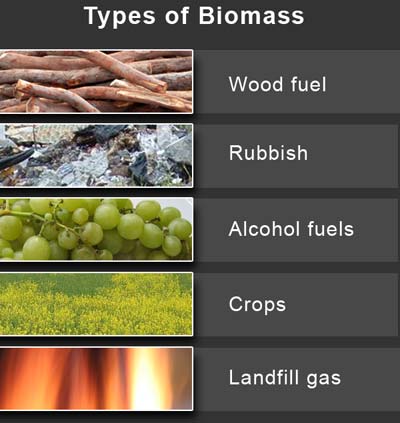
More efficient land use could see England produce enough biomass to meet around four per cent of current UK electricity demand without affecting environmental sustainability or food production.
That is the conclusion of a major new study funded by the UK Energy Research Centre examining the potential of planting short rotation energy crops on unused agricultural land.
It suggests that growing lignocellulosic crops such as willow and poplar on marginal land could yield 7.5 million tons of biomass, of which the South West and North West could produce around a third.
The researchers said that converting marginal land to biomass plantations would not only be sufficient to generate approximately four per cent of current UK electricity demand, but would meet approximately one per cent of total energy demand, including heat.
This would represent a considerable increase on today’s levels, whereby dedicated energy crops account for less than 0.1 per cent of UK electricity, despite biomass being listed in 2009’s Renewable Energy Strategy as having “an important role” in meeting government targets of sourcing 30 per cent of electricity, 12 per cent of heat and 10 per cent of transport energy from renewable sources by 2020.
The use of biomass and biofuels has been hindered by fears over sustainability, EU standards which the UK government has failed to enact, and concerns that using land for energy crops damages food supplies.
But the paper said that new technology will mean that fuels can increasingly be produced from short rotation lignocellulosic crops without affecting food production because the trees can be grown on poor quality agricultural land – unlike current cellulosic biofuels typically derived from wheat and maize.
Source: www.businessgreen.com