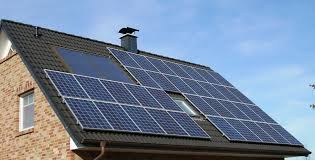
Solar PV more and more concentrated on energy savings

PV market heps users save energy

PV market is tuning into an energy saving market

The industry of solar energy is rapidly transforming from an investor’s market into an energy savings market, as the PV Parity Project states.

The solar photovoltaics industry provides its customers with electrical power by converting solar radiation into direct current electricity. The PV Parity Project is willing to participate with everything necessary to bring the technology in the EU electricity market and increase the competitiveness of the industry.

The group thinks that when the project comes to an end it will promote renewable energy technology and culminate in greenhouse gas emissions reduction, as well as diversifying energy supplies.

A new report shows that the existing costs of supporting schemes have helped the PV market grow and become more competitive, such as investment grants, net-metering, feed-in tariffs and green certificates in Germany, Italy, Netherlands and Austria. It also analyzed alternative support schemes.

The results of this report reveal the fact that self-consumption measures must be led by fair compensation for the electricity brought into the grid, in order to establish competiveness of installation driven by self-consumption.

This implies that for the time being, in most European countries, the compensation for the electricity fed into the grid, and not self-consumed has, to be even bigger than the market price for electricity.

“Self-consumption needs a specific regulatory framework, with a right to self-consume to be implemented and a lot of design criteria to be considered”, announced Fabian Pause, from SUER, the German Foundation for Environmental Energy Law.

The report noted that the self-consumption business model is dependent on the savings on grid costs and taxes.

Powerway will generate a 30MW PV program in Thailand

30 MW will be instaled by Powerway

Powerway will install 100,000 Pv modules in Thailand

A field of over 60 Acres in the north of Thailand is said to be covered by 100,000 PV systems that are said to be distribute to the PV project.

As the current figures report, until 2016 the entire installation of photovoltaic solar energy in Southeast Asia is said too reach 5 GW. The request for energy is developing and Thailand is to turn into Asia’s most prosper renewable energy market. The Thailandese government gives to the solar industry a great deal of attention. Moreover, as Asia’s first implementation of one of the countries FIT projects, has a strategy of reaching the goal of installing a 2GW PV plant until 2022.

If the last year’s success, when the Thai 18MW solar farm project was completed, is taken into account, you can say this is the second biggest success for Powerway. A professional aspect and design and a vast solar farm construction background is what defines Powerway, so the company again worked together with a renowned French EPC company. The project was formally launched in May, but the final steps are programmed by the end of the year. The project will install 100, 000 PV solar panels in an area of over 60 acres. The resulted power can provide for 90,000 people.

The project is situated in Northeast Thailand where the weather conditions are not easy to predict. Still, Powerway engineers have designed a ground mounting system that has a embedded foundation said to be reliable, cost effective and easy to install. Moreover, the company has sent an experienced project team to the job site that can offer technical support and train the local teams.

Global microinverter market will be four times bigger until 2017

Commercial systems are expected to account for nearly 30% of global microinverter shipments in 2017 compared with 9% in 2012

Micro inverter market will quatruple by 2017

The microinverter sales will quadruple in the upcoming four years because of the external market requirement increase, as the latest report by market research firm HIS, announced.

Microinverters are being bought in a bigger number besides the United States borders. The reason? The new markets are in a hurry to take advantage of the gadget’s updated efficiencies and features which are increasingly better than in the classic inverters, as the report says.

Global photovoltaic microinverter market are said to merger till 2.1 GW in 2017, whereas in 2013 there were around 500 MW. This means a rate of 306% as IHS presents in its latest report, “The World Market for PV Microinverters and Power Optimizers – 2013 Edition.”

Microinverters convert direct current (DC) electricity from a single solar module into alternating current (AC). Although they are more costly than conventional inverters, microinverters can increase the energy harvest of a system compared to conventional string or central inverter devices, which convert power from multiple solar panels,” IHS reports.

Until this moment , microinverter request has widely been limited to the U.S. residential market. Still, the strength is moving on to commercial solar systems and other regions.

Microinverters have reached very high adoption rates in the United States, particularly in the residential market, where penetration will reach more than 40% in 2013,” says Cormac Gilligan, PV market analyst at IHS. “However, in order to grow or maintain market share, microinverter suppliers now are striving to expand to new regions that at present don’t use the technology. Meanwhile, the advantages of microinverters — including their higher energy yields, enhanced safety and module-level monitoring capabilities — are making them more attractive in commercial systems, especially in small-scale projects”, IHS adds.

Roxana MORARU


Solar Junction rises above its own record with 44.1% cell efficiency

cell eficiency improved

Solar Junction breaks its own record with 44.1% cell efficiency

Solar Junction has exceeded its old World-Record with recognition 44.1% cell efficiency on IQE’s production qualified wafers.

IQE plc reports that its high-volume, production qualified material has been individually guaranteed as reaching 44.1% cell efficiency by the National Renewable Energy Laboratory (NREL), outdistancing Solar Junctions previous World Record for a standard triple junction CPV cell.

The wafers were made applying IQE’s high-volume MBE devices, were prepared by, a manufacturer of high efficiency multi-junction solar energy cells for the concentrated photovoltaic market (CPV), IQE’s strategic partner Solar Junction Corporation (“Solar Junction”). The classic three-junction solar are said to set a new world record for manufacturing scale CPV wafer technology and prove the upgraded performance over Solar Junction’s previous World Record announced in October 2012.

“Breaking a World Record is a major achievement, but improving on our most recent record using high-volume production equipment produced in conjunction with our manufacturing partner IQE, and Solar Junction’s fabrication line in Sunnyvale, CA, is dramatically more significant. This result is a testament to our close partnership with IQE, Solar Junction’s dilute nitride technology and our exceptional team. We continue to be the benchmark for multi-junction solar cell production efficiency to assist our customers in driving CPV costs down”, Vijit Sabnis, CEO at Solar Junction announced.

“Following our recent announcement of full qualification of our high volume 4 and 6 CPV technology, surpassing Solar Junction’s previous cell efficiency record is a massive achievement”, are the word of Dr. Drew Nelson, IQE Chief Executive

“Improvements in CPV cell efficiencies translate to highly significant overall cost reduction in terms of installation and energy generation in utility scale solar farms. The fact that this has been achieved on production-qualified platforms is a major milestone. Furthermore, the transfer of wafer production to IQE’s manufacturing tools enables the Solar Junction team to focus on further improving efficiencies on lattice-matched, multi-junction CPV solar cells using a combination of their unique dilute nitride technology, combined with pre existing IQE IP. This will facilitate seamless technology transfer into high volume manufacture of ultra efficient CPV cells as the conversion efficiency improves further”, he added.


ABB, granted by the EC to buy Power-One

ABB,_granted_by_the_EC_to_buy_Power_One
ABB has its path paved into growth by the approval of the European Commission by buying the U.S. inverter producer Power-One; it is mentionable that the $1 billion auction took place without any struggle in the sale of the California-based inverter producer.

The lack of competition was present “given the limited to moderate combined market shares and the small increments resulting from the merger” declared by the Commission.

The purchase of Power-One was announced in April by ABB, the Swiss colossal engineering company, and is to solidify its position as the top global dealer of solar inverters.

Nevertheless, the EC specified that a few tough adversaries still stay in the afflicted markets for solar energy converters and consumers still have alternate solutions in buying the products.

It appears that ABB is about to set expansion in the PV industry after last’s month gathering with the chief executive designate Ulrich Spiesshofer, taking the place of Joe Hogan, former CEO, in September. ABB will expand in the sector if it makes strategic sense.

Inverters represent the brain of PV systems, offering minimal chance that these devices will become a cheap mass of produced goods, declared Maxine Ghavi, the head of ABB’s solar business. The purchase of Power-One provided “access to the entire market, from private homes and commercial buildings to power plants”, she added. She expects the PV trade industry is about to expand more than 10% in the upcoming years.

ABB also revealed plans to extend inverter production in India and South Africa in addition to the preexisting plants in China and Estonia.

Roxana Moraru

Solar market is estimated to value $134 billion until 2020

solar_vs_conventional

Annual income gathered from PV installations is to overcome $134 billion in the next seven years. Moreover, solar will not net supporstarting from 2017, as Navigant Research report announces.

Navigant Research, a market analyst, forecasted the annual revenues from PV installations worldwide will top US$134 billion by 2020.

438 of modules and installments from around the world will be gathered in the upcoming seven years, as the company’s Solar PV Market Forecasts shows. This report also predicts government alternative energy installation targets will rise in the close future.

Navigant Research also forecasted that the time when solar energy can face conventional energy has finally arrived. They say that by 2017, a year after the tax credit for solar investment in th U.S will drop by 10% is probably the period when all this will take palce.

It is also forecasted that solar can and will be competitive with conventional electricity almost around the world by 2020.

Roxana Moraru

$27.2 billion to invest in PV market in five years

PV_market_raise

The global PV materials market will double until 2018. Lux research says the main reason is the improvements of the supply demand balance. The global demand will be represented by materials differentiation and innovations.

Taking into account last year’s investments, the PV material market will grow from $17.8 billion to $27.2 billion by 2018. Part of that sum, $12.8 billion to be precise, is formed of witih metals, including polysilicon and metallic absorber materials. A $6 billion raise is due to the global demand of silicon modules.

Lux Research analyst, Fatima Toor announces that “differentiated materials that enable high cell or module efficiencies or longer lifetime will be able to earn a premium and cash in on the growing demand.”

Toor also said that the need of improved quality may lead to materials innovations that could lower the price per watt as well as the price per kilowatt hour.

Materials such as backsheets, non-EVA encapsulants, metallization pastes and antireflection coatings can also lead to material innovations.
Moreover, effective planning and implementation of the module quality can be the source of opportunities for materials developers.
Roxana Moraru


Analysts from Luxor Research predict a 100% growth until 2018

doubling_of_pv_market_LuxResearch
The photovoltaic sector is said to reach US$155 billion until 2018, in the perspective of Luxor Research.

The analysts claim PV industry will jump up to 61.7 GW, although in 2013 there was only a minor increase to 35 GW. China is ready to jump to the top and become the biggest market.

The sector has dropped since 2011, but the researchers claim that it would have a “healthy 10% compound annual growth rate.”

The investigations also show that China, Japan and India will continue from the point where Germany and Italy have left off. Moreover, the U.S is going to be the second largest market with 10.8 GW of installations in the already mentioned year. Above it will be China, leading 12.4 GW.

Luxor Research show that commercial applications will become the head segment because of the U.S. and Japan increasing markets in the rooftop installations area.

“Manufacturers’ nightmare is turning into a long-term boon for the industry. Record low prices pushed gross margins to near zero or below, but they’ve made solar installations competitive in more markets, Supply and demand will come back into balance in 2015, easing price pressure, returning manufacturers to profitability and restoring the industry to equilibrium,” announced Ed Cahill, Lux Research Associate and the lead author of the report.

Roxana Moraru

Weltec Biopower builds 500 kW plant in France

The French project developer Methaneo agreed with Weltec Biopower to build a 500 kW biogas plant in France.

The Paris-based company has elaborated its own concept for „cooperative agricultural biogas plants“. The new biogas plant project „Cap‘Ter Methanisation SAS“ strengthens the value chains and material cycle in the vicinity of the plant location. The biogas technology is delivered by the German company Weltec.

Construction work will begin in January 2013, and the plant is to go live and starting feeding electricity into the French grid as early as July 2013. The 4,900 m³ stainless steel fermenter is to be filled with an agricultural substrate mix consisting of cattle manure, sheep manure, chicken manure and grain residue.

For Weltec it is the sixth biogas project in France. According to the French Environment and Energy Management Agency for the development of regenerative energies (ADEME) there have been twice as many project enquiries than in the prior year for biogas projects.

US photovoltaic market is growing up

In the second quarter of 2012, the PV market in the USA grew by 116% in comparison to the same period of the previous year.

In total, a photovoltaic output of 741.7 MW was newly connected to the grid – this is the second best value overall after 791.3 MW in Q4 2011 and 45% more than in the first quarter of this year (512 MW).

Solar power plants accounted for 477 MW of the new installations in the second quarter. Until the end of the year, 1.1 GW of new PV capacity could be installed, in total 3,400 MW are under development according to the study.

Also a strong growth is predicted in this market for 2013.

In the home photovoltaic sector, the prices were 5.84 $/W for privately financed facilities, while facilities installed by third parties on rented roofs were available for 5.64 $/W.