Nanogenerator that uses skin as a source of electricity

energy from movements

This tiny patch harvests electricity from your muscle movements

National University of Singapore developed a tiny nanogenerator that uses your skin as a source of static electricity, and converts it to electrical energy — reportedly enough to power a small electronic device.

The invention, presented at the MEMS 2015 conference recently, can generate 90 volts of open-circuit voltage when tapped by a finger. The researchers presented the patch as a self-powered device that can track the wearer’s motion.

According to Extreme Tech, the power generates thanks to the triboelectric effect, which is when certain types of materials can become electrically charged through contact and friction with another material — in this case, the patch gains the charge through fiction with human skin.

When the two materials are pulled apart, they generate a current that can be harvested. An electrode is needed in order to harvest the current, so the research team installed a 50nm-thick gold film to get the job done. The gold film sits below a silicone rubber layer composed of thousands of tiny pillars that help create more surface area for skin contact, which in turn creates more friction.

Thanks to the triboelectric effect, creating the device is easier as well — the skin is one of the triboelectric layers that helps produce the effect, so that layer doesn’t need to be built into the device itself, saving time, money, and materials. It also removes something that can go wrong with the device — having one less layer built in means that’s one less part that can break.

In the researchers’ test, a finger-tap on the device was able to generate enough current to power 12 commercial LEDs.

Aside from the obvious benefit of being able to, in theory, indefinitely power a device so long as you keep moving, this type of generator could remove the need for batteries in certain mobile devices — your smartwatch or fitness tracker could be made even thinner and lighter.

Who knows — one day this type of generator could even generate enough energy to power your smartphone, perhaps even removing the battery entirely, which is one of the biggest constraints to smartphone development and design.

World’s first solar-powered lock for your bike

solar-powered bike lock

This ultra-advanced bike lock protects both you and your bike

Developed by a team of San Francisco-based engineers, Skylock, world’s first solar-powered connected bike lock, can keep you and your bike safe and secure.

An app downloaded on the user’s iPhone or Android device is the connection between him and his Skylock-equipped bike. Yes, it controls the lock remotely, but it does much more than that. If someone is trying to cut the lock — a difficult and time-consuming process — the lock’s triaxial accelerometer will have notified you that your bike is being tampered with before the thief can take off.

According to the developers, “Any lock can be cut with enough time and the right tools. Since Skylock requires two cuts to break, this means you have twice the amount of time to respond to a theft alert.” Sure, it can send a false alarm if someone accidentally bumps your bike but at least you can go check to see what’s going on.

The Skylock can also be programmed so that if you are in an accident or get hit by a car it sends an automatic alert to a person or persons of your choice. The system only works if both phone and Skylock get a shock, so nothing will happen if you drop one or the other, Eco Watch writes.

What happens if both are in your backpack and you drop it? “The system will ask you if you are ok and take action if you don’t reply, so if you activate this feature, keep this in mind and don’t slam your backpack,” they advise. That’s probably good advice in general.

The Skylock isn’t just convenient and protective, it’s also eco-friendly. With its low-power design and solar-recharged battery, it needs little charging to provide power for up to months at a time. Although Skylock’s developers say you’re unlikely to run out of battery power (or your phone runs out) and find yourself locked out of your bike, they’ve got you covered.

“If you are ever running low, just plug in the USB charger and Skylock will be ready to guard you and your bike again,” they say. “Skylock also has a built-in capacitive panel. Just type in a key code combination to unlock Skylock if your phone ever runs out of battery. Never worry about getting your bike stuck outside.”

With Skylock, you can even share your bike with trusted friends. You can alert them to the bike’s location and send them access to it via phone.

Cycling enthusiasts were excited enough by the Skylock that it blew through its first Indiegogo fundraising goal in a single day and raised double its set goal in the second.

Naturally, Skylock doesn’t come cheap, but we know some serious cyclists that measure their dedication by how much money they are able to spend. Skylock can help them. While regular bike locks may run you anywhere from $10-$100, Skylock will retail for $250 but the company is taking preorders at $159. The lock should be in your hands before the summer cycling season is too far along.

First autonomous public lighting system that runs on solar and wind energy

solar and wind public light

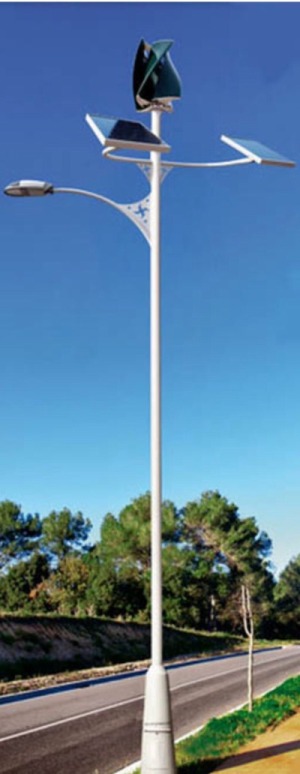
Solar and wind public lighting system

The first autonomous industrialized public lighting system that is running on nothing but solar and wind energy was recently created by researchers at the Universitat Politècnica de Catalunya, in cooperation with Eolgreen.

The system is designed for use along inter-urban roads and motorways, and in urban parks and various public areas and is reported to reduce total costs by as much as 20%, as compared to conventional systems, Clean Technica writes.

According to a recent press release, the prototype is 10-meters high and is fitted with a solar panel, a wind turbine and a battery. The turbine runs at a speed of 10 to 200 revolutions per minute (rpm) and has a maximum output of 400 watts (W). The developers’ aim is to make the lighting system even more environmentally efficient, so work is being done on a second prototype generator that runs at a lower speed (10 to 60 rpm) and has a lower output (100 W). An electronic control system manages the flow of energy between the solar panel, the wind turbine, the battery and the light.

“It takes very little wind to produce energy. The generator that has been developed can start working at a wind speed of only 1.7-meters per second (m/s), whereas current wind turbines need more than 2.5 m/s,” states creator Ramon Bargalló, a researcher in the Department of Electrical Engineering at the Barcelona College of Industrial Engineering of the Universitat Politècnica de Catalunya.

The system can reportedly provide up to 6 nights of electricity with no wind or sun.

As it stands, Eolgreen has already signed agreements with the port of Huelva, the municipal authorities of Sant Boi de Llobregat + Girona, and a number of towns in Andalusia. The company is planning to produce ~700 of these street lights in 2015.

Biomimicry, the new way to improve the efficiency of plastic solar cells

solar panel

Biomimicry allows scientists to take a page out of nature’s playbook

If you look closely, you may notice the tiny contours and crinkles on the surface of a leaf. All those folds bend and absorb light better than if it was flat, helping it receive more rays. Inspired by that, engineers at Princeton University use similar micro-folds to improve the efficiency of plastic solar cells in solar panels.

These man-made energy-collectors are one example of the growing field of engineering known as biomimicry.

Inventors have been exploring biomimicry as early as the Renaissance era when Leonardo Da Vinci sketched out a bat-shaped wing contraption for human flight, called an ornithopter. Engineers take what they see in the natural world and integrate it into new technologies.

According to scienceline.org, entire research institutes and education programs dedicated to biomimicry are working on technologies that maximize efficiency and cut manufacturing costs. The Korea Advanced Institute of Science and Technology made cost efficient LED lights for flat screen televisions and mobile phones that emulate the glow of fireflies; the Pacific Northwest National Laboratory in Washington developed hydrogen-pumping fuel cells for powering buildings and cars, which copy natural enzymes found in microorganisms.

Princeton’s leaf-inspired solar cells generate 47 percent more electricity than existing plastic solar cells, according to their inventors. While still less efficient than the silicon-based solar cells that dominate the market, researchers have high hopes for the plastic cells because they’re cheaper to produce.

The shimmering scales covering butterfly wings have also been a source of inspiration. The way their scales scatter light inspired better solar panels and improved counterfeit identification on paper money. A research group at the University of Alabama is even exploring if the lightweight scales can contribute to aerodynamic efficiency in planes.

Biomimicry is even giving us a deeper insight into the imbalances we humans have introduced into our environment, and it may even help us correct them. One company, Calera, sequesters carbon dioxide to create a cement of calcium carbonate — the same compound found naturally in coral and shellfish shells. The technology was inspired by coral’s ability to convert the greenhouse gas into a vital mineral.

While environmentally-conscious biomimetic innovation continues to grow, there is still much to discover. A recent analysis of the biomimicry market published in the December 2014 issue of Biotechnology Advances revealed that anti-pollutant technologies and environmentally sustainable projects are the most untapped areas of biomimicry research.

Common leaves, butterflies and coral each evolved traits to survive in tandem with our environment. We are familiar with many living species that have inspired technology from grade school lessons or walks in the park. The key idea to tomorrow’s next big invention might be just outside our front door.

Solar energy extends electric vehicle driving range

solar energy for electric cars

Solar energy for better electric vehicles

Researchers from the University of Windsor and a local solar technologies company have collaborated to prove the benefits of solar power in extending the driving range of electric cars.

By using solar energy, Unconquered Sun Solar Technologies founder and CEO Sean Moore says the driving range can be extended an average of 45 per cent further.

“Every second your foot’s not on the accelerator, when that vehicle’s in the sun, it’s charging,” Moore said, according to The Windsor Star. “This way, you have a generator … on your roof. Obviously if it’s nighttime or if it’s in a garage, you can just plug it in the wall and it recharges that way too.”

Associate professor Narayan Kar led a team of three PhD students, a master student and a senior undergraduate in studying the vehicle rooftop solar technology. He said months of research and testing — partially funded by a $20,000 federal research grant received almost a year ago — helped them prove the scientific benefits of solar panels and to show the financial benefits.

The University of Windsor Centre for Hybrid Automotive Research and Green Energy (CHARGE) published a report Dec. 11 outlining the team’s findings. They are expected to publish further technical papers next month.

“What’s great about it is it validates the technology,” Moore said. “It really helps us gain traction in the market … all the research validating the extended range and all the different benefits of having a renewable energy generator on the roof of your car.”

Moore’s company focused on esthetic issues of the rooftop panels by using Lexan, a clear plastic material that is lighter in weight than the typical glass panels used for lamination of solar cells, and a thermal process to form the sheets to fit the radius of different vehicles.

“We have developed an app … that (Moore) can take … on his cellphone to his customers and he can demonstrate the benefits of having a solar panel on the rooftop,” Kar said. “If you have a solar panel and it is in the sun most of the time you will see many days of no (electric) charging needed.”

Moore said he’s hoping to launch sales of low-speed electric vehicles — a new Transport Canada classification in North America — with rooftop solar panels early this spring. Low-speed vehicles have an electric drive train, four wheels on the road and they are restricted to a top speed of 50 kilometres.

The cars, trucks and buses are also limited to a gross vehicle weight of approximately 1,300 kilograms.

“Electric vehicles and particularly low-speed vehicles, the market is expected to be $2.6 billion over the next three years,” Moore said. “With solar on the roofs, they cost literally pennies a month to operate.”

He expects initial demand to come from companies with fixed delivery routes and inter-urban commuters.

Part of the attraction is the cost of the vehicles – estimated at $16,000 for a delivery truck or less than $10,000 for a three-seater passenger vehicle.

Kar, who is also Canada Research Chair in Electrified Transportation Systems, said the search is on for more funding for further research.

“This is not the biggest project in terms of money (for his department) but (it is) in terms of passion, dedication and the amount of time we have spent on this,” Kar said. “We really liked this project and we could really see the benefit of it.

“It was very productive from a research output point of view, student training point of view, relationship building point of view,” he said. “Research is never ending … there is always room for improvement. We have done good things but it could be better.”

Water splitting, a new way to store solar energy

solar energy storage

New way to store solar energy

Researchers at the Ecole Polytechnique de Lausanne (EPFL) in Switzerland have developed a new scalable technique for solar energy storage that relies on hydrogen production through water splitting.

According to aiche.org, the scientists are capturing solar energy and using it to split water into hydrogen and oxygen, so that the hydrogen can be stored for later use in a hydrogen fuel. Their goal was to find a more efficient and cost-effective method for splitting water.

One of the most sustainable methods of producing hydrogen is photoelectrochemical water-splitting. The water is split into its components of hydrogen and oxygen using a process called “hydrogen evolution reaction.” The reaction requires a catalyst, often platinum, which is deposited on the surface of the solar panel’s photocathode, where light is converted into electric current.

The research team at EPFL replaced platinum with a molybdenum-sulfide catalyst for the hydrogen evolution reaction, and a collaborating team developed copper(I) oxide as a photocathode. The researchers found that the molybdenum sulfide can be deposited on the copper(I) oxide photocathode for use in photoelectrochemical water splitting through a simple deposition process that is easily scaled.

The technique’s efficiency is comparable to using a platinum catalyst and it preserves the optical transparency for the light-harvesting surface. It also exhibits improved stability under acidic conditions, which could mean lower maintenance.
But more importantly, both the catalyst and the photocathode are made with cheap, earth-abundant materials that could greatly reduce the cost of photoelectrochemical water-splitting devices in the future.

The research team’s work was published recently in the journal Nature Communications under the title “Hydrogen evolution from a copper(I) oxide photocathode coated with an amorphous molybdenum sulphide catalyst.”

Perovskites for cheaper and more efficient solar panels

Perovskites

Best material for solar panels

Materials that may be cheaper and more efficient than silicon at converting the sun’s energy into electricity are the key to the next generation of solar panels, scientists say.

Perovskite, named for a 19th century Russian count, is now the most promising material for solar cells. Panels based on perovskites are surprising researchers by efficiently converting sunlight into electricity, says Jenny Chase, lead solar analyst with Bloomberg New Energy Finance in London.

Perovskites are the future “not because of where they are, but because they’re getting better really, really fast,” said Chase. “The rate of progress in the lab has been astounding.”

According to The Herald Business Journal, most of the 52 gigawatts of solar power that was expected to be installed around the world in 2014 will use panels made of silicon mainly derived from sand. The best silicon-based solar cells from SunPower can convert as much as 24.2 percent of sunlight to electricity.

Solar cells made from perovskite are already nearing that level. They can convert more than 20 percent of sunlight into power.

With the 20 percent conversion rate, perovskites have achieved a measure “attained by only a handful of other technologies,” according to Martin Green, a professor at the University of New South Wales in Australia. Using the material in a hybrid cell may eventually boost efficiency to more than 40 percent, Green said.

A new formula that can improve the performance of perovskite solar cells is showing promise in the lab, according to a report on Wednesday in the journal Nature.

Solar cells using perovskite exhibited “highly improved efficiency” converting “more than 20 percent” of sunlight into electricity, said Sang Il Seok, a researcher at the institute.

Perovskite cells may be produced by using a printing process, Seok said.

“We expect that fabrication cost will be reduced to below a third of silicon-based cells.”

First Solar, the largest U.S. photovoltaic panel manufacturer, uses cadmium telluride to produce solar panels that can convert 14.2 percent of sunlight into power.

Oxford Photovoltaics hopes to produce panels with perovskite-based solar cells in 2017, according to company co- founder and Oxford University researcher Henry Snaith. Saule Technologies in Warsaw is pursuing the same goal.

Both ventures must overcome the competitive advantage held by silicon-based panels, which have fallen more than 95 percent in price over the last decade.

“You don’t just need to be efficient, you need to be cheap,” said Chase. “It doesn’t necessarily matter how efficient you are when your feedstock is free. Anything that comes in now has to come down the cost curve really fast.”

Materials needed to make perovskite-based solar cells are cheap and perform better than silicon-based technology, Snaith said. Perovskite-based solar cells can absorb the spectrum of light that silicon-based cells miss, meaning that a hybrid cell could convert close to 30 percent of sunlight into electricity.
The technology will be be more efficient than silicon-based solar cells “in the relatively near-term,” Snaith said.

New methods of improving solar panels may be needed as the rate of improvement in panel efficiency slowed last year, according to a Jan. 4 report from Bloomberg New Energy Finance.

Green, the professor who taught Suntech Power founder and former chief executive officer Shi Zhengrong, sees potential in using materials like perovskites to create hybrid cells. While the stability of perovskites-based solar cells needs to improve, he foresees the technology being commercialized “in five years at the earliest.”

New HD solar powered bluetooth speakers by Grace Digital to be available in 2015

solar speakers

Ecosmart 4000 speakers and Smart HD solar panel

Grace Digital Inc. has just introduced two new Bluetooth speakers and a HD Solar panel for its new Ecosmart line. Ecopebble, Ecosmart 4000 speakers and Smart solar panel will be showcased at Consumer Electronics Show (CES), 2015. Grace Digital claims these products as a family of outdoor power and audio solutions for a 100% untethered al fresco experience.

Ecopebble speaker is the first product announced by Ecoxgear. This device acts like a waterproof and shockproof powerbank as it can be used to charge other gadgets such as smartphones via Bluetooth. According to crazyengineers.com, the key feature of this speaker is that it packs 10,000-mAh battery that supports seamless 50+ hours of play time.

On the other hand, in order to use renewable energy as the main power source, Ecoxgear announced another solar powered speaker called Ecosmart 4000. This one has a built-in solar panel that can support up to 18 hours of play time.

Ecoxgear has also introduced Smart Bluetooth 4.0 HD solar panel. It is used to charge Ecopebble power bank when it runs out of juice and can also be used to charge other devices such as smartphones or tablets.

“We set out to develop a family of outdoor portable products that use renewable energy as the main power source, drastically reducing energy consumption,” said Greg Fadul, Co-Founder of ECOXGEAR. “It was also important for us to provide users with a completely wire-free experience with their portable devices, not having to search for a place to plug-in while they’re enjoying the great outdoors.”

This device will charge your phone in just 15 minutes

external battery

Fastest charging external battery

Using the same methods as electric-vehicle supercharging technology, UK hardware startup Petalite have announced the Petalite Flux, an external battery for your phone that can be charged to 100% (2,600mAh) in just 15 minutes!

Combined with their revolutionary Power Dock technology the Petalite flux can either be charged normally via USB or in just 15 minutes with 10 amps of power when using the Power Dock.

The creators said that external chargers are handy, but remembering to charge them up can be a pain. Indie project, Petalite Flux, seeks to solve that by making a battery that can charge in just 15 minutes.

According to solarthermalmagazine.com, the device weights just 95g, and with a stylish, cylindrical design and utilizing automotive grade components, the Flux is incredibly durable and reliable, whilst also being ergonomic and light enough to fit within your hand, purse or pocket as you continue your daily routine.

New super-efficient and affordable solar panel

new solar panel

Rayton’s new super-efficient solar panel

Rayton Solar, an American solar company, has developed technology that can produce super-efficient solar power that’s cheaper than fossil fuels. Their new solar panel manufacturing technology uses 50 to 100 times less silicon than other technologies, cutting out large amounts of the most costly component of solar panels.

According to inhabitat.com, the company says its patent-pending process uses just four microns worth of silicon, leaving zero waste – while boosting efficiency to 24 percent. That means 25 percent higher than industry standard efficiency.

Their patent-pending solar PV modules can be manufactured in the United States at a cost of 60 percent less than the industry average, which is based on prices from places like China where the majority of solar panels are made.