Green Hotel made only from recycled materials

You are looking for a green vacation? AirHotel is the best location for such holidays.

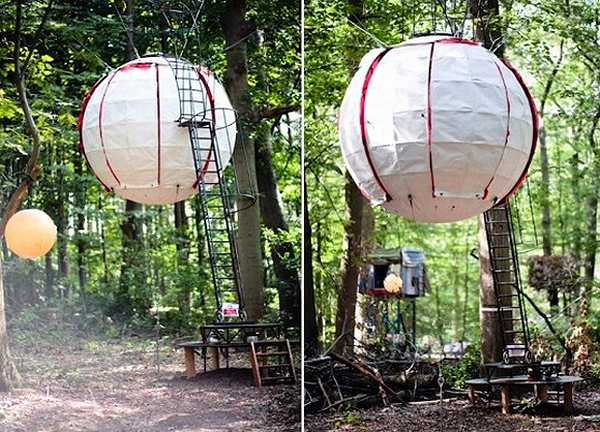
AirHotel will soon be nestled deep in the woodlands of Norfolk at about $57 a stay.

It is a suspended hotel, with six suspended independent rooms.

A bar, lounge, sauna and the breakfast service and are part of the fabulous hotel.

Also solar-powered Wellness Machine is there as the center  and it makes maximum use of natural lighting.

This design was thought by a group of Belgian artists who seemed to keep the environment in mind while developing this concept.

The best bart of this construction is that is made only from recycled materials.AirHotel uses solar energy and natural lighting to the fullest.

Brooklyn has the world’s largest rooftop greenhouse

It is not usual that people in big cities get to grow their own fresh vegetables and fruits.

But due to hydroponics and some innovative designs people can cultivate fruits and vegetables on rooftops.This represents one of the latest that helps both financial system and local produce.

This farm will be constructed on Brooklyn’s industrial waterfront. The greenhouse crops are not grown in the soil as is usually done in other farms,it is about  a new technology, according to which nutrients are taken up by the crops exactly from the water in which the plants are grown.

With this new technology new employment avenues will open up for people in Brooklyn and this will give a plus for the local economy.

This farm will provide the right amount of produce for the needs of  a number of people living in New York. The new development encourages a healthy living throughout the city.

This greenhouse farm by Bright Farms will be one of the biggest farms of the world and will provide up to a million pounds of local produce every year. The greenfarm will contribute to improve New York City’s food system. This means that the farm will bring a remarkable increase in the local food production and also a positive effect concerning a healthy life.

World of Chlorophyll: A green building project inspired by nature

We have always taught that impressive designes are inspired by nature.

Of  course, science and technology can come up with new and advanced things, but but it is still hard to match 5 million years of evolution with a few hundred years of research and development.The design of ‘World of Chlorophyll’ is an amazing example of biomimicry.

The project is inspired by the way trees capture sunlight and turn it into energy. The idea of the design is to create individual units that seems more like the leaves of a plant in one giant structure with each unit getting the proper sunlight along with green rooftops.

Each unit has its own unique view and is not blocked by any other when it comes to natural ventilation. The green building will be largely a residential complex and  with its access to sunlight, it can embrace solar rooftops.

This project is an proposal and if all goes in a good way,then, this amazing new architectural delight could take shape in the heart of New York City.It will be among  the skyscrapers of New York that will be worth paying a visit to.

IKEA uses 100% renewable energy

IKEA is a 100% green company, its 2011 Sustainability Report affirms its green status.

From September 2010 to August 2011 IKEA set aside approximately $670 million to invest in renewable energy which includes installations that have both been brought into operation or will be completed in the next 1.5 years.

The company’s current renewable energy portfolio will increase. Now it boasts 69 wind turbines and 124 photovoltaic (PV) projects (40 operational and 84 approved).

The company declared its future plans to add 11 new PV solar projects to its current portfolio. The aim is to aid rooftops of each of the brand’s stores with solar PV panels and generate approximately 7000KW of clean energy. The base of this future planning is strengthened by IKEA’s success at the completion of its geothermal project at Denver, Colorado.

In a separate announcement, released just hours before the Sustainability Report, IKEA said it has plugged in its 15th solar energy project in the United States. REC Solar installed 4,984 solar panels atop IKEA’s 148,200 square foot store located in College Park, Maryland. The solar panels will combine to generate 1,196 KW of renewable energy.

IKEA is one of the most lucrative businesses on the planet, is not using this model — the retailing juggernaut owns and operates each of the systems installed on its buildings.

IKEA says it has 22 solar projects underway in the US which, when complete, will hoist the company’s solar energy portfolio to 30.8 MW.
Solar power in Abu Dhabi

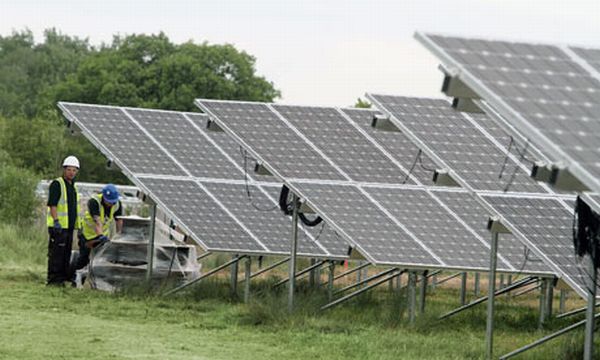
The Court of HH Mohammed bin Zayed bin Sultan Al Nahyan, the Crown Prince of Abu Dhabi, has been equipped with solar panels.

The installation of photovoltaic panels on the roof of the building was completed in record time by Gulf International Trading Group.

The installation on the roof of the building is hooked up to the Department of Electricity and Water Authority’s main generator.

This project further goes to prove the economic visions for the Emirate of Abu Dhabi 2030.

Californian college – 100% electricity from solar panels

The first college in the U.S. to go ‘grid positive’, the Butte College has installed 25,000 solar panels.

The college will generate over 100 percent of its electricity from solar power.

The solar panels are expected to generate more than 6.5 million kilowatt hours of electricity annually, which is more than the annual power consumption of the college.

The system generates more energy than it consumes, it says that it will be able to save between $50 million and $75 million over the next 15 years.

Butte College will surely set an example for other American institutions to go green.

You can be informed about your house energy usage with the new Interactive Carbon Calculator

If you want to know how much energy you use throughout the year, you can find now with the new Interactive Carbon Calculator House.

This little new invention use animatronics and light-up parts and two live displays that throw up information, changing according to the energy-saving systems you add and deduct from your home-grid.

The ICCH is portable and powered by rechargeable batteries and he also includes a thermostat dial, a washing machine dial, an energy saving bulbs switch and a load of similar features that you can add and remove from the home energy systems.

It has dimensions 70cm W x 60cm D by 80cm H.Weights 20kg.

The Interactive Carbon Calculator House is a great way to keep users informed and entertained, while providing education of a green life.

Toyota UK car plant will use solar energy

In addition to manufacturing a number of striking eco friendly cars like Prius and Highlander, Toyota has now geared up to power entire operations of its Derbyshire production plant in the U.K. with solar panels.

The Japanese automobile giant has announced that it is going to implement the ambitious project, which will cost more than $14 million to the company.

Toyota looks set to install a £10m solar array to power operations at its Derbyshire plant.

The company has already started work to fit around 17,000 panels on 90,000 square metres of industrial land – an area slightly smaller than four and a half football pitches – within the plant’s boundaries.

The array will be capable of supplying enough energy to build around 7,000 cars a year at the plant, which produces Auris hybrid, Auris and Avensis cars, as well as saving the company 2,000 tonnes of CO2 emissions a year.

Toyota project is expected to begin producing power in July 2011.

IBM software makes green buildings

In the future our apartment homes will be a lot more efficient than they are today.

New systems like IBM’s latest software will help users keep tabs on just how much energy they’ve been using, helping cut down unnecessary electricity usage during peak hours, indirectly cutting short electricity bills by considerable lengths.

This new software from IBM monitor how much energy residents use and check the energy consumption of heating systems, cooling systems, ventilators, refrigerating systems and the HVAC-R too.

Whit these new inventions buildings will go greener and more energy-efficient.

World’s first solar powered town in Japan

Japan will have the fist solar powered town in Fujisawa City.

Japan has learned its lessons from relying too much on nuclear energy after all the dark hours the nation has spent since the

Fukushima plant disaster and is now turning to solar energy instead to power up the lives of the people there.

Japan will built a smart town which will work with nine private sector firms to build a sustainable urban town which will see solar systems and battery storage technology installed in all homes and town facilities.

The project can become a model town that can be replicated in Japan’s earthquake-damaged areas.

This will be the first completely solar powered town in the world and it will have a thousand homes, playing residence to a population of about 3,000 people.

The project, which costs US$742 million and spans 19 hectares, will be completed in 2014.