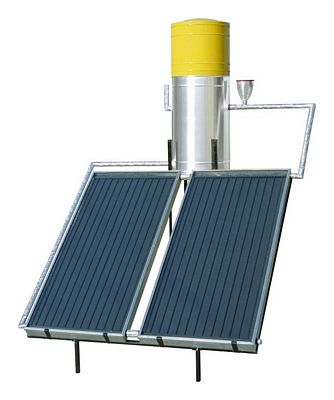
Blue Sky Energy Unveils Universal Communication Module

Blue Sky Energy, Inc., a leading manufacturer of photovoltaic (PV) battery charge controllers introduces the Universal Communication Module (UCM) for its Solar BoostTM family of Maximum Power Point Tracking solar charge controllers. Blue Sky Energy’s IPN network based charge controllers coordinate their activities and share resources over the proprietary IPN network. The new UCM provides is a full featured communication bridge or gateway between IPN network based charge controllers and external system, including remote access over the Internet.
According to Melanie Cullen, V.P. of Operations and Marketing, “We are excited to bring the UCM’s web enabled capability to the charge controller market place. The UCM is compatible with all of Blue Sky Energy’s IPN compatible charge controllers and provides multiple standard communication interfaces including RS-485 Modbus, Ethernet based Modbus/IP, FTP data upload, and a built in web site server. Unlike other web enabled products the UCM’s built in web site server allows remote access to all charge controller data and setup parameters over the Internet without a subscription. If an IPN-ProRemote display is present on the IPN network it’s full featured battery system monitoring functionality and associated setup become available as well. The UCM also provides 128 days of data logging of key performance parameters which may be downloaded from the UCM’s web site.”
Source: www.renewableenergyworld.com

Reports regarding wind market

America’s wind power industry grew 15 per cent last year, according to a new industry report which warned that the sector’s expansion was held back by weak electricity prices and unpredictable policies.
The American Wind Energy Association (AWEA) yesterday unveiled its US annual report, showing that 5,116MW of new capacity was added last year, taking the total volume of US installations to 40,181MW, now generating enough electricity to power more than 10 million homes.
However, despite the increase in capacity, last year’s growth was significantly lower than the average 39 per cent growth rate recorded in the previous five years.
The sector blamed weak electricity prices and investor uncertainty caused by doubts over whether key federal tax incentives would be extended for the relatively sluggish performance.
The report follows recently released figures from the Global Wind Energy Council (GWEC) which show that in 2009 China overtook the US in terms of the volume of new installations and manufacturing of wind turbines for the first time.
Denise Bode, AWEA chief executive, remained optimistic that the US was on track to produce 20 per cent of America’s electricity by 2030 from wind energy, as predicted by the Department of Energy during the Bush administration.
“The American wind industry is delivering, despite competing with energy sectors that have permanent government subsidies in place,” she said. “Wind is consistently performing … adding 35 per cent of all new generating capacity since 2007- that’s twice what coal and nuclear added combined.”
On top of new construction starts, the industry brought 14 new manufacturing facilities online in 2010, consistent with 2009, meaning that wind energy now accounts for up to 20,000 manufacturing jobs across 42 states.
“Continued interest and investment by manufacturers in America demonstrates that the US continues to be a global powerhouse for wind development, today and in the future,” Bode added.
Meanwhile, a separate report released by GWEC has this week argued that India’s potential for wind power development is higher than previously calculated, and could reach 65.2GW by 2020, up from 13.1GW at the end of 2010.
According to the Indian Wind Energy Outlook 2011, published yesterday by GWEC,  the World Institute of Sustainable Energy and the Indian Wind Turbine Manufacturers Association (IWTMA), India’s potential for wind power development could exceed 100GW, reaching 160.7GW by 2030, if the potential of offshore wind power and repowering was fully exploited.
Achieving 65.2 GW of wind capacity by 2020 would attract around $10.4bn of annual investment to the sector and create 170,000 new jobs.
Source: www.businessgreen.com

Renewable energy based on the principle of entropy

In nature, the diffusion of river water into salty seawater leads to a slight rise in temperature, and this energy could be captured to generate electricity. The conventional means of capture has been through osmotic power. Fresh water and salt water are separated by a membrane, and the salt water draws fresh water through the membrane, causing an increase in pressure. The pressure can then be used in a variety of ways, for example to turn a turbine. The Norway-based company Statkraft is testing one such osmotic power facility.
A team of researchers from Stanford University  approached the problem from a different angle and came up with a more compact system. As reported by Andy Extance at the Royal Society of Chemists, the Stanford system uses a battery to draw energy through a crystal lattice made of manganese dioxide nanorods, which pack a large surface area into a small space.

Source: www.cleantechnica.com

Dutch Company to Invest in Bulgarian Solar Power Park

Dutch company Infinity Energy Holding AG will invest EUR 50 M in a solar power installation near the Bulgarian town of Devnya, near the Black Sea city of Varna.The announcement was made by the Chair of the Management Board of the company, Tjalling Halbertsma, after a meeting with the governor of the Varna district, Dancho Simeonov.
At present, the company is building the first part of the installation, which is expected to have a power of 5 MW. It has to be completed by the end of the year. In Bulgarian, Infinity energy Holding AG has contacts and is working with the company Solarpro. In Halbertsma’s words, the construction of the second part of the solar park, which will have a power of 10 MW, will begin after the Bulgarian Parliament adopts the law which defines the rates for sale of electricity from solar installations.
He also said that his company is interested in building wind farms in Bulgaria as well
The interest in Renewable Energy and in specific PV has been steadily growing for a number of years in the Balkan region. This region will continue to develop, and present opportunities for local and international businesses. A strong will to become less depended on fossil fuels is driving the market development.
Source: www.renewableenergyworld.com

Mid-sized solar projects will be ditched if incentive cuts go through UK legislation

The chilling effect of the coalition’s proposed cuts to feed-in tariff incentives on planned solar projects with 50kW capacity was hammered home last week with the release of new data suggesting that virtually no mid-sized installations will go ahead if the incentives are slashed as planned.
Officials from the Department of Energy and Climate Change (DECC) last week hosted a workshop alongside the Micropower Council and the British Photovoltaic Association where they were presented with detailed evidence on how the proposed feed-in tariff cuts of between 40 and 70 per cent are expected to result in a freeze on all projects with over 50kW capacity, including community-owned and public sector projects.
“We’ve all had our rant about the cuts, now we need to help ministers with the evidence they need to make decisions,” Dave Sowden, chief executive of the Micropower Council, told BusinessGreen. “It is still a bun-fight, but it is turning into an evidence-based bun-fight.”
Officials saw presentations from three solar developers – building giant Kingspan, solar specialist Suntech and insulation and solar technology installer Mark Group – all of which demonstrated that the scale of the feed-in tariff cuts proposed in the government’s ongoing review will make the full range of 50kw plus projects unviable.
Most notably, Kingspan used three real life projects with capacities of 100kW, 250kW and 500kW to undertake a detailed analysis of the rates of return available to firms at different locations and under the current and proposed tariff regimes.
The analysis found that, with the current tariffs, firms deploying the projects could expect to receive rates of return before tax ranging from 7.1 per cent for a 100kW installation in Edinburgh to 11 per cent for a 500kW array in Plymouth.
In contrast, once the tariff proposed in the government’s consultation is applied, none of the projects attains the five per cent rate of return DECC has said in its impact assessment that it wants to achieve. The best rate of return is 4.7 per cent for a 100kW array in Plymouth, while all other projects would deliver returns of between 3.8 and -1.2 per cent.
Significantly, Kingspan’s analysis is based on real life projects and the company has offered to make all of its calculations, invoices and contracts available to DECC officials.
A DECC spokeswoman said that the workshop was part of the government’s efforts to support its ongoing consultation exercise, adding that the department was in “listening mode” and committed to ensuring that “everyone gets the chance to put their view across”.
Source: businessGreen

Solar Water Heating is on the Rise for Commercial Applications in the U.S.

AltaTerra Research announced the release of its highly anticipated report today, entitled, “Solar Water Heating on the Rise: Tapping into Commercial Solar Thermal.”  The report is one of the first professional market research studies of how customers are installing solar water heating. It addresses customer-facing issues, including the value proposition and suitability to and rate of adoption in particular industry types. It also profiles how and why current customers are installing solar water heating systems.
Sample findings from the report include:
  • The United States solar water heating market is now growing at about 20 percent per year in the commercial sector—a significant upturn from long-term trends.
  • For most customers, solar heating lowers energy expenditures.
  • Pilot installations are raising market acceptance and triggering follow-on purchases.
In a development that bodes well for the potential of a robust commercial market, solar thermal power purchase agreements are starting to take root in some areas.
“The market for commercial solar water heating systems in the United States is on the rise, growing an estimated twenty percent in 2010.  The U.S. commercial market is benefiting from new incentives programs and an increase in corporate and commercial customers seeking to meet resource efficiency goals and hedge against rising energy prices,” said the report’s lead author Eric Paul.
Source: www.renewableenergyworld.com

Tata Steel is investing in solar paint

Tata Steel has said it is investing around £10m in a trio of Welsh research projects working to commercialise emerging low carbon building technologies, such as paint on solar cells that could turn homes, offices and factories into mini power stations.
Tata yesterday cut the ribbon on the £6.5m Sustainable Building Envelope Centre at Shotton in North Wales, where it will test new integrated heating, energy and ventilation systems on the fabric of buildings, including pioneering dye solar cell technology.
Earlier this week, Tata also said it would expand an £11m photovoltaics project, also at Shotton, to develop a manufacturing process for Dyesol’s dye solar cells. The decision allows the project to enter a second phase in June, meaning that Tata will expand the workforce from 30 to 50, at a cost of about £3.5m a year, with further investments yet to be determined.
Peter Strikwerda, managing director of Tata Steel Colors, said that Dyesol technology is at the heart of its plan to develop a new range of coated steel products capable of generating renewable energy for use on the roofs and walls of buildings.
Source: businessGreen

China boosts solar and cuts nuclear energy

The world’s biggest energy consumer is watering down its policy to boost nuclear energy, but strengthening targets on solar power, in the wake of the nuclear crisis at Japan’s Fukushima power plant.
China is planning to lower its target of building 80GW of nuclear power capacity by 2020, while at the same time raising its target of installing 20GW of solar energy by the same date, according to reports from news agency Bloomberg.
However, Ren Dongmin, head of renewable energy at China’s National Development and Reform Commission, who told reporters of the plans at a conference in Beijing today, failed to provide any details on the new targets for solar and nuclear energy capacity.
Engineers at Fukushima are still working desperately to cool and stabilise the reactors and limit radiation from the site that is said to have reached dangerous levels.
The news of China’s new energy supply targets came as the developer of Tibet’s largest solar power plant said it will switch on the new 30MW installation in May. The 800 million yuan project in western China is funded by Linuo Power Group.
Meanwhile, Reuters has reported that China is planning to increase the price tariff for renewable energy such as wind and solar power in an attempt to boost clean technology investment.
According to the reports, the China Electricity Regulatory Commission (CERC) is planning to increase the additional levy on renewables from 0.004 yuan (£0.0004) to 0.006 yuan per kilowatt-hour either this year or next.
Huang Shaozhong, of the CERC’s price monitoring department, said the current levy covers only about 70 per cent of the subsidies offered to renewable energy producers, at around 10 billion yuan annually.
Source: www.businessgreen.com/bg/news/2039056/china-boosts-solar-cuts-nuclear-following-fukushima-crisis

DIN-Y: Solar-powered mobile conference unit

DIN-Y is designed as a mobile, private, tap-proof conference mobile. It is suited for trade exhibitions as well as for events at disused industrial plants or in the countryside.
An operating company provides for transport as well as catering. Once the last conference participant has taken a seat in DIN-Y, the vehicle is raised to ensure a better view and enhanced privacy.
DIN-Y has power cells and solar cells for an operating time of 6 hours. For intensive operation, however, it must be connected to the electricity network.
DIN-Y cannot be bugged or tapped, and provides absolute protection from external noise.
Source: www.ecofriend.com/entry/din-y-solar-powered-mobile-conference-unit-for-the-uber-secret-conference/

Sam Wilkinson from IMS Research, about the future of PV market

Sam Wilkinson is one of the analysts in the PV Research Group at IMS Research. IMS Research is a leading provider of market intelligence to the global electronics industry and has been providing research and statistics on the industry for over 20 years.

What are your expectations for the global PV market in 2011 to 2012 (in terms of new GWs)?
IMS Research estimates that global installations will increase by around 20% in 2011, to between 20-22 GW; however, this is very dependent on how the market reacts to the changes in France and Italy. It’s possible we see a big pull-forward in demand again, but also possible that demand stalls and prices come down rapidly. Inventive reductions during, and at the end of 2011 mean that installations are likely to be roughly flat in 2012.
What do you expect to be the leading PV markets in the coming years?
We forecast that the largest PV markets (in terms of installations) in the next four to five years will be USA, China and Germany. Generally we see the global market diversifying and becoming less depending on just one or two markets – which of course will help stabilise demand.
What are your forecasts for the German and Italian PV market? And what other European PV markets will play a dominant role till 2015?
Following what has been an incredible two years for the German market, with installations estimated to have reached around 7.5 GW in 2010, we are seeing the incentive reductions start to take effect, and predict that installations will begin to decline in 2011, and again in 2012. That said, we don’t see Germany disappearing off the map or crashing altogether and believe that it will continue to install significant amounts of PV over the coming years.
It is currently very difficult to make a solid forecast for installations in Italy, as new information regarding its feed-in tariff is being released all the time. Based on the shipment information that we have collected (from inverter and module suppliers), we believe that genuine completed installations in 2010 were between 3-3.5 GW. We predict that there will be a surge in installations until the end of May when the current feed-in tariffs will finish. Currently, the rates that will be offered after this date are not available and there is still a chance that annual installations will be capped. Until this information is confirmed, it is very difficult to make a forecast. Although, it is certain that the new incentives policy will be designed to reduce the installations.
The Chinese PV industry is growing tremendously. Not only are the existing giants expanding their capacity, new entrants with huge ambitions are still entering the market. How does this match with the global market growth?
Chinese suppliers are carrying out extremely aggressive expansion plans. Chinese module suppliers added capacity very quickly throughout 2010 and capacity in China at the end of the year was over 80% higher than it was at the end of 2009. This growth was roughly in line with total industry demand. However, 2011 looks a little different; aggressive capacity expansions are continuing and Chinese suppliers are forecast to add a similar amount in 2011, but in contrast to 2010, installations are not predicted to grow at the same rate.
It is also significant that a number of other large Asian electronics suppliers are entering the market. Companies like LG, Samsung and Taiwan Semiconductor are able and willing to spend large amounts of capital and plan to quickly add capacity over the next few years.
What will the solar industry look like in five years’ time? Isn’t the solar industry likely to follow the wind-energy industry in the near future, with more than 90% of the market shared among only ten major manufacturers?
With incentive levels in the largest markets being quickly reduced over the last year or so, and further reductions likely, there will certainly be increased pressure on PV module prices. The leading, and surviving, companies will therefore be those that are able to reduce their costs in order to offer attractive prices whilst still maintaining a healthy margin. It is likely than only a small number of the hundreds of suppliers active in the market today will be able to achieve this.
Where in the supply chain (silicon to module) do you see the highest potential for further cost reductions?
As I previously mentioned, cost reduction is key to companies in a market that is ultimately aiming to reduce prices to the point where it no longer relies on subsidies and incentives, and can compete with conventional energy sources.
On the crystalline side, a clear strategy of some of the larger suppliers is the move to vertical integration. It is not difficult to see that the cost structure of a fully integrated module supplier (manufacturing polysilicon, wafers, cells and modules in house) has the potential to be significantly lower than a non-integrated one. A non-integrated module supplier’s cost structure could include the margin of a cell supplier, a wafer supplier and a polysilicon supplier, as well as the extra transportation costs etc. involved with the purchase of each item.
What module price development do you expect this and next year? Will the ASP for c-Si modules hit €1/Wp in 2012?

Following some increases in price during the second half of 2010, due to the high demand and short supply of modules, IMS Research predicts that prices will begin to fall again throughout 2011 and 2012. We predict that some crystalline modules will reach the €1/W milestone during 2012. Some thin film modules will reach this price this year though.
Europe seems to focus more on residential PV applications with their FiT support mechanisms. In the USA on the other hand, utility scale projects seem to drive the market. What is your view on the market segments that will drive the demand in the coming years?
IMS Research predicts that utility-scale PV systems will represent an increasing proportion of installations over the coming years, for a number of reasons:
Firstly, some of the largest markets in a few years time will be ones that favour large utility-scale projects, such as China and USA.
Secondly, the high volume nature of large utility-scale plants once again leads to lower prices and costs, on a per watt or per kWh basis at least.
In your opinion, where will the solar industry and markets be in 2015?
We predict that the largest end markets (geographically) will be USA, Germany and China in 2015. However, as I mentioned earlier we see full vertical integration becoming more and more common in the market, and we are likely to see a number of cell, module and wafer suppliers becoming their own ‘end customer’ and increasingly being involved in developing systems themselves.

Source: http://www.solarplaza.com/article/ims-research-usa-and-china-likely-to-become-the-w