New York’s largest on-farm biogas generates renewable energy for nearly 1,000 homes

In New York, USA, was opened one of the largest on-farm, co-digestion biogas power plants.

The project under the name Synergy Biogas LLC is built by the US company CH4 Biogas LLC.Also is one of the state’s first biogas projects specifically designed for the co-digestion or processing of animal and food wastes.

The biogas created in the 120,000-gallon co-digester is fueling a 1.4 MW CHP plant to generate renewable electricity.

The project is expected to reduce the dairy farm’s baselood greenhouse gas emissions by about 8,500 tons of CO2 annually, which is equivalent to the CO2 emissions of 1,700 automobiles.

The facility also will produce an estimated 17,500 cubic yards of bedding material for livestock while reducing manure odors and helping the farm manage nutrients applied to cropland.

National Grid is supporting the project as part of its broader strategy to help upgrade New York state’s energy infrastructure, promote further economic growth in the region and encourage the development of renewable energy resources

The New York State Energy Research and Development Authority is providing US$ 1 million.

Wireless sensors based on solar cells

During the exhibition , The European Energy Harvesting & Storage Exhibition which was held in Berlin on 15-16 May, 2012, Solar Print, the company behind the next generation printable solar cell knowledge had announced they will showcase its independently motorized wireless temperature and humidity sensor.

Innovative minds of Solar Print have shared its Dye Sensitized Solar cell (DSSC) technology. Simultaneously, Gas Sensing Solutions has provided its low-power CO2 sensors which are based on COZIR technology.

Analog Devices Incorporated complimented their efforts by contributing the long-range, effectual and wireless networking technology

DSSC delivers substantial cost savings by reducing the need for wired networks along with reduced battery related replacement needs when integrated for harvesting energy into wireless sensors in buildings.

This gives a platform to tune solar cells in a way that increases and maximizes their performance under interior lighting capacities.

This sensor comes along with maintenance free and cost effective wireless networks. These networks possess qualities like increased reliability which gives superior flexibility in consuming the sensors.

This next generation technology provides integrated customer solutions to meet the needs of wireless sensor applications.

Samsung decided to launch solar notebooks in Bangladesh

It is quite interesting that Samsung has decided to launch their new line of solar-powered notebooks in Bangladesh.

This decision came due to the fact that it’s is rich in solar energy and if they are thinking of the region as a potential market that will really respond well to this type of product, then maybe an expansion to the adjacent market in India might have been a better bet.

But also the lack of competition in the Bangladeshi markets along with the specific needs of the local community could influenced the decision.

All in all Samsung is going to unveil solar notebooks in June.The price will be around $415.

The idea of going solar from Samsung is particularly significant considering the reach and popularity of the company.

This solar trend will hopefully catch up with other product.

Tiny generator powered by viruses

Scientists invent tiny generator powered by viruses.

Scientists have discovered that harmless viruses have the ability to turn themselves into energy harvesting beings in a far more environmentally friendly manner.

The boffins invented a virus-based postage stamp-sized generator that’s able to power a small LCD by generating a quarter of the voltage produced by AAA batteries.

The viruses convert mechanical energy into electrical power, similar to the way PVs in solar panels transform sunlight into electricity.

scientists at the United States’ Department of Energy have found that bone is able to demonstrate piezoelectric properties which led them to find out new ways of  developing piezoelectric materials.

They created a substance from a modified virus called M13 (bacteriophage) that attacks bacteria and is harmless to humans.When they used an electric field on a film of M13, proteins that coat the virus twisted in response owing to the effect of piezoelectricity.

Films with M13s were then stacked on top of each other as well as between gold-plated electrodes. These were connected to an LCD through wires.When the films were tapped, 6 nanoamperes of electricity and 400 millivolts of potential were generated. That was enough to produce the number ‘1’ on the LCD.

Now the development is still in progress.

Solar powered Kudocase for iPad uses photovoltaic ink technology

Now you can have the worthiest eco-friendly cases for your iPad: Kudocase

It is a solar-powered protective case for iPad 2 and 3. It uses photovoltaic ink technology to produce power from sunlight.Kudocase has the capacity grab energy from both outdoor and indoor light.

Kudocase comes with a powerful 10,000 mAh battery.It can also store additional power, which you can use to charge your smartphone, camera or music player.The solar-powered case sports a built-in HDMI port.

You can stream content from the tablet on external projectors and TVs without taking it out of the case.The case is produced now only in black color.

In future,Kudocase could be produced in gray, blue, pink and green colors.The case will be sold for $190 and pre-orders will start on May 11, 2012.

System built in the environment to promote use of alternate energy

The people’s power pavilion is a massive structure, designed to be a large gathering place that will be integrated with an alternate energy system.

The system has three power sources, including the sun, the wind and human muscle power.Michael Jantzen is the designer and its innovation is meant for serving the community in two fold manner; one as hub of alternate energy production and second as an architectural art attraction.

The pavilion will be mounted with large custom vertical axis wind turbine.Flexible solar cells will be atached on the roof as long black strips for capturing energy from the sun.

People’s muscle power will be acquired through the use of exercise bikes. These bikes will get activated using cell phones.

The electric energy will be delivered to the local grid. The structure is self sustained. The centre of the pavilion will be fixed with a low energy consuming LED display screen and light.

The design is planned to provide plenty of space to the visitors for sitting and enjoying.The structure will have glass doors that can be closed during the winters and left open during summers.

The roof has been  designed to collect rainwater that is channelled to storage tanks under the pavilion and can be used for watering the vegetation on campus and the surroundings as well.

This structure is a central hub for alternate energy . It is suitable for setting up in various locations and will help to educate people about the use and need of renewable energy.

Hybrid aircraft uses electricity and gasoline to fly

Portland,Oregon-based company Volta Volaré has built a new hybrid aircraft.

The prototype GT4 airplane uses green energy due to the fact that it is hybrid.

The aircraft has a hybrid powertrain, powered by batteries and backed up with a gasoline engine. The plane can fly 300 miles on battery alone.

With a power supply drop to 25%, the gasoline engines automatically recharge the batteries.

All in all, the prototype could change in a good and efficient way the aviation industry takes electricity-powered engines.

Apple plans to power a data center with biogas and solar energy

A protest against the perilous use of coal-fired plants slammed  recently Apple.

The Greenpeace organization has taken this decision.

Due to this, Apple plans to use fuel cells to power up its North Carolina data center.

This will feed on biogas  captured from landfill sites.

4.8 megawatts worth of fuel cells were supplied by Bloom Energy.

So, Apple want to lighten its carbon footprint. In this case greenhouse gas emissions will be reduced, using biogas instead of the conventional natural gas.

Apple wants Maiden to be one of the greenest datacenters known to mankind.

Green Hotel made only from recycled materials

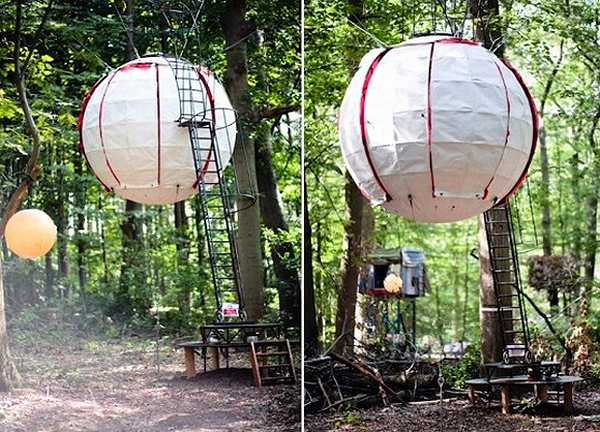
You are looking for a green vacation? AirHotel is the best location for such holidays.

AirHotel will soon be nestled deep in the woodlands of Norfolk at about $57 a stay.

It is a suspended hotel, with six suspended independent rooms.

A bar, lounge, sauna and the breakfast service and are part of the fabulous hotel.

Also solar-powered Wellness Machine is there as the center  and it makes maximum use of natural lighting.

This design was thought by a group of Belgian artists who seemed to keep the environment in mind while developing this concept.

The best bart of this construction is that is made only from recycled materials.AirHotel uses solar energy and natural lighting to the fullest.

Solar energy powers telecommunication infrastructure

IHS Africa powers telecommunication infrastructure with solar energy.

IHS Africa is one of the biggest telecommunications infrastructure of Africa.

The company has recently unveiled the largest solar-powered cell site in Africa.

This is an attempt to reduce diesel consumption at least 40% to 50%.

Only in West Africa, HIS Africa have 4,000 generator powered cellular communications towers.

Most telecommunication towers are located off-grid and powering these with electricity makes it all easier.

This solar powered system could prove to be a boon to rural mobile-phone users.