Germany and China lead in solar installed capacities

solar capacity statistics

Top 10 solar countries with solar power installed vs growth rates

According to new statistics released by Demnag, in the top 10 solar countries who have installed the most solar capacity, Germany leads the pack with 38,200 MW in installed capacity. China comes in the second place with 28,199 MWs & Japan in third place with 23,300MW.

Germany’s top place in the ranking is not surprising given its Energiewende focus to transition away from fossil fuels & its declared war on coal. Here is The Economist’s take on Energiewende:

“Wholesale electricity prices will be 70% higher by 2025, predicts the Karlsruhe Institute of Technology. Germany must build or upgrade 8,300km (5,157 miles) of transmission lines (not including connections to offshore wind farms). Intermittent wind and sun power creates a need for backup generators while playing havoc with business models that justify investing in them. Hans-Peter Keitel, president of the Federation of German Industry, likens the Energiewende to “open-heart surgery”.

But if it pays off Germany will have created yet another world-beating industry, say the gamblers. Alone among rich countries, Germany has “the means and will to achieve a staggering transformation of the energy infrastructure”, says Mark Lewis, an analyst at Deutsche Bank.

While Germany ranks the highest in installed capacity, China has a much higher growth rate 60% & that too with a high base of nearly 28,000 MW. In China too, the government has given solar a high priority in reducing pollution.

Analysts believe that China’s recent announcement of the Cap & Trade policy will encourage a boom in solar power generation infrastructure. This will turn kick of another race to move to solar by other countries such as India.

Solar module efficiency: Panasonic says they topped SolarCity at 22.5%

panasonic solar panels

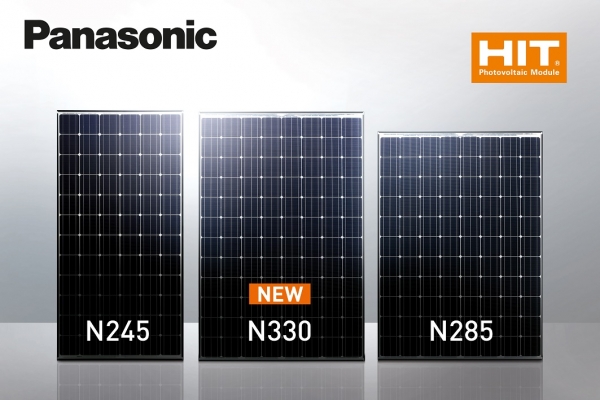
Panasonic’s new N330 module will be on show at SEUK next week, alongside the company’s record-setting prototype. Image: Panasonic.

Panasonic claims to have toppled a world record for module efficiency announced a few days ago by SolarCity and will be demonstrating the new module at next week’s Solar Energy UK exhibition organised by PV Tech’s publisher, Solar Media.

Last Friday SolarCity announced it had recorded 22.04% efficiency in a rooftop module from its pilot line, however this morning Panasonic has revealed its recorded module conversion efficiency of 22.5% on a commercial-sized prototype module, verified by the Japanese National Institute of Advanced Industrial Science and Technology.

According to pv-tech.org, Panasonic said the new record built on cell-level efficiencies of 25.6% recorded last year. “The new panel efficiency record demonstrates once again Panasonic’s proven leadership in photovoltaics and our ongoing commitment to move the needle in advanced solar technology,” said Daniel Roca, senior business developer at Panasonic Eco Solutions Europe.

The technology manufacturer has also announced the launch of its new HIT N330 module, a 96-cell, 330W panel which features 19.7% module-level efficiency and claims to deliver 27% more peak power compared to mainstream 260W multicrystalline modules.

Both products will be on show at next week’s SEUK expo, held at Birmingham’s NEC.

Wind energy is now as cheap as natural gas

wind energy

Wind power is now comparable in price to fossil fuels, new report says. Image via cdn7.triplepundit.com

Wind power is now comparable in price to fossil fuels, and solar is well on its way, according to a new report that confirms earlier predictions that renewables aren’t just the best option for the environment – they’re unequivocally the smartest long-term investment you can make on energy.

The report, by Bloomberg New Energy Finance, found that in the second half of 2015, the global average cost of onshore wind energy will be $83 per megawatt-hour of electricity (which is down $2 from the first half of the year), and for thin film solar photovoltaics, the cost is $122 per megawatt-hour (down $7 in the past six months).

The costs as they are now, and the steady drops we’ve seen in price over the past six months alone, suggest that as the technology to eke out more and more electricity from solar and wind energy gets ever-more sophisticated, those prices can only continue to fall.

“You start to go from a world where renewables are expensive, to a world where renewables are actually cheap. And that’s very meaningful,” said Seb Henbest, head of the Europe, Middle East, and Africa analysis for Bloomberg New Energy Finance. “Onshore wind is today competitive in many places in the US and around the world with coal and gas-fired generation technology.”

According to Science Alert, the report based its analysis on what’s known as the ‘levelised cost of electricity’, which takes into account several factors such as interest rates, capital expenditures, and the operating costs of facilities, and uses these to compare different energy sources on a dollar value. The team analysed over 55,000 projects around the world to come up with their global average figures.

In terms of breaking it down more specifically into locations, the report found that while coal-fired electricity costs $75 per megawatt-hour in North and South America (up from $66 per megawatt hour), in Europe, you’ll have to fork out $105 for the same amount. And gas-fired electricity costs $82 in the Americas, on average (up from $76 per megawatt hour), and $118 in Europe.

Those higher costs for fossil fuels in Europe – due in large part to government-regulated carbon policies – make it even more of a no-brainer for them to be getting into renewables, with the report finding that the average cost of wind is $85 per megawatt-hour in the UK and $80 in Germany, while the combined average for coal and natural gas was more than $100 per megawatt hour in both countries.

“In China, by contrast, coal-fired electricity generation remained extremely cheap – just $44 per megawatt hour,” Chris Mooney reports for The Washington Post. “Wind, in contrast, cost $77 and solar photovoltaics, $109.”

Mooney adds that the US is also not quite there yet, with the incredibly cheap average price of coal- and gas-fired electricity sitting at $65, while wind sit at $80 per megawatt-hour and solar at $107. The good news is that a lot of the cost of renewables is up-front – installation, construction, and the initial period of energy harvesting.

Unlike the process used to convert fossil fuels to electricity, converting renewable energy to electricity doesn’t require fuel, which means solar, wind, and even the currently expensive wave power sources will continue to get cheaper.

“Clean energy solutions like wind and solar are getting more affordable and more accessible by the day, meaning they are increasingly the smartest long-term financial investments for utilities and other electricity producers across America,” Michael Brune, the executive director of US-based environmental organisation, the Sierra Club, said in a statement. “The transition to a clean energy economy is going full speed ahead and pushing dangerous, dirty fossil fuels to the back of the line.”

Germany to fund 125 million euros for renewable energy projects in India

Merkel in India

Renewable energy is one of the key areas of Indo-German partnership mentioned in the Joint Statement of Hannover in April 2015. Image via The Financial Express

Germany and India on Tuesday signed two loan agreements worth 125 million Euros for the Green Energy Corridors’ project in Andhra Pradesh and Himachal Pradesh.

Germany’s development bank, KFW, will fund 57 million Euro for the project at Himachal Pradesh, and 68 million Euro for the Andhra Pradesh project, a press statement from the government said.

According to The Financial Express, the agreements were signed at a time when Germany’s chancellor Angela Merkel is on a state visit in India.

Renewable Energy is one of the key areas of India-German partnership. The financing of the transmission infrastructure of renewable energy projects, the Centre and State grids will be strengthened to evacuate more green energy, the statement said.

“With the Green Energy Corridors, the intra-State network will feed the renewable energy to the respective State grids and the high capacity transmission corridors and inter-State network will connect major renewable energy pockets with the national grid,” it added.

SolarCity says it has created the world’s most efficient solar panel

solarcity solar panels

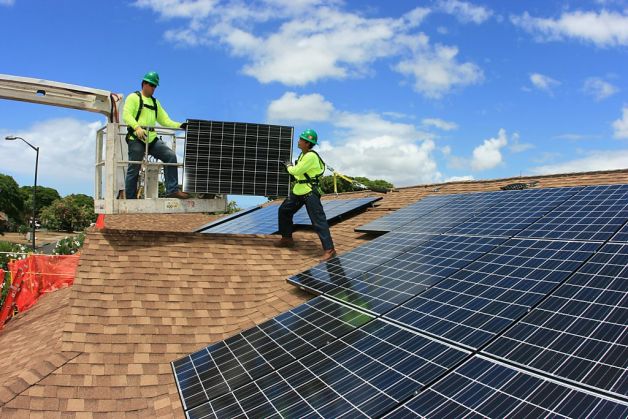
Solar panels created by SolarCity. Image via cdn.zmescience.com

SolarCity, the sun-powered startup founded by Elon Musk’s cousins Lyndon and Peter Rive, announced that it has created the world’s most efficient solar panel, with a 22 percent module-level efficiency.

Bright, a startup out of Y Combinator that installs solar panels in Mexico, agreed that if SolarCity’s new panel is indeed producing a 22 percent module-level efficiency, it would make the panels the most efficient. At least on the surface.

“The big caveat is that once you use more expensive materials, such as GaAs, the efficiency for modules can go way up (north of 40 percent),” Bright founder Jonah Greenberger told TechCrunch.

According to techcrunch.com, SolarCity created its new panel via a proprietary process that it claims not only ups the performance, but also significantly reduces the manufacturing cost relative to other high-efficiency technologies at the same size as other solar panels, adding an additional 30 to 40 percent more power per panel.

The percentages of overall energy production and module-level can be confusing but don’t get lost in them. The gist is these panels promise to have a higher output at a lower production cost – and SolarCity says it is the most efficient solar panel at the moment, reducing waste – cuttings costs for both consumer and company and adding an attractive amount of power performance.

SolarCity backs up the claim with third-party, independent testing from the Renewable Energy Test Center, an energy services and certification testing facility for solar panel products.

The sun-powered provider expects to install these new panels on rooftops and carports, initially and then move to commercial installations.

SolarCity plans to produce a small batch of the new modules out of its 100 MW pilot facility in Fremont, California this month and then will move production to SolarCity’s 1 GW facility in Buffalo, N.Y. The company expects to produce 9,000 to 10,000 solar panels per day when production is in full swing.

The company recently announced an initiative to lower the cost of sun power for lower-income families. In a partnership with solar panel installation firm Everyday Energy, SolarCity will work with affordable-housing developers to install its solar systems in California.