New study regarding sustainable biomass

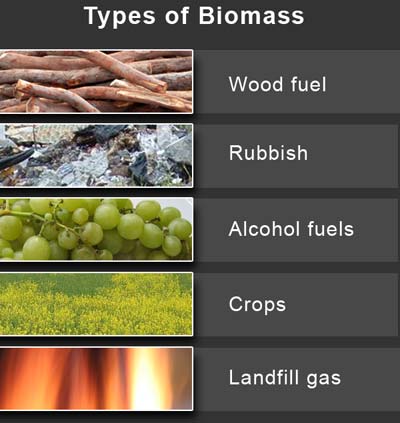
More efficient land use could see England produce enough biomass to meet around four per cent of current UK electricity demand without affecting environmental sustainability or food production.
That is the conclusion of a major new study funded by the UK Energy Research Centre examining the potential of planting short rotation energy crops on unused agricultural land.
It suggests that growing lignocellulosic crops such as willow and poplar on marginal land could yield 7.5 million tons of biomass, of which the South West and North West could produce around a third.
The researchers said that converting marginal land to biomass plantations would not only be sufficient to generate approximately four per cent of current UK electricity demand, but would meet approximately one per cent of total energy demand, including heat.
This would represent a considerable increase on today’s levels, whereby dedicated energy crops account for less than 0.1 per cent of UK electricity, despite biomass being listed in 2009’s Renewable Energy Strategy as having “an important role” in meeting government targets of sourcing 30 per cent of electricity, 12 per cent of heat and 10 per cent of transport energy from renewable sources by 2020.
The use of biomass and biofuels has been hindered by fears over sustainability, EU standards which the UK government has failed to enact, and concerns that using land for energy crops damages food supplies.
But the paper said that new technology will mean that fuels can increasingly be produced from short rotation lignocellulosic crops without affecting food production because the trees can be grown on poor quality agricultural land – unlike current cellulosic biofuels typically derived from wheat and maize.
Source: www.businessgreen.com

Dutch Company to Invest in Bulgarian Solar Power Park

Dutch company Infinity Energy Holding AG will invest EUR 50 M in a solar power installation near the Bulgarian town of Devnya, near the Black Sea city of Varna.The announcement was made by the Chair of the Management Board of the company, Tjalling Halbertsma, after a meeting with the governor of the Varna district, Dancho Simeonov.
At present, the company is building the first part of the installation, which is expected to have a power of 5 MW. It has to be completed by the end of the year. In Bulgarian, Infinity energy Holding AG has contacts and is working with the company Solarpro. In Halbertsma’s words, the construction of the second part of the solar park, which will have a power of 10 MW, will begin after the Bulgarian Parliament adopts the law which defines the rates for sale of electricity from solar installations.
He also said that his company is interested in building wind farms in Bulgaria as well
The interest in Renewable Energy and in specific PV has been steadily growing for a number of years in the Balkan region. This region will continue to develop, and present opportunities for local and international businesses. A strong will to become less depended on fossil fuels is driving the market development.
Source: www.renewableenergyworld.com

Geothermal Leaders to Gather in the Nation’s Capital for GEA Geothermal Energy Technology and International Development Forum

As the geothermal industry is poised for record setting expansion, leaders will gather in Washington DC on Wednesday, May 4 for the Geothermal Energy Association (GEA) 2011 Geothermal Energy Technology and International Development Forum which will be held at The Ronald Reagan Building and International Trade Center.
“Our industry is developing rapidly here in the United States, but the growth of geothermal power abroad has been fantastic as well,” said Karl Gawell, GEA Executive Director. “Our program is going to allow us to see how and where these many projects are coming along, while also giving an update on the many new technologies that are coming into the geothermal market.”
The Forum was developed in conjunction with the U.S. Department of Energy and the U.S. Department of Commerce. Over two-hundred industry leaders, foreign diplomats, financiers and government officials are expected to participate.
“Having the Departments of Commerce and Energy, as well as leaders from such a broad spectrum of geothermal supporters, as a part of this event will provide a great insight into where the geothermal industry currently stands and where it will be going over the next few years,” Gawell said.
The program showcases geothermal projects, trends, and governmental policies in the U.S. and around the world. Topics covered will include the geothermal market today, projects under development in the U.S. and internationally, outlook for the future of the geothermal market, jobs and money, new technologies, and federal agency support at home and abroad. The Forum will also feature an expo area.
Source: www.renewableenergyworld.com

Tata Steel is investing in solar paint

Tata Steel has said it is investing around £10m in a trio of Welsh research projects working to commercialise emerging low carbon building technologies, such as paint on solar cells that could turn homes, offices and factories into mini power stations.
Tata yesterday cut the ribbon on the £6.5m Sustainable Building Envelope Centre at Shotton in North Wales, where it will test new integrated heating, energy and ventilation systems on the fabric of buildings, including pioneering dye solar cell technology.
Earlier this week, Tata also said it would expand an £11m photovoltaics project, also at Shotton, to develop a manufacturing process for Dyesol’s dye solar cells. The decision allows the project to enter a second phase in June, meaning that Tata will expand the workforce from 30 to 50, at a cost of about £3.5m a year, with further investments yet to be determined.
Peter Strikwerda, managing director of Tata Steel Colors, said that Dyesol technology is at the heart of its plan to develop a new range of coated steel products capable of generating renewable energy for use on the roofs and walls of buildings.
Source: businessGreen

Solar Water Heating is on the Rise for Commercial Applications in the U.S.

AltaTerra Research announced the release of its highly anticipated report today, entitled, “Solar Water Heating on the Rise: Tapping into Commercial Solar Thermal.”  The report is one of the first professional market research studies of how customers are installing solar water heating. It addresses customer-facing issues, including the value proposition and suitability to and rate of adoption in particular industry types. It also profiles how and why current customers are installing solar water heating systems.
Sample findings from the report include:
  • The United States solar water heating market is now growing at about 20 percent per year in the commercial sector—a significant upturn from long-term trends.
  • For most customers, solar heating lowers energy expenditures.
  • Pilot installations are raising market acceptance and triggering follow-on purchases.
In a development that bodes well for the potential of a robust commercial market, solar thermal power purchase agreements are starting to take root in some areas.
“The market for commercial solar water heating systems in the United States is on the rise, growing an estimated twenty percent in 2010.  The U.S. commercial market is benefiting from new incentives programs and an increase in corporate and commercial customers seeking to meet resource efficiency goals and hedge against rising energy prices,” said the report’s lead author Eric Paul.
Source: www.renewableenergyworld.com

Mid-sized solar projects will be ditched if incentive cuts go through UK legislation

The chilling effect of the coalition’s proposed cuts to feed-in tariff incentives on planned solar projects with 50kW capacity was hammered home last week with the release of new data suggesting that virtually no mid-sized installations will go ahead if the incentives are slashed as planned.
Officials from the Department of Energy and Climate Change (DECC) last week hosted a workshop alongside the Micropower Council and the British Photovoltaic Association where they were presented with detailed evidence on how the proposed feed-in tariff cuts of between 40 and 70 per cent are expected to result in a freeze on all projects with over 50kW capacity, including community-owned and public sector projects.
“We’ve all had our rant about the cuts, now we need to help ministers with the evidence they need to make decisions,” Dave Sowden, chief executive of the Micropower Council, told BusinessGreen. “It is still a bun-fight, but it is turning into an evidence-based bun-fight.”
Officials saw presentations from three solar developers – building giant Kingspan, solar specialist Suntech and insulation and solar technology installer Mark Group – all of which demonstrated that the scale of the feed-in tariff cuts proposed in the government’s ongoing review will make the full range of 50kw plus projects unviable.
Most notably, Kingspan used three real life projects with capacities of 100kW, 250kW and 500kW to undertake a detailed analysis of the rates of return available to firms at different locations and under the current and proposed tariff regimes.
The analysis found that, with the current tariffs, firms deploying the projects could expect to receive rates of return before tax ranging from 7.1 per cent for a 100kW installation in Edinburgh to 11 per cent for a 500kW array in Plymouth.
In contrast, once the tariff proposed in the government’s consultation is applied, none of the projects attains the five per cent rate of return DECC has said in its impact assessment that it wants to achieve. The best rate of return is 4.7 per cent for a 100kW array in Plymouth, while all other projects would deliver returns of between 3.8 and -1.2 per cent.
Significantly, Kingspan’s analysis is based on real life projects and the company has offered to make all of its calculations, invoices and contracts available to DECC officials.
A DECC spokeswoman said that the workshop was part of the government’s efforts to support its ongoing consultation exercise, adding that the department was in “listening mode” and committed to ensuring that “everyone gets the chance to put their view across”.
Source: businessGreen

Japan’s Kyocera to build second solar panel plant in Čzech Republic

Kadan, March 31 (CTK) – Japanese company Kyocera has launched the construction of its second solar panel plant in the industrial zone in Kadan in the Usti nad Labem region, northern Bohemia, Stepanka Filipova of the government agency CzechInvest told CTK Thursday.
Kyocera is going to invest Kc700m in the new plant.
At present it employs around 600 people in the region. In the autumn it is going to hire another 400 employees.
Usti nad Labem is a region with the highest employment in the country. In February it registered 60,612 jobless people.
According to the Kyocera management, the Kadan enterprise is its base for the European market.
The new plant is to have a capacity of 360 MW. Kyocera’s total solar panel production in both Kadan plants should reach 560 MW annually.
The Kadan company supplies solar panels to the entire Europe. Besides the Czech Republic, Kyocera has plants in Japan, China, Mexico and the USA.

Source: http://praguemonitor.com/2011/04/01/japans-kyocera-build-another-solar-panel-plant-%C4%8Dr

WIND POWER INDIA

EVENT PROFILE
Wind Power India is a show that is meant to set stage for major expansion policies in the Indian wind power market. The event provides common grounds for key stake holders to meet collaborate and exchange new ideas and practices in the field of wind energy. The show will not only facilitate trade and business but will also be the best platform for exchange of innovative ideas which will help in tapping the entire market of wind energy.
VISITOR’S PROFILE
Visitors to the show will be top level executives and decision makers of industrial units engaged in the wind energy sector, engineering firms looking for newer business opportunities, researchers and analysts willing to understand the market trends and innovation requirements, motor and turbine industries, renewable energy laboratories, manpower placement agencies and all related to the field of renewable sources of energy.
EXHIBITOR’S PROFILE
Exhibitors in the show will be national and local government officials and regulators, independent power producers, wind farm owners/operators and project developers, wind power integrators and installers, wind technology developers and manufacturers, investment firms, risk management companies, legal experts and consultants, energy analysts and engineering consultants.
Venue: Chennai Trade & Convention Centre
Country: Chennai, India
Start Date: 07-APR-11
End Date: 09-APR-11
Industry: Renewable Energy

Source: www.solar-magazine.com

Tibet’s largest solar power plant to become operational in May

The largest solar power plant in Southwest China’s Tibet Autonomous Region will become operational in May to help ease the plateau region’s power shortages.
The 30-megawatt solar photovoltaic generation project in Xigaze Prefecture, about 3 km northwest of Tibet’s second largest city Xigaze, is perched at 3,895 meters above sea level, the project’s steering committee said Thursday in a press release.

It said the project would cost 800 million yuan (122 million U.S. dollars), funded solely by Linuo Power Group, a leading provider of solar photovoltaic power generation systems based in east China’s Shandong Province.

Construction of the first phase, costing 249 million yuan and covering an area of 30 hectares, began in May last year. It will generate up to 20.23 million kilowatt-hours of electricity annually, the document said.

German bored piling technology was used to dig through the thick layer of perennial frozen earth on the plateau, said project manager Zhang Daobin. It was the first time such technology had been employed in Tibet.

He said the first phase of the project alone could ease some power shortages in Xigaze Prefecture, by supplying electricity for more than 100,000 farming and herding families.

The clean energy project would help save 7,600 tonnes of coal annually and reduce carbon dioxide emissions by at least 13,800 tonnes, said Zhang.

Last year, a 10-megawatt solar photovoltaic generation project was built in Yangbajing, a town 90 km northwest of Tibet’s capital Lhasa, with a designed power generation capacity of 430 million kwh during its 25-year life span.

Source: http://english.peopledaily.com.cn/90001/90776/90882/7336743.html

Thin film solar technology promises charging phones without need of wires

Electronics users may soon never have to plug their cellphone or e-book reader into a wall again thanks to the latest innovations in thin film solar technology. French company Wysips is planning to launch a transparent solar film that will fit over a device’s screen, charging it without the need for wires.
The company, which has won first place in CTIA’s 2011 Emerging Technology competition, says that the material will be available in flexible or rigid formats, with thicknesses of between 0.1mm and 0.5mm.
The film has an efficiency of 10 per cent, but can scales easily in size, so that it can be used for relatively large areas, the company says.
It also claims that it can be built into screens, fabrics, plastics, and other materials, without affecting their appearance, making it ideal for mobile electronic devices.
The material could be particularly useful for the growing e-book reader category, most of which rely on electronic paper that carries an image with power. These books, which draw power only to change the image on the page, are likely candidates for the material, because their power draw is already so low.
However, Wysips is setting its sights on a wide range of potential markets, envisaging tents with built-in light sources, or garden furniture that can similarly power electrical devices.
Source: www.businessgreen.com/bg/news/2038960/french-solar-innovation-promises-wireless-phone-charging