Japan: Prime Minister promote renewable energy

Japanese Prime Minister Naoto Kan said the government will focus more on the development of renewable energy, like solar and wind power.

“Japan needs to review its energy policy while seeking safer ways to secure nuclear power,” Kan told a gathering of reporters on Tuesday.

The Japanese government will promote renewable energy and create a more energy-efficient society.

The country goal is to have renewable power account for 20 percent of the country’s total electricity output by 2030.

Solar power installations had a huge growth rate in 2010

Solar energy is racking up major increases in installed capacity year after year.

2009 was a bad year for solar energy, because the growth rate slowed to 24% which was a disappointing pace.

According to PVNews, 2010 saw a growth increase of 141% over the previous year, more than doubling the amount of new solar installations from 7.2 GW to 17.5 GW.

It seems the weak performance of 2009 was due to economic uncertainties.

Chinese manufacturers have contributed greatly at this increase with cheaper crystalline solar cells.

China’s market has little to no environmental regulations in place and the production of solar cells is a toxic business.

The thin film solar cells have the potential to be much cleaner to produce than crystalline cells and are largely manufactured in the west.

Thin film solar cells still only make up about 5% of the solar market.

Nine of the top fifteen producers of PV cells are based in China or Taiwan.

In the next years will be a significant challenge on solar market and subsidies are critical for the expansion of solar power.

Investment continues to occur at a rapid pace, and the solar industry has shown a remarkable ability to change with the times and continue expanding.

Clean energy collaboration between Moscow and Stockholm

Russia and Sweden will cooperate on energy efficiency and international trade; the government ministers from Russia and Sweden have signed a memorandum of understanding.

In a joint press conference with Swedish Prime Minister Frederick Reinfeldt on 28 April 2011, Russian Prime Minister Vladimir Putin did add one detail – the planned creation of a joint research facility.

“We are interested in developing close cooperation in energy efficiency and renewable energy sources and we have agreed to work through our energy agencies and draft a project for a Russian-Swedish centre on innovation and energy efficiency,” Putin said.

Italy will add 7000 MW by June

Since 2007 Italy has targeted legislative incentives to make a transition to clean energy sources.

2010 was a record for Italy with 4000 MW, but 2011 will be a mega because by mid-year total installed capacity is expected to reach 7 GW of solar power on the grid.

“Some 200 MW out of these 4,000 MW became operative in December, and I believe that at least another 3,000 MW will be connected by the end of June,” Gerardo Montanino, director of the state services agency told Reuters.

How far Italy has exceeded that required EU standards by the Kyoto agreement, the government wants to suspend subsidies.

This forces companies and investors to review their business strategies for Italy.

Google invests into solar thermal power plant

Google said it would invest $168 million into the Ivanpah solar thermal power plant being erected by BrightSource Energy.
The Ivanpah plant, rated at 392 megawatts, is slated to be the first in a series of large solar thermal plants from BrightSource. The company has additional power contracts for 1,300 megawatts with Southern California Edison and 1,310 megawatts with Pacific Gas & Electric.
The technology underlying Ivanpah and many of the other new projects differs from conventional solar thermal power plants. At Ivanpah, fields of relatively flat, computer-controlled mirrors will focus the heat of the sun onto a water tank to create steam. The steam ultimately powers a turbine. The architecture, says BrightSource, can more economically and efficiently capture and transfer energy than the traditional systems that use parabolic mirrors to heat oil in tubes. BrightSource should know: It grew out of a parabolic company called Luz that built some of the most successful parabolic fields ever erected.
Google has invested $250 million in alternative power projects, including wind and solar farms.

Source: www.greentechmedia.com

Reports regarding wind market

America’s wind power industry grew 15 per cent last year, according to a new industry report which warned that the sector’s expansion was held back by weak electricity prices and unpredictable policies.
The American Wind Energy Association (AWEA) yesterday unveiled its US annual report, showing that 5,116MW of new capacity was added last year, taking the total volume of US installations to 40,181MW, now generating enough electricity to power more than 10 million homes.
However, despite the increase in capacity, last year’s growth was significantly lower than the average 39 per cent growth rate recorded in the previous five years.
The sector blamed weak electricity prices and investor uncertainty caused by doubts over whether key federal tax incentives would be extended for the relatively sluggish performance.
The report follows recently released figures from the Global Wind Energy Council (GWEC) which show that in 2009 China overtook the US in terms of the volume of new installations and manufacturing of wind turbines for the first time.
Denise Bode, AWEA chief executive, remained optimistic that the US was on track to produce 20 per cent of America’s electricity by 2030 from wind energy, as predicted by the Department of Energy during the Bush administration.
“The American wind industry is delivering, despite competing with energy sectors that have permanent government subsidies in place,” she said. “Wind is consistently performing … adding 35 per cent of all new generating capacity since 2007- that’s twice what coal and nuclear added combined.”
On top of new construction starts, the industry brought 14 new manufacturing facilities online in 2010, consistent with 2009, meaning that wind energy now accounts for up to 20,000 manufacturing jobs across 42 states.
“Continued interest and investment by manufacturers in America demonstrates that the US continues to be a global powerhouse for wind development, today and in the future,” Bode added.
Meanwhile, a separate report released by GWEC has this week argued that India’s potential for wind power development is higher than previously calculated, and could reach 65.2GW by 2020, up from 13.1GW at the end of 2010.
According to the Indian Wind Energy Outlook 2011, published yesterday by GWEC,  the World Institute of Sustainable Energy and the Indian Wind Turbine Manufacturers Association (IWTMA), India’s potential for wind power development could exceed 100GW, reaching 160.7GW by 2030, if the potential of offshore wind power and repowering was fully exploited.
Achieving 65.2 GW of wind capacity by 2020 would attract around $10.4bn of annual investment to the sector and create 170,000 new jobs.
Source: www.businessgreen.com

Gujarat, India – ready for solar

The state policy of Gujarat in India, with a population of 50 million, is one of the drivers in Indian solar. Gujarat has the fastest growing economy in the country. Another driver is the Jawaharlal Nehru National Solar Mission with an initial feed-in tariff structure, which is already under fire from opponents. That plan, in three phases, looks for one gigawatt to be commissioned by 2013, half of which will be CSP (see diagram below). The state of Rajasthan proposes 550 megawatts in a reverse bidding process.
Julian Hawkins,Senior VP of Sales and Marketing at Abound Solar, who had just returned from a long trip to India, sees a number of factors in India’s favor: There’s a lot of sun and a market for power in the country. In Abound’s case, India’s hot weather makes thin film’s temperature coefficient a better fit than crystalline silicon. Gujarat is a dusty place, according to Hawkins, and the diffused light in that environment is also better suited for their thin-film modules. Hawkins sees Gujarat as a “very business focused state,” that is “making sure that the grid is ready for solar.”
Gujarat has a target of installing one gigawatt by the end of 2012 and three gigawatts by 2016 under a fixed tariff structure.
Source: www.greentechmedia.com

New study regarding sustainable biomass

More efficient land use could see England produce enough biomass to meet around four per cent of current UK electricity demand without affecting environmental sustainability or food production.
That is the conclusion of a major new study funded by the UK Energy Research Centre examining the potential of planting short rotation energy crops on unused agricultural land.
It suggests that growing lignocellulosic crops such as willow and poplar on marginal land could yield 7.5 million tons of biomass, of which the South West and North West could produce around a third.
The researchers said that converting marginal land to biomass plantations would not only be sufficient to generate approximately four per cent of current UK electricity demand, but would meet approximately one per cent of total energy demand, including heat.
This would represent a considerable increase on today’s levels, whereby dedicated energy crops account for less than 0.1 per cent of UK electricity, despite biomass being listed in 2009’s Renewable Energy Strategy as having “an important role” in meeting government targets of sourcing 30 per cent of electricity, 12 per cent of heat and 10 per cent of transport energy from renewable sources by 2020.
The use of biomass and biofuels has been hindered by fears over sustainability, EU standards which the UK government has failed to enact, and concerns that using land for energy crops damages food supplies.
But the paper said that new technology will mean that fuels can increasingly be produced from short rotation lignocellulosic crops without affecting food production because the trees can be grown on poor quality agricultural land – unlike current cellulosic biofuels typically derived from wheat and maize.
Source: www.businessgreen.com

SolarCity sees U.S. panel prices tumbling in 2011

Solar panel prices in the United States are likely to drop by 20 cents per watt this year, according to the head of SolarCity, one of the nation’s largest photovoltaic solar service companies.
That drop would put the price of the panels that convert sunlight into electricity at about $1.40 per watt on average, or about 12.5 percent below prices quoted at the beginning of 2011.
Chief Executive Officer Lyndon Rive said the decline will help privately held SolarCity, which buys the panels from manufacturers and installs them for homes and businesses, to reach its cost-cutting target of 5 to 8 percent this year.
Prices for solar panels have dropped by about 75 percent in the past decade, and make up less than half the total cost of installing a rooftop system.
Most major solar manufacturers are increasing their output capacity of solar panels this year in a bid to grow their market share, even as key markets in Europe trim spending on the subsidies that are crucial to the fast-growing industry.
That could lead to a glut of solar panels on the market, squeezing margins at companies such as Trina Solar, First Solar Inc and SolarWorld AG.
However, market experts say those price declines are necessary to help the renewable power source compete with other sources of energy such as natural gas and coal, as well as reduce its dependence on government supports.

Source:  www.reuters.com

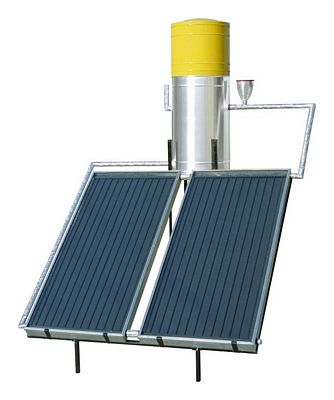
Solar Water Heating is on the Rise for Commercial Applications in the U.S.

AltaTerra Research announced the release of its highly anticipated report today, entitled, “Solar Water Heating on the Rise: Tapping into Commercial Solar Thermal.”  The report is one of the first professional market research studies of how customers are installing solar water heating. It addresses customer-facing issues, including the value proposition and suitability to and rate of adoption in particular industry types. It also profiles how and why current customers are installing solar water heating systems.
Sample findings from the report include:
  • The United States solar water heating market is now growing at about 20 percent per year in the commercial sector—a significant upturn from long-term trends.
  • For most customers, solar heating lowers energy expenditures.
  • Pilot installations are raising market acceptance and triggering follow-on purchases.
In a development that bodes well for the potential of a robust commercial market, solar thermal power purchase agreements are starting to take root in some areas.
“The market for commercial solar water heating systems in the United States is on the rise, growing an estimated twenty percent in 2010.  The U.S. commercial market is benefiting from new incentives programs and an increase in corporate and commercial customers seeking to meet resource efficiency goals and hedge against rising energy prices,” said the report’s lead author Eric Paul.
Source: www.renewableenergyworld.com