Apple is building a $2 Billion solar-powered data command center

solar-powered data

Apple to build a solar-powered data in Arizona

Apple’s power plant project in Arizona didn’t work out, so now Apple is investing another $2 billion to convert the facility into a massive data center.

According to Quartz, the company will employ 150 full-time Apple staff at the Mesa, Arizona facility, which will serve as a command center for its global network of data centers. In addition to the investment for the data center, Apple plans to build a solar farm capable of producing 70-megawatts of energy to power the facility.

The facility with some 120,000 square meters (1.3 million square feet) had been the planned site of a plant to produce sapphire glass screens in a collaboration with GT Advance Technologies.

Sapphire touch screens are a very tough synthetic replacement for the glass currently used on many Apple mobile devices, and are already used in a limited way for particularly sensitive parts of devices, The Sun Daily writes.

The synthetic screens were also expected to be used in the Apple Watch set to hit the market in April.

The collaboration came apart late last year after GTAT filed for bankruptcy and accused Apple of saddling the company with onerous terms in the deal.

State officials said the investment is a good deal for Arizona.

“Apple is a company that we wanted to come to Arizona, previously with a third party,” state Governor Doug Ducey said during a press conference.

“Now, we have Apple itself investing in our state. This is a one-of-a-kind company, they just had a world record quarterly earnings, and they are coming to Arizona.”

Ducey said Apple has made a 30-year commitment with the data center, and that it will sign on about 150 employees along with creating hundreds of construction jobs during the building phases.

Greenpeace senior IT sector analyst Gary Cook lauded Apple’s decision to build an Arizona data center powered by renewable energy.

“Apple remains the most aggressive among major IT companies in delivering on its commitments to be 100% renewable, and has shown the business community that solar is ready, here and now, to power our economy,” Cook said.

He call on other technology industry titans, particularly Amazon and its massive cloud services operation, follow suit.

Singapore’s first 3D-printed urban solar electric car

solar-powered cars

NTU eco cars

Two solar-powered electric cars, designed by students from the Nanyang Technological University (NTU), were unveiled by the institution on Monday morning.

According to Channel News Asia, one of the two is the first car in Singapore to be made with 3D-printed parts. Its cabin, which can seat one driver, is made of 150 3D-printed components that have been glued together using epoxy adhesive.

“We are extremely proud to have designed and assembled a 3D-printed body shell for the electric car,” Associate Professor Ng Heong Wah said. “The 3D printed car body was pushing existing technology to the limits and we are so pleased that it has paid off.”

“Using the latest engineering techniques learnt from their studies in NTU, the students have developed innovations such as silicon solar cells that can be contoured to follow the car’s shape,” he added.

Undergraduate Ilmi Bin Abdul Wahab, who led the development of 3D-printed NV8, said: “We decided to go with a 3D-printed cabin made from lightweight plastic, as we wanted to maximise the internal space and driver’s comfort while still being able to keeping the weight to a minimum. Despite being an Urban Concept car, it is no slouch and can reach a top speed of 60km/h, while maintaining low energy consumption.”

Co-designer Ng Jun Wen explained the unique honeycomb design for NV8: “For it to be lightweight, thin and yet strong, we integrated a honeycomb structure and a unique joint design to hold the parts together. When seen against the light, the structure has a translucent see-through effect, like a dragonfly wing.”

According to NTU, NV8 will participate in the Shell Eco-marathon Asia competition this year, under the Urban Concept category. Teams with more “roadworthy” fuel-efficient vehicles fall in this category, it said. The competition challenges students to design, build and drive a vehicle that can travel the furthest distance using the least amount of energy.

The second eco-car features hand-made silicon solar cells

The students have also built the NTU Venture 9 (NV9), a three-wheeled racer, which can “take sharp corners with little loss in speed” due to its unique tilting ability inspired by motorcycle racing, the university said.

The car, featuring hand-made silicon solar cells, will be NTU’s entry in the Prototype category at the Shell competition. Teams enter futuristic prototypes focused on maximising fuel efficiency through innovative design elements in the Prototype category.

By developing the silicon solar cells innovation, Prof Ng said it allows for “maximum harvesting of the solar energy and a tilting mechanism” in NV9 that results in avoiding the loss of speed.

Explaining the inspiration behind their prototype, NV9 Team Manager, Winston Tan, said: “We took the tilting mechanism inspiration from motorcycle racing, where racers would lean left or right during sharp turns to maintain their handling and speed. For the car’s body, we aimed for it to be as streamlined as possible.”

The two NTU teams consist of 16 students from the various engineering schools. The cars were designed from scratch and students spent over a year to build them. Shell Eco-marathon Asia will take place in Manila from Feb 26 to Mar 1.

Nepal finally goes solar

solar panels in Nepal

Clean power for Nepal

Sales of solar power systems have grown significantly in the past few years with load-shedding hours ever increasing. The government of Nepal has helped to boost the business further by providing subsidies to promote renewable energy in the country.

According to ekantipur.com, the surge in demand for renewable energy systems has led many companies to enter this niche market. Many companies have been launching various promotional campaigns and educating people on the benefits of installing solar panels for long-lasting energy supply.

More than 70 companies are competing for a share of the market in this segment in the Kathmandu valley, traders said.

“More and more residential houses and official buildings have been turning to alternative energy in recent years as load-shedding has been hampering people’s lives severely,” said Alok Kumar Gupta, head of marketing at Sipradi Energy. Sipradi, which entered this segment in 2010, has been witnessing a 40-50 percent growth in business annually, Gupta added. The company offers solar power systems with capacities starting at 80 watt and prices starting at Rs 45,000.

According to him, solar panels in the range of 120-150 watts and priced between Rs 45,000 and Rs 60,000 are in high demanded among households. “We recently installed a 40 KW solar panel at the Alternative Energy Promotion Office,” said Gupta.

“We are also focusing on expanding our sales and service network to make it easier for customers to avail of our products and services.” The company has 140 dealers across the country.

Meanwhile, an American solar energy equipment supplier Renogy has entered the Nepali market with a wide range of solar panels. “Today’s generation which has a busy schedule and uses technology a lot has been discouraged by the long power cuts. So we see a great market potential,” said Sudeep Chhetri, managing director of Suyash International, the authorised distributor of Renogy solar systems in Nepal.

Renogy solar panels come in the range of 35 to 200 watt and have a starting price of Rs 15,000. “We have sold Rs 700,000 worth of solar panels since launching a month ago,” he said.

Pratik Karki, sales manager of Lotus Energy, said that the government’s subsidy scheme to promote renewable energy was also helping business to grow.

“People have started realising that despite the higher initial cost compared to inverters, the solar panel system is more beneficial in the long run,” he said.

Corporate houses and banks and financial institutions, among other organizations, have been buying solar power systems instead of spending money on generators and inverters, he added.

Power to the people: ‘Fracking village’ goes solar

balcombe solar plant

Residents from Balcombe

A British village made famous after strong anti-fracking protests has installed the first community-owned solar panel project.

According to Engineering and Technology Magazine, local residents from Balcome, West Sussex set up a local energy co-operative REPOWERBalcombe after controversy over fracking by oil and gas company Cuadrilla in the summer of 2013.

The co-op has installed a total of 69 panels on the roof of a cow-shed at the nearby family-run Grange Farm as part of a long-term plan to generate enough power to match the entire electricity use of the village.

“We are delighted to have our first solar panel installation under way, as part of our bigger project to power the equivalent of our entire village’s electricity using clean and renewable energy,” said Joe Nixon, REPOWERBalcombe’s spokesman.

The panels will produce 18,000kWh of electricity each year. Grange Farm will be able to buy the electricity for at least 30 per cent cheaper than the best market-price, while the association will retain the Government feed-in tariff subsidy to pay dividends to their members and to fund local community projects.

“It’s great to be involved in doing something for our community and the environment, and nice to see the cow-shed roof being put to good use, plus we get a reduction on our electricity bills,” said Chris Jarvis, the owner of the Grange Farm.

According to organisers, the panels will produce just over 1 per cent of the community’s electricity needs, but they are negotiating with three local schools to install solar panels on its rooftops, which would account for 10 per cent of the village electricity’s demand. This will be paid for by a community share issue to local residents worth around £300,000.

“Balcombe has come to symbolise the choice Britain faces about our energy future – fracking or clean, renewable energy,” said Leo Murray, community energy campaigner.

“It is particularly apt that the community here have installed their first solar panels in the same week that Parliament has cast fresh doubt over the whole fracking project in the UK.

“Seeing these panels go up is a major milestone on REPOWERBalcombe’s journey and these first steps are blazing a trail for other communities to follow. The people here are part of a fast-growing movement to take back control of Britain’s energy future from giant, fossil-powered energy companies.”

The first installation coincides with a call to suspend fracking for shale gas from a committee of MPS, which was later rejected by Westminster and might be on the cards in Scotland, and Lancashire councillors delaying a decision on Cuadrilla’s fracking proposal.

World’s first solar-powered lock for your bike

solar-powered bike lock

This ultra-advanced bike lock protects both you and your bike

Developed by a team of San Francisco-based engineers, Skylock, world’s first solar-powered connected bike lock, can keep you and your bike safe and secure.

An app downloaded on the user’s iPhone or Android device is the connection between him and his Skylock-equipped bike. Yes, it controls the lock remotely, but it does much more than that. If someone is trying to cut the lock — a difficult and time-consuming process — the lock’s triaxial accelerometer will have notified you that your bike is being tampered with before the thief can take off.

According to the developers, “Any lock can be cut with enough time and the right tools. Since Skylock requires two cuts to break, this means you have twice the amount of time to respond to a theft alert.” Sure, it can send a false alarm if someone accidentally bumps your bike but at least you can go check to see what’s going on.

The Skylock can also be programmed so that if you are in an accident or get hit by a car it sends an automatic alert to a person or persons of your choice. The system only works if both phone and Skylock get a shock, so nothing will happen if you drop one or the other, Eco Watch writes.

What happens if both are in your backpack and you drop it? “The system will ask you if you are ok and take action if you don’t reply, so if you activate this feature, keep this in mind and don’t slam your backpack,” they advise. That’s probably good advice in general.

The Skylock isn’t just convenient and protective, it’s also eco-friendly. With its low-power design and solar-recharged battery, it needs little charging to provide power for up to months at a time. Although Skylock’s developers say you’re unlikely to run out of battery power (or your phone runs out) and find yourself locked out of your bike, they’ve got you covered.

“If you are ever running low, just plug in the USB charger and Skylock will be ready to guard you and your bike again,” they say. “Skylock also has a built-in capacitive panel. Just type in a key code combination to unlock Skylock if your phone ever runs out of battery. Never worry about getting your bike stuck outside.”

With Skylock, you can even share your bike with trusted friends. You can alert them to the bike’s location and send them access to it via phone.

Cycling enthusiasts were excited enough by the Skylock that it blew through its first Indiegogo fundraising goal in a single day and raised double its set goal in the second.

Naturally, Skylock doesn’t come cheap, but we know some serious cyclists that measure their dedication by how much money they are able to spend. Skylock can help them. While regular bike locks may run you anywhere from $10-$100, Skylock will retail for $250 but the company is taking preorders at $159. The lock should be in your hands before the summer cycling season is too far along.

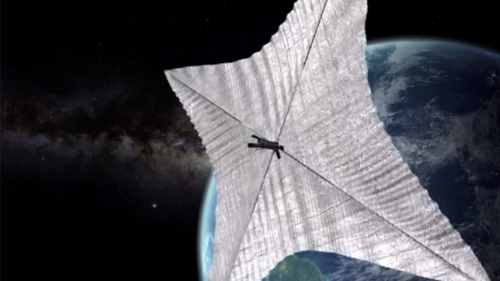
Planetary Society to launch solar sail test flight in May

solar spacecraft

Solar sails are designed to capture the momentum from solar energy photons using large mirrored surfaces.

A tiny spacecraft designed to be pushed through space by ultra-thin “solar sails” will be launched in May by a U.S.-based non-profit group, 10 years after its first failed attempt.

The Planetary Society announced recently that its LightSail spacecraft will blast off on a test flight aboard an Atlas V rocket. The society is a non-profit space advocacy organization co-founded by the late astronomer Carl Sagan and headed by Bill Nye, best known as the Science Guy from his popular TV show.

According to CBC News, the LightSail spacecraft, a tiny cube satellite about the size of a loaf of bread, is expected to unfurl its four solar sails in June. The triangular sails are made of Mylar, about a quarter of the thickness of a garbage bag, and have a combined area of 32 square metres — equivalent to two parking spaces.

Solar sails are designed to capture the momentum from solar energy photons using large, mirrored surfaces. The small, continuous acceleration allows a spacecraft propelled by solar sails to reach high speeds over time.

“As LightSail breezes around the Earth, its shiny sails will be visible from the ground,” the Planetary Society says on its website for the project.

According to a blog post by Jason Davis, the society’s digital editor, the spacecraft won’t fly high enough to escape Earth’s atmospheric drag and demonstrate “true” solar sailing.

But it will gather time-lapse images of the sails’ deployment and engineering data that show how they perform in microgravity.

That, in turn, will be used to prepare for a second flight in 2016, at a higher altitude of 720 kilometres that will demonstrate “true solar sailing.”

The Planetary Society is collaborating on the project with California Polytechnic State University and the Georgia Institute of Technology, which will help collect data from the spacecraft, and two private space technology companies, Stellar Exploration Inc., which built the spacecraft, and Ecliptic Enterprises Corp., which conducted flight testing.

Five years later, the first solar sails were deployed by Japan’s Venus-bound IKAROS spacecraft and NASA’s NanoSail-D satellite in low-Earth orbit.

NASA has two upcoming solar sail missions, one to the moon and the other to an asteroid, scheduled for 2018.

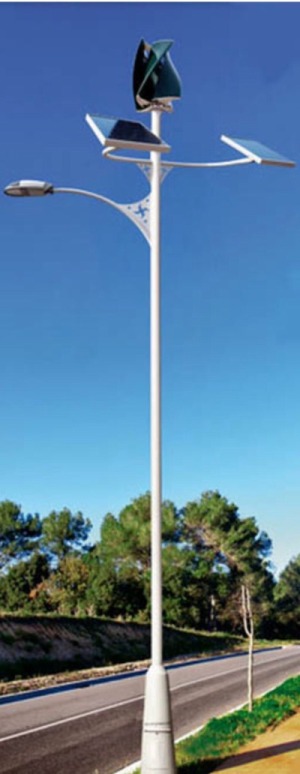
First autonomous public lighting system that runs on solar and wind energy

solar and wind public light

Solar and wind public lighting system

The first autonomous industrialized public lighting system that is running on nothing but solar and wind energy was recently created by researchers at the Universitat Politècnica de Catalunya, in cooperation with Eolgreen.

The system is designed for use along inter-urban roads and motorways, and in urban parks and various public areas and is reported to reduce total costs by as much as 20%, as compared to conventional systems, Clean Technica writes.

According to a recent press release, the prototype is 10-meters high and is fitted with a solar panel, a wind turbine and a battery. The turbine runs at a speed of 10 to 200 revolutions per minute (rpm) and has a maximum output of 400 watts (W). The developers’ aim is to make the lighting system even more environmentally efficient, so work is being done on a second prototype generator that runs at a lower speed (10 to 60 rpm) and has a lower output (100 W). An electronic control system manages the flow of energy between the solar panel, the wind turbine, the battery and the light.

“It takes very little wind to produce energy. The generator that has been developed can start working at a wind speed of only 1.7-meters per second (m/s), whereas current wind turbines need more than 2.5 m/s,” states creator Ramon Bargalló, a researcher in the Department of Electrical Engineering at the Barcelona College of Industrial Engineering of the Universitat Politècnica de Catalunya.

The system can reportedly provide up to 6 nights of electricity with no wind or sun.

As it stands, Eolgreen has already signed agreements with the port of Huelva, the municipal authorities of Sant Boi de Llobregat + Girona, and a number of towns in Andalusia. The company is planning to produce ~700 of these street lights in 2015.

Bacteria discovered that exist on pure energy

electric bacteria microbial nanowires

Electric bacteria connect to form wires

Microbiologists from California have discovered bacteria that survive by eating pure electrons rather than food, bringing an entirely new method of existence to awareness and raising questions about possibilities for alien life.

According to Extreme Tech, the ‘electric bacteria’ – as they have been dubbed by the team that discovered them – take energy from rocks and metal by feasting directly on their electrons. The hair-like filaments the bacteria produce carry electrons between the cells and their environment.

These bacteria yet again prove the almost miraculous tenacity of life — but, from a technology standpoint, they might also prove to be useful in enabling the creation of self-powered nanoscale devices that clean up pollution. Some of these bacteria also have the curious ability to form into ‘biocables,’ microbial nanowires that are centimeters long and conduct electricity as well as copper wires — a capability that might one day be tapped to build long, self-assembling subsurface networks for human use.

As you may recall from high school biology, almost every living organism consumes sugar to survive. When it gets right down to it, everything you eat is ultimately converted or digested into single molecules of glucose. Without going into the complexities of respiration and metabolism (ATP!), these sugars have excess electrons — and the oxygen you breathe in really wants those electrons. By ferrying electrons from sugar to oxygen, a flow of electrons — i.e. energy — is created, which is then used to carry out various vital tasks around your body (triggering electrons, beating your heart, etc.)

These special bacteria, however, don’t need no poxy sugars — instead, they cut out the middleman and feed directly on electrons. To discover these bacteria, and to cultivate them in the lab, the USC biologists quite simply scooped up some sediment from the ocean, took it back to the lab, stuck some electrodes into it, and then turned on the power. When higher voltages are pumped into the water, the bacteria “eats” electrons from the electrode; when a lower voltage is present, the bacteria “exhales” electrons onto the electrode, creating an electrical current (which could be used to power a device, if you were so inclined). The USC study very carefully controlled for other sources of nutrition — these bacteria were definitely eating electrons directly.

 All told, various researchers around the world have now discovered upwards of 10 different kinds of bacteria that feed on electricity — and, interestingly, they’re all pretty different (they’re not from the same family), and none of them are like Shewanella or Geobacter, two well-known bacteria that have interesting electrical properties. Kenneth Nealson of USC, speaking to New Scientist about his team’s discovery, said: “This is huge. What it means is that there’s a whole part of the microbial world that we don’t know about.

As for the repercussions of finding bacteria that eat and excrete electrons, the most obvious use is in the growing fields of molecular motors and nanomachines. These bacteria, at their most basic, are machines that consume raw electricity — and so, with some clever (genetic?) engineering, it stands to reason that we might one day use them to power tiny machines that can perform tasks that are currently carried out by expensive, human-operated machines (cleaning up chemical spills, for example). These bacteria might also allow us to find out exactly how much energy a living cell needs to survive; put them in a test tube, and then slowly dial back the electrode voltage until they die. A cruel experiment, but one that would yield very informative results.

This unique bamboo bike uses kinetic energy to charge your phone

bamboo bike

Bambootec’s bamboo bike

Bambootec, a consortium from Yucatán, Mexico, has designed a bamboo bicycle that turns pedaling into electricity for charging mobile devices. With a navigation dashboard in the handlebars, this unique bike measures distance and time thanks to a bluetooth connection.

After all, Bambootec’s creation it’s an impressive piece of engineering—particularly if the designs are simple enough to be built by hand by individuals in areas where rolling blackouts are a part of daily life.

Cristina Espinosa López, founder of Bambootec, said to inhabitat.com that the energy transfer is made possible thanks to a converter made of a circuit starting on the rim and proceeding through the system core under the seat, which captures and converts the kinetic energy into electricity. A regulator was also added to the converter, in order to assure that the electricity generated by the bike isn’t unevenly distributed due to variations in speed or quick braking.

The frame itself is assembled with bamboo sticks and resin, instead of metal, making the bike sturdier, lighter and more resistant to heat.

In all, the device sounds like an excellent instance of appropriate technology. The bikes could easily be assembled in the developing world since bamboo is cheap, though certainly not the cheapest material in the world. And the bike could be used both for transport and for charging devices when faulty power grids go out, which can be an hourly occurrence in many parts of the world. Electricity-generating bikes are certainly nothing new, but used it that context, this one could do the world some good.

New iPhone 7 Rumors: Waterproof and Solar-Powered?

solar powered iphone

Solar-powered iPhone 7?

Although the Apple iPhone 6 is quite new, rumors have been flying about iPhone 7. Fans and analysts are clamoring to know what the iPhone 7 will bring to the table. Some think that the new device will be waterproof and solar-powered.

Currently, it’s unknown whether the smartphone will see release in 2015 or 2016, thefusejoplin.com writes. That hasn’t stopped Android fans from feeding the rumor mill, and some interesting rumors have come from various sources. Most of these rumors are intriguing, so let’s take a quick look at some of the most common rumors flying around right now.

Rumor: A Waterproof Device

Most flagship Android devices are waterproof or water-resistant to some degree. However, Apple has never implemented such a feature on its iconic smartphone. Analysts expect the company to make the iPhone 7 waterproof after the iPhone 6 was released without this added layer of protection. A waterproof device would allow users to handle their smartphones in the rain or other wet conditions without worries. Of course, consumers would buy the device in droves if it comes with added durability like this.

Rumor: A Solar Power Feature

No smartphones have implemented solar power into their designs. Doing so isn’t cost-effective, and the technology isn’t there yet. Then again, this rumor describes an iPhone 7 that improves its battery life by utilizing solar power. Such an add-on wouldn’t let the device completely recharge itself, but it would give the smartphone some extra juice. Since Apple customers are used to paying a premium for their devices, this rumor only seems out there because of the actual idea rather than its price.

Rumor: Same Old A8 Processor

Unfortunately, a horrifying rumor surrounding the iPhone 7 states that the device will ship with the A8 processor. That’s the same processor found on current iPhone models, and consumers won’t like that. The processor packs a powerful punch, especially for graphics, but consumers expect improvements with each generation. Apple might keep the A8 for the iPhone 6S models, but it’s hard to imagine that the company won’t unveil the A9 chip for the next generation of devices.

Rumor: Double The Amount of RAM

A major complain of the current iPhones revolve around their available 1GB of RAM. Most Android devices feature 2GB to 4GB of RAM, so Apple needs to catch up. According to the rumor mill, 2GB of RAM will be implemented into the iPhone 7, but this could hit the iPhone 6S beforehand. More RAM can only help iOS 8 and its future editions. The fact of the matter is that iPhones could benefit from more RAM because they’ll be able to multitask better than before, which is essential for some smartphone users.

Will An iPhone 6S Come Before The iPhone 7?

In the end, many of these rumored features for the iPhone 7 might actually come in the form of the iPhone 6S. Apple hasn’t released details about the “S” upgrade to the iPhone 6 and 6 Plus, though. Such upgrade models have been implemented for multiple generations now, though. For that reason, Apple fans shouldn’t expect an iPhone 7 until 2016 at the earliest. A desire to better compete with Android devices could lead Apple to changing plans and releasing the smartphone in 2015, but only Apple knows if that’s the case.