A huge floating solar power plant to be built in India

solar technology

Floating solar power plant in India

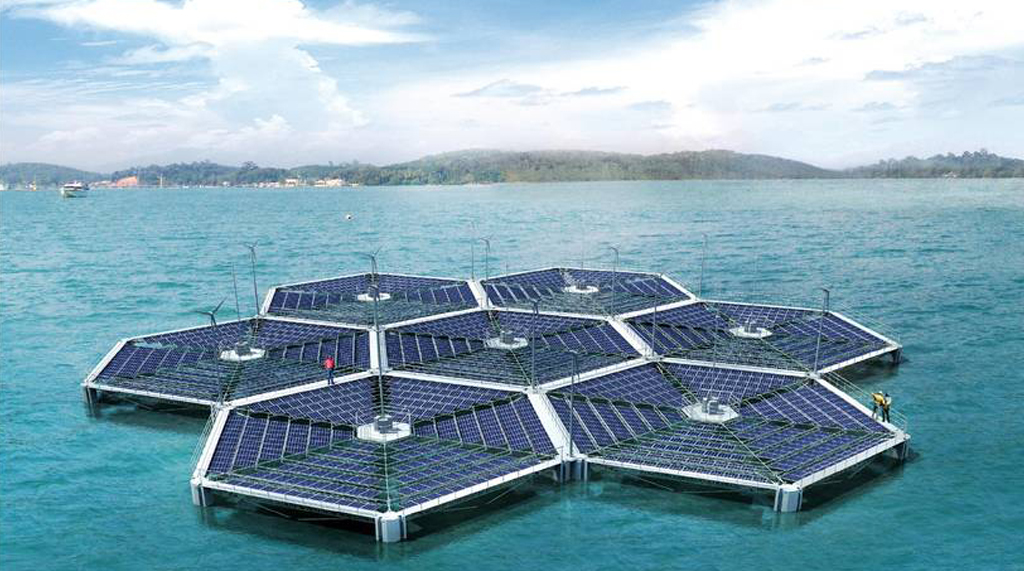
The National hydroelectric power company in India announced that they are going to construct a great solar power plant that will sail on top of a lake.

India has previously announced their strategy to build a 10 megawatt solar situated on some of the its canals, the Asian country took their idea to another level and want to construct a floating power station that will be situated on one of the large stretches of water in Kerala, India.

This particular floating solar power plant machinery was expanded by India’s Renewable Energy College and it is going to be implemented by the National Hydro Power Corporation, India’s national energy company. The very first of its plants will be authorized this fall.

“NHPC had contacted us for offering technical know-how and installation assistance for their proposed 50-mw plant,” reports the chairman of the Renewable Energy College, Gon Choudhury. “Each station would require around 3000 square feet of space to generate 20 kilowatt of power. There are many water bodies that could be used for this,” he added.

The project is also said to be eco-friendly and it will have a small impact on the surroundings, as Choudhury illustrates:

“The ecology of the water body is not likely to be affected much and it will also reduce evaporation, thus helping preserve water levels during extreme summer. Solar panels installed on land face reduction of yield as the ground heats up. When such panels are installed on a floating platform, the heating problem is solved to a great extent. This isn’t an ideal solution, it’s not as though we can go and cover the world’s oceans with photovoltaic cells, but it’s certainly a solid intermediary step until we get those space-based solar farms up and running.”

This project looks a lot like one of Japan’s offshore solar power plants built in 2013. The 70MW Kagoshima Nanatsujima Mega Solar Power Plant was conceived as part of the move towards a more green energy area as a follow-up of the 2011 Fukushima meltdown and is located in Japan’s Kagoshima Prefecture.
A huge floating solar power plant to be built in India

solar technology

Floating solar power plant in India

The National hydroelectric power company in India announced that they are going to construct a great solar power plant that will sail on top of a lake.

India has previously announced their strategy to build a 10 megawatt solar situated on some of the its canals, the Asian country took their idea to another level and want to construct a floating power station that will be situated on one of the large stretches of water in Kerala, India.

This particular floating solar power plant machinery was expanded by India’s Renewable Energy College and it is going to be implemented by the National Hydro Power Corporation, India’s national energy company. The very first of its plants will be authorized this fall.

“NHPC had contacted us for offering technical know-how and installation assistance for their proposed 50-mw plant,” reports the chairman of the Renewable Energy College, Gon Choudhury. “Each station would require around 3000 square feet of space to generate 20 kilowatt of power. There are many water bodies that could be used for this,” he added.

The project is also said to be eco-friendly and it will have a small impact on the surroundings, as Choudhury illustrates:

“The ecology of the water body is not likely to be affected much and it will also reduce evaporation, thus helping preserve water levels during extreme summer. Solar panels installed on land face reduction of yield as the ground heats up. When such panels are installed on a floating platform, the heating problem is solved to a great extent. This isn’t an ideal solution, it’s not as though we can go and cover the world’s oceans with photovoltaic cells, but it’s certainly a solid intermediary step until we get those space-based solar farms up and running.”

This project looks a lot like one of Japan’s offshore solar power plants built in 2013. The 70MW Kagoshima Nanatsujima Mega Solar Power Plant was conceived as part of the move towards a more green energy area as a follow-up of the 2011 Fukushima meltdown and is located in Japan’s Kagoshima Prefecture.

A huge floating solar power plant to be built in India

solar technology

Floating solar power plant in India

The National hydroelectric power company in India announced that they are going to construct a great solar power plant that will sail on top of a lake.

India has previously announced their strategy to build a 10 megawatt solar situated on some of the its canals, the Asian country took their idea to another level and want to construct a floating power station that will be situated on one of the large stretches of water in Kerala, India.

This particular floating solar power plant machinery was expanded by India’s Renewable Energy College and it is going to be implemented by the National Hydro Power Corporation, India’s national energy company. The very first of its plants will be authorized this fall.

“NHPC had contacted us for offering technical know-how and installation assistance for their proposed 50-mw plant,” reports the chairman of the Renewable Energy College, Gon Choudhury. “Each station would require around 3000 square feet of space to generate 20 kilowatt of power. There are many water bodies that could be used for this,” he added.

The project is also said to be eco-friendly and it will have a small impact on the surroundings, as Choudhury illustrates:

“The ecology of the water body is not likely to be affected much and it will also reduce evaporation, thus helping preserve water levels during extreme summer. Solar panels installed on land face reduction of yield as the ground heats up. When such panels are installed on a floating platform, the heating problem is solved to a great extent. This isn’t an ideal solution, it’s not as though we can go and cover the world’s oceans with photovoltaic cells, but it’s certainly a solid intermediary step until we get those space-based solar farms up and running.”

This project looks a lot like one of Japan’s offshore solar power plants built in 2013. The 70MW Kagoshima Nanatsujima Mega Solar Power Plant was conceived as part of the move towards a more green energy area as a follow-up of the 2011 Fukushima meltdown and is located in Japan’s Kagoshima Prefecture.

A huge floating solar power plant to be built in India

solar technology

Floating solar power plant in India

The National hydroelectric power company in India announced that they are going to construct a great solar power plant that will sail on top of a lake.

India has previously announced their strategy to build a 10 megawatt solar situated on some of the its canals, the Asian country took their idea to another level and want to construct a floating power station that will be situated on one of the large stretches of water in Kerala, India.

This particular floating solar power plant machinery was expanded by India’s Renewable Energy College and it is going to be implemented by the National Hydro Power Corporation, India’s national energy company. The very first of its plants will be authorized this fall.

“NHPC had contacted us for offering technical know-how and installation assistance for their proposed 50-mw plant,” reports the chairman of the Renewable Energy College, Gon Choudhury. “Each station would require around 3000 square feet of space to generate 20 kilowatt of power. There are many water bodies that could be used for this,” he added.

The project is also said to be eco-friendly and it will have a small impact on the surroundings, as Choudhury illustrates:

“The ecology of the water body is not likely to be affected much and it will also reduce evaporation, thus helping preserve water levels during extreme summer. Solar panels installed on land face reduction of yield as the ground heats up. When such panels are installed on a floating platform, the heating problem is solved to a great extent. This isn’t an ideal solution, it’s not as though we can go and cover the world’s oceans with photovoltaic cells, but it’s certainly a solid intermediary step until we get those space-based solar farms up and running.”

This project looks a lot like one of Japan’s offshore solar power plants built in 2013. The 70MW Kagoshima Nanatsujima Mega Solar Power Plant was conceived as part of the move towards a more green energy area as a follow-up of the 2011 Fukushima meltdown and is located in Japan’s Kagoshima Prefecture.

A huge floating solar power plant to be built in India

solar technology

Floating solar power plant in India

The National hydroelectric power company in India announced that they are going to construct a great solar power plant that will sail on top of a lake.

India has previously announced their strategy to build a 10 megawatt solar situated on some of the its canals, the Asian country took their idea to another level and want to construct a floating power station that will be situated on one of the large stretches of water in Kerala, India.

This particular floating solar power plant machinery was expanded by India’s Renewable Energy College and it is going to be implemented by the National Hydro Power Corporation, India’s national energy company. The very first of its plants will be authorized this fall.

“NHPC had contacted us for offering technical know-how and installation assistance for their proposed 50-mw plant,” reports the chairman of the Renewable Energy College, Gon Choudhury. “Each station would require around 3000 square feet of space to generate 20 kilowatt of power. There are many water bodies that could be used for this,” he added.

The project is also said to be eco-friendly and it will have a small impact on the surroundings, as Choudhury illustrates:

“The ecology of the water body is not likely to be affected much and it will also reduce evaporation, thus helping preserve water levels during extreme summer. Solar panels installed on land face reduction of yield as the ground heats up. When such panels are installed on a floating platform, the heating problem is solved to a great extent. This isn’t an ideal solution, it’s not as though we can go and cover the world’s oceans with photovoltaic cells, but it’s certainly a solid intermediary step until we get those space-based solar farms up and running.”

This project looks a lot like one of Japan’s offshore solar power plants built in 2013. The 70MW Kagoshima Nanatsujima Mega Solar Power Plant was conceived as part of the move towards a more green energy area as a follow-up of the 2011 Fukushima meltdown and is located in Japan’s Kagoshima Prefecture.

New record high for green energy price with the construction of expensive wind turbines at the sea

energy price

The green energy price boosted up as annual bill

The green energy price boosted up as annual bill for users reached £2.5bn. There are more plants to be built and the price goes up with each one of them.

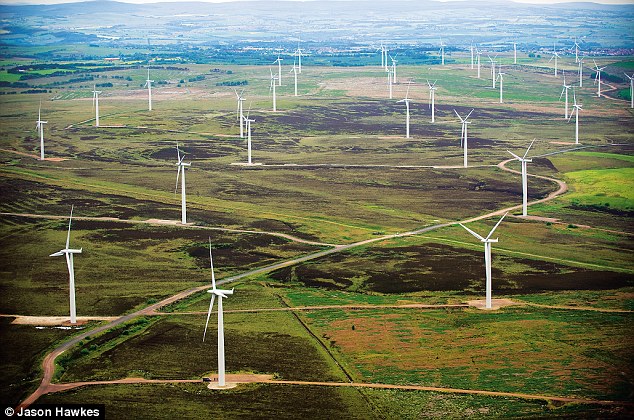
The cost of generating renewable electricity has reached record high because subsidies belong to expensive offshore wind farms and household solar panels, as new figures are revealed. More and more turbines are constructed and a lot of homeowners put solar panels on their homes. So, the annual bill for these users reached £2.5bn.

Every unit of renewable energy is now more expensive, as new figures tell and they reached 66.97 per MWh in 2012-13. The rise was high as it comes from £54.26 in 2012, even if the ministers requested a weigh down of the costs.

The rise shows the force to build turbines offshore, that will get twice as much subsidy in comparison to the ones at shore, as the latter are quite controversial. Companies that built this large scale plants received subsides that reached £2bn, from £1.5bn the former year. This shows that there is a surge of householders to put solar panels on their homes at this kind of subsides before the support was reduced in March 2012. They got £500m in 2012-13, coming from £150m the year before.

The director of Renewable Energy Foundation, Dr. John Constable, reports : “DECC is subsidizing renewables to meet arbitrary and over-ambitious EU targets, so it was inevitable that we would move rapidly up the cost curve once the ‘cheaper’ opportunities had either been fully developed like landfill gas or exceeded the limits of public acceptability like onshore wind.

Subsidy costs are now spiraling out of control – the annual burn is about £3bn a year and rising fast. There still is a good case for experimenting with renewables, but building so much capacity when the whole sector is still fundamentally uneconomic is bound to end in tears.”

A spokesman for the Department of Energy and Climate Change said: “As we move closer to achieving the government’s renewables target it is inevitable we will start using more expensive forms of renewable energy such as offshore wind, which can be deployed at far greater scale than other renewable technologies. By supporting these technologies now we are driving down their costs. Nonetheless the support levels for each technology are coming down over time and our analysis suggests household electricity bills will be on average £41 lower per year between 2014-30 compared to meeting the our targets using current measures.”