Water your garden automatically using solar panels

Your garden will not be thirsty of water when you’re gone.

A new concept for gardens, the Garden Sitter, is a solar powered system, programmable rain barrel irrigation system that is capable of watering a garden for months together, without any sort of human intervention.

The system was designed by Gary Lee of Edenton, North Carolina.

Gary Lee designed his very own solar rainwater harvesting irrigation system, then he turn around and makes it available to the public.

The system is powered by solar energy, which makes it more acceptable among the increasingly environment conscious population.

The system is equipped with a North Carolina Cypress box which contains 5 watt solar panel. It also has a 7 amp charge controller and battery. The LED lights attached to it, sum up the status of charging.

You can set the time according to your convenience and shoo off the nightmare of a destroyed garden.

The construction of the system, it consists of twin barrels and has a holding capacity of 2600 gallons.

It can be used throughout the growing season and is expected to save an estimated 5000 gallons.

This is a magnificent invention because uses a renewable source of energy to function and the other that Garden Sitter is save water, a bare necessity that is becoming increasingly expensive around the world.

Toyota UK car plant will use solar energy

In addition to manufacturing a number of striking eco friendly cars like Prius and Highlander, Toyota has now geared up to power entire operations of its Derbyshire production plant in the U.K. with solar panels.

The Japanese automobile giant has announced that it is going to implement the ambitious project, which will cost more than $14 million to the company.

Toyota looks set to install a £10m solar array to power operations at its Derbyshire plant.

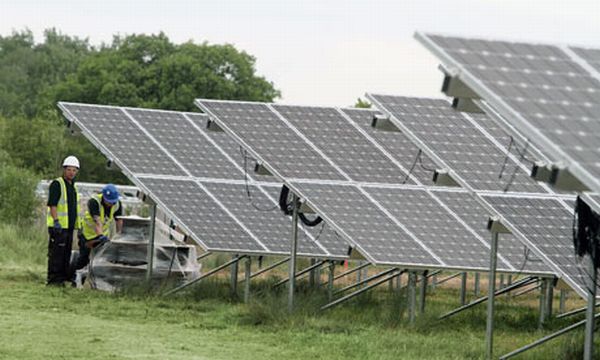
The company has already started work to fit around 17,000 panels on 90,000 square metres of industrial land – an area slightly smaller than four and a half football pitches – within the plant’s boundaries.

The array will be capable of supplying enough energy to build around 7,000 cars a year at the plant, which produces Auris hybrid, Auris and Avensis cars, as well as saving the company 2,000 tonnes of CO2 emissions a year.

Toyota project is expected to begin producing power in July 2011.

The solar plant that can generate solar power even at night

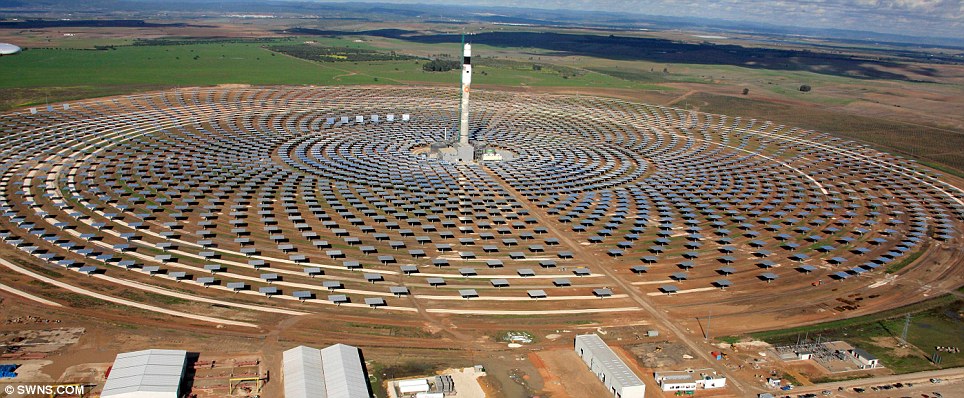
The world’s first solar power station that generates electricity at night is Gemasolar Power Plant near Seville in southern Spain which consists of an incredible 2,650 solar panels spread across 185 hectares of rural land.

The mirrors – known as heliostats – focus 95 per cent of the sun’s radiation onto a giant receiver at the centre of the plant.

This ingeniously and rather scrupulously conceived £260million ($425 million) power station is actually collaborative effort by Abu Dhabi energy company Masdar and a branch of Spanish engineering firm SENER called Torresol Energy.

Heat of up to 900C is used to warm molten salt tanks, which create steam to power the £260million station’s turbines.

But, unlike all other solar power stations, the heat stored in these tanks can be released for up to 15 hours overnight, or during periods without sunlight.

The sunny weather of southern Spain rather sustains the solar energy during most of the yearly mornings which allows the plant to generate clean and green electricity at an estimated 270 days per year, 3 times more than other renewable solar projects.

It is expected to produce 110 GWh/year – enough to power 25,000 homes in the Andalucia region.

IBM software makes green buildings

In the future our apartment homes will be a lot more efficient than they are today.

New systems like IBM’s latest software will help users keep tabs on just how much energy they’ve been using, helping cut down unnecessary electricity usage during peak hours, indirectly cutting short electricity bills by considerable lengths.

This new software from IBM monitor how much energy residents use and check the energy consumption of heating systems, cooling systems, ventilators, refrigerating systems and the HVAC-R too.

Whit these new inventions buildings will go greener and more energy-efficient.

World’s first solar powered town in Japan

Japan will have the fist solar powered town in Fujisawa City.

Japan has learned its lessons from relying too much on nuclear energy after all the dark hours the nation has spent since the

Fukushima plant disaster and is now turning to solar energy instead to power up the lives of the people there.

Japan will built a smart town which will work with nine private sector firms to build a sustainable urban town which will see solar systems and battery storage technology installed in all homes and town facilities.

The project can become a model town that can be replicated in Japan’s earthquake-damaged areas.

This will be the first completely solar powered town in the world and it will have a thousand homes, playing residence to a population of about 3,000 people.

The project, which costs US$742 million and spans 19 hectares, will be completed in 2014.